How to protect the rights and interests of FTX exchange's Chinese creditors?
TechFlow Selected TechFlow Selected
How to protect the rights and interests of FTX exchange's Chinese creditors?
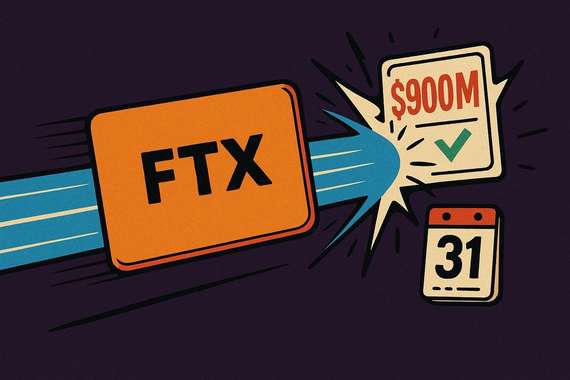
Chinese creditors are not entirely without hope, as FTX's relatively ample funding pool and ongoing liquidation provide a basis for compensation.
 Navigating Web3 tides with focused insights
Authors: Niu Xiaoqing, Liu Honglin
What Happened in the FTX Collapse?
You might still be confused about the "FTX collapse." Don't worry—let’s first go over the background. If you’re already familiar with the incident, feel free to skip ahead 👇.
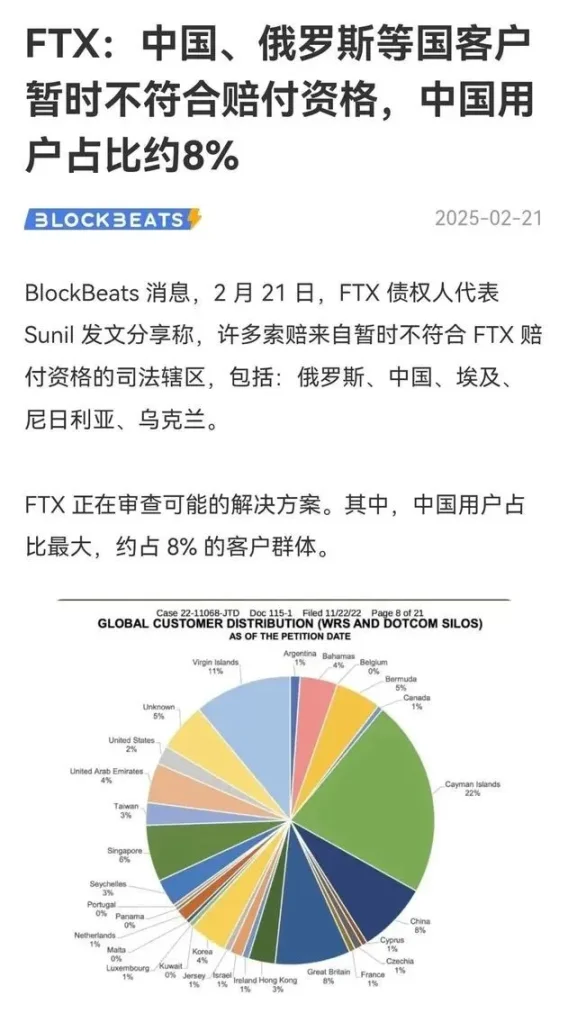
In November 2022, the cryptocurrency world was rocked by a major event: FTX, the second-largest crypto exchange globally, suddenly filed for bankruptcy without warning. Built by the so-called “genius” Sam Bankman-Fried (SBF), the platform had once been a rising star valued at $32 billion. Yet it collapsed overnight due to fund misappropriation and poor management, leaving hundreds of thousands of users and over $100 billion in debt. SBF was ultimately sentenced to 25 years in prison by a U.S. court. However, the FTX liquidation team staged a remarkable recovery, reclaiming between $14.5 billion and $16.3 billion and pledging full restitution to customers. This dramatic episode shocked the world—and left Chinese users, who made up 8% of FTX’s user base, in a difficult position: due to regulatory restrictions, they were excluded from compensation eligibility.
Will Chinese Creditors Receive Compensation?
According to PANews, Chinese clients are excluded from the compensation plan due to China's regulatory environment. In notices issued in 2017 and 2021, China declared cryptocurrency trading an illegal financial activity with no legal protection, creating compliance risks for FTX when paying out to Chinese users. Despite accounting for 8% of FTX’s total users (per South China Morning Post), Chinese customers remain ineligible under the current U.S. bankruptcy proceedings.
The FTX bankruptcy payout has entered the phase of small-claim distributions, but Chinese users are currently excluded due to jurisdictional barriers and compliance concerns. Does this mean Chinese creditors have no hope? Not necessarily. The situation is far more complex than it appears—and there remains reason for optimism. While payouts to Chinese users may be delayed, they likely won’t be entirely ruled out.
How to File a Claim?
The FTX bankruptcy involves two parallel legal processes: the Chapter 11 bankruptcy proceeding in the United States and the liquidation process in the Bahamas. The former is led by FTX in Delaware courts, while the latter pertains to its Bahamian subsidiary, FTX Digital Markets Ltd. Choosing which jurisdiction to file your claim under directly affects whether you can successfully recover your assets.
For Chinese creditors, the Bahamian liquidation process may offer a better option. The two liquidation teams reached a settlement in December 2023, committing to coordinate asset distribution so that payout amounts and timing would align across both jurisdictions—including principal repayment plus 9% annual interest. Compared to the U.S. process, the Bahamian legal framework offers stronger protections for foreign creditors in cross-border insolvencies, potentially better accommodating the realities faced by Chinese claimants and minimizing compliance conflicts arising under U.S. law.
There are several key points to keep in mind during the claims process: carefully assess your claim type, potential disputes, and personal circumstances before making a decision—don’t act rashly. Additionally, if your claim amount is large (e.g., exceeding several hundred thousand dollars) or your English proficiency is limited, we strongly recommend hiring a professional lawyer. Legal counsel can not only prepare your submission materials on your behalf, saving time, but also provide tailored advice based on your specific case, helping you avoid missing opportunities due to procedural errors.
Why Is FTX Able to Pay Back Claims?
Looking back at history after previous exchange collapses such as Mt. Gox, FTX achieving relatively high repayment rates post-bankruptcy marks notable progress. This difference stems from various factors including asset management, efficiency of liquidation, legal frameworks, and market conditions.
Strong asset recovery efforts. Although FTX founder SBF was convicted of misusing customer funds, those funds weren’t completely lost. Much of the money had been invested into liquid assets rather than disappearing altogether. As of March 11, 2025, the liquidation team has recovered between $14.5 billion and $16.3 billion—enough to cover all customer principal (based on USD value at the time of FTX’s November 2022 collapse) with an additional 9% interest. These recovered assets include cash, cryptocurrencies, and equity investments (such as shares in Anthropic, sold in 2024 for approximately $1 billion profit). The efficient Chapter 11 bankruptcy mechanism under U.S. law provided strong support for this asset recovery.
Favorable market timing. FTX collapsed in November 2022, near the bottom of the crypto market cycle (Bitcoin around $16,000). The liquidation team sold assets during the market rebound of 2024–2025—when Bitcoin prices rose significantly—greatly increasing the value recovered. In contrast, Mt. Gox missed similar opportunities, resulting in severely limited payouts.
Modern regulation and technical tools. By the time of FTX’s collapse, blockchain tracking technologies (like Chainalysis) had matured, enabling the liquidation team to trace fund flows effectively. Meanwhile, strict U.S. regulatory and judicial oversight (including creditor equality principles under 11 U.S.C. §1123) ensured priority treatment for customer claims. In contrast, Mt. Gox suffered massive asset losses (850,000 BTC stolen), a decade-long delay in liquidation, and outdated technology, allowing only 15%-20% loss recovery.
While Web3 promotes decentralization, real-world operations still rely on centralized entities. A mature regulatory environment is essential to protect investors. FTX’s ability to compensate customers exemplifies this very principle.
Mankin Law Firm Summary
Chinese creditors are not entirely without hope. FTX’s relatively robust asset pool and ongoing liquidation provide a foundation for compensation. Opting for the Bahamian process, seeking professional assistance, and closely monitoring developments are crucial steps to safeguarding your rights. While the ideal of Web3 decentralization is admirable, in reality, it is centralized legal systems that serve as the final line of defense for investors.
Join TechFlow official community to stay tuned
Telegram:https://t.me/TechFlowDaily
X (Twitter):https://x.com/TechFlowPost
X (Twitter) EN:https://x.com/BlockFlow_News