"The New Fed Wire": Neither dovish nor hawkish, Powell now looks more like a "duck"
TechFlow Selected TechFlow Selected
"The New Fed Wire": Neither dovish nor hawkish, Powell now looks more like a "duck"
Appearing calm on the surface, but continuously paddling beneath the murky water.
 Navigating Web3 tides with focused insights
By Li Xiaoyin, Caixin Global
Powell is caught in a threefold dilemma of economic crisis, political pressure, and internal divisions.
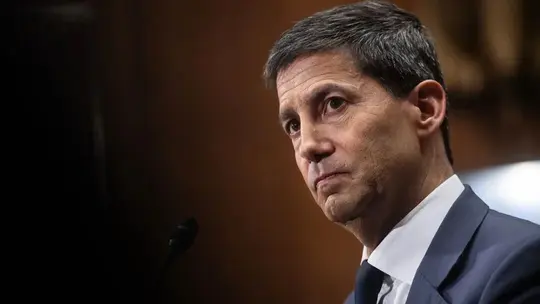
On March 18, Nick Timiraos, known as the "new Fed watcher," published an article in The Wall Street Journal offering a deep dive into the challenges facing Federal Reserve Chair Jerome Powell.
The article highlights that with just one year remaining in his term, Powell faces the most complex challenges of his career: on one hand, tariff threats that could trigger stagflation; on the other, aggressive political pressure from the Trump administration. Even more concerning is that his 18 policy-making colleagues on the Federal Open Market Committee (FOMC) are moving in sharply divergent directions.
This means Powell must safeguard the Fed's independence amid trade wars and potential policy interference, while also maintaining balance amid conflicting internal voices.
Timiraos compares Powell to a "duck": calm and unruffled on the surface—neither dovish nor hawkish—yet paddling furiously beneath troubled waters.
Stagflation Risks Mounting
Timiraos opens by identifying the core challenge confronting Powell: the threat of stagflation.
Escalating tariffs stemming from trade conflicts may drive up prices, while simultaneously slowing or stalling economic growth. This forces Fed officials into a difficult choice between cutting interest rates to stimulate demand or keeping them high to contain inflation.
The article cites Dario Perkins, economist at GlobalData TS Lombard:
"If the Fed cuts rates now, it will likely be because the economy has worsened."
This statement precisely captures Powell’s predicament—he must strike a balance between controlling inflation and supporting economic growth, or risk leaving the Fed trapped between two undesirable outcomes.
Timiraos notes that risks of renewed inflation are building: declining immigration and government spending cuts could disrupt labor supply and demand, while significantly higher tariffs might create the worst combination—"economic stagnation alongside rising prices."
The article specifically references the Fed’s missteps during the post-pandemic inflation surge in 2021.
At the time, the Fed dismissed price increases as "transitory," only to later be forced into rapid monetary tightening and aggressive rate hikes. This painful lesson has made Powell and his colleagues more cautious today—and more attentive to how trade wars could reignite inflation.
Timiraos warns that the new Treasury secretary has suggested the Fed should treat tariff-driven inflation as temporary—a potentially dangerous recommendation.
Trump’s Interference Threatens Independence
Compared to his first term, Trump is now exerting even greater political pressure on the Fed.
While the Trump administration claims it won’t interfere with interest rate decisions, its actions appear to indirectly threaten the Fed’s independence.
As described in the article, Kevin Hassett, former director of Trump’s National Economic Council, recently criticized the Fed’s handling of inflation in media interviews.
Last month, the Trump administration issued an executive order granting the government authority to oversee the Fed’s regulatory agenda. Although monetary policy is formally exempted, the implementation remains ambiguous—effectively placing indirect constraints on the Fed’s autonomy.
More alarmingly, the Trump Justice Department is seeking to overturn a 1935 legal precedent that protects the independence of regulatory agencies. If successful, this would severely undermine the Fed’s independence, making it far more vulnerable to political influence.
Colleagues With Diverging Agendas
Powell’s challenges come not only from outside—but also from within the Fed itself.
Timiraos points out that FOMC members are increasingly divided. Some former doves have turned hawkish, and vice versa.
The article singles out two Fed governors: Christopher Waller and Michelle Bowman.
Waller, seen by some as a potential successor to Powell, has recently adopted a more dovish stance on rate cuts. As recently as December last year, he used a Trump-style analogy to describe the Fed’s fight against inflation:
"I feel like an MMA fighter who has inflation in a chokehold, waiting for it to tap out."
Bowman, meanwhile, was nominated by Trump to serve as Vice Chair for Supervision. She has publicly opposed the Fed’s rate-cutting policies.
These differing positions and political ambitions make Powell’s job of crafting consensus all the more delicate and complicated.
Join TechFlow official community to stay tuned
Telegram:https://t.me/TechFlowDaily
X (Twitter):https://x.com/TechFlowPost
X (Twitter) EN:https://x.com/BlockFlow_News