Opinion: Ethereum needs to establish a value capture mechanism, otherwise it will become an obsolete security layer
TechFlow Selected TechFlow Selected
Opinion: Ethereum needs to establish a value capture mechanism, otherwise it will become an obsolete security layer
Ethereum is not a free lunch; L2s should pay rent.
 Navigating Web3 tides with focused insights
Author: zak.eth, Co-founder of Corn
Translation: Felix, PANews
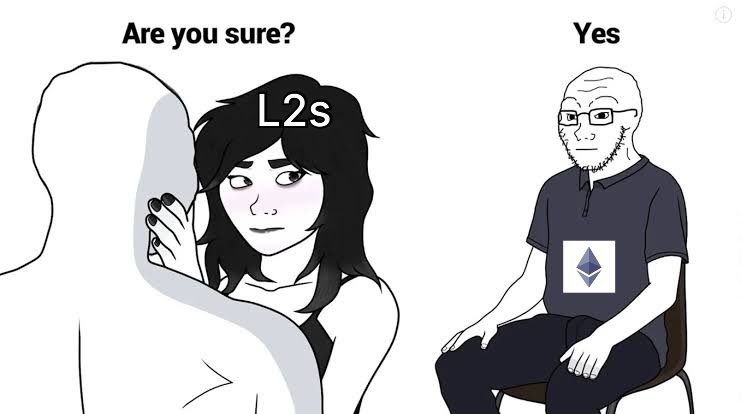
Ethereum's value is leaking to L2s. Rollups extract fees, MEV, and liquidity, while ETH stakers are left behind. If this continues, Ethereum will become a dumb security layer, and L2s will be printing money.
L2s don't need to use ETH as gas, but they do need to pay for Ethereum's security. Right now, they pay almost nothing. That needs to change. Ethereum is not a free lunch. L2s should pay rent.
Last month, Base collected around $2.5 million in fees while paying less than $11,000 to Ethereum. For every dollar Optimism pays to ETH, it earns about $321 from L2 fees. L2 profits are enormous, but ETH sees almost no value in return.
This is insane.
Every rollup should contribute to Ethereum in one of the following ways:
-
ETH staking deposits: L2 sequencers should stake ETH as collateral to participate
-
Settlement fees: a portion of L2 fees should go to Ethereum stakers
-
MEV redistribution: MEV generated by L2s should be routed back to Ethereum
If an L2 doesn't use ETH as gas, it should still be required to either stake ETH or deposit a portion of its token supply into an ETH treasury. This treasury would act as an index of all rollup economies, making ETH the financial layer of the entire L2 ecosystem.
Ethereum validators should protect rollups, not just the L1. L2 sequencers should be required to stake ETH, and restaking should be used to extend Ethereum’s security to all rollups. If L2s want access to Ethereum’s trust, they need to pay for it.
Every L2 needs liquidity for cross-chain asset transfers. ETH should be the default settlement asset for all cross-rollup transactions. Native gas tokens are fine, but ETH needs to become the liquidity layer.
L2s don’t have to be forced into a single model. They can use their own tokens, their own sequencers, and their own economics. But Ethereum must capture value—either through ETH staking, fees, or direct economic alignment with rollup ecosystems.
Right now, Ethereum is subsidizing L2s while L2s extract all the value. This is unsustainable. Either Ethereum enforces adjustments now, or it risks becoming an obsolete security layer for rollups.
Join TechFlow official community to stay tuned
Telegram:https://t.me/TechFlowDaily
X (Twitter):https://x.com/TechFlowPost
X (Twitter) EN:https://x.com/BlockFlow_News
 @0xzak