








CS2 Skins Defy Market Trends: When the "Dragon Sniper" Goes on-chain, Can the NFT Market See Another Summer?
TechFlow Selected TechFlow Selected
CS2 Skins Defy Market Trends: When the "Dragon Sniper" Goes on-chain, Can the NFT Market See Another Summer?
The CS2 in-game item trading system may offer valuable insights for the blockchain industry.
 Navigating Web3 tides with focused insights
Original: msfew
Translation: Yuliya, PANews
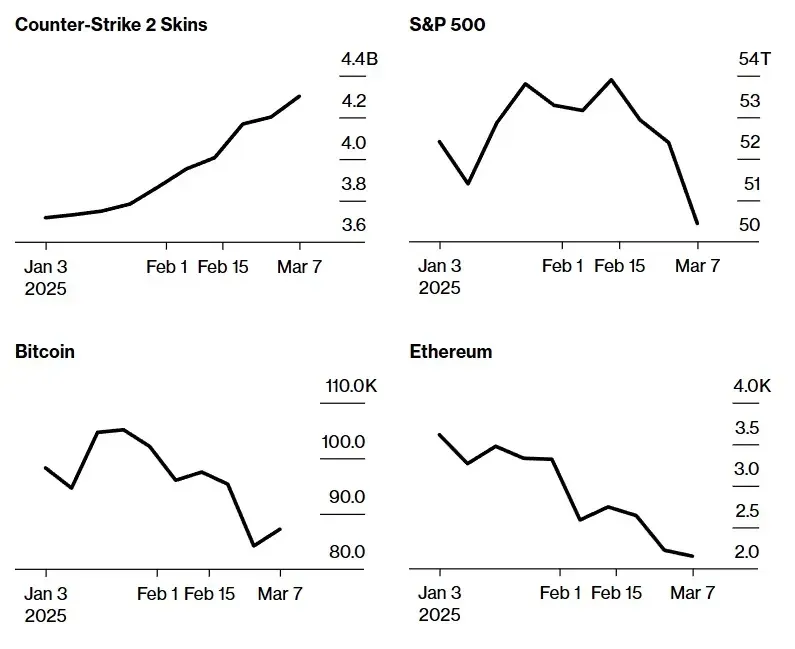
Recently, CS2 in-game item prices have surged significantly, while U.S. stocks and cryptocurrency markets have declined. In contrast, gaming not only brings enjoyment but also creates profit opportunities, whereas crypto trading tends to be mentally exhausting and often leads to losses.
This article explores the characteristics of the CS2 in-game item market through the lens of an experienced CS2 player, analyzing its potential integration with blockchain technology. As a mature digital asset market that has existed for years, the CS2 item trading system may offer valuable lessons for the blockchain industry.
CS2 In-Game Items
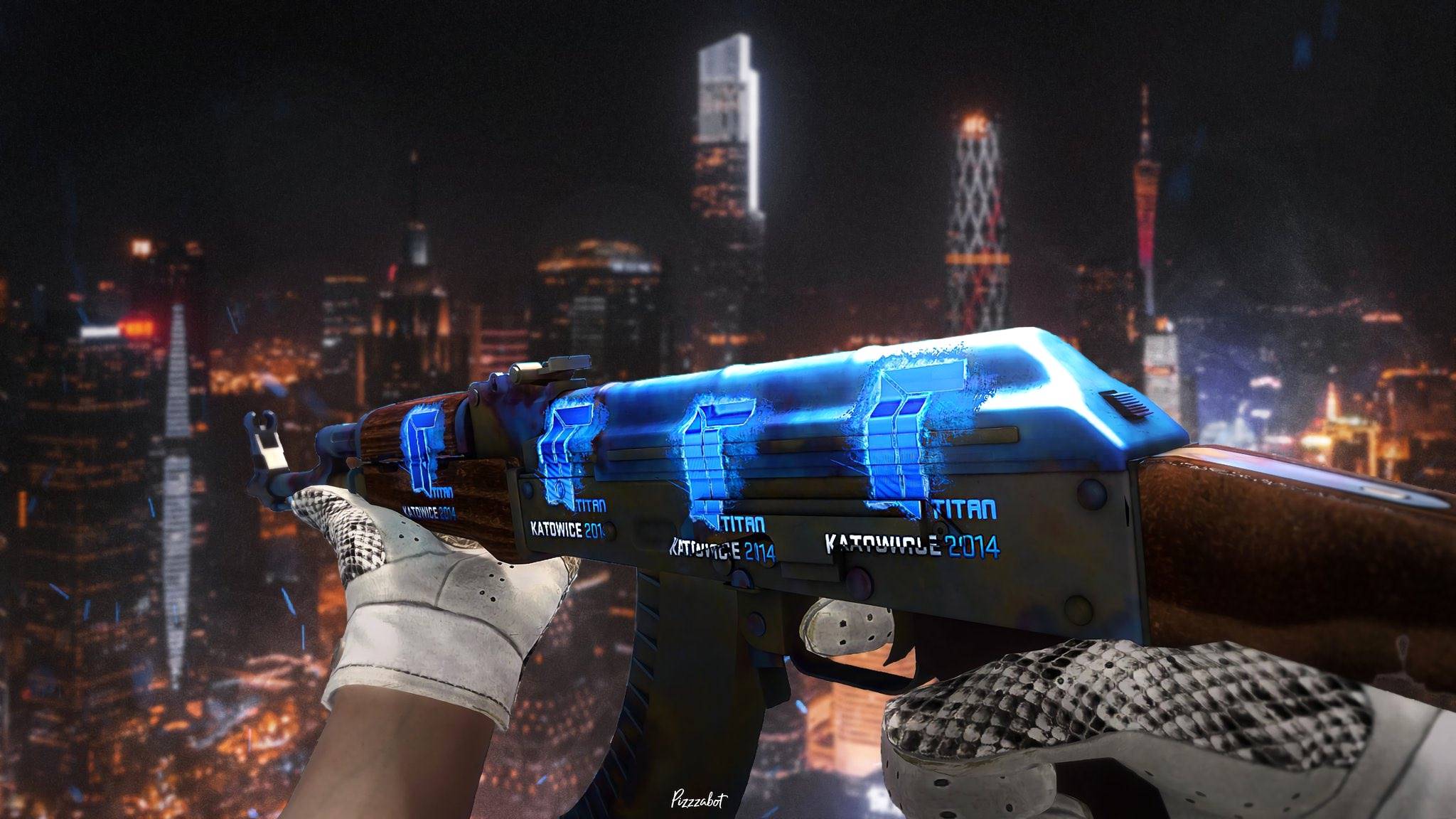
CS2 in-game items share many similarities with NFTs. Each weapon model features different skin designs, categorized by wear level (analogous to NFT rarity) and unique random patterns—such as the all-blue "Fade" AK-47, which can be worth hundreds of thousands of dollars.
In-game items are primarily classified into the following categories:
-
Weapon Skins: The most common type, with prices varying by weapon model and design.
-
Knife Skins: Rare drops; there's a significant visual difference between default knives and skinned ones, leading to higher prices. These are considered "blue-chip" assets.
-
Glove Skins: Rarer and more expensive than knife skins, regarded as high-end collectibles with relatively poor liquidity.
-
Stickers: Highly speculative; some limited-edition stickers (e.g., Titan Holo) can reach prices as high as $60,000.
The primary uses of these items include:
-
Aesthetic Customization: Players obtain items through randomly dropped cases (keys require additional payment to unlock). Most players quickly equip their favorite weapons with skins to avoid using default appearances.
-
Investment Value: Due to scarcity (especially knife skins), prices rise with demand. However, the market suffers from low liquidity and is prone to manipulation (e.g., "pump and dump" schemes on obscure stickers). Compared to the crypto market, CS2 players generally lack investment experience, making them easier targets for exploitation.
-
Trading Instruments: Used as prizes or collateral on gambling platforms.
Trading Model
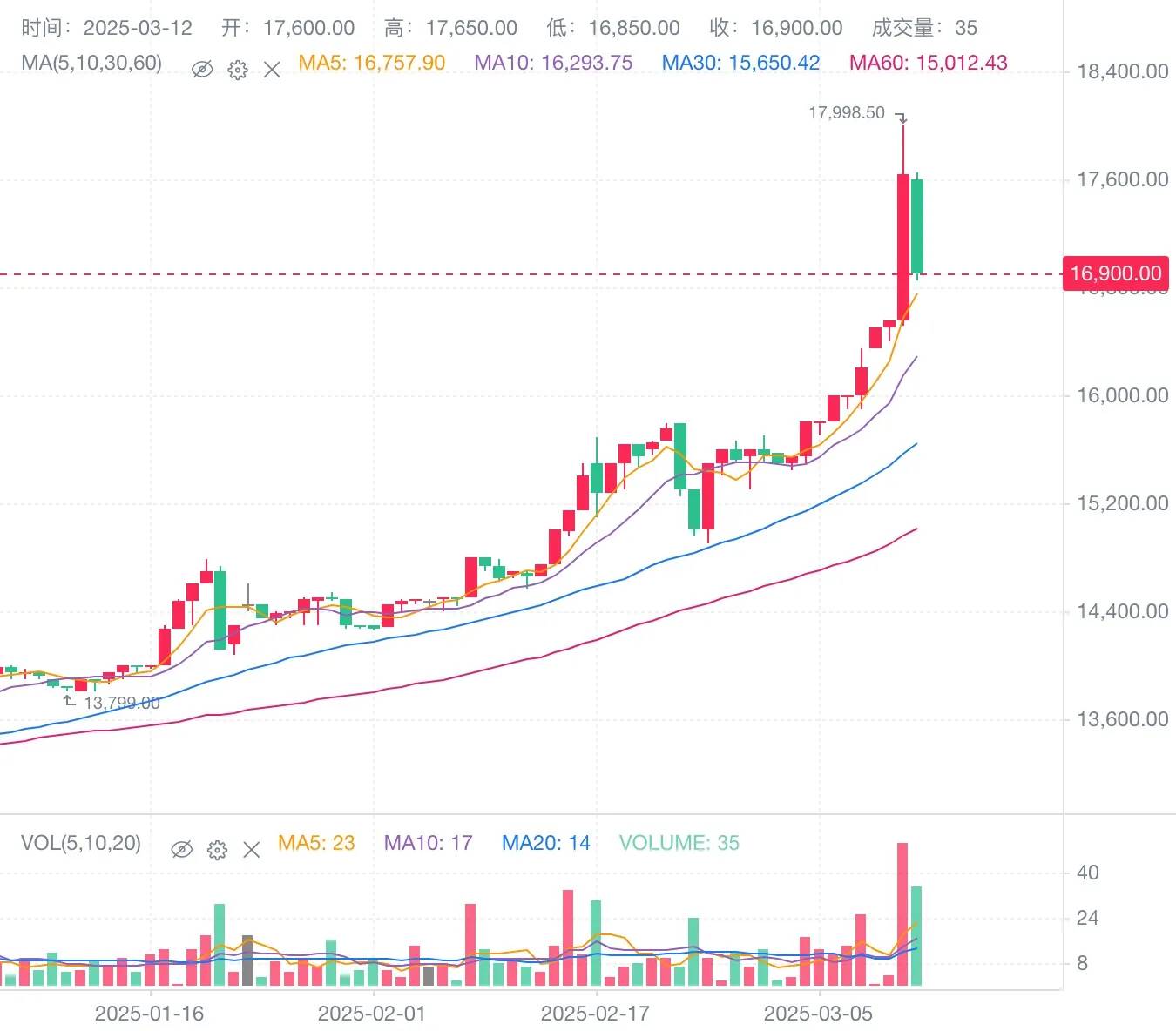
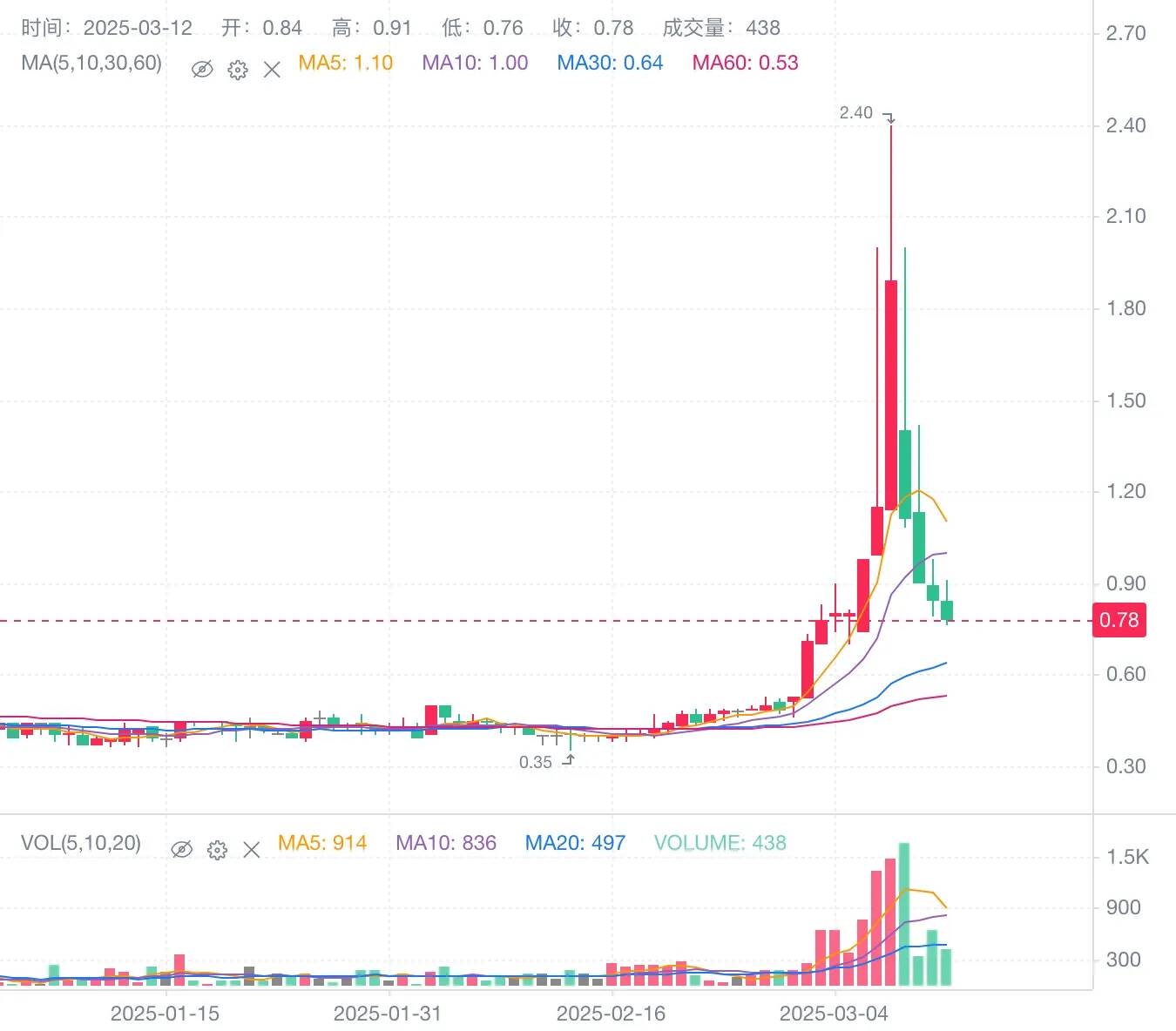
CS2 item trading resembles NFT markets, operating via an order book mechanism. Common strategies include hoarding, hype-building, price pumping, and selling off—price charts even resemble candlestick charts on TradingView. The market relies on continuous inflows of new players and capital, essentially forming a Ponzi-like cycle centered around gaming.
Market participants mainly consist of:
-
Players: Purchase items for in-game use.
-
Investors: Speculate based on market fluctuations.
-
Trading Platforms: Provide trading services (Steam’s official marketplace restricts withdrawals, causing liquidity issues).
-
Streamers/Pro Players: Act as KOLs promoting specific items—e.g., pro player donk buying opponents’ stickers during matches, creating market buzz.
Potential Integration of CS2 Items with Blockchain
1) AMM (Automated Market Maker) for CS2 Items
Interestingly, the original inspiration for AMMs came from Minecraft's HyperConomy in 2012. Currently, CS2 item trading uses an order book model similar to NFT markets, suffering from evident liquidity problems. Many listings go unsold for days, eventually forcing sellers to accept prices below market value, triggering downward price spirals.
To improve trading experience, an AMM mechanism could be introduced:
-
Fully Off-Chain Model: Requires developing a protocol akin to an aggregator, consolidating buy/sell orders across multiple platforms to enhance efficiency. Alternatively, market makers could establish independent pools (similar to Sudoswap). However, this approach depends on centralized market makers and still limits user experience.
-
On-Chain Mapping Model: Drawing from tokenized RWA practices, map items onto the blockchain and use oracles to provide pricing data, then build liquidity pools. Yet, this only optimizes trading experience without truly enabling broader circulation of items.
2) Short Selling and Leveraged Trading
If shorting and leverage were enabled for CS2 items, the market might see more aggressive price movements, while lower-value items could return to fair valuations.
Similar mechanisms already exist in the CS2 ecosystem—for example, rental models where players lease items for 100 days to short them. Additionally, Steam’s 7-day trade hold functions like a European option expiring in seven days. Thus, derivative systems could be designed based on traditional short-selling principles.
The key challenge lies in liquidation mechanisms. Currently, if the market rises, users borrowing items may simply abscond ("rug pull"), leaving platforms to bear losses. This could be mitigated by借鉴 perpetual contracts in crypto: create perpetual contracts pegged to item prices (e.g., “AWP Dragon Lore”), with platforms calculating funding rates at regular intervals to maintain market stability.
3) CS2 Item Index Funds
The CS2 item market naturally lends itself to index fund construction. For instance, indices could be segmented by item category.
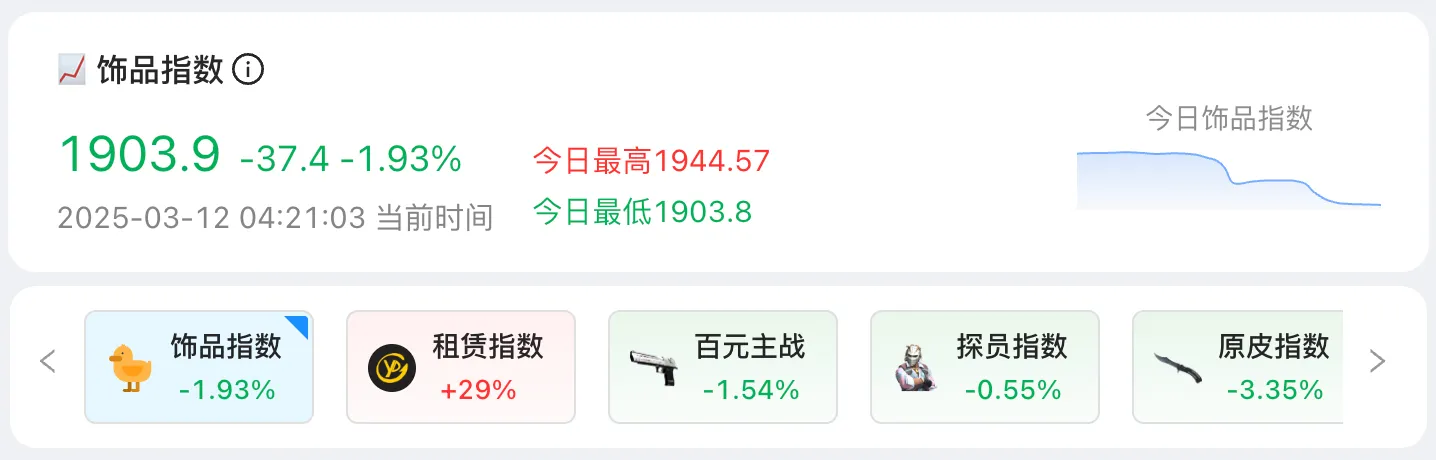
While traditional index fund design is well understood, on the blockchain, DAO-governed funds could allow users to stake high-value items for fund shares, enabling fractional ownership and trading. This would boost market liquidity and open new investment avenues.
4) Infrastructure Development
VC-friendly yet low-revenue opportunities include:
-
Data Analytics: Similar to gmgn.ai, aggregate market transaction data to provide real-time quotes, historical trends, market depth, and support one-click buy/sell functionality—streamlining trades and reducing the need to repeatedly log in to Steam for confirmations.
-
Market Intelligence: Track item holdings and analyze trading behaviors of KOLs and pro players to assist investment decisions.
-
Custody & Security: Establish professional CS2 item custody platforms using multi-signature wallets and cold storage (cold Steam accounts) to secure user assets.
Other directions include API services, insurance platforms, security tools, MEV (miner extractable value)-like front-running mechanisms, and social/community platforms. However, the root cause of inefficient trading remains Steam’s restrictions. Even if on-chain solutions improve user experience, they cannot fundamentally resolve liquidity constraints within the Steam ecosystem.
Additional Key Points (from DeepSeek)
-
Centralization Risk: Although CS2 items resemble NFTs, ownership ultimately resides with Steam, exposing users to risks such as account bans or rule changes (Steam officially opposes NFTs to protect its closed economic model).
-
Regulatory Arbitrage: Some Chinese players theoretically use item trading to circumvent foreign exchange controls. While feasible, practical costs are high, making it unattractive unless there's a clear need for fund laundering.
-
Liquidity Tiering: High-end items (e.g., Dragon Lore AWP, gem-encrusted knives) are primarily traded over-the-counter (OTC), with pricing mechanisms resembling crypto OTC desks. These top-tier items are held by a highly concentrated group of players, mirroring the holder ecosystems of blue-chip NFTs like CryptoPunks.
-
Wear-Level Economics: A "pseudo-mystical" premium exists in the 0.15–0.18 wear range, where slight scarcity drives additional price inflation.
Position Management Is Crucial
The convergence of CS2 items and blockchain might become the only domain where players can proudly say: “I didn’t just defeat my opponent in-game—I also profited by successfully shorting the market!” This delicate balance between gaming and investing is precisely what makes the CS2 item market uniquely compelling.
Yet, whether in gaming or investing, managing your position is paramount. After all, even if you own the flashiest skin, during an eco round you might still find yourself budget-constrained, carefully deciding whether to buy armor. True victory isn't just about profits on paper—it's about the sense of achievement and joy gained through gameplay.
May every player dominate the battlefield and succeed in the market. Now, it's time to put down the analysis and return to the fight.
Join TechFlow official community to stay tuned
Telegram:https://t.me/TechFlowDaily
X (Twitter):https://x.com/TechFlowPost
X (Twitter) EN:https://x.com/BlockFlow_News






