How to hype yourself up during a dull bear market?
TechFlow Selected TechFlow Selected
How to hype yourself up during a dull bear market?
Emotion is the greatest enemy, but persistence is the best strategy.
 Navigating Web3 tides with focused insights
By TechFlow

Time goes on—another March 12 has arrived.
The crypto market always seems to have this trait: bull markets are short and noisy, while bear markets are long, dull, and painfully drawn out.
In this mismatch of timing, most people refuse to take profits, fail to cut losses in time, and can't bring themselves to step away—only to end up emotionally drained, waiting for the next cycle to begin.
If you happened to strongly believe in a certain narrative near the peak of the bull run and got trapped holding bags, you're likely enduring both portfolio pain and emotional fatigue.
People are complicated creatures. Just months ago, you might have enthusiastically talked crypto with anyone who'd listen; now, you've gone cold, silent, distant—like an outsider. You’ve deliberately closed your trading apps, hoard SOL like gold, avoid gambling on meme coins, and act as if nothing interests you anymore.
The bull market is gone, the wealth effect has vanished, and I just can’t get excited anymore.
But ironically, it’s precisely during times like these that you mustn’t completely give up on yourself.
Emotion is your biggest enemy, but persistence is your best strategy.
During the market’s frenzy, you were probably chasing every trend, fully invested, afraid of missing out. But now, in its silence, you have the rare chance to calm down and focus on accumulation.
You should know that if you grow too indifferent during a bear market, voluntarily disconnecting yourself, you’ll gradually numb your sensitivity—and miss those subtle yet critical signals of opportunity.
By the time a new narrative truly emerges, you may find yourself unable to keep up, or worse—scrambling to eat leftovers once again.
Just like when the corruption scandal involving Chinese national football team members was exposed last year, Li Fei, former starting defender for Shenzhen FC, confessed on camera after taking bribes to fix matches:
“As an insider, we had no confidence at all. You’re often playing消极ly. Mentally and physically, you’re completely relaxed, never staying focused enough to properly execute tactics and techniques. And after doing this for too long, when you finally want to tighten up again, you simply can’t.”

Isn’t crypto the same?
If you truly do nothing throughout the bear market, by the time the next bull run arrives, you might find yourself standing outside, watching others celebrate—unable to find your place again.
So what should you actually do?
The answer isn’t complicated. Do complex things simply, and repeat simple things consistently—this is the best survival rule in a bear market.
When the market is quiet, open your tools, check trends, analyze data;
When projects go silent, return to communities, join discussions, seek inspiration;
When your mood dips, record your thoughts, review your trades, challenge your biases.
Every bit of accumulation in a bear market ensures you won’t fall behind when the bull market returns.
Don’t let indifference erode your sensitivity, nor let laziness become the barrier between you and opportunity.
Let’s talk about what you *can* do during a bear market—from market analysis to trend spotting, from community sentiment to personal growth. Hopefully, this helps you find direction during this long downturn. And hopefully, one day in the future bull market, you’ll look back and thank yourself for not giving up.
You Don’t Need to Research Deeply—Just Keep Moving Forward Daily
Sometimes, going to the mall isn’t about buying something specific—it’s just casual browsing.
But if you never go at all, you’ll know nothing about the season’s new arrivals.
Crypto is similar. Often, research isn’t about immediately finding investment targets, but about maintaining market sensitivity.
A bear market is like a quiet shopping season. There’s no rush of crowds fighting over products, but the “new arrivals” launched now often become the hottest items in the next bull run.
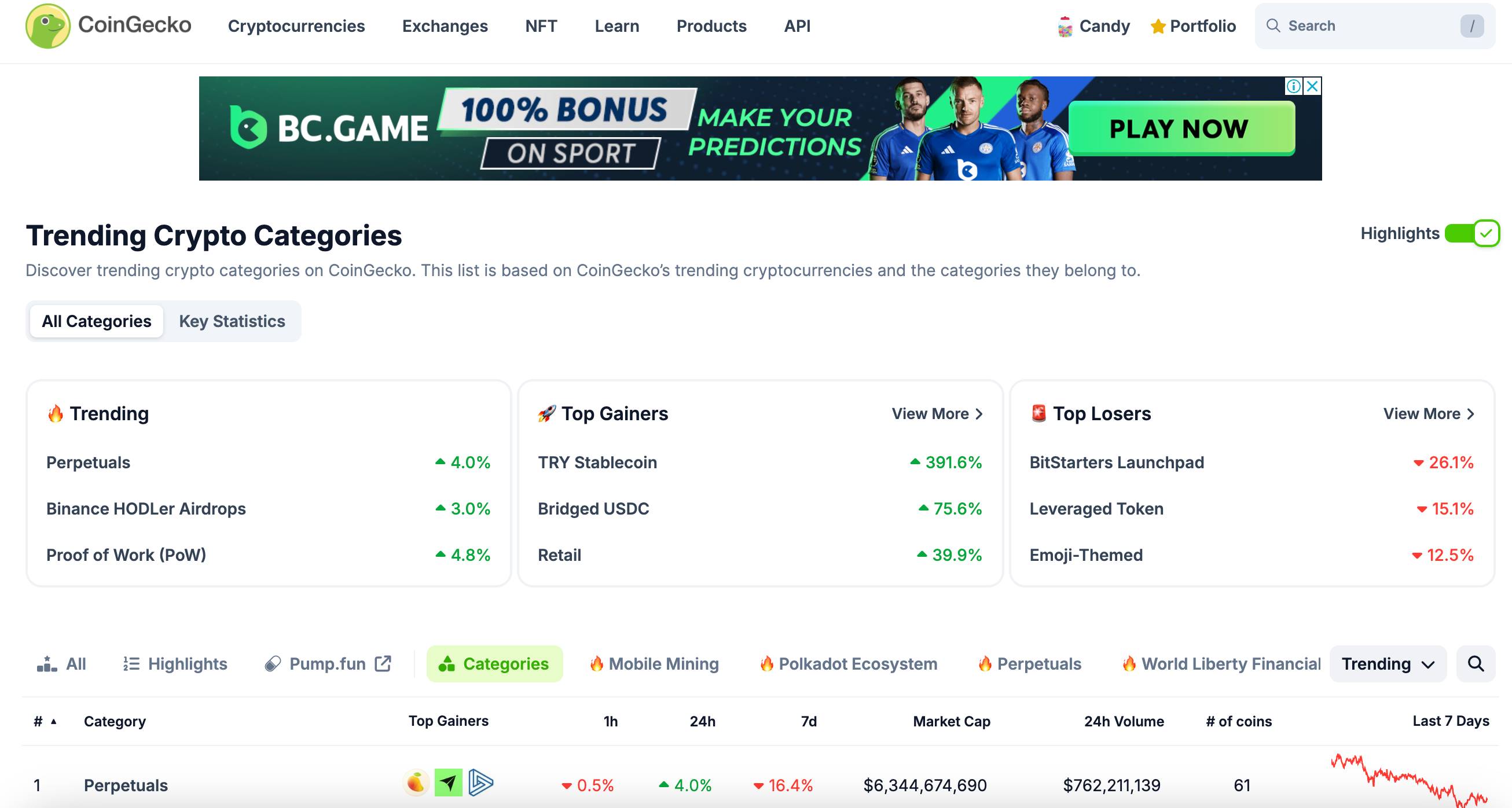
1. Browse Coingecko’s Trending Page Daily
A simple yet effective habit: visit Coingecko’s Trending page every day to see which sectors are currently popular.
On its “Trending” tab, you can spot the most-searched tokens and themes recently.
If a project keeps appearing in searches, there’s likely some event or trend driving attention.
For example, derivatives tools dominating the list lately may signal that capital and interest are shifting back toward the DEX sector.
Browsing daily costs nothing—it’s like scrolling through Weibo or Xiaohongshu.
2. Check GMGN’s DEX Hot Trends
If you want a more granular view—spotting localized hot tokens on-chain—you can use specialized DEX data monitoring sites.
Take GMGN as an example. It tracks liquidity pools across major chains, offering real-time data on trading volume, liquidity, and price volatility—all in Chinese.
Just browse it once a day.
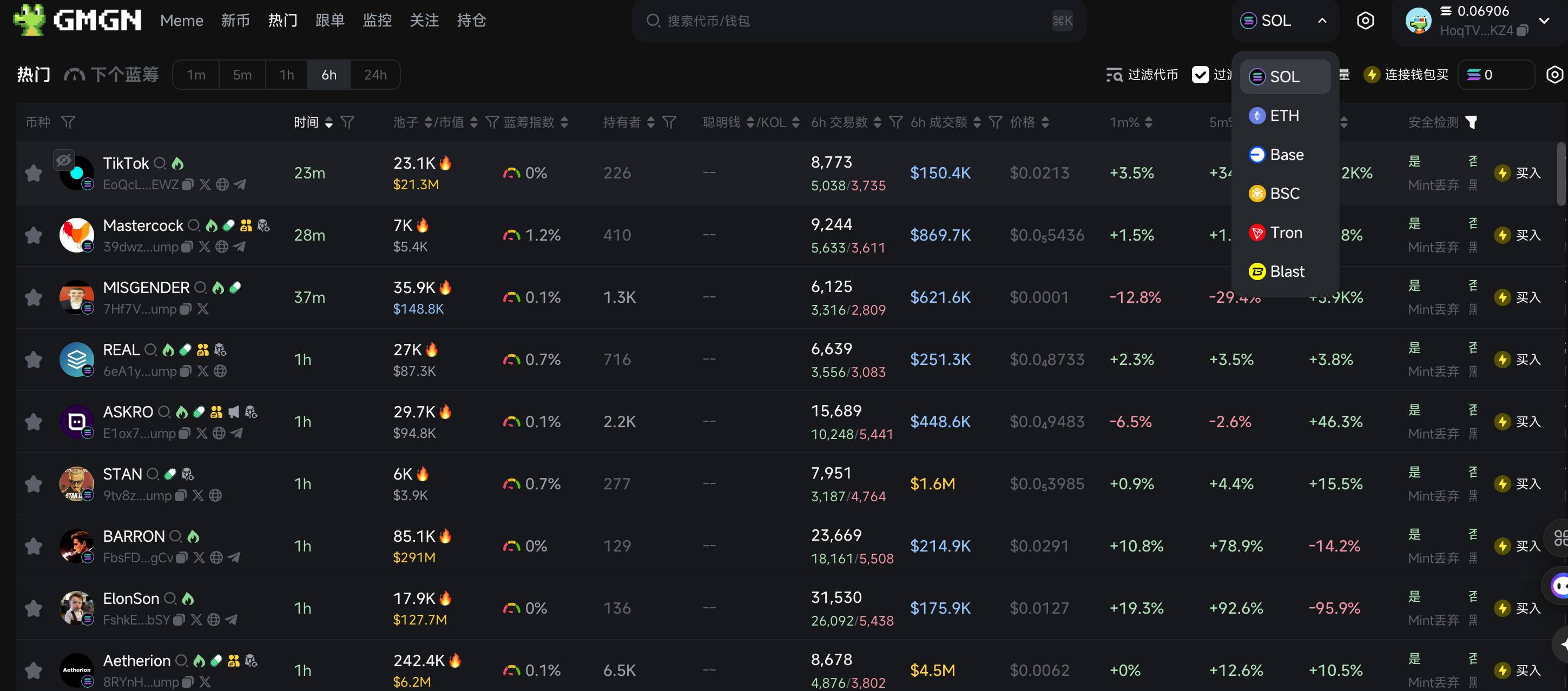
The editor usually checks the top 10 on-chain pools, which easily reveals short-term trends.
For instance, at the time of writing, 7 out of the top 10 on-chain pairs are on Base. Combine that with recent news like Coinbase’s US stock tokenization on-chain and the Doge prototype dog owner adopting a new meme pup—and isn’t it easy to conclude that "Base chain may offer short-term opportunities"?
3. Track Broader Daily Data Indicators
Just as people check weather forecasts to decide whether to wear a coat or change shoes, investors need charts to sense the market’s “seasonal shifts.” In a bear market, daily and weekly charts are your most reliable forecast tools.
For example, the 200 MA (200-day moving average).
The 200 MA is crypto’s “climate line,” representing the long-term trend. Prices below it typically indicate a bear market; a breakout above could signal the start of a bull run. Watching how close prices get to the 200 MA helps identify potential reversal points.
Another key tool: Order Blocks (OBs).
Order blocks are the “footprints” of large players. They often act as key support or resistance zones because institutions or whales tend to accumulate or distribute heavily here. Observing these areas helps anticipate potential rebounds or pullbacks.
Other indicators worth tracking:
-
RSI (Relative Strength Index): Helps identify overbought or oversold conditions—especially useful for spotting short-term bounce opportunities in bear markets.
-
Volume changes: Sudden spikes in volume often signal shifts in market sentiment—perhaps new capital is flowing into a token.
-
Market Structure: By analyzing swings in highs and lows, determine whether the market is trending up, down, or consolidating.
These indicators are readily available on tradingview.com or built into many CEX platforms—no need for hand-holding here.
4. Force Yourself to “Overthink”
Beyond daily browsing, scrolling Twitter or Telegram channels can help—but passive scrolling risks noise overload or getting misled by single posts. You need to actively connect the dots.
Use last cycle’s infrastructure development as a mental model:
-
If an infrastructure project (like zk Rollups) gains traction, consider whether its application layer (e.g., DeFi protocols on zk Rollups) might also benefit.
-
If a Layer 2 project attracts users due to a tech upgrade, related tools—bridges, wallets, DeFi protocols—may also rise.
-
When Ethereum’s liquid staking (LSD) sector took off, investors noticed that LSD-related protocols (such as trading platforms for staking derivatives) surged alongside. This kind of value chain ripple effect is key to catching trends early.
If you struggle to make these connections, focus first on building foundational knowledge—map out the relationships across different sectors.
You can return to CMC or Coingecko, study leading projects in each category, and gradually form a web of understanding.
Talk More, Find Quality Communities
Fighting alone often leads to confusion. Even the so-called “P generals” succeed through collaboration.
Whether you’re a beginner or experienced investor, joining communities brings fresh perspectives to your research and decisions—hence the idea of a “core circle.”
During bear markets, projects need user engagement for marketing purposes. If you join official groups on Discord or Telegram and show genuine interest, competition is far less intense than in bull markets.
Even if you feel like a loser, act like a builder.
How to choose quality groups and communities?
Observe first. Prioritize groups with active moderation, educational content, and meaningful discussion—avoid those flooded with hype and pure speculation.
If it’s purely promotional, you’re likely already late. How many times have we seen communities turn into nothing but pump-and-dump chat rooms before collapsing?
For introverts: don’t fear asking questions—especially about technology, project background, or market trends. After all, it’s not face-to-face; social anxiety is lower. With curiosity and effort, people will remember you.
Keep a Journal—Pen Is Mightier Than Memory
Journals aren’t just for recording life—they’re tools for reflection and growth. For traders, a trading journal is essential for understanding behavioral patterns and identifying areas for improvement.
How to start?
The simplest way: after your daily routine above, spend 10 minutes writing down which projects caught your eye, their sectors, and why you’re interested.
If you can’t write it clearly, you don’t truly understand it. And if you invest without understanding, you might profit—but eventually lose it all back.
Understanding doesn’t guarantee profits, but consistent summarization sharpens your analytical skills. If you can’t write it down clearly, your analysis is flawed.
A practical starting point:
-
Record every trade: entry point, exit point, reasoning, market context, and final outcome.
-
Spend 10 minutes daily noting market observations, emotions, and cognitive biases. For example: “Market sentiment is bearish today, but I noticed increasing capital inflows into certain L2 projects.”
It doesn’t need to be long—just comprehensive enough to reflect your market awareness.
Even the most respected research-driven KOLs rely on this basic discipline. The gap between them and others isn’t genius—it’s consistency. In this grassroots ecosystem, sustained focus and repeated practice in niche areas are what set the best apart.
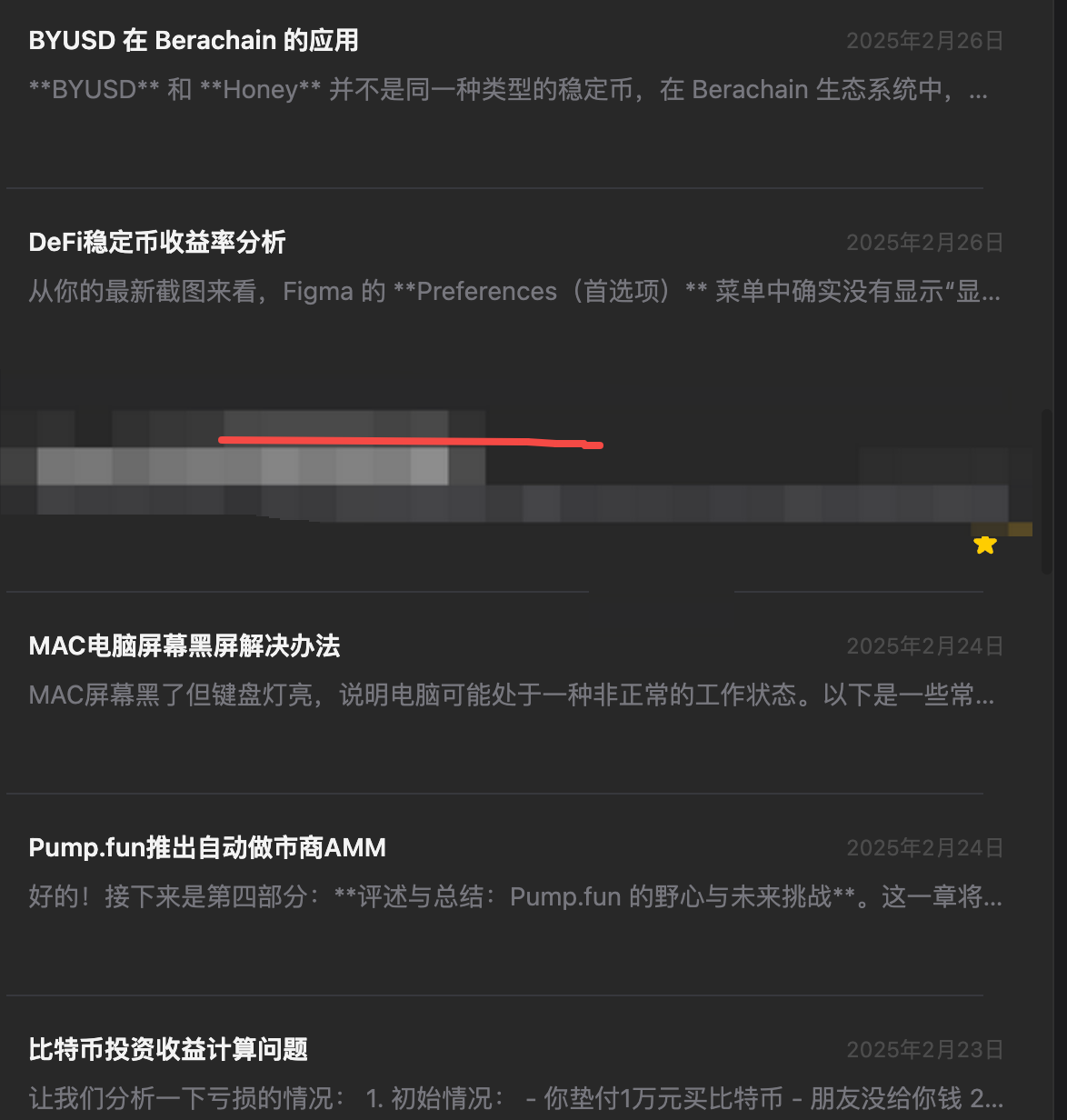
Also, it’s 2025—AI tools are free and abundant. Use them. The barrier to understanding financial terms is crumbling. No concept is too hard, no knowledge out of reach—only execution separates the winners.
Participate Conservatively, Drop Biases
Even in a bear market, if your analysis reveals promising projects, the urge to place a few trades is natural.
Given current liquidity conditions, conservative participation is the safest approach.
In quiet markets, boredom or overconfidence easily leads to reckless trades. That’s why risk management is crucial: set clear entry and exit rules, use stop-loss orders, and only trade with money you can afford to lose.
Still unsure? Do the math: risking no more than 1–2% of your total capital per trade—isn’t that conservative enough?
Additionally, bear markets breed negativity. How do you mentally reframe and self-motivate?
A practical tip: even when the broader market declines, some sectors or projects still perform well. Focus on them. Observe fundamentally sound projects weekly or biweekly, take profits early, or exit promptly.
Again: don’t become an outsider. And never cling to rigid beliefs in a market that flips faster than a page.
For example, if you’re permanently bearish, is opening a low-leverage short position wise?
Clearly not. When signs suggest a bullish shift, your fixed mindset might dismiss everything as “worthless shitcoins,” causing you to stubbornly stay short—and ultimately lose.
Likewise, if you’re overly optimistic about a project, ensure you’re not ignoring its flaws or risks.
Challenge your thinking regularly. If you can’t, ask friends or peers to challenge you. Stay cautious. Stay balanced.
Finally, may you all find your fire again.
Stay active. Stay consistent. Even in the quietest markets, there are always lessons to learn and opportunities to find.
Join TechFlow official community to stay tuned
Telegram:https://t.me/TechFlowDaily
X (Twitter):https://x.com/TechFlowPost
X (Twitter) EN:https://x.com/BlockFlow_News
 深潮TechFlow