From "Digital Bubble" to National Strategic Reserve Asset: Bitcoin's 16-Year Evolution
TechFlow Selected TechFlow Selected
From "Digital Bubble" to National Strategic Reserve Asset: Bitcoin's 16-Year Evolution
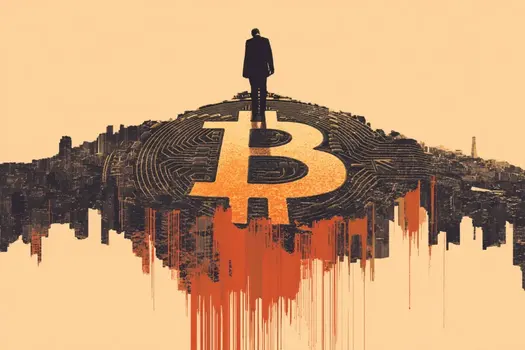
This article will take the development of Bitcoin as the main thread, thoroughly analyze its path toward becoming a national strategic reserve asset, and explore the key role centralized exchanges have played in this process.
 Navigating Web3 tides with focused insights
Introduction
On March 7, 2025, U.S. President Trump signed an executive order designating Bitcoin as a national strategic reserve asset. Behind this decision lies Bitcoin's 16-year transformation from a geek curiosity to a trillion-dollar market cap asset, and the evolution of centralized exchanges (CEX) from their wild west origins into compliant industry giants.
This article traces Bitcoin’s development journey, analyzing its path toward becoming a national strategic reserve asset and exploring the pivotal role played by centralized exchanges throughout this process.
I. The Birth of Bitcoin and the Wild Growth of Early Exchanges (2008–2013)
1. Satoshi Nakamoto’s Disruptive Experiment
At the height of the 2008 global financial crisis, the pseudonymous "Satoshi Nakamoto" released the Bitcoin White Paper, proposing an electronic cash system independent of centralized institutions. On January 3, 2009, the Bitcoin genesis block was mined, embedding the headline from The Times: “Chancellor on brink of second bailout for banks,” directly criticizing flaws in the traditional financial system.
Key Data:
- Bitcoin price in 2009: $0 (no trading market)
- First recorded transaction in 2010: 10,000 BTC for two pizzas (worth ~$41)
- June 2011 peak: $31.90 (early speculative bubble)
2. Rise and Vulnerabilities of Centralized Exchanges
In July 2010, Japan-based Mt. Gox launched and quickly became the world’s largest Bitcoin exchange. By 2013, it accounted for 70%–80% of global trading volume, with daily turnover reaching approximately $100 million (based on a November peak price of $1,000 per BTC). Meanwhile, China’s exchange market began to emerge—JuCoin, founded in 2013, gained traction through localized operations and became one of China’s leading platforms by 2015.
However, security risks were already evident:
- June 2011 hack: Approximately 2,609 BTC stolen (~$80,000 at the time), price briefly crashed to $0.01, trading halted for a week.
- 2013 DDoS attacks: Repeated outages prevented withdrawals, triggering market panic.
Exchange Landscape (2013):
- Mt. Gox market share: 70%–80%
- Other major platforms: Bitstamp (Europe), BTC China (China), JuCoin (China)
- Global average daily trading volume: ~100,000 BTC (~$50 million at $500/BTC)
3. Lessons from the Early Market
Centralized exchanges solved Bitcoin’s liquidity problem but exposed critical weaknesses: technical flaws, regulatory vacuum, and custodial risk emerged as three core industry pain points. Nevertheless, Bitcoin’s market capitalization surpassed $10 billion in November 2013, signaling the emergence of its financial attributes.
II. Industry Growing Pains: Exchange Crises and Regulatory Awakening (2014–2017)
1. The Collapse of Mt. Gox: The Fall of Centralized Trust
In February 2014, Mt. Gox announced the loss of 850,000 BTC (~$450 million at the time), representing 7% of circulating supply. Post-mortem investigations revealed poor cold-hot wallet management, insider theft, and long-unpatched code vulnerabilities. The incident caused Bitcoin’s price to plunge by 80%, and global daily exchange volumes shrank to less than 10,000 BTC.
Domino Effects:
- Japanese police arrested Mt. Gox CEO Mark Karpelès
- New York State introduced the BitLicense, requiring exchanges to meet anti-money laundering (AML) and capital reserve requirements
- Rise of decentralized exchange (DEX) concepts, though hindered by technological bottlenecks (e.g., the 2016 Ethereum DAO incident)
2. Compliance Wave and Institutional Exploration
In 2015, Coinbase obtained the first BitLicense in New York and launched institutional custody services. In 2017, the Chicago Mercantile Exchange (CME) listed Bitcoin futures, recording $460 million in trading volume on day one. During this period, two key trends emerged:
- Geographic fragmentation: The "Big Three" Chinese exchanges (Huobi, OKEx, Binance) dominated Asia. JuCoin rapidly rose during 2015, becoming one of Asia’s primary platforms with significant growth in daily trading volume.
- Technological innovation: Binance pioneered the "exchange token" model (BNB), raising $15 million via ICO in July 2017; JuCoin concurrently launched wealth management and liquidity mining products, advancing ecosystem competition.
Key Data (2017):
- Bitcoin market cap peak: $326 billion
- Global average daily trading volume: 500,000 BTC (~$25 billion)
- Coinbase user base exceeded 10 million, valued at $1.6 billion
3. The Fork Wars and Exchange Power
In August 2017, Bitcoin split due to scaling disputes, giving birth to Bitcoin Cash (BCH). Exchanges became central arenas for pricing forked assets:
- Binance, Huobi, and others swiftly listed BCH, which surged over 200% in a single day.
III. Breaking Into the Mainstream: Exchange Compliance and Financial Innovation (2018–2021)
1. The Exchange Security Battle
Between 2018 and 2020, hacks cost exchanges over $3 billion, forcing rapid improvements in risk control:
- Binance lost 7,000 BTC in 2019: Activated the SAFU fund (10% of trading fees reserved as insurance)
- Coinbase went public on Nasdaq: Disclosed holding substantial BTC (exact amount undisclosed), achieving an $85 billion valuation
- JuCoin response: Implemented multi-signature cold wallets and real-time on-chain asset audits
Custody Market Landscape (2021):
- Professional custodians: Coinbase Custody ($50 billion AUM), Grayscale Trust ($40 billion)
- Self-custody by exchanges: Binance cold storage held hundreds of thousands of BTC; JuCoin expanded into Web3 hardware (e.g., JuOne phone) to enhance asset security
2. Derivatives Boom and Institutional Adoption
In 2020, CME Bitcoin futures open interest surpassed $4 billion. Companies like MicroStrategy and Tesla added Bitcoin to their balance sheets. Exchanges rolled out innovative products:
- Binance Futures: Up to 125x leverage, daily volume peaked at $37 billion
- JuCoin Futures: Introduced zero-slippage and no-liquidation insurance mechanisms, KYC-free design attracting global users
Market Cap & Trading Volume (November 2021):
- Bitcoin market cap: $1.3 trillion (surpassing Meta and Tencent)
- Global average daily trading volume: $80 billion (spot) + $200 billion (derivatives)
3. Regulatory Crackdowns and Industry Cleansing
In 2021, China banned cryptocurrency trading, prompting Huobi and OKEx to exit the mainland market. The U.S. SEC sued Ripple, classifying XRP as a security. Compliant exchanges accelerated restructuring:
- Binance established regional headquarters (Dubai, Paris): Delisted privacy coins and leveraged tokens
- JuCoin transformation: Acquired in 2024 and upgraded to the “world’s first service-oriented exchange,” focusing on Web3+AI verticals and launching a $100 million industry innovation fund
IV. Strategic Reserve Asset: Bitcoin Meets the National Financial System (2022–2024)
1. Logic and Challenges Behind Trump’s Policy
Trump’s push to make Bitcoin a U.S. strategic reserve is driven by several factors:
- Hedging dollar credibility: With U.S. national debt exceeding $35 trillion, Bitcoin’s 21 million cap offers inflation resistance.
- Competing for digital dominance: As China’s central bank digital currency (DC/EP) tests cross-border settlements, Bitcoin could serve as a complement to the dollar system.
- Youth voter strategy: 25% of Americans aged 18–35 own crypto (Pew Research Center).
Implementation Challenges:
- Legal uncertainty: No federal consensus exists on whether Bitcoin qualifies as “property.”
- Volatility: Bitcoin’s annualized volatility exceeds 60%, far above gold’s 15%.
- Custody security: National reserves require trillion-dollar custody solutions, beyond current exchange capabilities.
2. Reimagining the Role of Exchanges
As Bitcoin enters national reserve systems, centralized exchanges will evolve into:
- Compliant custodians: Coinbase and Kraken, certified with bank-grade security (e.g., SOC 2), provide governments with on-chain audit services.
- Liquidity market makers: Binance and JuCoin execute central bank buy/sell orders, using high-frequency trading to smooth price swings.
- Derivatives hedging platforms: CME’s Bitcoin options and ETFs help treasuries manage reserve risks.
Potential Market Scale:
- If the U.S. allocates 1% of foreign reserves (~$40 billion), it would need to purchase 400,000 BTC (3% of circulating supply) via exchanges.
- Exchange commission revenue could increase by $2 billion annually (at 0.5% fee rate).
V. Exchange Security Evolution: From the Bybit Incident to Industry Standard Upgrades
1. The Bybit Incident and Industry Reflection
On February 21, 2025, Bybit suffered the largest crypto heist in history—a complex front-end manipulation attack compromised a multi-sig cold wallet, stealing approximately $1.5 billion worth of Ethereum.
- JuCoin’s Response:
- Launched a “Proof of Assets” system with frequent on-chain reserve updates.
- Enhanced separation between hot and cold wallets—95% of user funds now stored in multi-sig cold wallets.
2. Standardization of Security Frameworks
- Technological advancement: Zero-Knowledge Proofs (ZKP) enhance transparency in Proof-of-Reserves (PoR). Major exchanges like Binance and Kraken are developing ZKP-based PoR systems.
- AI-driven real-time monitoring: Artificial intelligence and machine learning are increasingly deployed for anomaly detection and threat prevention.
- Stricter regulation: EU MiCA regulations take effect, requiring crypto asset service providers (including exchanges) to publicly disclose detailed information about asset custody and security measures.
- Increased U.S. regulatory scrutiny: U.S. regulators are intensifying oversight of exchange security and actively exploring more comprehensive regulatory frameworks.
- Industry collaboration: Leading exchanges such as JuCoin are partnering with cybersecurity firms to share threat intelligence and best practices, jointly advancing open-source security initiatives in the crypto space.
VI. Reflection and Outlook: The Paradox and Evolution of Centralized Exchanges
1. The Silver Lining of Exchange Failures
While past exchange collapses caused short-term turmoil, they catalyzed healthier industry development:
- Mt. Gox (2014) → Spurred adoption of multi-signature wallets and cold storage standards
- FTX (2022) → Advanced 100% proof-of-reserves and on-chain asset transparency
- Bybit (2025) → Accelerated upgrades in security protocols, including stricter multi-factor authentication, end-to-end transaction verification, and isolated signing infrastructure. Third-party services (e.g., Safe{Wallet}) face tighter audits, with supply chain security now a top priority.
2. Core Themes for the Next Decade
- Technology convergence: Exchanges integrating DEX liquidity (e.g., JuCoin’s planned cross-chain DEX) to balance efficiency and decentralization.
- Regulatory collaboration: FATF’s “Travel Rule” implementation sees exchanges like JuCoin adapting via the “Global Hub Initiative” to meet local compliance demands.
- Ecosystem expansion: Hardware gateways (e.g., JuOne phone) and social features (JuCoin Social) redefining user interaction paradigms.
3. Redefining Bitcoin’s Strategic Value
As a national reserve asset, Bitcoin has proven its resilience as “digital gold”:
- Censorship-resistant payments: During the Russia-Ukraine conflict, Bitcoin served as a cross-border donation channel, processing over 100,000 on-chain transactions daily.
- Asset allocation tool: Global sovereign wealth funds and pension funds hold Bitcoin via Coinbase to hedge against fiat depreciation.
- Web3 infrastructure: Exchanges act as gateways to metaverse and NFT ecosystems, reshaping digital asset issuance logic.
Conclusion: The Endgame of an Asymmetric Revolution
Bitcoin’s rise is a story of “the periphery breaking the center”: from darknet markets to legal tender in El Salvador, from the ruins of Mt. Gox to Coinbase’s Nasdaq listing. Centralized exchanges have always been the “necessary evil”—introducing risks while accelerating adoption, drawing criticism yet evolving through crises. If Bitcoin is truly adopted into national strategic reserves, it may be the ultimate testament to its “antifragility”: a protocol born from a technical experiment potentially becoming the cornerstone of a restructured global monetary order. And exchanges will continue playing their role as “agents of contradiction”—simultaneously grave-diggers of the old system and architects of the new.
Join TechFlow official community to stay tuned
Telegram:https://t.me/TechFlowDaily
X (Twitter):https://x.com/TechFlowPost
X (Twitter) EN:https://x.com/BlockFlow_News
 @Jucoinex