








A Deep Dive into Seven Yield-Generating Stablecoins: Risks, Returns, and Market Trends
TechFlow Selected TechFlow Selected
A Deep Dive into Seven Yield-Generating Stablecoins: Risks, Returns, and Market Trends
Each of these stablecoin protocols—Ethena, Resolv, Sky, Frax, Usual, Ondo, and Level—employs a unique mechanism to generate yield.
 Navigating Web3 tides with focused insights
Author: Nemi
Translation: Luffy, Foresight News
Ethena popularized the concept of yield-bearing stablecoins through sUSDe, generating widespread interest but also criticism due to counterparty risk or negative funding rate exposure. Despite these concerns, USDe's market cap has reached $5.8 billion, demonstrating strong product-market fit and proving its potential for scale within the crypto ecosystem.
The success of sUSDe has paved the way for a new generation of yield-generating stablecoins that employ different mechanisms to generate returns, each offering unique risk-return profiles. This diversity creates opportunities for capital allocation—whether through risk management or optimizing returns based on market conditions.
Each of the stablecoin protocols—Resolv, Sky, Frax, Usual, Ondo, and Level—employs a distinct mechanism to generate yield. In this article, we explore how they operate, their associated risks, and potential returns.
Ethena’s sUSDe
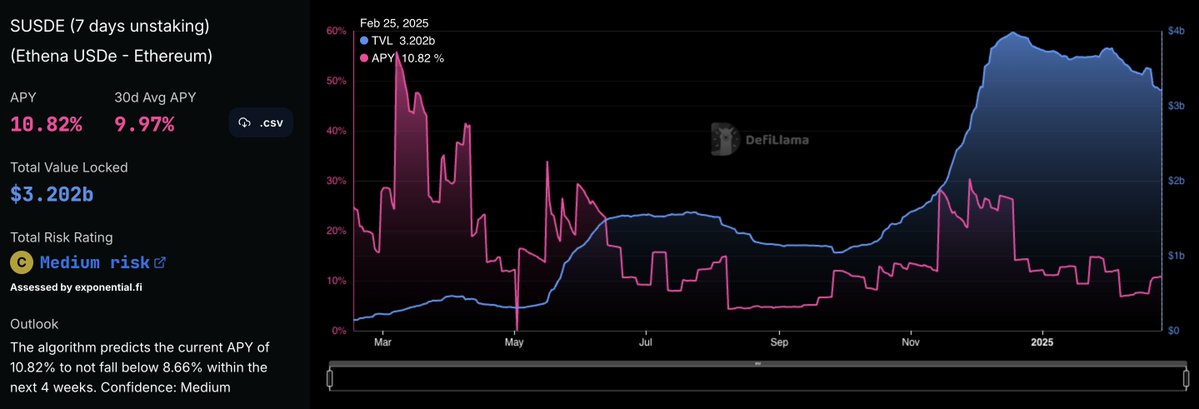
Historical annualized yield of sUSDe
Ethena's sUSDe is the yield-accruing version of USDe, delivering a wide range of yields since launch—from a low of 4.3% to a high of 55.8% APY.
USDe maintains its dollar peg through automated delta-neutral hedging, ensuring that price fluctuations in the underlying assets are offset by corresponding changes in hedges. Since these assets can be perfectly hedged with equivalent short positions, USDe operates at a 1:1 collateral ratio without requiring over-collateralization.
sUSDe is the yield-bearing form of USDe, where users stake USDe to earn yield. Ethena generates revenue primarily from short positions in perpetual futures contracts, which collect funding rates on exchanges. Additionally, staking rewards from stETH provide an extra source of yield for sUSDe.
In 2024, Bitcoin averaged a funding rate of 11%, while Ethereum averaged 12.6%, enabling sUSDe to achieve an average annualized yield of 18%.
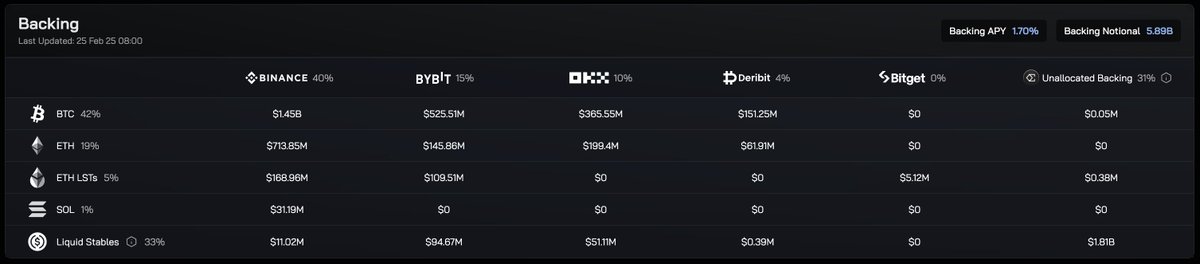
USDe collateral composition
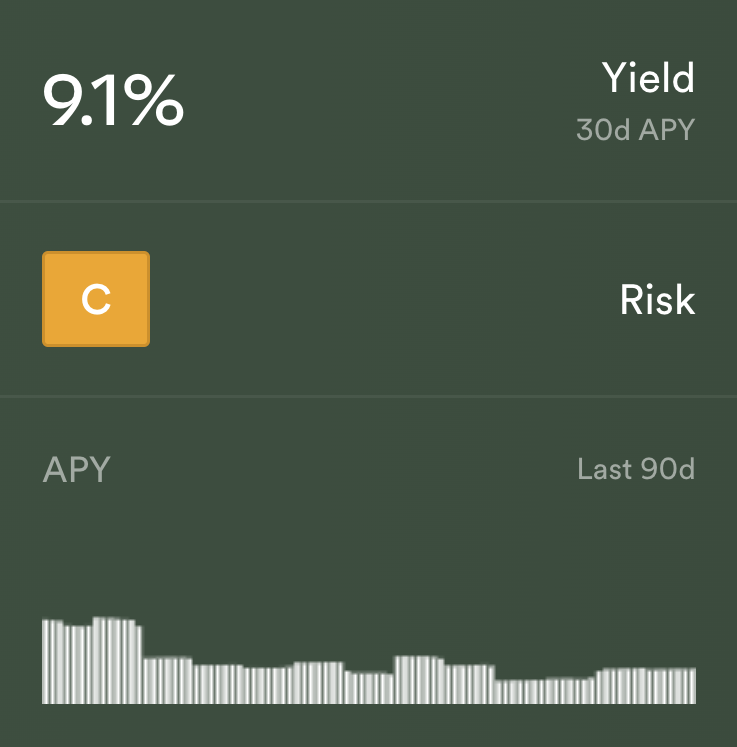
As of now, sUSDe offers a 10.82% yield, and Ethena holds a “C” risk rating on exponential.fi:
-
Low collateral risk, primarily due to reliance on liquid staking derivatives (LSDs).
-
Significant dependence on off-chain computation, introducing additional complexity.
-
Reliance on proof-of-stake (PoS) validators introduces potential slashing risks, which could lead to partial loss of staked assets.
Notably, following the Bybit hack incident, Ethena responded transparently by ensuring USDe remained over-collateralized, with its backing assets securely held in custodial solutions outside exchanges.
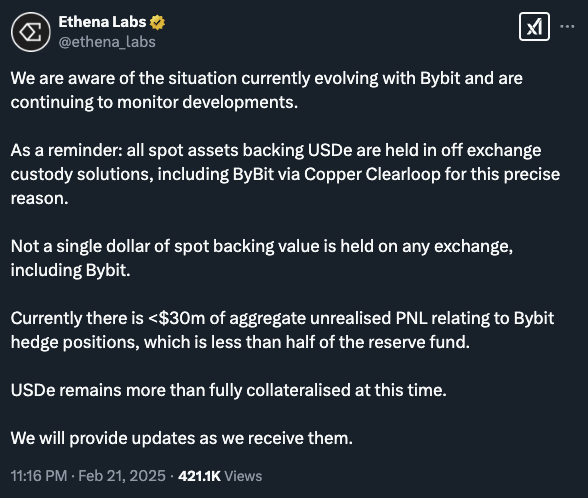
To ensure transparency, Ethena conducts monthly custodial snapshots clearly showing the status of USDe’s backing assets. The snapshot report as of January 30, 2025, showed:
-
USDe supply: $5.739 billion
-
Copper custodied assets: $2.573 billion
-
Ceffu custodied assets: $3.045 billion
-
Cobo custodied assets: $5.08 million
-
Coinbase Web3 Wallet assets: $100 million
-
Assets in minting/redemption process: $30 million
-
Total backing assets: $5.753 billion
-
Reserve fund: $60.41 million
-
Total backing assets including reserve fund as % of USDe: 101.30%
This further reinforces USDe’s over-collateralized position and Ethena’s commitment to transparency.
Sky’s sUSDS
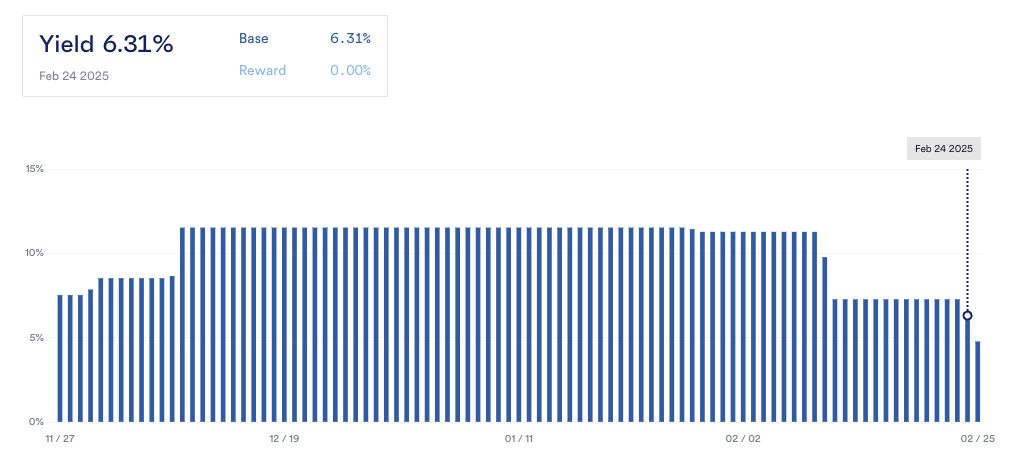
sUSDS returns
Sky Protocol (formerly MakerDAO) offers a 6.5% yield via its Sky Savings Rate (SSR) module. Users can stake USDS to receive sUSDS, which automatically accrues value over time.
Collateral & Security
USDS is backed by a mix of crypto assets (ETH, wstETH, WBTC) and real-world assets (RWAs) such as U.S. Treasuries, with a collateralization ratio of 229.6%, indicating high security.
Yield Sources
sUSDS yield comes from multiple sources:
-
Stability fees from lending: Borrowers of USDS pay stability fees, which are redistributed to sUSDS holders.
-
Liquidation fees: Fees generated from liquidating undercollateralized USDS loans are partially distributed to sUSDS holders.
-
RWA investments: The protocol earns income by investing in Treasuries and high-yield bonds, boosting the Sky Savings Rate.
Risk Profile
Sky holds a “B” risk rating on exponential.fi, with most risks tied to systemic vulnerabilities in underlying blockchains, protocols, or assets.
By holding sUSDS, users gain exposure to diversified yield mechanisms, enabling steady value accumulation over time.
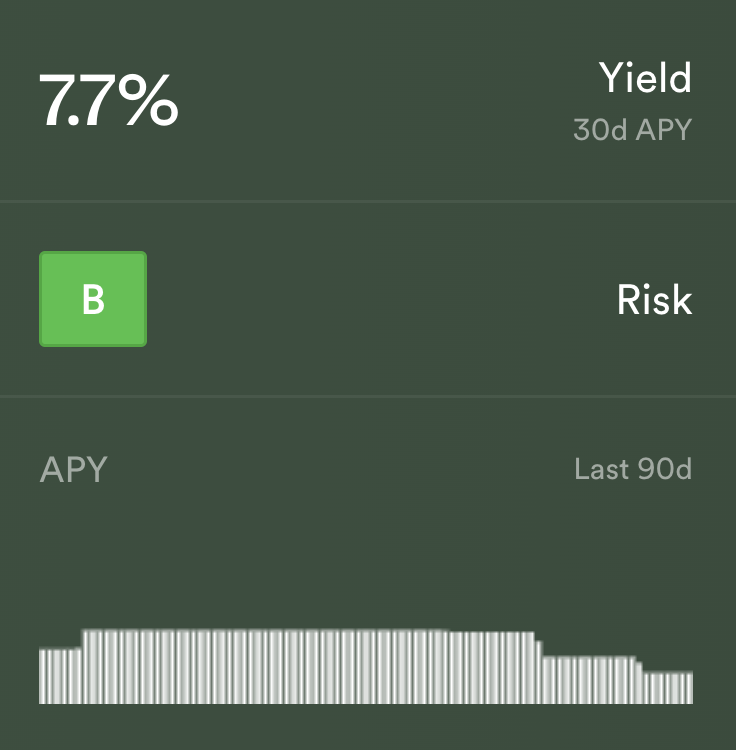
Usual’s USD0++
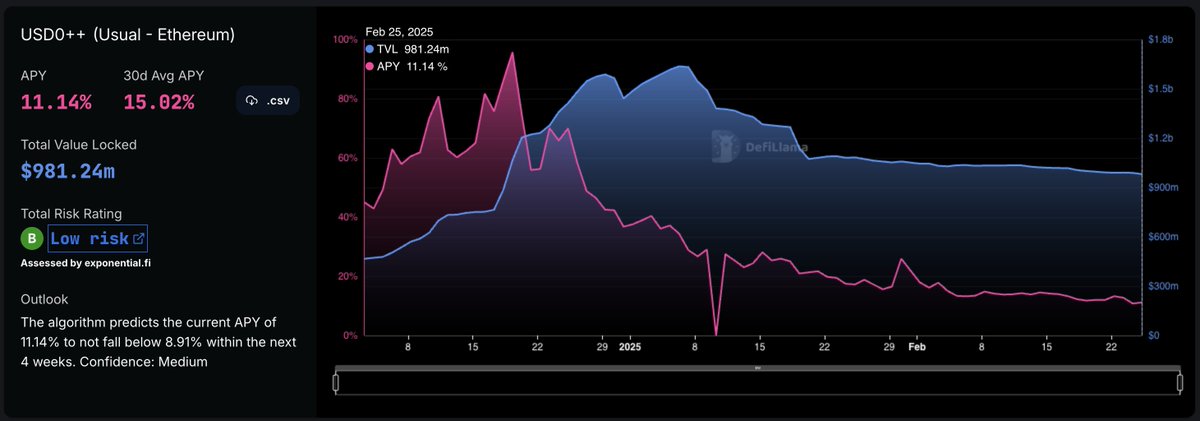
Historical annualized yield of USD0++
Usual gained significant market attention last December but lost user trust after abruptly changing USD0++’s redemption ratio from 1:1 to 0.87:1.
How USD0 and USD0++ Work
-
USD0: Usual’s first liquidity deposit token (LDT), fully backed 1:1 by ultra-short-dated real-world assets.
-
USD0++: A staked version of USD0 with a 4-year lock-up period, functioning as a liquidity staking token (LST). It distributes yield via daily coupon payments in USUAL tokens. Yield varies with the market price of USUAL, though USD0++ guarantees a minimum yield equivalent to the risk-free rate.
Yield and Risk Considerations
-
At the time of writing, USD0++ offers an 11.14% yield, peaking at 95.7% APY on December 19, 2024.
-
However, the lock-up structure and dual-exit mechanism introduce liquidity and price stability risks.
-
As a result, exponential.fi assigns Usual a “B” rating, highlighting potential concerns around accessibility and price stability.
While USD0++ offers competitive returns, its complex structure and recent redemption ratio change have raised concerns about liquidity risk and protocol stability.
Frax Finance’s sfrxUSD
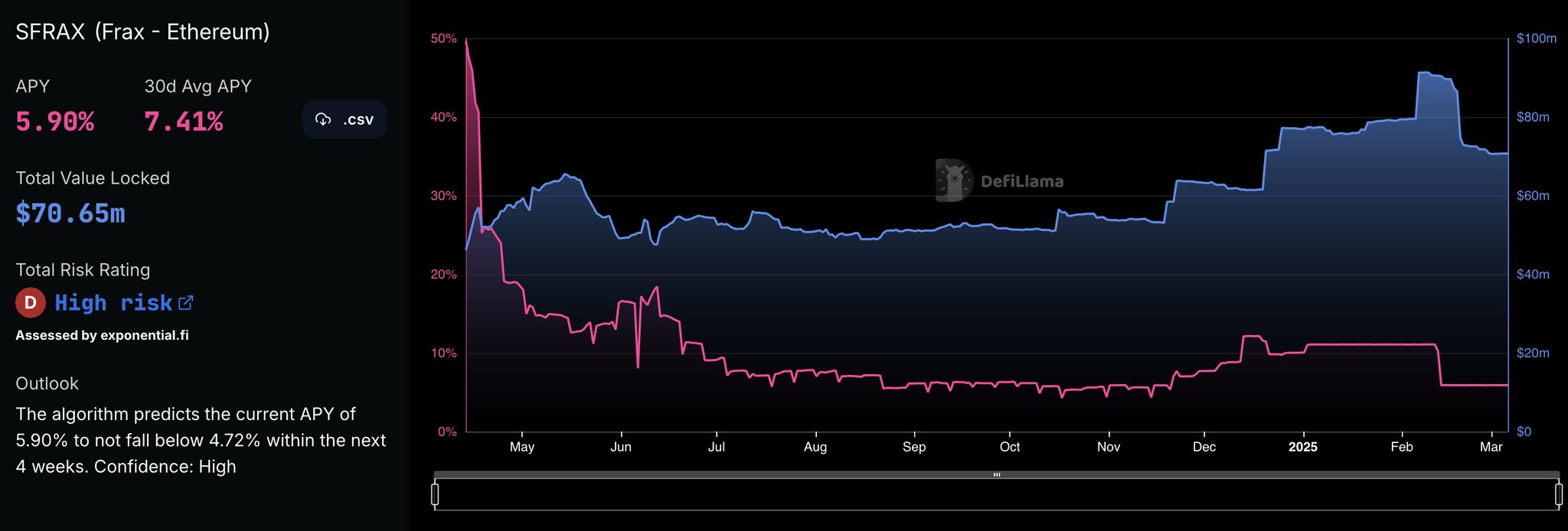
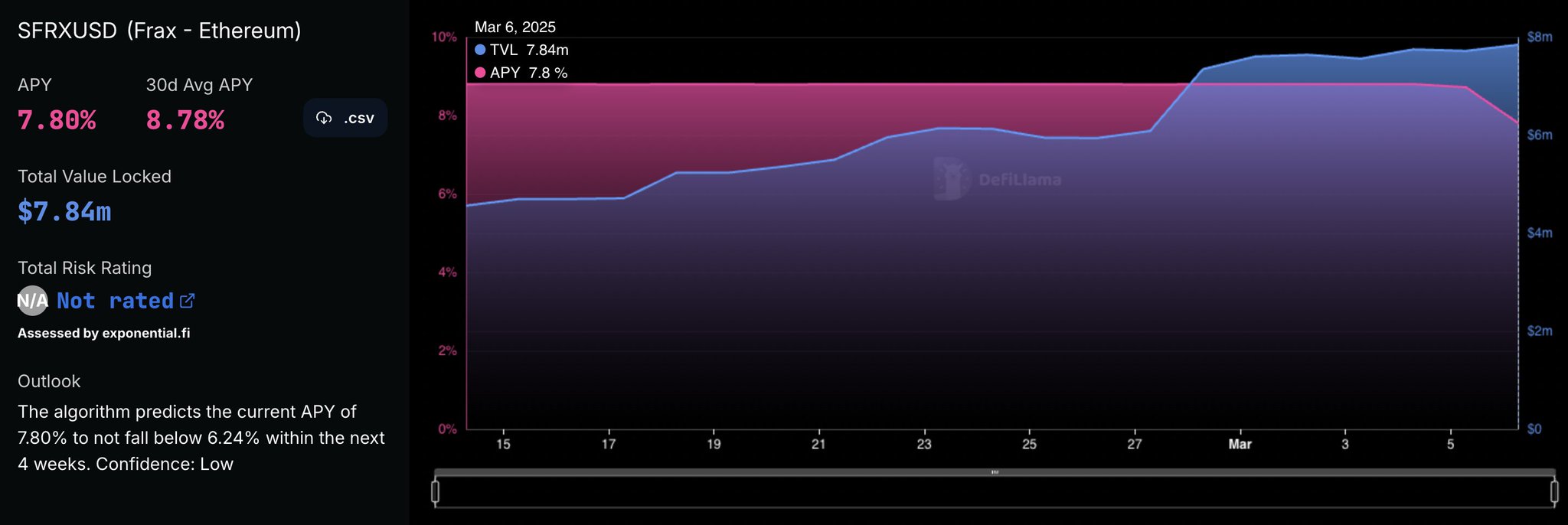
Historical yield of sfrxUSD (formerly sFRAX)
Frax Finance is a decentralized finance (DeFi) protocol that pioneered a partially algorithmic stablecoin model, aiming to create a scalable and decentralized stablecoin ecosystem.
Key Components of Frax
-
frxUSD Stablecoin: Initially a hybrid model, frxUSD was partly backed by collateral (e.g., USDC) and partly algorithmic. Over time, it transitioned into a fully collateral-backed stablecoin relying on on-chain assets for stability.
-
Frax Shares (FXS): Governance and value accrual token of the Frax ecosystem.
-
Price Stability Mechanism: frxUSD maintains its $1 peg through collateral reserves, algorithmic controls, and diversified revenue streams.
Yield Generation
sfrxUSD (staked frxUSD) generates yield by leveraging Frax Finance’s native yield sources—primarily Frax Bonds (FXBs) and the Frax Lending AMO. The protocol stakes frxUSD in FXBs, which offer fixed returns, and deploys funds into lending markets like Fraxlend, Aave, and Compound to earn interest.
Additionally, Frax’s treasury management optimizes stablecoin reserves and yield strategies, ensuring sustainable returns. As an elastic supply asset, sfrxUSD increases in value relative to frxUSD over time, allowing holders to passively earn yield while maintaining composability across DeFi integrations.
Security and Stability
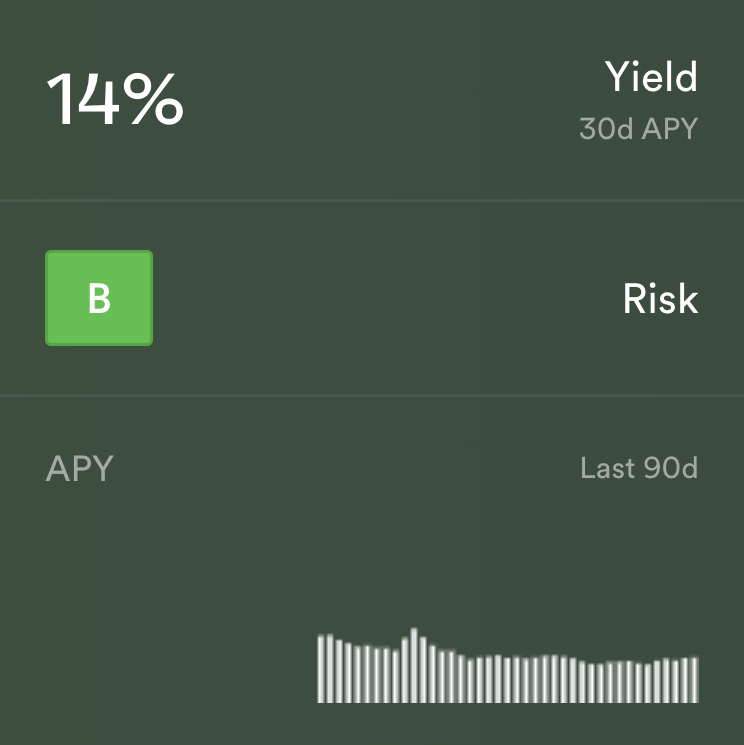
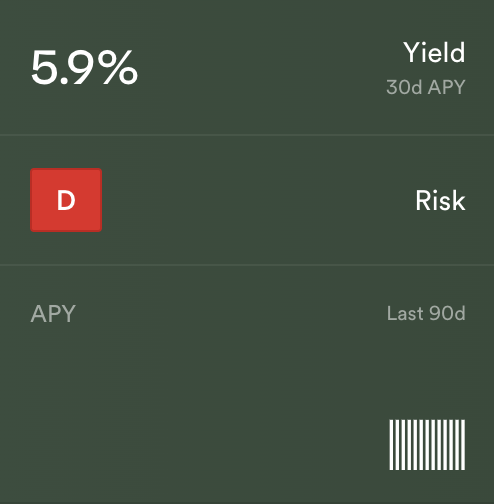
Despite a “D” rating on exponential.fi, the protocol implements robust risk controls to mitigate threats such as oracle price manipulation and negative feedback loops.
Frax actively manages yield optimizers and conducts open market operations to regulate frxUSD supply, ensuring its $1 peg even during market volatility. Currently, sfrxUSD offers an 8.80% yield.
Resolv’s USR
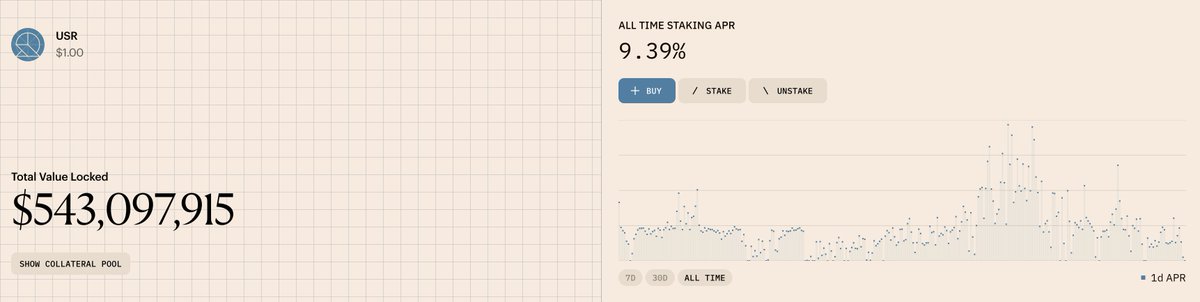
Resolv also employs a delta-neutral strategy to generate yield
USR is a stablecoin designed to be independent of real-world asset risks, using crypto-native money markets to generate yield. Unlike traditional stablecoins, USR is backed by ETH and its derivatives, employing a delta-neutral strategy to hedge against crypto market volatility.
However, given the inherent risks of delta-neutral strategies, Resolv introduced a scalable tokenized protection layer—the Resolv Liquidity Pool—which absorbs these risks while providing leveraged yield farming opportunities.
Key features of USR and Resolv:
-
ETH-backed stability: Fully collateralized by ETH and liquid staking tokens (LSTs), with price volatility hedged via perpetual futures shorts.
-
Minting and Redemption: Users can mint or redeem USR 1:1 using liquid staking assets, ensuring seamless access and stability.
-
Resolv Liquidity Pool: An over-collateralized insurance pool enhancing long-term stability and risk protection.
-
Staking and Yield: While USR itself does not accrue yield, users can stake USR to earn returns via stUSR, currently offering a 5.74% APY for 7-day staking.
By integrating robust modeling and a dedicated insurance pool, Resolv ensures security, flexibility, and resilience in volatile markets, making USR a stable, reliable, and efficient medium of exchange in decentralized finance.
Ondo’s USDY
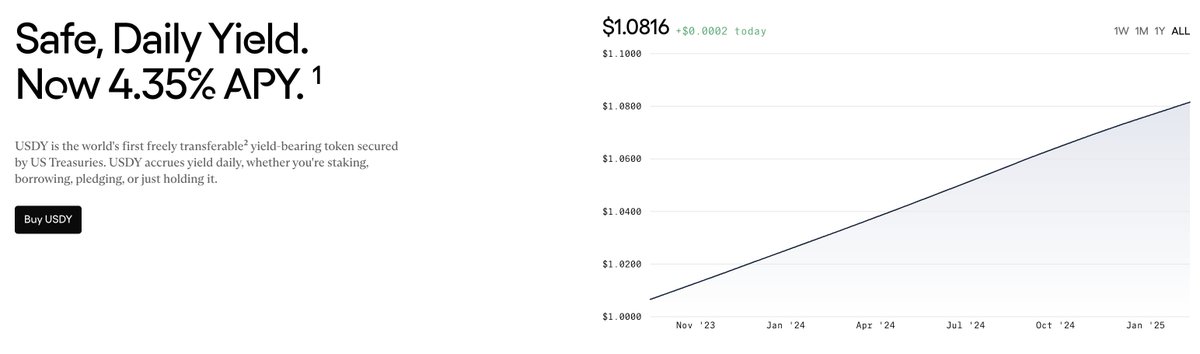
USDY offers a 4.35% yield
Ondo Finance’s USDY is a tokenized secured note backed by short-term U.S. Treasuries and bank deposits. It aims to combine the accessibility of stablecoins with high-quality, yield-generating assets, offering non-U.S. investors a compliant way to access dollar-denominated returns.
Collateral & Security
USDY is backed by:
-
Short-term U.S. Treasuries: Highly liquid, low-risk government securities.
-
Demand bank deposits: Enhance liquidity for timely redemptions.
-
Bankruptcy-remote structure: USDY is issued by Ondo USDY LLC, a legal entity separate from Ondo Finance, ensuring token holders are the sole creditors in case of financial distress.
Yield Generation
USDY generates yield from short-term U.S. Treasuries, delivering returns above 4%. Yields accrue automatically, with no manual claiming required. USDY exists in two forms: an accruing version (USDY), where the price per token rises with accumulated yield; and an elastic supply version (rUSDY), which maintains a $1.00 peg but increases the holder’s token balance to distribute yield. For example, if USDY’s price rises from $1.00 to $1.01, rUSDY holders receive more tokens rather than seeing a price change.
Level’s slvlUSD
Translator’s note: The author of this article works at Level.
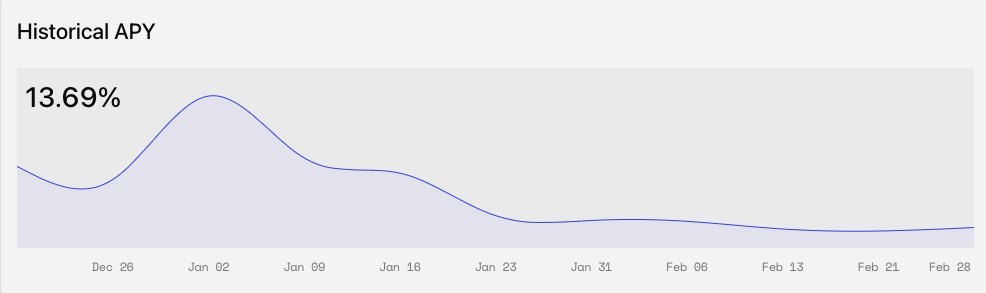
Historical annualized yield of slvlUSD
Level is a decentralized stablecoin protocol backed by Dragonfly and Polychain. Level issues lvlUSD, allowing users to earn yield from various crypto-native sources including lending protocols and restaking.
lvlUSD is a stablecoin backed by USDC and USDT, which are deposited into Aave to generate base yield. The aUSDT and aUSDC receipt tokens are then restaked in Symbiotic, contributing to decentralized network security while maintaining a stable economic security pool. Level aims to stack additional restaking yield on top of base yield, with Symbiotic points earned through staking being returned to users.
lvlUSD holders can stake their lvlUSD to obtain slvlUSD and earn on-chain yield. The current yield is 13.69%, calculated annually and compounded based on protocol-distributed earnings divided by the daily average market cap of slvlUSD since the last distribution.
How Stablecoin Yields Respond to Market Changes
Stablecoin yields typically fluctuate with market sentiment, reflecting the dynamics of bull and bear cycles. A clear example is Ethena’s sUSDe, whose yield partially derives from shorting assets like Ethereum and collecting funding rates. During bull markets, as traders build long positions, funding rates rise, increasing sUSDe’s yield. Conversely, in bear markets, funding rates turn negative, reducing yield generation. This correlation highlights how yield-bearing stablecoins are influenced by market trends, making their returns dynamic rather than fixed.
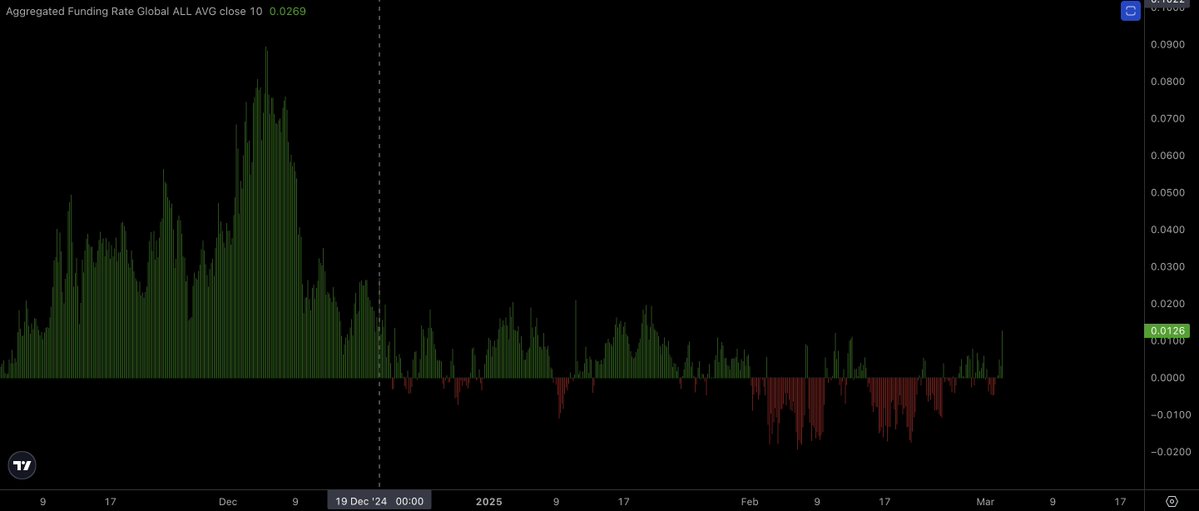
The chart above shows the aggregate funding rates of various crypto assets from early November to present. It is evident that funding rates declined significantly after December 9, 2024, remaining negative throughout February, indicating that traders were predominantly shorting the market. This prolonged period of negative funding rates signals increased bearish sentiment, with short sellers paying fees to maintain their positions.
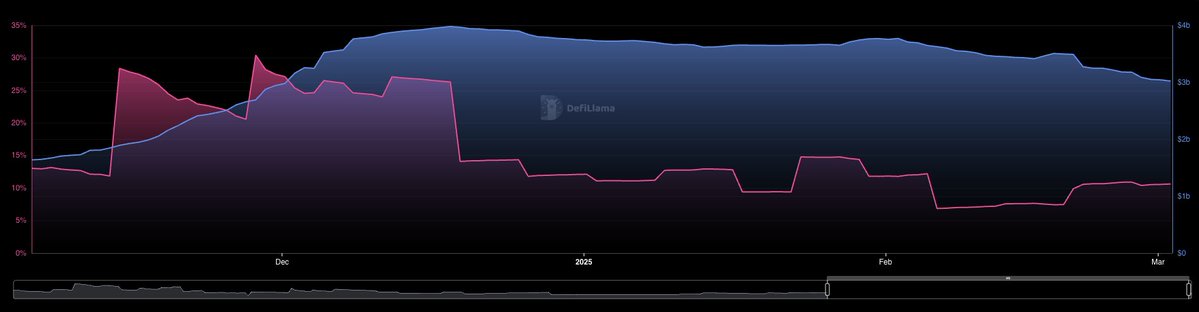
sUSDe yield trend since end of 2024
During the same period, sUSDe’s yield (pink line) remained elevated until mid-December, then declined and stabilized between 7%–15%. This trend underscores the correlation between bullish market conditions and the returns of certain yield-bearing stablecoins.
Similarly, slvlUSD, which generates yield by depositing USDT/USDC into Aave, is also affected by market sentiment. During bull runs, on-chain traders borrow more stablecoins to increase long exposure, driving up demand and boosting annualized yields for platforms like Level. This relationship further illustrates how DeFi stablecoin yields respond to market cycles—increased borrowing activity translates into higher returns for liquidity providers.
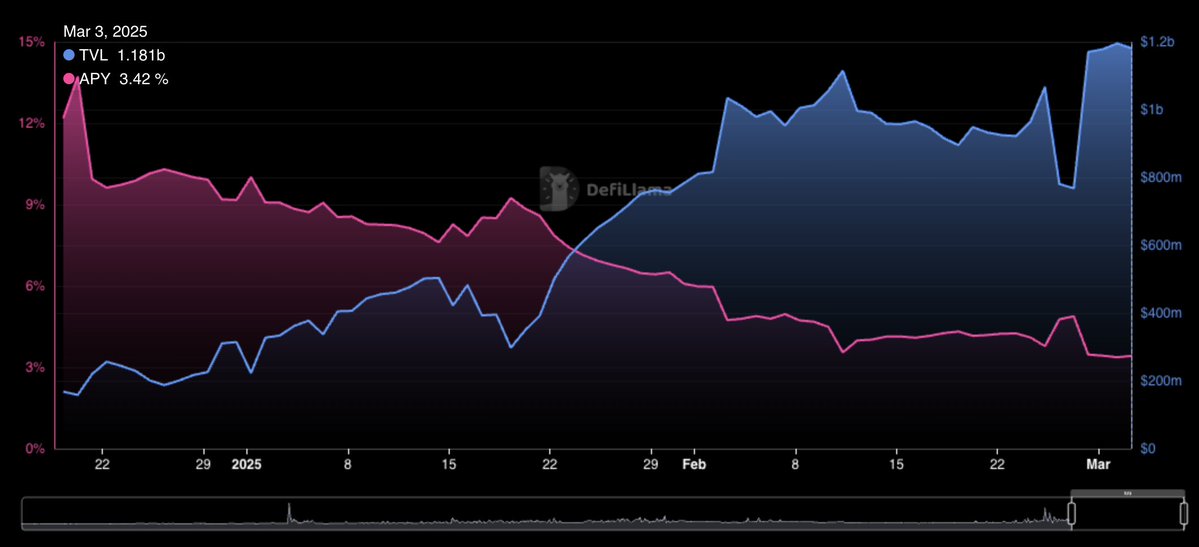
USDC supply yield on Aave V3
This chart shows the yield on USDC on Aave V3 (Ethereum), peaking at 13.72% on December 20, 2024, before dropping to 3.42%. This reflects shifting market sentiment—bull phases drive up lending yields, while bear periods see reduced demand and lower returns.
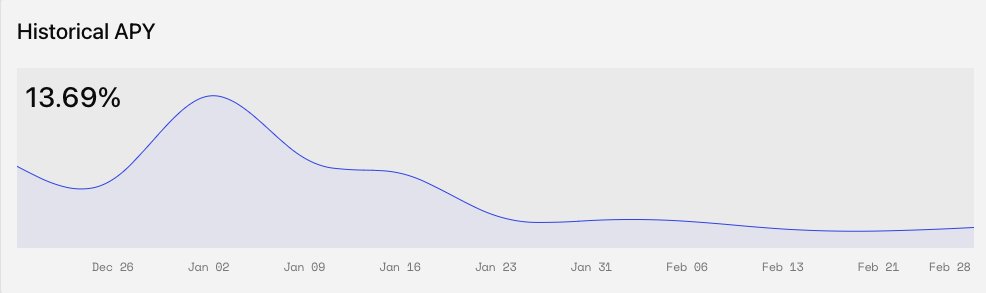
slvlUSD follows a similar trend, as its yield is partially correlated with USDC borrowing yields on Aave. Overall, in bear markets, yield-bearing stablecoins see declining rates because most depend on lending demand or funding rates—both of which weaken when market sentiment turns negative.
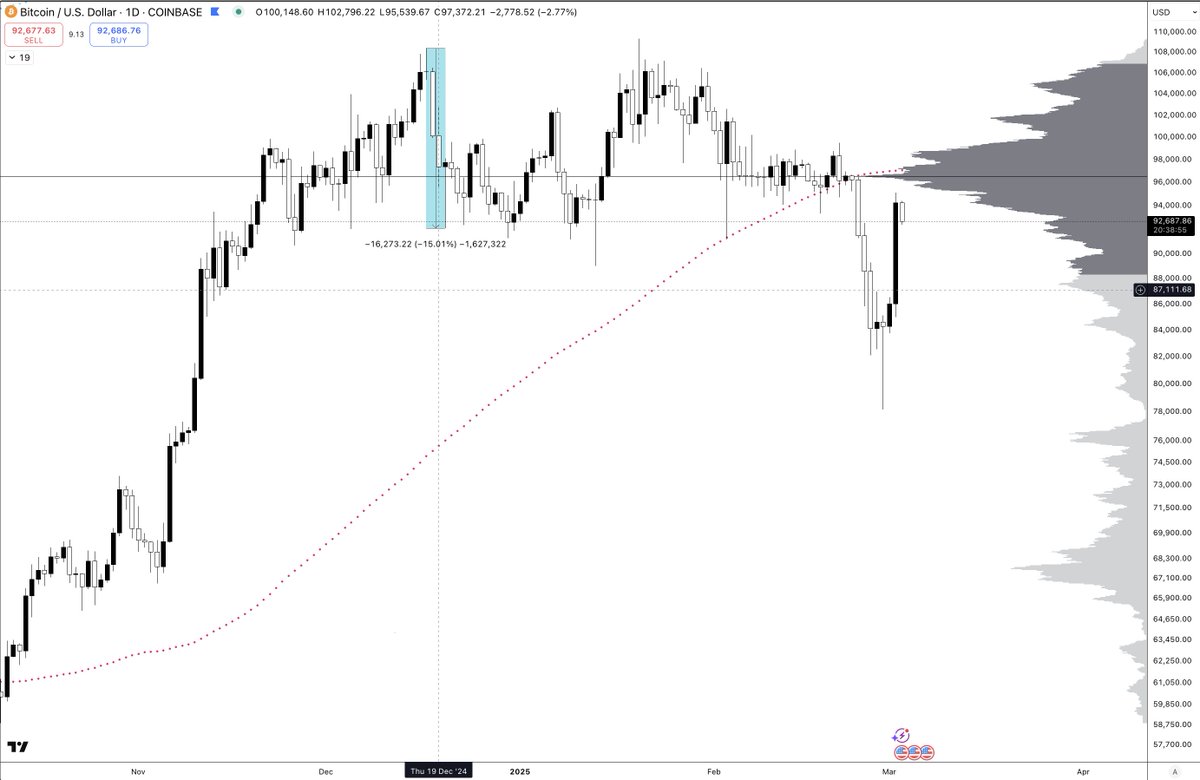
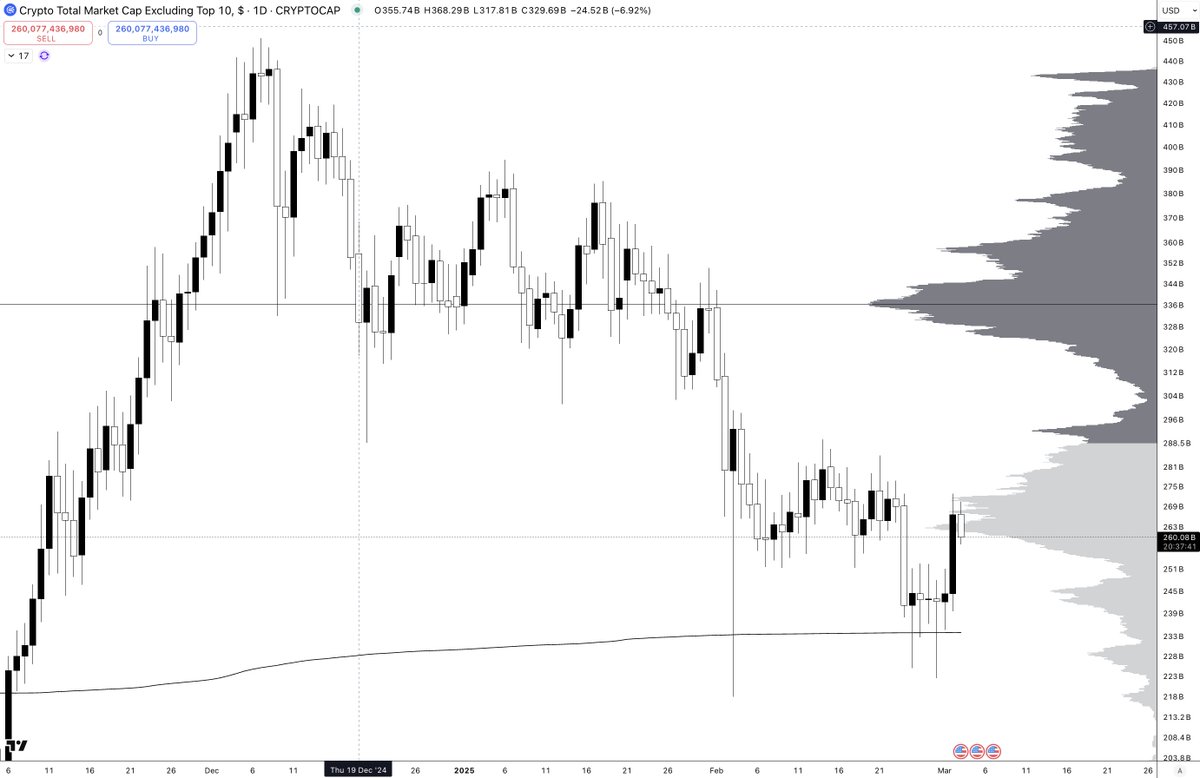
Since early December, the market has been trading sideways or trending downward, as reflected in charts of Bitcoin and "Others" (total market cap excluding top 10 cryptocurrencies), directly impacting the interest rates of yield-bearing stablecoins.
However, new solutions are emerging to mitigate declining yields, particularly through Pendle. By purchasing PT tokens on Pendle, users can lock in fixed yields while holding the underlying asset, effectively shorting variable yields as a hedge. Moreover, Pendle’s Boros will allow long or short positions on funding rates, enabling protocols like Ethena to hedge against falling funding rates and offer users more stable and competitive yields.
Conclusion
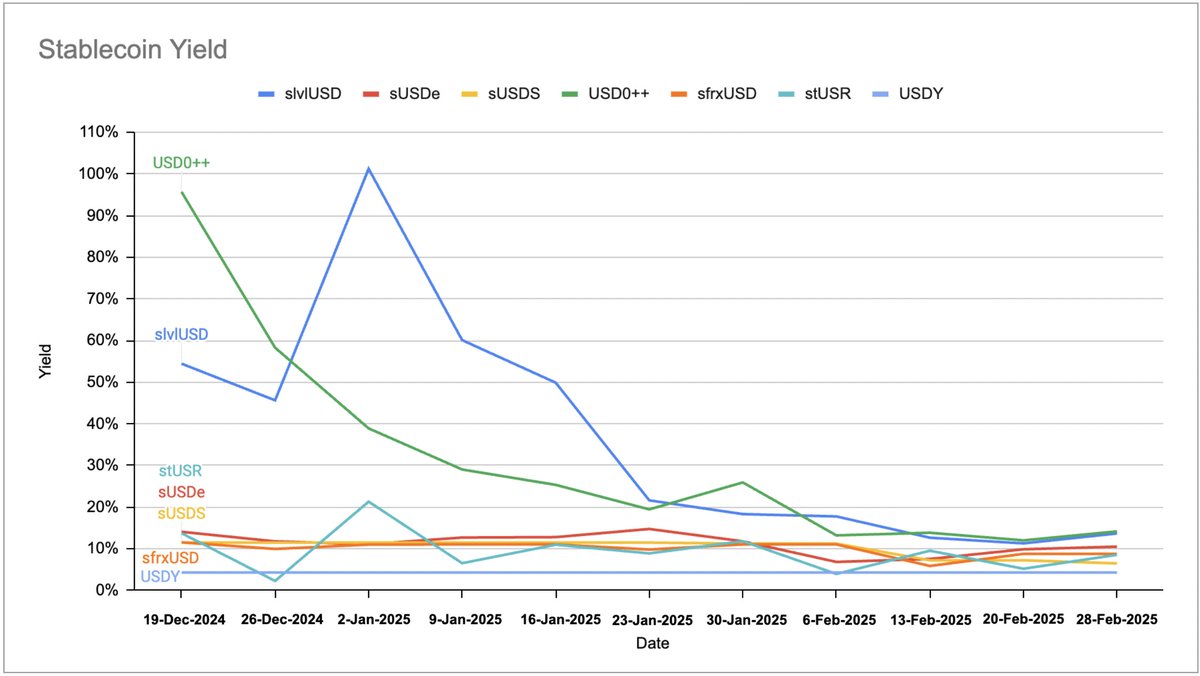
Annualized yields of seven yield-bearing stablecoins from December 19, 2024, to February 28, 2025
Yield-bearing stablecoins are clearly influenced by broader market sentiment, with all seven analyzed here showing a downward trend in yields.
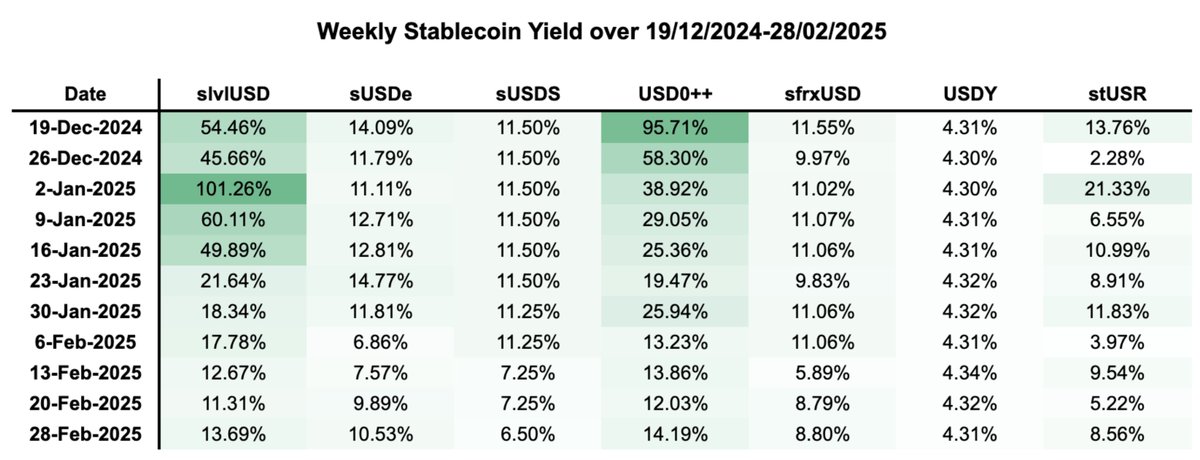
Yields of seven yield-bearing stablecoins over the past 11 weeks
If bullish sentiment returns, stablecoin borrowing demand increases, and market funding rates turn positive, returns on yield-bearing stablecoins could rise again.
Join TechFlow official community to stay tuned
Telegram:https://t.me/TechFlowDaily
X (Twitter):https://x.com/TechFlowPost
X (Twitter) EN:https://x.com/BlockFlow_News
 @Nemi_0x


