Huobi Growth Academy | Cryptocurrency Market Macro Research Report: From Tariffs to Strategic Cryptocurrency Reserves, the Crypto Order in the Trump Era
TechFlow Selected TechFlow Selected
Huobi Growth Academy | Cryptocurrency Market Macro Research Report: From Tariffs to Strategic Cryptocurrency Reserves, the Crypto Order in the Trump Era
This report will delve into the impact of the Trump administration's tariff policies on global financial markets, and how its potential push for a strategic cryptocurrency reserve initiative could influence the market performance of major cryptocurrencies such as Bitcoin and Ethereum.
 Navigating Web3 tides with focused insights
Introduction: The New Order of the Cryptocurrency Market in the Trump Era
In 2025, global financial markets entered a new phase of transformation. With Donald Trump's return to the White House, his consistent economic nationalism policy has been reaffirmed—measures such as increased tariffs, supply chain restructuring, and reinforcement of dollar hegemony have been rolled out one after another. Meanwhile, amid expanding U.S. fiscal deficits, intensifying global "de-dollarization" trends, and the rising prominence of the crypto asset market worldwide, the Trump administration’s stance toward cryptocurrencies is undergoing a significant shift. Against this backdrop, the concept of a strategic cryptocurrency reserve has gradually emerged and become a focal point for market attention.
This report will conduct an in-depth analysis of how the Trump administration's tariff policies impact global financial markets, and explore how its potential push for a strategic crypto reserve could affect the market performance of major cryptocurrencies such as Bitcoin and Ethereum. Additionally, we will examine possible shifts in regulatory frameworks, institutional investors’ asset allocation strategies, and the overall future direction of the cryptocurrency market.
1. Trump’s Economic Policies and the Macroeconomic Context of the Crypto Market
1.1 Tariff Policy: Reshaping the Global Economic Order and Impacting Capital Markets
Trump’s economic agenda has always centered on “America First,” a strategy that not only reshapes domestic economic structures but also profoundly alters the operation of global capital and financial systems. During his previous term from 2017 to 2021, the Trump administration implemented major economic initiatives including large-scale tax cuts, aggressive trade wars, pressure on the Federal Reserve, and management of dollar liquidity. These measures boosted short-term U.S. economic growth but also led to long-term increases in fiscal deficits and international economic instability. Following Trump’s re-election in 2025, markets widely expect his government to continue—or even intensify—past policies, particularly in areas such as tariffs, dollar strategy, fiscal stimulus, regulatory environment, and global capital flows—all of which will have far-reaching implications for the crypto market.
As the global economy becomes increasingly decentralized, the crypto market is emerging as a critical component of the international financial system. Major digital assets like Bitcoin and Ethereum are no longer viewed solely as speculative investments; they are increasingly seen by some nations and institutions as hedges against dollar-related risks. Stablecoins (e.g., USDT, USDC) are gaining traction in international trade settlements, accelerating the digitization of the U.S. dollar. The Trump administration’s economic policies will significantly influence these trends: its tariff policies may accelerate global capital allocation into cryptocurrencies like Bitcoin; dollar liquidity management will shape funding availability in the crypto market; U.S. regulatory decisions will determine the legality and growth potential of the sector; and any potential push for a strategic crypto reserve could trigger transformative changes across global markets.
One core element of Trump’s economic platform is his highly assertive trade policy. The U.S.-China trade war between 2018 and 2019 triggered a global restructuring of supply chains and altered capital flows. Facing new economic conditions in 2025, Trump is likely to revive the trade war, imposing higher tariffs on economies such as China, the European Union, and Japan, aiming to restore American manufacturing competitiveness through external pressure. A direct consequence would be heightened uncertainty in international capital markets, prompting global investors to seek safe-haven assets. In such an environment, decentralized assets like Bitcoin could emerge as new forms of safe havens. Indeed, during the peak of the 2019 trade war, Bitcoin surged from $3,000 to $13,000, with many attributing the rally to capital fleeing traditional market risks and flowing into crypto. An escalation of trade tensions in 2025 could spark similar capital movements—especially if confidence in the dollar weakens, further enhancing Bitcoin’s appeal.
Beyond trade wars, the Trump administration’s fiscal policy remains a key driver affecting the crypto market. His 2017 tax reform drastically cut corporate taxes while increasing fiscal deficits. In 2025, Trump may pursue similar measures to stimulate economic growth—including further corporate tax reductions, massive infrastructure spending, and increased defense expenditures. While these steps might boost short-term economic activity, they risk exacerbating fiscal imbalances and placing additional strain on the credibility of the dollar. Rising deficits typically force governments to issue more debt or adopt monetary easing, and if markets anticipate that the Fed will resume quantitative easing (QE), liquidity expansion could benefit Bitcoin and other crypto assets. Notably, the ultra-loose monetary policy enacted by the Fed during 2020–2021 was a major catalyst behind the previous Bitcoin bull run. Thus, should the Trump administration launch a new round of fiscal stimulus backed by accommodative monetary policy, the stage could be set for another upward cycle in crypto valuations.
1.2 Dollar Liquidity and the Cyclical Relationship with the Crypto Market
The U.S. dollar, as the world’s primary reserve currency, may see its status influenced by Trump-era policies. During his first term, Trump frequently expressed dissatisfaction with a strong dollar, arguing that it undermined U.S. manufacturing competitiveness. In 2025, his administration may actively pursue a weaker dollar to boost exports and reduce trade deficits. If a sustained depreciation trend takes hold, global investors may turn to alternative assets to hedge against dollar devaluation—with Bitcoin, gold, and other safe-haven assets likely to attract inflows. Globally, several countries are already advancing de-dollarization efforts: Russia and China have reduced their reliance on the dollar in bilateral trade, while Middle Eastern nations are experimenting with using currencies like the yuan for oil transactions. Should Trump’s policies accelerate this shift, demand for decentralized assets like Bitcoin could rise sharply, ushering in a new phase of development for the crypto market.
Domestically, the regulatory landscape for cryptocurrencies may undergo major changes under a second Trump administration. While Trump maintained an ambiguous position on digital assets during his first term—Treasury Secretary Mnuchin repeatedly called for tighter oversight to prevent illicit use of Bitcoin—the tone shifted during the 2024 campaign. Trump and his allies began expressing more favorable views, recognizing blockchain technology and Bitcoin as potential sources of financial innovation and economic growth. In 2025, the administration may revise the U.S. crypto regulatory framework—potentially lowering tax burdens on crypto holdings, relaxing legal restrictions on trading and investment, and supporting the expansion of financial products like Bitcoin ETFs. If implemented, such reforms could unlock substantial growth opportunities for the U.S. crypto market and set a precedent for other nations to follow.
Notably, the Trump administration may advance a “Strategic Cryptocurrency Reserve Program,” incorporating digital assets like Bitcoin into national reserve systems. This initiative could stem from multiple strategic considerations: hedging against dollar credit risk, securing leadership in the global crypto race, and maintaining U.S. dominance in digital assets amid geopolitical competition. If the U.S. government begins holding Bitcoin as a strategic reserve, the asset would gain unprecedented legitimacy and potentially become a foundational part of the global financial architecture. Such a move would carry more weight than any ETF approval or institutional entry—it would signify formal sovereign recognition of Bitcoin and could prompt other nations to follow suit.
1.3 Institutional Investors’ Reconfiguration of Crypto Exposure
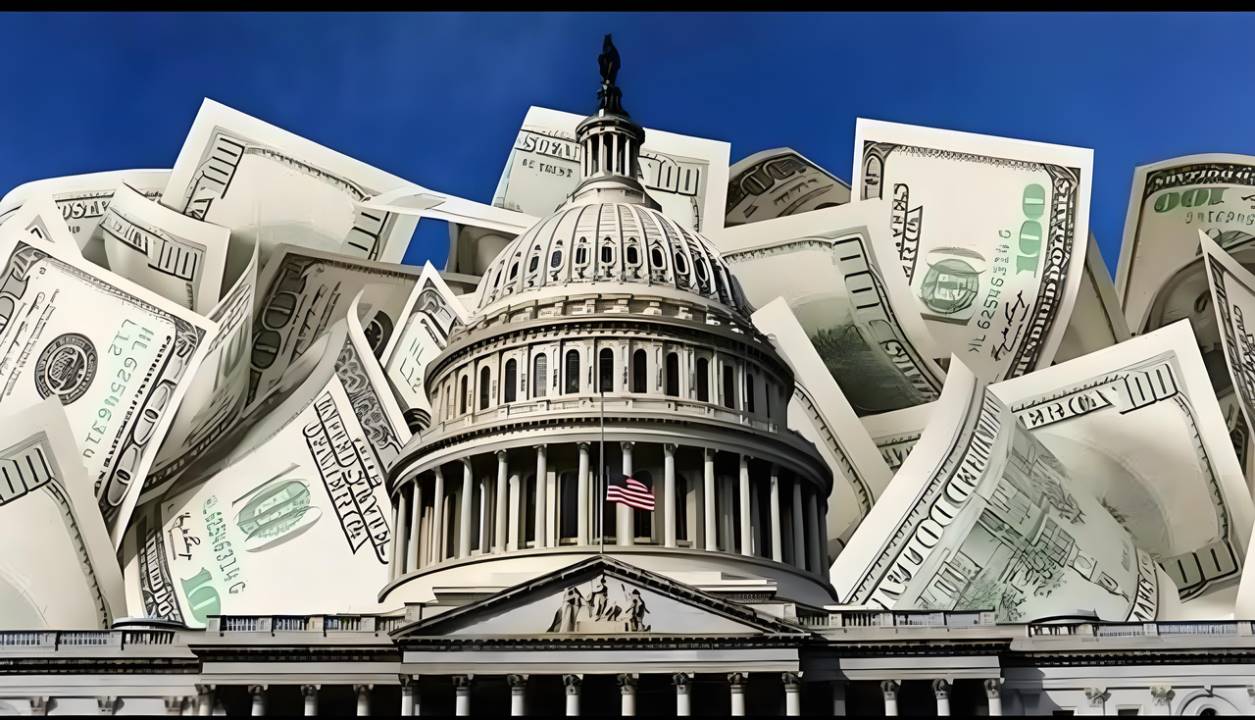
In recent years, institutional adoption of crypto assets has steadily increased. With the approval of Bitcoin ETFs and growing participation from major financial firms, digital assets are becoming integrated into traditional portfolios. If the Trump administration advances a strategic crypto reserve and eases restrictions on institutional ownership, the market structure could shift dramatically. Over time, this could lead Bitcoin, Ethereum, and other leading assets to be included in sovereign wealth funds, pension funds, and central bank reserves, contributing to greater market maturity.
Overall, the Trump administration’s economic policies are poised to exert profound influence on the crypto market. Trade conflicts could accelerate capital flows into crypto, rising deficits and dollar depreciation could boost Bitcoin demand, and regulatory liberalization could foster deeper market development. If the administration ultimately launches a strategic crypto reserve program, Bitcoin could achieve historic institutional validation—fundamentally altering the structure of the global financial system. In this evolving landscape, investors must closely monitor policy developments and global market reactions to seize emerging opportunities in the crypto space.
2. Strategic Cryptocurrency Reserve: Policy Background and Potential Impacts
2.1 Policy Rationale Behind the U.S. Government’s Push for a Crypto Reserve
With Trump returning to power in 2025, the core of his economic policy remains “America First”—a doctrine that may now extend to reevaluating the dollar’s role as the dominant global reserve currency and exploring diversification of national reserves to hedge against dollar credit risk. For decades, the dollar’s privileged status has granted the United States unparalleled influence over the global financial system. However, rising U.S. debt levels, widening fiscal deficits, shifting interest rate policies, and growing international skepticism about dollar supremacy are increasingly challenging this dominance.
On one hand, the U.S. fiscal deficit has become a major concern for global markets. Since 2020, U.S. government debt has surged continuously, surpassing $34 trillion by the end of 2024—and continues to climb rapidly. This erosion of confidence in the dollar’s long-term value has prompted many countries to explore non-dollar reserve options. With the Trump administration expected to pursue further fiscal stimulus and infrastructure spending, the deficit problem may worsen. Should market expectations of dollar depreciation intensify, central banks around the world may accelerate diversification of their foreign reserves—making decentralized assets like Bitcoin attractive alternatives.
On the other hand, the accelerating trend of de-dollarization compels the U.S. government to rethink how to preserve its financial hegemony. In recent years, numerous countries have reduced their dependence on the dollar in international settlements: Sino-Russian trade is gradually shifting toward local currency clearing, while nations like the UAE and India are exploring yuan-denominated oil transactions. This trend undermines the dollar’s global reach, pushing Washington to develop new strategies to maintain its leadership in the global financial order. If the Trump administration sees a strategic crypto reserve as a tool to counter de-dollarization, Bitcoin could be formally incorporated into America’s official reserve体系—as a potential weapon in the battle for financial supremacy.
Moreover, the Trump administration’s attitude toward the crypto market is evolving. Although Trump publicly criticized Bitcoin in 2019, calling it “based on air, with no real value,” his stance shifted notably during the 2024 campaign. His team increasingly recognized the transformative potential of digital assets in the future financial system and sought support from the crypto industry. Simultaneously, U.S. institutional investors have significantly increased Bitcoin exposure in recent years—BlackRock, Fidelity, and others launched spot Bitcoin ETFs that attracted tens of billions in inflows. In this context, the U.S. government may now recognize that Bitcoin is no longer a fringe asset, but a core component of the global financial ecosystem. To maintain leadership in this domain, establishing a “Strategic Cryptocurrency Reserve” may be viewed as a rational and strategically sound decision.
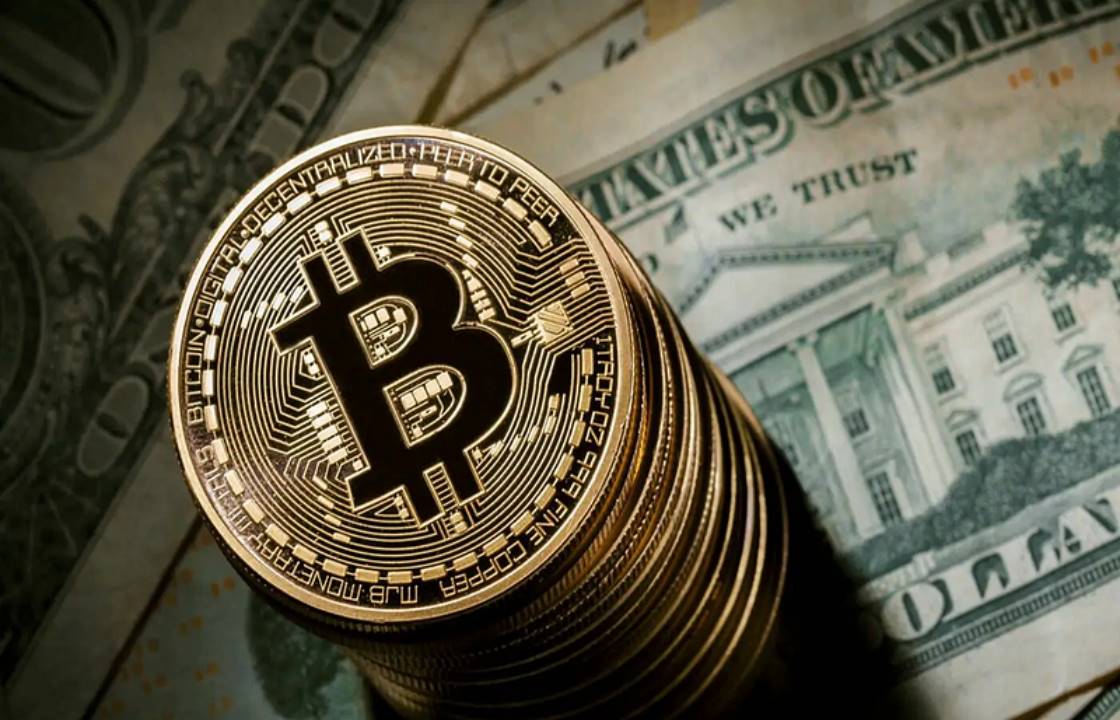
2.2 Potential Impacts of a Strategic Crypto Reserve
First, such a policy could fundamentally reshape market perceptions of Bitcoin’s value and propel it into a new valuation paradigm. Currently, Bitcoin is primarily valued based on scarcity (a capped supply of 21 million coins), inflation-hedging properties, and its role in the digital economy. However, if the U.S. government officially includes Bitcoin in its national reserves, the asset would transition from an “alternative investment” to a “sovereign reserve asset,” marking a qualitative leap in market perception. For decades, gold has played a central role in central bank reserves. If Bitcoin enters the same category, its market cap could grow exponentially. Today, the global gold market stands at approximately $13 trillion, whereas Bitcoin’s total market cap is around $1 trillion. If Bitcoin achieves even 30–50% of gold’s reserve function, its market value could reach $4–6 trillion or more—implying a Bitcoin price exceeding $200,000. This means U.S. policy could directly shape Bitcoin’s long-term valuation and catalyze a new bull market.
Second, implementing such a policy could subtly undermine the dollar’s status as the world’s primary reserve currency. Traditionally, the dollar’s dominance rests on the strength of the U.S. economy, widespread dollar liquidity, and the stability of dollar-denominated assets like U.S. Treasuries. Yet, if the U.S. government itself starts hedging against dollar risk by holding Bitcoin, it sends a powerful signal to markets: even America questions the long-term reliability of its own currency. This could amplify concerns about dollar stability, prompting other central banks to adjust their reserve compositions and consider adding Bitcoin. Once this dynamic takes hold, it may erode the dollar’s global primacy and hasten the emergence of a multipolar financial system.
At the same time, U.S. ownership of Bitcoin could reshape global geopolitics. Some countries have already begun integrating Bitcoin into national financial strategies—El Salvador became the first nation to adopt Bitcoin as legal tender in 2021 and has steadily increased its national Bitcoin holdings. Russia, Iran, and others are exploring Bitcoin for international trade settlement to circumvent Western financial sanctions. If the United States acts first by adopting Bitcoin into its reserve system, other nations may feel compelled to respond, fearing strategic disadvantage in the evolving global financial order. This could spark a global “sovereign Bitcoin reserve race,” reshaping the balance of financial power worldwide.
Finally, the policy could trigger cascading effects on domestic crypto regulation. Currently, the U.S. regulatory environment remains uncertain, with jurisdictional disputes between the SEC (Securities and Exchange Commission) and CFTC (Commodity Futures Trading Commission) over crypto assets. However, if the federal government formally adopts Bitcoin as a reserve asset, its legal status would likely be cemented, paving the way for clearer regulatory frameworks. This would provide greater compliance clarity for the U.S. crypto industry, encourage more institutional capital inflows, and accelerate Bitcoin’s mainstream integration.
In sum, the U.S. government’s adoption of a “Strategic Cryptocurrency Reserve” would represent not just a shock to the global financial system, but a fundamental redefinition of Bitcoin’s market role—one that could redirect global capital flows. While implementation may cause short-term market volatility, in the long run, it could become a landmark event in Bitcoin’s history, ushering in a new era for global finance.
3. Market Outlook and Investment Strategies
3.1 Long-Term Trends and Future Prospects for the Crypto Market
The trajectory of the crypto market can be analyzed through multiple lenses: macroeconomic trends, policy environments, structural shifts, and technological progress. The Trump administration’s policies may serve as a catalyst for a new bull cycle, but their lasting impact will depend on various factors—including the Fed’s monetary stance, the pace of global de-dollarization, institutional participation, and policy directions in emerging markets.
First, evolving global financial conditions will be pivotal in shaping the long-term outlook for crypto. The world economy currently faces challenges including deglobalization, inflationary pressures, interest rate uncertainty, and geopolitical tensions—all of which may drive more investors toward Bitcoin as a safe haven. Historically, periods of high global uncertainty have boosted demand for traditional hedges like gold, and Bitcoin is increasingly fulfilling a similar role. If the U.S. government formally recognizes Bitcoin as a reserve asset, it would gain even greater credibility and could capture a meaningful share of gold’s traditional safe-haven market.
Second, the level of institutional participation will be a decisive factor in determining the scale of Bitcoin’s future market. In recent years, the launch of spot Bitcoin ETFs has enabled traditional financial giants to enter the crypto space. BlackRock, Fidelity, and others have drawn billions in capital through their ETF offerings. If the U.S. establishes a “Strategic Cryptocurrency Reserve,” more sovereign wealth funds, pension funds, and central banks may accelerate their Bitcoin allocations. This would enhance market maturity, gradually transforming Bitcoin from a volatile speculative asset into a stable store of value.
Furthermore, the acceleration of de-dollarization will deeply impact the crypto market. Economies such as China, Russia, Iran, and India are actively pursuing paths to reduce dollar dependency. If Bitcoin becomes part of U.S. national reserves, other countries may reassess their positions. Some may follow suit, increasing Bitcoin’s share in foreign reserves, while others may restrict its use to protect domestic monetary sovereignty. This policy divergence will directly affect Bitcoin’s global liquidity and may create arbitrage opportunities in certain markets.
3.2 Investment Strategies and Market Opportunity Analysis
Amid profound structural changes, investors must adapt their strategies to navigate the new landscape. Both individual and institutional investors need to rethink asset allocation and identify the most promising opportunities within the evolving financial order.
First, Bitcoin’s investment thesis is shifting. Previously seen as a high-risk, high-return speculative asset, it may increasingly be regarded as “digital gold” or a “central bank reserve asset.” This implies that Bitcoin’s price volatility may gradually decline, and long-term holders could benefit from steady value appreciation. For investors, adopting a “hold long-term” (HODL) strategy may be the optimal response—especially given potential government backing, which enhances confidence in Bitcoin’s long-term value.
Second, structural arbitrage opportunities may expand. As governments adopt divergent policies toward Bitcoin, regulatory fragmentation could lead to price disparities across markets. For instance, if certain countries impose strict trading bans while the U.S. actively promotes a national Bitcoin reserve, global Bitcoin prices may diverge significantly. Sophisticated investors can exploit these differences through cross-market arbitrage.
In addition, the role of derivatives markets will grow. Bitcoin futures and options are already well-established, and with rising institutional involvement, demand for risk management tools will increase. We may soon see more sophisticated financial instruments introduced into the crypto space—such as Bitcoin-backed bonds or structured products. For professional investors, leveraging these tools for hedging and yield optimization will become a key trend.
Meanwhile, investment opportunities beyond Bitcoin deserve attention. While Bitcoin may dominate as a reserve asset, platforms like Ethereum (ETH) and Solana (SOL) continue to expand their smart contract ecosystems. If government and institutional capital floods into the crypto market, these assets could also benefit. Particularly in decentralized finance (DeFi) and real-world asset tokenization (RWA), new opportunities may emerge. For example, some nations might explore blockchain-based sovereign bond issuance or use smart contracts to streamline financial processes—trends that could open fresh investment avenues.
3.3 Risk Factors and Mitigation Strategies
While the Trump administration’s policies may offer long-term tailwinds for the crypto market, investors must remain vigilant about potential risks and implement appropriate mitigation strategies.
First, policy uncertainty remains one of the biggest risks. Even if the Trump administration supports a strategic crypto reserve, actual implementation depends on multiple variables—including congressional approval, the Fed’s stance, Treasury cooperation, and international responses. Delays or reversals in policy could trigger significant market volatility. Investors should closely track legislative and administrative developments and adjust strategies accordingly.
Second, liquidity risk remains a key concern. Although the Bitcoin market has matured, it still lags behind traditional financial markets in terms of depth and resilience. Sudden shifts in holdings by governments or large institutions could cause sharp price swings. Investors should avoid excessive leverage and consider dollar-cost averaging or staged buying/selling strategies to mitigate market impact.
Additionally, geopolitical dynamics may influence the crypto market. As global competition intensifies, some nations may restrict Bitcoin to counter U.S. financial influence. For example, China has repeatedly tightened crypto regulations in recent years. If the U.S. advances a Bitcoin reserve plan, others may retaliate. Investors should anticipate such scenarios and ensure portfolio diversification to reduce exposure to specific policy shocks.
Finally, technological risks persist. Despite Bitcoin’s robust network security, the broader crypto industry still faces vulnerabilities—including smart contract bugs, exchange hacks, and cyberattacks. Investors should use secure platforms, employ cold wallets for storage, and diversify across asset classes to minimize technical risks.
4. Conclusion
As the global financial system undergoes historic transformation, whether the U.S. government will formally incorporate Bitcoin and other crypto assets into its national strategic reserve has become a central question. With the Trump administration shifting its stance on digital assets and global de-dollarization accelerating, the possibility of establishing a “Strategic Cryptocurrency Reserve” is rising. If implemented, this policy would rank among the most disruptive financial shifts in a century—reshaping the dollar’s reserve status, altering inter-state financial competition, influencing market liquidity, redefining sovereign currency dynamics, and transforming perceptions of Bitcoin’s intrinsic value. It is therefore essential to examine the motivations, policy context, macroeconomic backdrop, and broad market implications of such a move.
Under the banner of a potential “Strategic Cryptocurrency Reserve,” global financial markets are experiencing a deep structural transformation. Bitcoin and other crypto assets are transitioning from speculative instruments to potential components of national reserves, solidifying their place in the core of the global financial system. This evolution will not only reshape the crypto market itself but also impact the dollar’s global standing, traditional financial markets, monetary systems, and investment strategies at both institutional and individual levels. The crypto market now stands at a critical juncture—poised between policy-driven opportunity and inherent market challenges. If the U.S. formally adopts crypto into its strategic reserves, flagship assets like Bitcoin and Ethereum could enter a new era of unprecedented growth.
We recommend that investors closely monitor policy developments and actively seek optimal entry points amid market fluctuations. The Trump administration’s proposal for a “Strategic Cryptocurrency Reserve” may become a pivotal moment in the evolution of global finance, propelling the Bitcoin market into a new phase of maturity. For investors, this represents extraordinary opportunity—but also significant uncertainty. In this evolving environment, success will depend on long-term Bitcoin holding, attentiveness to policy signals, exploitation of arbitrage opportunities, optimization of portfolio structure, and disciplined risk management. As the global financial system transforms, crypto assets will become increasingly vital components of investment portfolios—and those who accurately anticipate and navigate these shifts stand to gain the most.
Join TechFlow official community to stay tuned
Telegram:https://t.me/TechFlowDaily
X (Twitter):https://x.com/TechFlowPost
X (Twitter) EN:https://x.com/BlockFlow_News
 @HTXAcademy