The Wall Street Journal: The Life-and-Death Battle Between Tether and Circle
TechFlow Selected TechFlow Selected
The Wall Street Journal: The Life-and-Death Battle Between Tether and Circle
Who controls Stablecoin, controls Crypto.
 Navigating Web3 tides with focused insights
By Angus Berwick
Translated by Luffy, Foresight News
In the Alpine town of Lugano, Switzerland, newly minted billionaire Giancarlo Devasini lives a secluded life. He resides in a modest apartment by the lake, strolling along cobblestone streets wearing a black hoodie, seething with anger toward an American rival he believes is trying to destroy his business.
Devasini is one of the principal owners of Tether, the company behind USDT—the digital dollar that has become indispensable to the cryptocurrency industry. The central role of USDT has helped Devasini amass vast wealth, wield significant influence within crypto, and gain support from a top ally of President Trump.
Critics claim USDT has become the preferred tool for criminal groups moving money globally.
A powerful adversary seeking to dismantle Devasini’s empire is Jeremy Allaire, founder of Circle—Tether's archrival—which issues the stablecoin USDC. Allaire, a suit-wearing executive, moves comfortably through Davos, Wall Street, and congressional halls. He is spearheading a campaign to eliminate USDT through regulation.
Devasini has told business associates that Circle has been slandering USDT to policymakers and inciting law enforcement actions against Tether. In Devasini’s view, Circle wants to turn this sector into yet another regulated corner of finance, while he hopes crypto will remain true to its bold, anti-establishment roots.

Giancarlo Devasini, CEO of Tether, in Milan in 2014
Months ago, Devasini told an associate: “As long as USDT exists, Circle cannot win.”
This battle is about the future of the $3 trillion cryptocurrency industry. A pro-crypto Trump administration was supposed to usher in a golden age for the sector; on Sunday, Trump announced a strategic crypto reserve plan. Yet calls from government regulators to bring crypto into the mainstream have triggered a life-or-death struggle among crypto players. Although laws are expected to be broadly favorable to the industry, they could prove devastating for individual participants like USDT that stand on the wrong side of new rules.
Allaire has been urging governments in the U.S. and elsewhere to pass laws banning the use of USDT tokens issued overseas. Such a law in the European Union fully took effect last December, and similar legislation has been proposed in the United States.
USDT is the undisputed industry leader—four out of every five crypto transactions use its stablecoin. The holding company that owns half of USDT said it earned $13 billion last year, double BlackRock’s profit, mainly from ultra-safe U.S. Treasury bonds backing the 1:1 peg between USDT and the dollar.
Allaire frequently testifies before Congress, calling for stricter regulations that would hurt USDT but benefit Circle. Last year, a senior aide to Allaire urged lawmakers to target USDT, citing its alleged use in terrorist financing. The Wall Street Journal reported in October that the U.S. Department of Justice and Treasury were investigating whether USDT might have violated financial crime laws.
“We want USDC to become the default digital dollar,” Allaire said in an interview.

Jeremy Allaire, founder of cryptocurrency firm Circle
In contrast, Devasini shuns the spotlight and rarely speaks publicly. The 60-year-old has nominally served as USDT’s chief financial officer and on Monday the company said he would transition to chairman. In practice, he has remained in control of operations—even though his business card reads “no title, no job, nothing.” According to colleagues, behind the scenes he is counting on allies such as Commerce Secretary Howard Lutnick to block hostile legislation backed by Circle. Lutnick’s firm, Cantor Fitzgerald, holds substantial U.S. Treasury reserves backing USDT. After securing a cabinet position in the Trump administration in February, Lutnick stepped down from his role at Cantor Fitzgerald.
Both companies declined to comment directly on each other. Allaire says Circle isn’t focused on an “unregulated world of money,” but rather the legitimate $100 trillion digital currency market. In February, when a YouTube crypto influencer asked Paolo Ardoino, Devasini’s deputy, about Circle, he grinned and replied: “You mentioned the name—I didn’t.”
USDT has repeatedly denied aiding criminals and says it cooperates with law enforcement.
Screaming Dollars
Devasini, an Italian, has had a varied career. He started as a plastic surgeon in Milan, then moved into importing electronics in Hong Kong. In 1995, Italian prosecutors accused him of participating in a software piracy ring and fraud charges. Devasini reached a plea deal with authorities and paid a settlement to Microsoft.
Later, he entered the nascent cryptocurrency space and saw an opportunity nearly a decade ago: crypto firms couldn’t connect their digital currencies to the real-world banking system.

Paolo Ardoino, one of Devasini’s key deputies, often represents USDT in public
Launched in 2014 and registered in the British Virgin Islands, USDT was designed to solve this problem. Traders could exchange real-world money for USDT, a dollar-pegged token, and transfer it instantly via blockchain to trade for other cryptocurrencies.
To Devasini, USDT was meant to disrupt traditional finance. His wife, an artist, displayed paintings showing George Washington screaming on U.S. dollar bills, reflecting her belief that the dollar “has no more value.”
Allaire’s mission is different. The 53-year-old American is a veteran Silicon Valley entrepreneur who once served as CTO at software firm Macromedia, which pioneered Flash animation technology. Allaire founded Circle in Boston a year before USDT launched, aiming to build a new financial system for the internet age—one more efficient than the complex, error-prone bank networks that often complicate international payments.
Hemant Taneja, CEO of venture capital firm General Catalyst, said Allaire’s strategy of working with regulators to grow Circle is a kind of “reverse bet,” especially given most in the crypto community favor unregulated markets.
Taneja and other prominent U.S. investors—including Jim Breyer, known for early investments in Facebook—backed Allaire’s vision. Goldman Sachs, BlackRock, Fidelity, and crypto exchange Coinbase later invested too. Allaire remains Circle’s largest individual shareholder.
When Allaire first sought money transmission licenses, regulators were skeptical. But in a young, unproven industry rife with scammers, he quickly gained a reputation as “the most credible adult in the room.” By late 2013, Allaire testified before Congress, urging the U.S. to lead in setting crypto regulations to prevent criminal activity.
“He’s the best I know at dealing with high-level politicians in Washington,” Breyer said.
In 2020, as crypto trading went mainstream, Circle and USDT began publicly attacking each other.
In January that year, Allaire tweeted: “The defining feature of USDT is non-compliance and opacity.” He noted USDT had become the choice for those wanting to bypass the financial system.
In letters to U.S. and foreign authorities, Circle warned about consumer risks posed by unregulated stablecoins. In July 2020, Circle wrote to the Financial Stability Board—an international body monitoring global finance—about an incident two years earlier when authorities seized large amounts of USDT during a money laundering probe, causing it to temporarily lose its dollar peg. Circle argued this showed such stablecoins could fail and wipe out consumers’ crypto assets.
Circle promotes its transparency, publishing audited financial statements in 2021. It later hired Deloitte to audit consolidated monthly reports covering its dollar coin reserves—mainly U.S. Treasuries, plus short-term Treasury repo loans and cash.
In contrast, USDT’s financial disclosures are far less detailed and were only released under pressure from New York state regulators. USDT also includes Bitcoin, commercial loans, gold, and other unspecified investments alongside its Treasury holdings.
Information reviewed by The Wall Street Journal shows Devasini complaining to associates about unfair comparisons with Circle. He called USDC “trash coin,” said auditors avoid USDT due to reputational concerns, and claimed online rumors are being spread about his company.
"Flight to Quality"
After years of modest returns, both USDT and Circle unexpectedly received massive inflows in 2022. When the Federal Reserve raised interest rates, income from USDT’s U.S. Treasury holdings surged from tens of millions annually to hundreds of millions per quarter.
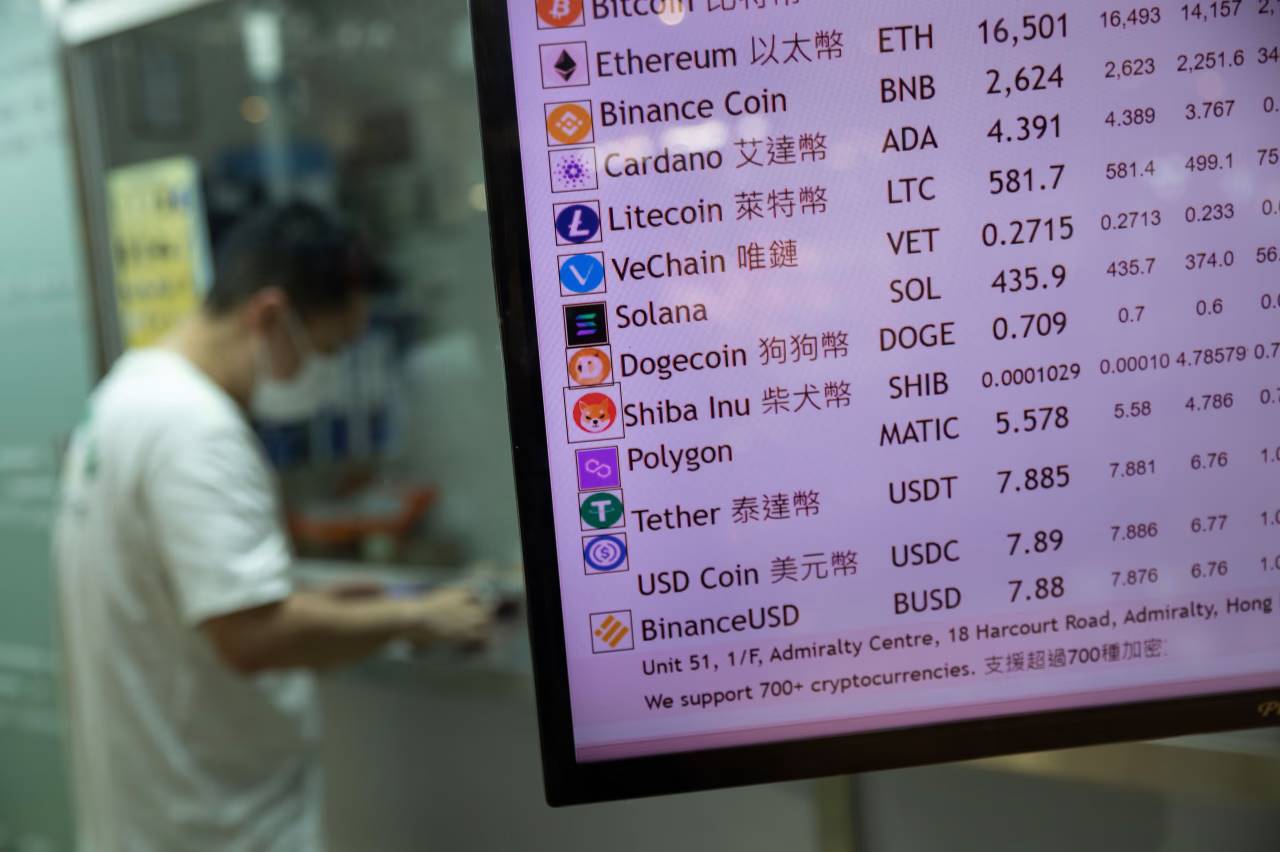
A monitoring screen in Hong Kong displays prices of various cryptocurrencies including USDT and USDC
Devasini spent little of this windfall on himself. He often attends meetings in worn tracksuits, wearing a hat printed with “Fool,” keys and storage devices dangling from a shoulder strap. Still, he enjoys boasting to peers about how much USDT earns daily.
He also feels his newfound wealth has made him a target. That December, at a conference in the Bahamas, Devasini told a business partner he believed USDT threatened the U.S.-dominated international banking order—and that the White House could try to shut it down at any moment.
Meanwhile, Allaire deepened ties with traditional finance. By the end of 2022, Circle held most of its reserves at BNY Mellon, the world’s largest custodian bank, with some cash in other regulated institutions. BlackRock managed its U.S. Treasury portfolio.
People familiar with USDT say it is primarily run by Devasini and a small group of outsiders, including combative Italian programmer Ardoino. Circle, by contrast, employs hundreds and has a board filled with former corporate executives.
As USDC began catching up, Allaire tweeted about a “flight to quality,” suggesting traders were abandoning USDT for USDC.
But in March 2023, when Silicon Valley Bank collapsed, Circle found itself in trouble—with over $3 billion in cash trapped. Panicked traders dumped USDC, sending its price tumbling to 87 cents.
USDT seized the moment, highlighting its immunity to the SVB collapse. As traders rushed back into USDT, Ardoino fired back on Twitter: “Flight to safety.”
After regulators rescued SVB, USDC regained its dollar peg. For the rest of the year, around $20 billion flowed out of USDC.
Ardoino warned people should be “really cautious” about stablecoins like Circle that keep reserves in uninsured cash deposits, saying this left USDC vulnerable during bank failures—despite USDT itself having suffered fund seizures years earlier. Allaire countered that Circle needed to keep a small portion of reserves outside BNY Mellon and other major banks to ensure clients could redeem funds smoothly.
In June that year, Allaire petitioned Congress to pass a stablecoin bill mandating strict reserve requirements and allowing issuers to hold cash at the Federal Reserve. He launched a fierce attack on USDT, calling for measures to ban offshore-issued digital dollars that “don’t follow U.S. rules.” He said: “The worst part is, they’re undermining U.S. national interests and security.”
He and his team traveled globally—to Japan, Singapore, the EU, Brazil—urging foreign governments to enact stablecoin laws and signing deals with local banks so Circle customers could transact directly with regulated entities.
Circle Gains Ground
Last year, at his home in Lugano, Devasini grew uneasy about tightening legal constraints—not just increasing regulation but also accusations linking USDT to criminal activities.
Lugano Mayor Michele Foletti said the Swiss town serves as his “refuge” from the outside world. Devasini often works from a plain office above a sports bar and dines with Foletti at a restaurant serving Bitcoin-themed Italian bread. Devasini’s wife unveiled a sculpture of Bitcoin’s anonymous founder Satoshi Nakamoto in a lakeside park.
Devasini told associates he would never go to the U.S. In a chat group, he inquired about the fate of Kim Dotcom, founder of the defunct file-sharing site Megaupload, whom the U.S. Justice Department is trying to extradite on piracy charges.
In April 2024, the U.S. Treasury specifically highlighted USDT’s use in funding Russia’s war machine. In June, billboards in Washington, D.C., and New York’s Times Square bore the slogan “USDT linked to corruption.” This was part of a campaign by an advocacy group aiming to spotlight USDT’s use by terrorists and drug cartels. The group labeled Tether “the next FTX.”
Devasini believes Circle is behind this. He told a business partner: “Behind every attempt to discredit USDT, there they are.”
Ardoino later publicly accused USDT’s rivals of funding the advocacy group’s campaign. The group, named “Consumer Research,” previously ran campaigns against environmental, social, and governance (ESG) investing and refuses to disclose its donors.
Circle declined to comment.
However, people familiar with internal discussions said that throughout 2024, Circle executives frequently met with senior U.S. Treasury officials and other authorities, highlighting national security risks associated with USDT. In February this year, during a congressional hearing, when asked about USDT, Circle’s senior policy director said she hoped U.S. authorities would investigate how USDT enables “malicious activities.”
These individuals said the Treasury Department was deeply concerned about USDT’s widespread use among America’s adversaries and even considered imposing sanctions on USDT itself—a move that would cut it off from the U.S. banking system and likely kill its business. The department also requested new powers from Congress to crack down on offshore dollar-backed stablecoins targeting USDT, though these powers were not granted.
In April, Democratic Senator Kirsten Gillibrand of New York and Republican Senator Cynthia Lummis of Wyoming introduced a bill that would ban unregulated stablecoins. At the time, Lummis stated: “If I had to choose, I’d pick USDC over USDT.”
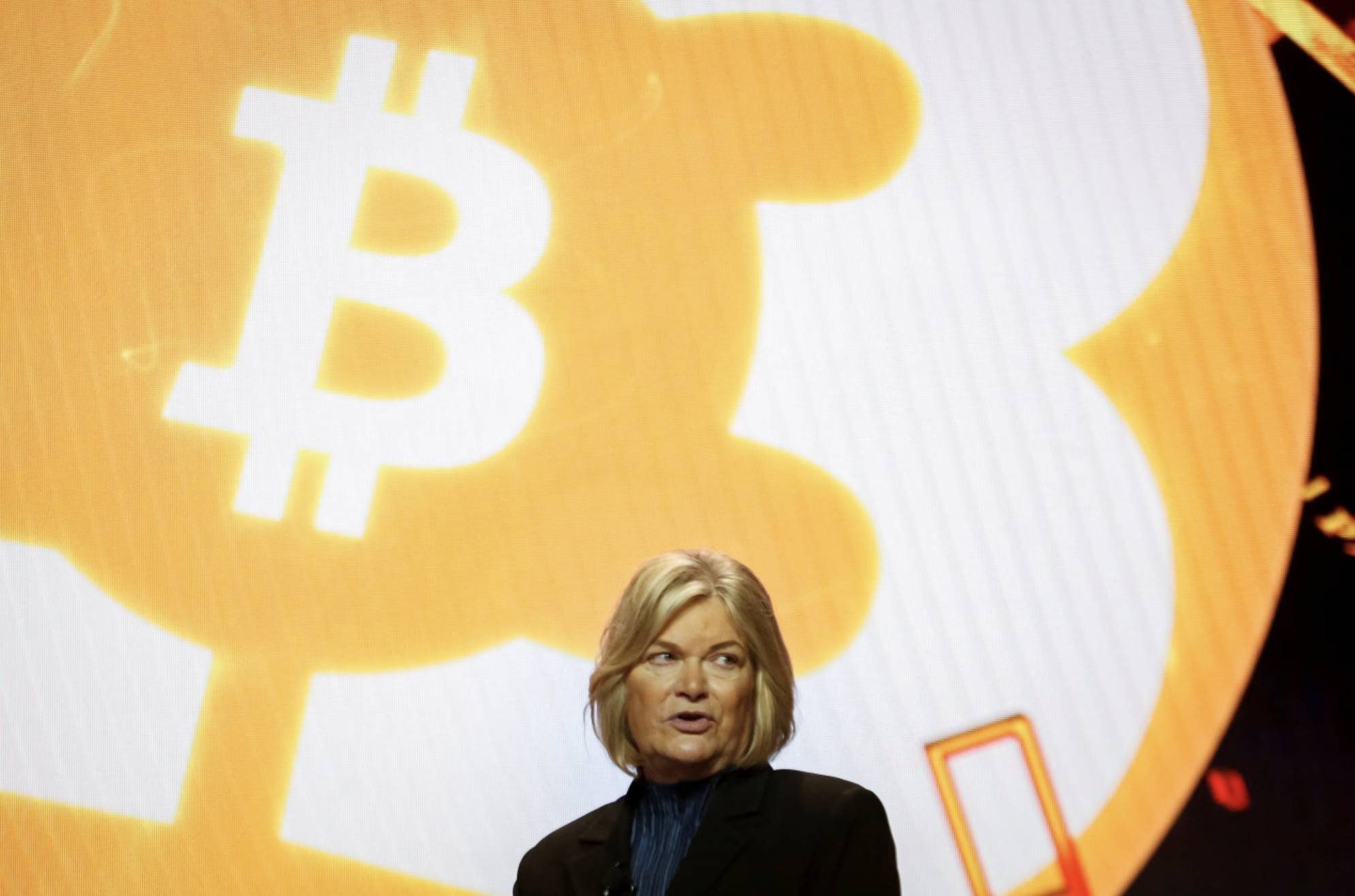
Senator Cynthia Lummis introduced legislation to regulate cryptocurrencies
Under the new rules, Circle obtained a license to operate in the EU, where stablecoin issuers must hold at least 30% of cash reserves in local banks. USDT opposed this condition, arguing it increases risk—as shown by the Silicon Valley Bank collapse. In response, Coinbase and other exchanges delisted USDT in the EU.
Another victory for Circle came in December, when Binance—the world’s largest crypto exchange—partnered with it to promote USDC adoption. For years, the once-maverick exchange was the epicenter of USDT trading. But after admitting violations of U.S. financial crime laws in late 2023, it aligned itself with Allaire.
New Administration
Devasini holds one trump card: Commerce Secretary Lutnick, whose firm Cantor Fitzgerald holds USDT’s Treasury reserves.
Lutnick personally negotiated a deal in April 2024 for Cantor to invest in Tether’s holding company via convertible bonds. After meeting Lutnick in Lugano the following month, Devasini told colleagues that Trump’s ally would seek to block any legislation harming Tether. Devasini added that Lutnick dislikes Circle too.
The U.S. Department of Commerce did not respond to requests for comment. A Cantor spokesperson declined to comment.
People close to Lutnick say he helped Devasini build connections with the Trump camp. One month after Trump’s victory, Tether bought a stake in conservative media platform Rumble for $775 million, with Cantor handling the deal. Rumble CEO Chris Pavlovski, a close friend of Donald Trump Jr., tweeted that Tether was spreading “American freedom.”
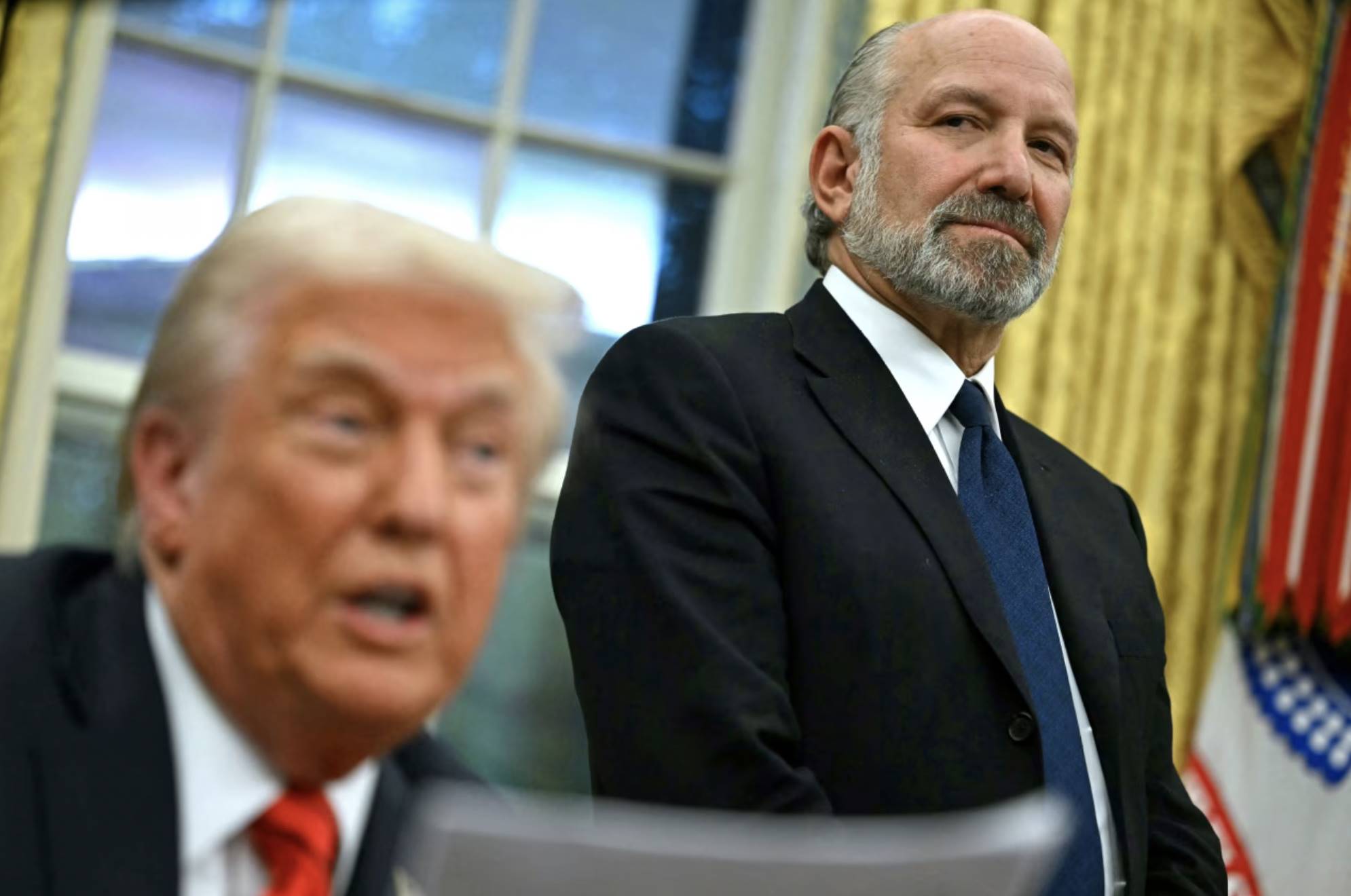
President Trump met with Howard Lutnick in the Oval Office in February; days later, he was appointed Commerce Secretary
During Lutnick’s confirmation hearing, senators pressed him on potential conflicts of interest involving Tether. He argued that criminals use Tether more than USDC simply because Tether has a larger market share. “It’s like blaming Apple because criminals use iPhones,” he said.
When Democratic Senator Maria Cantwell of Washington asked if he would undermine any legislation regulating Tether, Lutnick responded that he had repeatedly expressed his belief that Congress should avoid disrupting “dollar supremacy on the blockchain”—implying lawmakers shouldn’t impose overly burdensome rules that could cost companies like Tether their market share.
He did not commit to refraining from involvement in any federal investigation into Tether, only writing that he would fulfill his duties under government ethics laws. Regarding past discussions with Devasini, Lutnick wrote: “I never suggested to anyone that I would do anything improper regarding Tether.”
Trump issued an executive order aimed at promoting “legitimate dollar stablecoins globally.” It established a presidential crypto task force, including Lutnick, to review regulations for repeal or revision.
After Lutnick left Cantor, his son Brandon Lutnick was named chairman of the company—Brandon had interned at Tether in Lugano.
Meanwhile, Circle donated $1 million to a super PAC supporting pro-crypto candidates and gave $1 million to Trump’s inauguration committee.
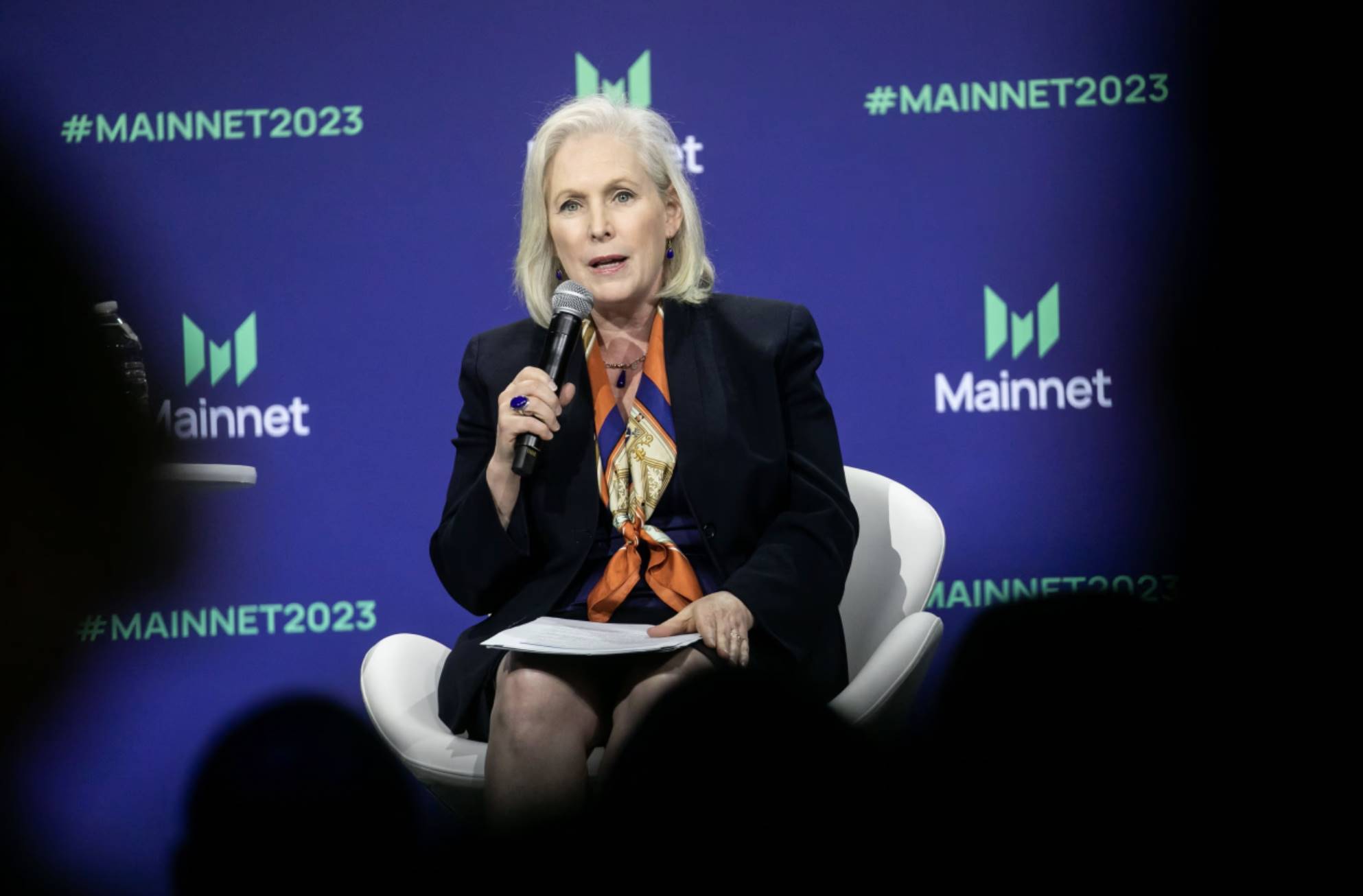
Senator Kirsten Gillibrand helped introduce a bill she says would allow legitimate crypto firms to compete fairly in the market
In February, Lummis and Gillibrand joined two Republican senators in introducing a new stablecoin bill, which Allaire publicly welcomed. Similar proposals emerged in the House. In an interview, Gillibrand said the legislation would allow legitimate crypto firms to compete fairly, “without being undercut or disrupted by bad actors lacking safety standards and transparency.”
She added: “I don’t think Tether currently meets those standards.”
Since mid-December, when USDT was removed from several exchanges, its growth has slowed.
Circle’s valuation has soared. In early February, the total value of USDC finally surpassed pre-SVB-collapse levels. The company is preparing to move into a new headquarters at the World Trade Center in New York City.
Join TechFlow official community to stay tuned
Telegram:https://t.me/TechFlowDaily
X (Twitter):https://x.com/TechFlowPost
X (Twitter) EN:https://x.com/BlockFlow_News