








Deconstructing the Sonic Ecosystem: From Origins to the Future, the Ultimate Unveiling of the Ecosystem Blueprint
TechFlow Selected TechFlow Selected
Deconstructing the Sonic Ecosystem: From Origins to the Future, the Ultimate Unveiling of the Ecosystem Blueprint
Sonic isn't playing small games—the future is about flipping the table and doing big things.
 Navigating Web3 tides with focused insights
Author: Zephyr
Introduction: The Ultimate Deconstruction of the Sonic Ecosystem
Sonic is a high-performance Layer-1 blockchain that has re-emerged into prominence thanks to its 10,000 TPS throughput and EVM compatibility. The return of @AndreCronjeTech, coupled with a transparent 200 million $S airdrop, has ignited tremendous excitement within the crypto community. Drawing from research by influencers such as @0xAlexon, @Foxi_xyz, @DaPangDunCrypto, @y_cryptoanalyst, @CyberPhilos, and @rich_adul, along with my own hands-on experience, I've compiled this comprehensive deep dive into the Sonic ecosystem.
This article traces back from Fantom’s technological origins, analyzes the current thriving ecosystem driven by assets like $S and $Shadow, unpacks alpha opportunities within Sonic, and lays out both the full picture and the most hardcore insights circulating in the space—helping you understand Sonic's past, present, and future potential!
(Skip directly to Section II if you're hunting for contract addresses—and make sure to read Section V.)
I. Origins Deconstructed
Sonic didn’t appear out of thin air; it all starts with Fantom. In 2018, Fantom burst onto the scene with its Lachesis consensus and DAG technology, aiming to do something different.
Fantom experimented with the ve(3,3) model to power a DeFi flywheel—an early precursor to today’s x(3,3) framework. Back then, @AndreCronjeTech was already the "DeFi Godfather." In 2020, he launched $YFI, which skyrocketed from $6 to $95,000—a 2,900x gain. Then in 2021 came $FTM, backed by an $800 million incentive program, surging 180x with TVL peaking at $7 billion. OG users who tested on Fantom’s testnet praised its silky-smooth UX. But later, competition from Solana and Avalanche squeezed its growth, and disaster struck when Multichain’s cross-chain bridge collapsed. TVL plummeted to just $90 million. When the bear market hit in 2022, @AndreCronjeTech announced his retirement—many believed the project was doomed.
Then in 2023, @AndreCronjeTech made a comeback. By 2024, he had upgraded the tech stack and launched the Sonic mainnet. Launched on December 18th, $S listings followed across major exchanges in January, with the token tripling in value within two weeks. TVL exploded 500% in one month, reaching $730 million. As @0xAlexon noted last October: “This isn’t a skin job—it’s a bone marrow transplant.” Indeed, X (formerly Twitter) lit up with chants of “Fantom reborn,” capturing massive attention. This foundational layer was forged by @AndreCronjeTech through sheer technical passion.
But there's more: enter @danielesesta, the so-called “King of Cycles.” Back in 2021, he went all-in on Fantom, launching Popsicle Finance and Solid Swap. Teaming up with @AndreCronjeTech, they propelled TVL from $5 million to over $6 billion. Popsicle’s cross-chain liquidity optimization and Solid Swap’s ve(3,3) model powered a self-sustaining flywheel—laying the groundwork for Sonic’s x(3,3) innovation. His declaration on X—“Fantom is my starting point”—now rings true as he injects fresh energy into the Sonic ecosystem via WAGMI and HeyAnon innovations.
To this day, @SonicLabs maintains a TVL around $700 million—up from just $27 million at the start of the year. It’s worth asking: Is this hardcore resurgence in the Sonic ecosystem worth jumping into?
II. Ecosystem Anatomy
If you want real-time updates on new projects and official endorsements, follow the core team members. Some have changed their handles—check @SonicLabs’ profile for affiliated accounts. Personally, I also recommend @insider_Sonic and @Sonichub_, which curate quality projects and information. Also, fair warning: this section is the longest—please be patient!
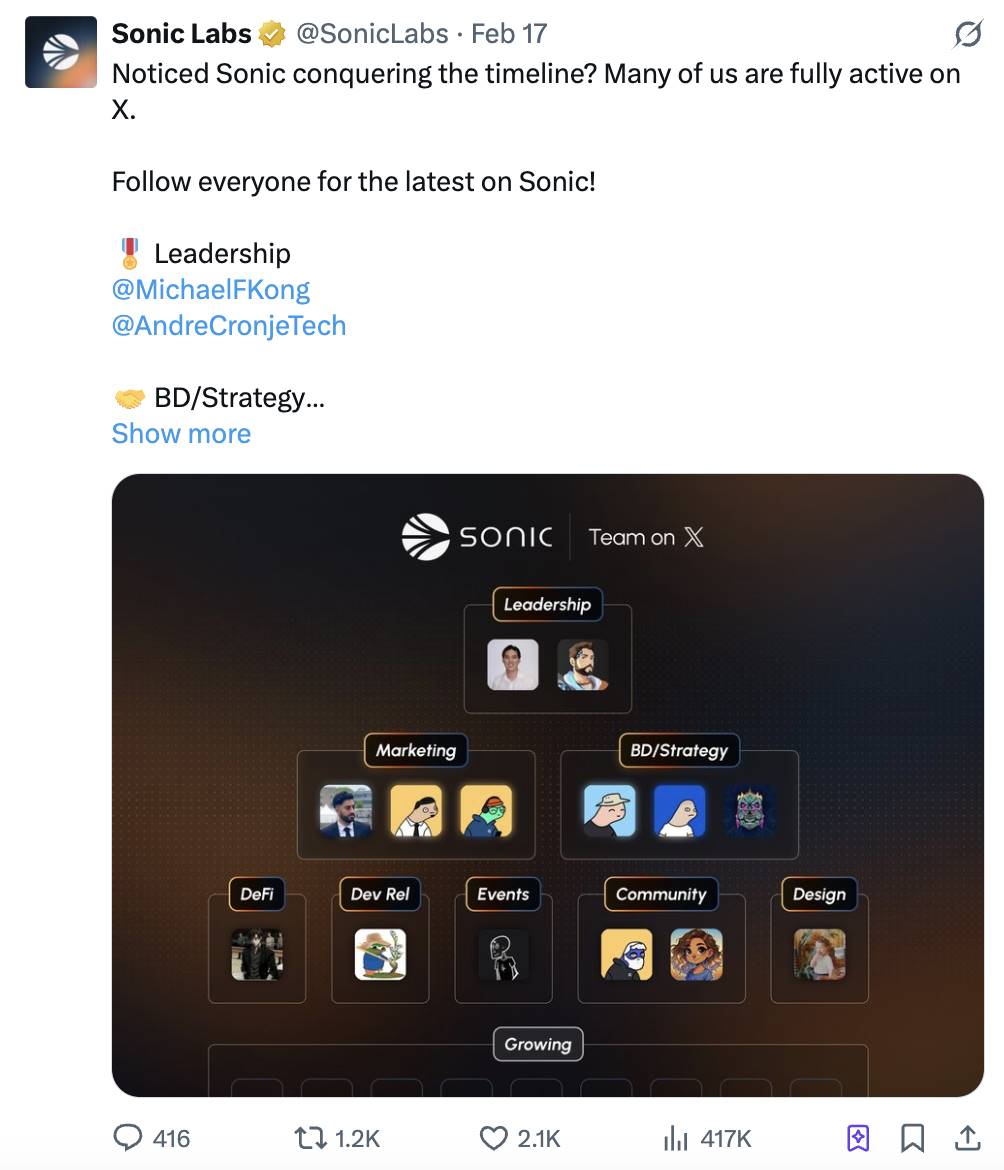
Based on Dapps listed by @SonicLabs eligible for AP (Activity Points) and other trending projects in the ecosystem, this section breaks down the landscape into five categories: Spot DEXs, Lending & Yield, GameFi, Meme coins, and NFTs.
For additional projects, visit https://my.Soniclabs.com/apps. This site also tracks your accumulated Points—you can filter for AP-earning projects via the top-right menu.
Spot Dex
@ShadowOnSonic uses CLM (Concentrated Liquidity Model). As of now, it has over $100 million TVL—roughly one-seventh of Sonic’s total—with cumulative trading fees exceeding $9 million. Its token $SHADOW surged 33x within 20 days post-launch, achieving a ~$26 million circulating market cap. The protocol runs on an x(3,3) model: staking $SHADOW mints Shadow tokens, granting governance rights and fee dividends, with peak APR hitting 5,500%. $x33 serves as a liquid staking derivative, maintaining a stable price ratio (~80%) against $SHADOW via instant exit fees and auto-compounding mechanisms. Early withdrawal incurs a 50% penalty, incentivizing long-term commitment. By end-February, daily trading volume consistently exceeded $50 million.
@MetropolisDEX operates on DLMM (Dynamic Liquidity Market Making). Current TVL stands at $10.42 million, with $500k in cumulative trading fees. Token $METRO has a $10.9 million circulating market cap and a FDV of $220 million. Users stake $METRO for voting power and APR rewards, locking for at least 90 days, with peak APR around 30%. Powered by segmented price bins (“Bins”), it enables near-zero slippage trades, dynamically adjusts fees to counter impermanent loss, supports single-sided liquidity provision, and offers LPs simple mode (auto-deposit) or advanced mode (custom price ranges and allocation shapes: equal, curve, bid-ask). Daily volume averages ~$1.5 million as of February.
@SwapXfi leverages V4 AMM (Algebra Finance’s fourth-gen automated market maker). TVL is currently $55.59 million. $SWPx has a $9.1 million market cap and $1.33 million 24h volume. After launching WBTC/scBTC pool, price rose 58.7%, with peak APR over 80%. The V4 AMM ensures low slippage, optimized capital efficiency via concentrated pools and automated liquidity management, supports single-token deposits (via ICHI ALM), and multiple pool types (Classic Volatile, Stable, CLAMM). Staking $SWPx grants voting rights and rewards under a VE(3,3) lock-up incentive model. Average daily volume: ~$2 million by end-February.
@wagmicom uses GMI (Multi-layer Pool Model). TVL sits at $17.5 million. $WAGMI has a $33 million market cap, $950k 24h volume, up over 95% since launch, with peak APR ~50%. The GMI multi-tier structure optimizes liquidity using nested V3 sub-pools that auto-rebalance during volatility. LPs can deposit single assets, with profits distributed proportionally based on $WAGMI holdings. 80% of newly minted tokens fund leveraged trading and GMI pool incentives. Staking $WAGMI generates sWAGMI, entitling holders to 20% of protocol fees. Flexible lock periods, with over 60% currently staked. Daily volume averaged ~$3 million by end-February.
Lending and Yield
@SiloFinance uses an isolated lending model. With $200 million TVL, it dominates the network—accounting for nearly a third of total TVL. Its isolation pools allow high-leverage looping strategies, where each pool operates independently to contain asset-specific risks. Users can deposit $S or stablecoins like $ScUSD to amplify yields via recursive borrowing. Depositing $ScUSD earns 18x SonicPoints bonus; USDE deposits yield 12% APR. However, much of the TVL is inflated due to looping—actual organic TVL may be closer to $20 million (about 10%). Still, it’s ideal for users chasing maximum Points: looping essentially trades interest spreads for points.
@eulerfinance allows users to earn interest by depositing assets (e.g., scETH, stS, scUSD, wstkscUSD) or borrow other tokens by collateralizing them. It supports looping strategies from day one—effectively a one-click leveraged yield platform. That said, its UX and optimizations are poor. For similar needs, manual looping via @SiloFinance is recommended.
@OriginProtocol and @beets_fi offer liquid staking solutions: deposit $S to receive $OS (12% APR) or $Sts (4.75% APR). Both derivatives are fully liquid and composable across DeFi (lending, liquidity pools, etc.). However, their exchange rate with $S isn't fixed at 1:1, introducing liquidation risk when used in leveraged protocols.
@Rings_Protocol creates synthetic assets pegged to USD, ETH, and BTC (e.g., $ScUSD, $ScETH, $ScBTC). Users collateralize stablecoins to participate in yield farming strategies managed by Veda Labs, generating high returns. The platform offers passive staking income, fixed-rate options, and yield leverage. These meta-assets earn boosted Sonic Points, especially $ScUSD.
@HandofGodSonic takes inspiration from Tomb Finance, using AI (@GodSonic_AI) to automatically rebalance emissions, bonds, and supply every six hours—aiming for emotion-free stability. The token system includes $HOG (pegged), $gHOG (governance/rewards), and $bHOG (bonding). Currently ranked among Sonic’s top 10 by TVL, $gHOG is scheduled to launch next week. (Looks good on surface—but structurally flawed; see Section V.)
@spectra_finance tokenizes future yield into Principal Tokens (PTs) and Yield Tokens (YTs), allowing users to sell future returns upfront or lock in principal. PTs offer fixed rates to hedge volatility; YTs enable speculation on yield. Built-in AMM facilitates YT trading, enabling yield speculation and periodic payouts. Permissionless design lets anyone create yield pools from ERC-4626 tokens. No early withdrawal allowed—enhancing composability but increasing complexity. (Hard to use. Start small. Read docs carefully.)
@eggsonSonic aims to establish $EGGS as a reserve currency akin to OHM in prior cycles. Users mint $EGGS by depositing $S, redeem $EGGS for $S, or borrow $S with leverage. Over 13.86 billion $EGGS burned; $662.8k worth of $S borrowed. TVL: $73.95 million.
@HeyAnonai is an AI-powered DeFi protocol simplifying interactions on Sonic via conversational AI and real-time data aggregation. Users interact naturally with HeyAnon to execute complex operations: bridging, swapping, staking, lending. Developed by renowned builder @danielesesta. $Anon available on major chains.
GameFi
@sacra_fi launched in April 2022, completed three BETA rounds, and officially went live in Q2 2024. Partnered with @SonicLabs on a 500,000 $S reward program. See @rich_adul’s video for details. $SA peaked at $24, now trades near $0.08.
@FateAdventure features @AndreCronjeTech’s avatar as one of its characters. Funded by @SonicLabs in seed round—essentially a “core project.” A clear P2E blockchain game where players earn $FA through tasks, battles, and NFT usage. $FA reached $2, currently at $0.76.
Meme
Risk Warning: @AndreCronjeTech has publicly expressed disdain for meme coins.
@GOGLZ_Sonic — leading meme coin, goggles-themed, nearly flipped several times.
@TinHat_Cat — conspiracy cat. Extremely volatile price action. NFT floor remains high with steady volume—truly a Cabal play.
@derpedewdz — Derp is the NFT-linked token. NFT holders receive free claims and airdrops. Uppies is a community-driven meme contest project.
@MIMonSonic — launched on @wagmicom, recently airdropped to Dero holders (~$10+ value). Wizard theme.
@PassThe_JOINT — smoke-404 concept. Sold blind boxes on NFT marketplace; opened to random token amounts. Sold out instantly upon listing. Market cap lingers around $200k.
@haunted_ice and @Memetoona — both purchased personally by @danielesesta using @HeyAnonai. Both remain very low market cap.
NFT
The primary NFT marketplace on Sonic:
@derpedewdz is the blue-chip NFT of the Sonic ecosystem. Official team members proudly hold and display these NFTs as profile pictures. Even @AndreCronjeTech recently switched to a Derp pfp—confirming its龙头 (top dog) status. Only 2,000 minted. Many community members hold dozens. Airdrops to holders keep coming—some exceeding $10,000. Projects frequently grant whitelist spots directly to Derp holders. For anyone seriously engaging with Sonic, holding at least one Derp NFT is recommended: it’s both OG verification and cultural participation. (See? I’m a Derp too.)
@MetropolisDEX NFT ranks among those with sustained high volume and floor price. Initially distributed via fair launch, holders received token purchase quotas scaling with NFT count. Early Metro NFTs were claimable after completing simple tasks. Current floor: 1,400 $S. The team continues adding utility—future airdrops and WL access likely.
@LazyBearSonic was a fair mint NFT (<1 $S cost). Join DC + form submission = guaranteed WL. Mint lasted four hours. Peak floor approached 500 $S, now ~300 $S. Early adopters and savvy multi-account minters earned thousands to tens of thousands in $S.
III. Airdrop Opportunities
@SonicLabs has openly announced a 200 million $S airdrop. @DaPangDunCrypto’s analysis covers the distribution thoroughly—I won’t repeat it here. Instead, let’s discuss maximizing gains.
Sonic Airdrop Analysis
Is there an opportunity for airdrop farmers?
Absolutely!
I reference @JupiterExchange’s airdrop data here because @SonicLabs hasn’t yet revealed the Points algorithm or ranking methodology—making precise strategy impossible. If/when more data emerges, I’ll share updated guidance.
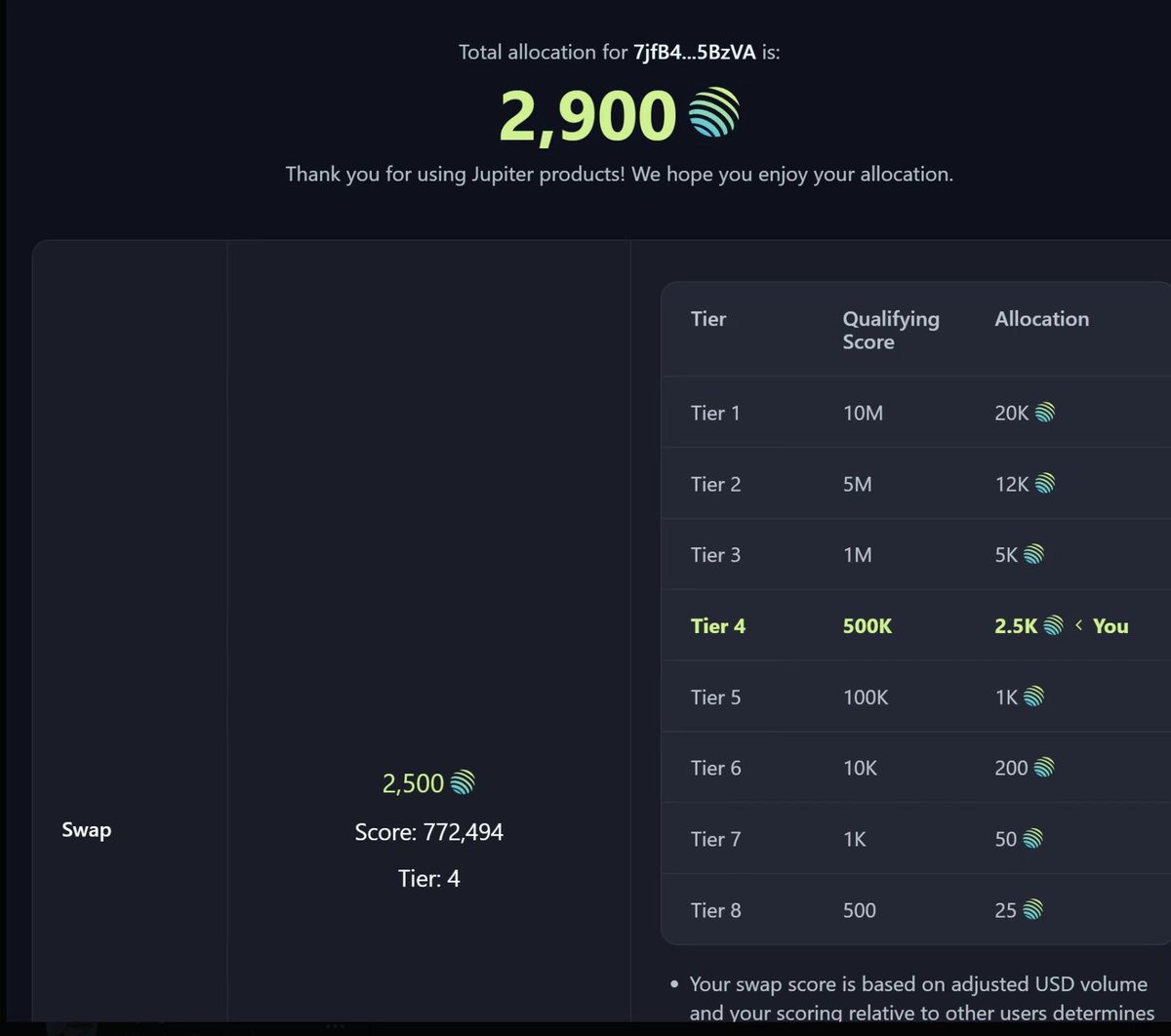
@JupiterExchange categorized trading addresses into eight tiers. Data shows Tier 7–8 addresses received 5% of total airdrop relative to volume, Tier 6 got 2%, Tier 5 only 1%, decreasing further upward—Tier 1 received just 0.2%. This reveals a critical insight: higher volume doesn’t guarantee higher rewards. In fact, reward-to-volume ratio declines as volume increases. Therefore, spreading activity across multiple wallets near tier thresholds could yield disproportionately better returns. While no official data exists yet—even AP isn’t visible on dashboard—the @ShadowOnSonic dashboard does show Point rankings, offering a clue. For example, 510k points ranks ~14,000th. Strategically, aim for ~20,000th per address, pushing key wallets into 10k–5k range to avoid being pushed into top tiers where point weight diminishes.

This is speculative, of course—just my personal hypothesis. For small-cap users, the real alpha lies in discovering early opportunities. Yet as a DeFi chain, Sonic allows extremely high point farming, presenting a genuine path to profit.
IV. Future Vision
Here’s Grok’s ultimate take on Sonic’s trajectory:
Sonic isn’t here for minor plays—it’s built to flip the table and go big.
@AndreCronjeTech’s technical vision burns stronger than ever. The 2,900x of $YFI and 180x of $FTM were just appetizers—he’s saving the main course for Sonic. With #1 TPS across all chains, FVM (Fantom Virtual Machine), and DB upgrades (LiveDB + ArchiveDB), performance is maxed out.
Sonic introduces L1.5 architecture—splitting full nodes into Validators and Archive Nodes—for leaner, faster operation. This foundation empowers dominance in DeFi and GameFi, positioning Sonic to crush slower competitors. Watch Sonic Gateway: its cross-chain bridge is insanely fast, challenging Ethereum head-on. By unlocking stETH, wBTC, and similar assets, $S will catalyze explosive TVL growth.
On the ecosystem front, $Shadow and Metropolis are just starters. Sonic’s high performance will revolutionize DEXs. Innovations like x(3,3) and DLMM will evolve rapidly. Expect $Shadow TVL to surpass $150 million, Metropolis optimizing single-sided liquidity efficiency—and many more hardcore protocols to emerge. With $140 million in incentives deployed and 200 million $S airdrop arriving June, developers will flock in. Sonic Labs holds another 200 million $S in its Innovator Fund—AAA-tier projects aren’t just possible, they’re inevitable. And I suspect AC has even bigger plans: his roadmap mentions black-box tech like money markets, options, and leveraged mining—all destined for Sonic. The ecosystem will explode.
The community flywheel—powered by Sonic Points and Gems—is spinning fast. Airdrop farmers earn PP, LPs collect AP, early miners chase high-risk/high-reward plays—even casual users double returns effortlessly. Going forward, Sonic will tightly couple users and developers. Points and Gems won’t just be rewards—they’ll become engines driving ecosystem growth.
Sonic will differentiate via killer DApps. Communities will engage deeper—LPing, staking, NFT collecting—all feeding the flywheel. Once spinning, Sonic could drain liquidity from competing chains.
And it won’t stop at L1. AC’s 8-year-old technical blueprint includes forex AMMs, leveraged spot, and options mining. Upgraded Sonic Gateway will pull Ethereum’s TVL cross-chain. $S will cement its status as hard currency.
Sonic’s performance edge enables a comeback. But it won’t stop at DeFi—it will absorb GameFi, NFTs, and more, carving out an entirely new frontier. The entire Web3 space is watching: if Sonic succeeds, it could reshape everything.
V. Practical Breakdown
In my view, @SonicLabs fits @CyberPhilos’ definition of an early-stage ecosystem: small market cap, potential for low-cost early airdrops, real utility and community—worth investing time and capital early to grow alongside.
Recall: Derp NFT minted at 100 $S now trades at 2,000 $S. Holding Derp also earned $xshadow airdrop worth over $10,000 at peak—and new airdrops keep flowing. Recently, LazyBear was free-mintable via DC form submission—peaked near 500 $S. Even Metro NFTs, once freely claimable, now trade above 1,000 $S. I believe Sonic is still in its infancy—abundant alpha awaits. I’m happy to build with the pioneers!
Recommended Read: Why I Believe SONIC Is Still Early
Recommended Read: Bullish Cases for the Sonic Ecosystem
How Should Retail Investors Participate in Sonic?
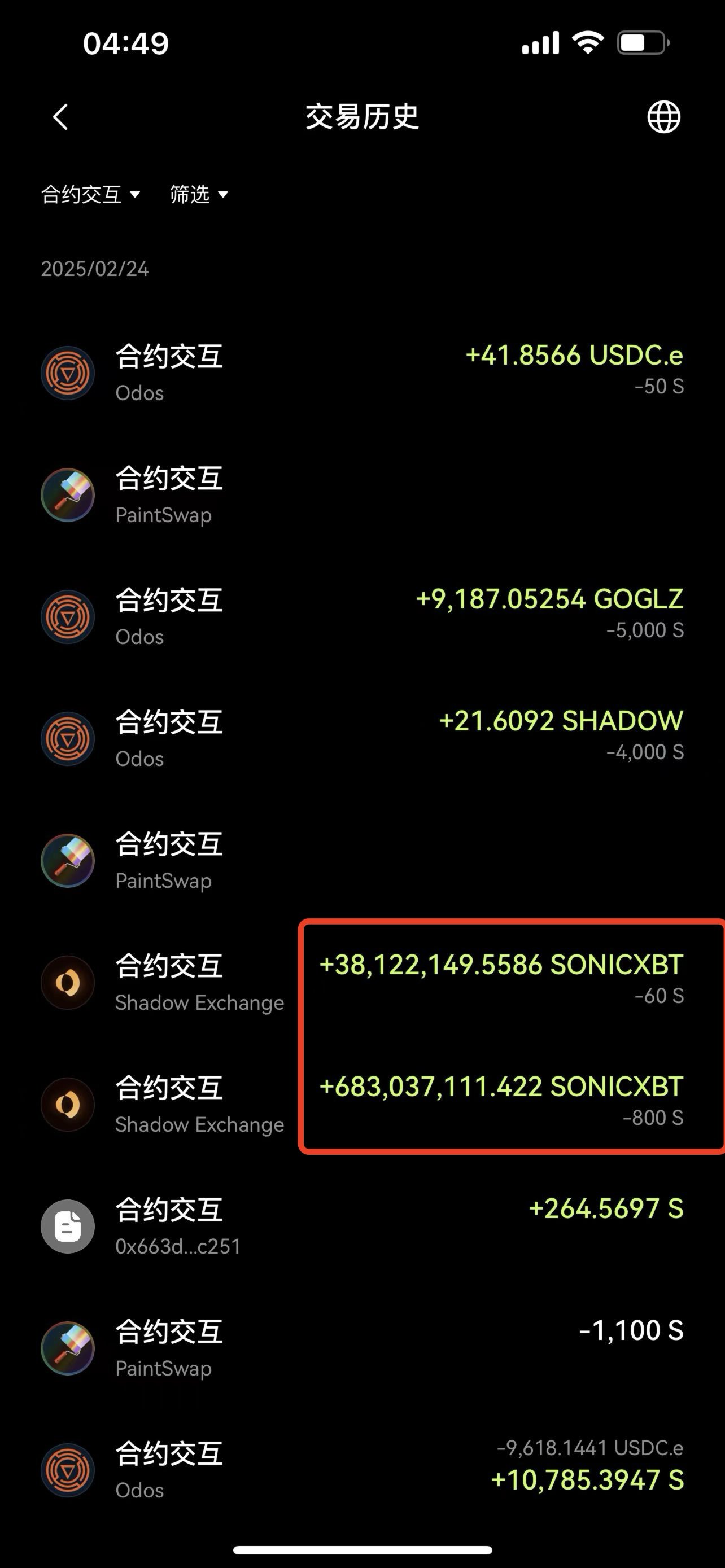
Security is paramount. Funds can vanish through scams, bugs, or missteps. Sonic’s infrastructure is still immature. Buying non-endorsed tokens carries huge risk—you often can’t verify if contract permissions are renounced. I myself fell victim: bought $Sonicxbt after seeing chatter in a group chat. Saw low market cap, remembered $BNBxBT, didn’t think twice—bought 800+ $S. Got rekt. Classic scam coin.
Stay alert when interacting with diverse protocols. Always test with small amounts first. Many DeFi platforms penalize quick in-and-out behavior via high slippage or taxes. Especially in staking platforms—@spectra_finance, for instance, converts your scUSD into confusing tokens like wstkscu and sw-wstksc. Conversion paths aren’t clearly marked—buried in lengthy documentation. That’s why small-scale testing is essential. When things go wrong, it’s painful.
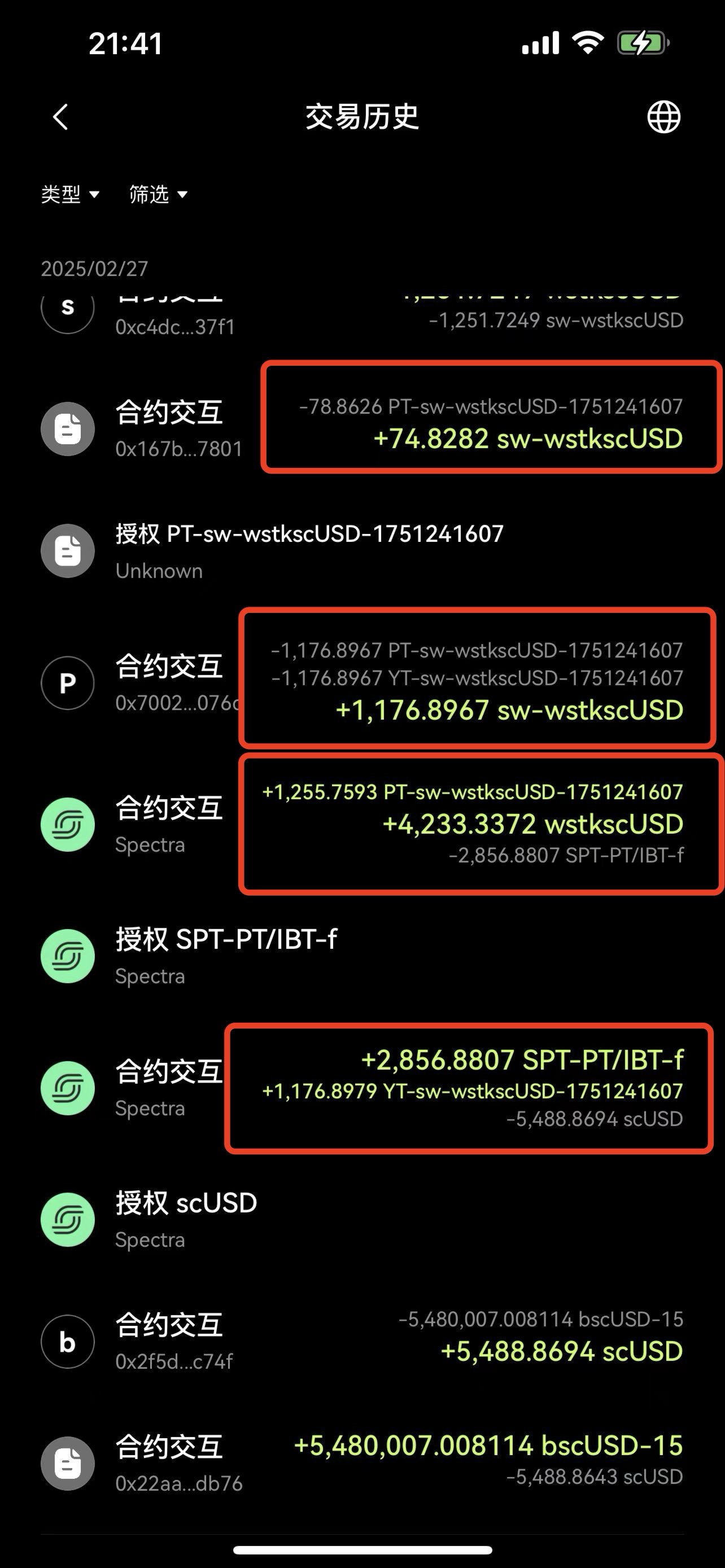
For retail investors, grinding DeFi alone isn’t efficient. To scale up, you must hunt alpha—especially new projects. But stay vigilant. Assess rug-pull risks and always read the documents. (If you’re too lazy—follow me. I’ll post about promising new launches.)
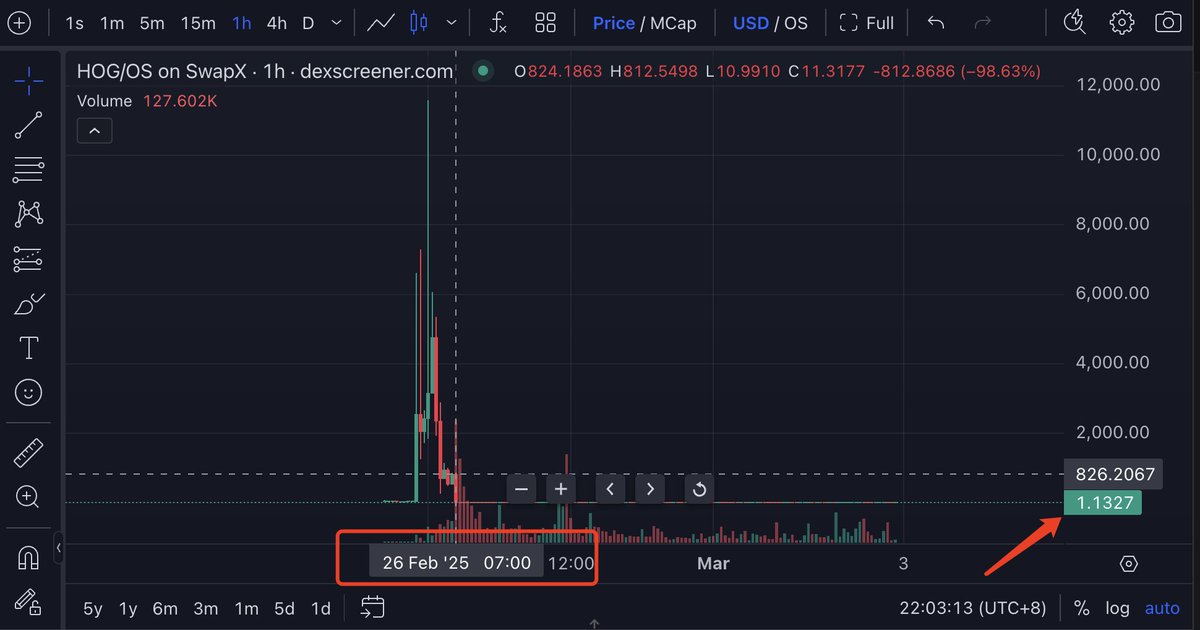
Take @HandofGodSonic as a case study. Phase one involved depositing to mine $hOG. Price briefly spiked to thousands of dollars, then crashed hard. Officially, $hOG is soft-pegged to $os—meaning it should stabilize near $1. I warned my group: price was artificial; dump after mining. Plus, 1% tax on deposits. Before distribution began, sky-high $hOG price drove APRs into tens of thousands of percent daily—then dropped steadily, eventually falling below 0.1% daily (requiring 10+ days to break even). Worse, some LP pairs couldn’t withdraw—effectively locked. Retrospectively: suspicious. Project incentivized depositing $os/$hOG pairs (no tax, highest APR) with forced lockups. Top-yield pools were official partners: $os as base pair, $Swpx from partnered DEX. These received up to 30,000 $hOG/day, while others got as little as 2,000.
Always read the docs. One overlooked detail can make or break your outcome.
Join TechFlow official community to stay tuned
Telegram:https://t.me/TechFlowDaily
X (Twitter):https://x.com/TechFlowPost
X (Twitter) EN:https://x.com/BlockFlow_News
 @ZephyrTrading






