









Has the spring of crypto regulation arrived? A review of recent batch settlements and dismissals between the SEC and crypto companies
TechFlow Selected TechFlow Selected
Has the spring of crypto regulation arrived? A review of recent batch settlements and dismissals between the SEC and crypto companies
US SEC exonerates "wrongful cases," bringing regulatory dawn for crypto.
 Navigating Web3 tides with focused insights
Author: Golem, Odaily Planet Daily
Although the recent cryptocurrency market has shown signs of weakness, with Bitcoin falling over 10% in the past seven days and briefly dropping out of the top ten global asset rankings by market capitalization, there are positive developments emerging in crypto regulation.

Well before Trump officially took office, pro-crypto organizations such as the Chamber of Digital Commerce in the U.S. had already listed a key “Day One” agenda for the new SEC: launching a review of all existing crypto-related investigations, Wells Notices, and ongoing litigation, and seeking to pause cases that do not involve actual fraud or investor harm.
On January 20, 2025, Gary Gensler, who had led the U.S. SEC for four years, officially stepped down. Mark Uyeda has since served as the acting chair of the U.S. SEC. Within just one month, the new SEC leadership fulfilled its promise, shifting away from Gary Gensler’s stringent regulatory stance toward crypto firms during his tenure, and began settling and dismissing a batch of crypto-related lawsuits. Odaily Planet Daily has compiled these cases in the chart below:
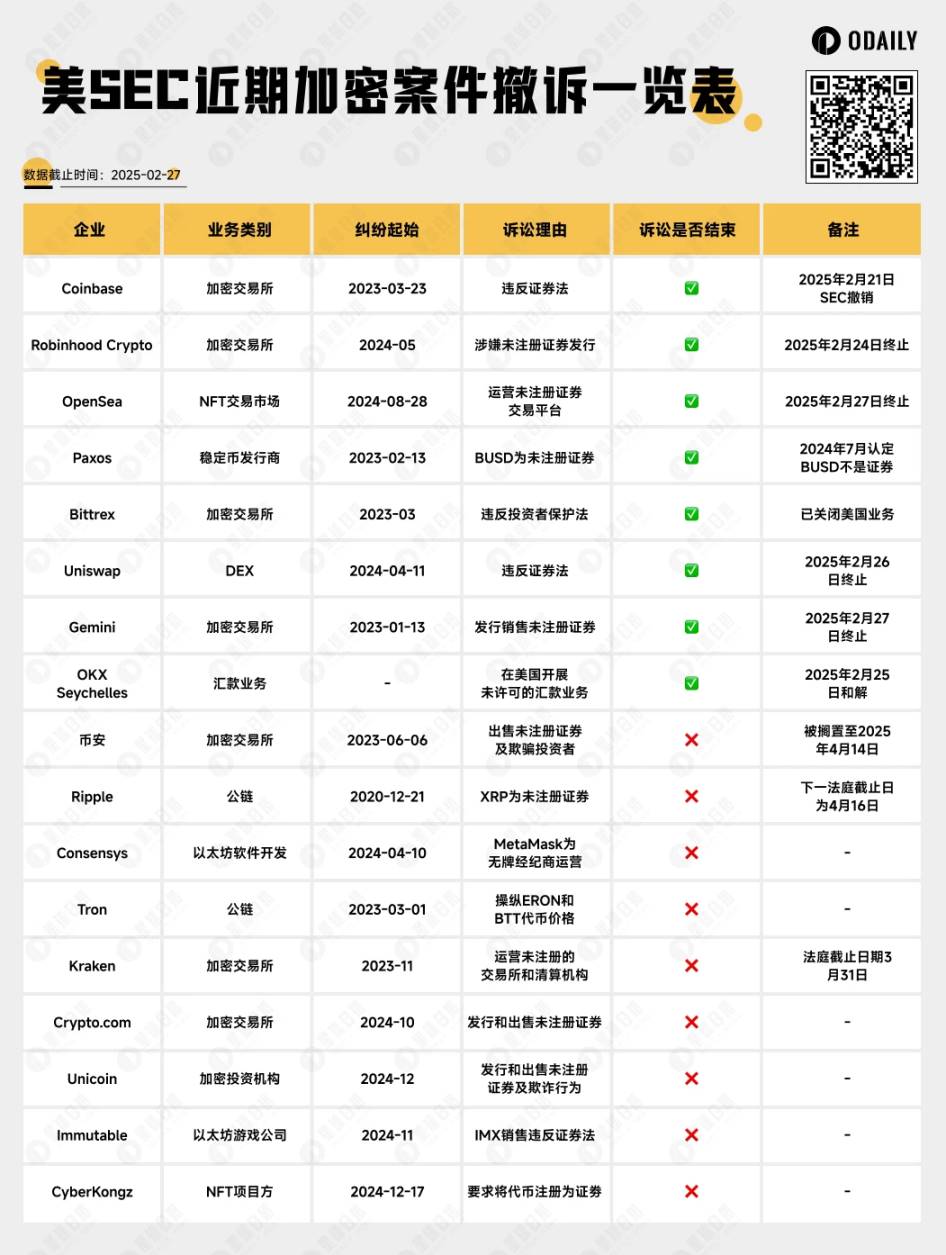
Crypto Companies: Years of Persistence Finally Bring Hope
Prior to the settlements and dismissals, many crypto companies had been engaged in prolonged battles with the U.S. SEC lasting several years.
The dispute between Coinbase and the U.S. SEC dates back to 2021. In September 2021, the SEC issued a Wells Notice to Coinbase regarding its lending product, Coinbase Lend—a non-binding warning typically issued before initiating civil proceedings against a public company. Upon receiving the notice, Coinbase chose not to fight and instead canceled its planned crypto lending program.
However, in March 2023, the SEC issued another Wells Notice to Coinbase, indicating potential violations of U.S. securities laws, particularly concerning staking services and asset listings. This time, Coinbase stood firm. CEO Brian Armstrong stated, “Coinbase must prepare for a court battle with the SEC that could last years. If things worsen, we may consider making more investments overseas, including potentially relocating from the United States.”
Other companies adopting similarly firm positions include Uniswap and OpenSea.
In April 2024, Uniswap received a Wells Notice from the SEC and clearly declared it would “fight back” all the way: “We must stand up to U.S. government agencies to protect our company and industry. This fight will last years, possibly going all the way to the Supreme Court. The future of fintech and our industry hangs in the balance.”
In August of the same year, OpenSea also received a Wells Notice from the SEC, accusing it of operating as an unregistered securities exchange and attempting to classify NFTs as securities. OpenSea likewise chose to fight for the industry and, to help ensure creators can continue their work without fear, pledged $5 million to cover legal fees for NFT artists and developers who also received Wells Notices.
In reality, fighting litigation against the SEC is no easy task. As Uniswap co-founder Hayden Adams remarked when the SEC dropped its investigation into Uniswap on February 26: “The SEC’s prior investigation lasted three years, wasted millions of dollars and significant time, and had a major impact on the company.”
The human, material, and financial burdens involved in such legal battles are beyond what most companies can endure. Some crypto firms did not survive long enough to see this era of regulatory reversal and vindication.
For example, Paxos, a stablecoin issuer, received a Wells Notice from the U.S. SEC in February 2023 over BUSD, a stablecoin jointly issued with Binance, alleging that BUSD was an unregistered security. On that very day, under pressure from the New York State Department of Financial Services, Paxos halted issuance of BUSD. Although Paxos initially fought back, arguing BUSD was not a “security” and even suing the SEC, it ultimately could not withstand the pressure. Binance announced in November 2023 that it would gradually phase out BUSD. Ironically, in July 2024, the SEC dropped its investigation into Paxos, concluding that BUSD was not a security.
The Spring of Crypto Regulation Has Arrived
The crypto market expects two key promises from Trump’s administration: establishing a strategic Bitcoin reserve and reversing the SEC’s hostile stance toward crypto. While progress on state-level approvals for a Bitcoin reserve remains sluggish, the SEC’s shift in attitude toward crypto is visibly improving.
The SEC’s move to drop lawsuits is creating a ripple effect. After the dismissals of cases against Coinbase and Robinhood, exchanges like Binance and Kraken may also see relief, as the legal basis for actions against these platforms follows similar regulatory logic to the Coinbase case. Additionally, according to Fox Business reporter Eleanor Terrett, given the SEC’s recent focus on staking, the agency may reconsider its lawsuit filed last year against ConsenSys over MetaMask’s staking service.
The wave of dismissals will also benefit tokens previously treated as securities, including BNB, SOL, and ADA, potentially ushering in a new “policy-driven bull run.” The spring of crypto regulation has indeed arrived, bringing the crypto industry one step closer to mainstream recognition.
Join TechFlow official community to stay tuned
Telegram:https://t.me/TechFlowDaily
X (Twitter):https://x.com/TechFlowPost
X (Twitter) EN:https://x.com/BlockFlow_News
 Odaily






