








From North Korea to Nigeria, "state looting" hidden within the cryptocurrency market
TechFlow Selected TechFlow Selected
From North Korea to Nigeria, "state looting" hidden within the cryptocurrency market
The rise of cryptocurrency is not merely a technological wave, but also a profound rebellion against the "legitimate violence" of monetary plunder.
 Navigating Web3 tides with focused insights
Author: Daii
This weekend, the North Korean hacker group—Lazarus Group—made headlines again. This time, they pulled off a massive heist, stealing nearly $1.5 billion worth of Ethereum from the Bybit exchange. It's the largest theft in cryptocurrency history and has significantly impacted the market, causing ETH’s price to drop from around 2850, nearly breaking below 2600.
The method used by these North Korean hackers this time wasn’t complicated—it relied on social engineering to trick individuals into executing malicious programs. At the end of last year, I analyzed their deception process in detail in "Are Cold Wallets Really Safe? How an Experienced Journalist Lost $400,000," which also includes useful tips for ordinary users to avoid scams. I recommend you check it out when you have time.
But actually, there’s another issue that deserves even more of your attention: Nigeria is demanding $81.5 billion in compensation from Binance, including $2 billion in taxes and $79.5 billion in damages.
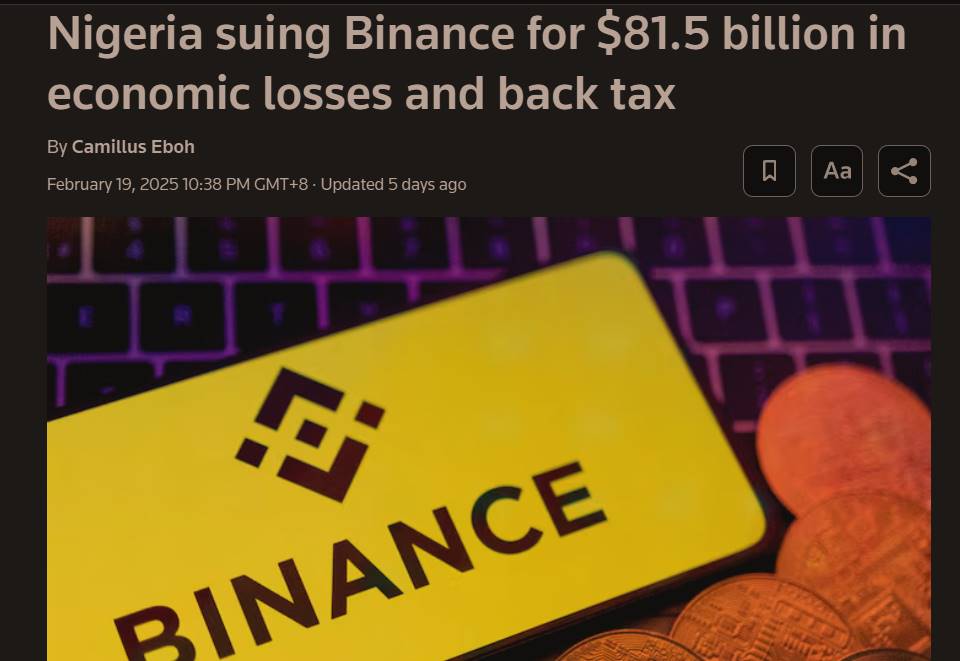
Hacking is simply crime—there’s no debate. We should all work together to catch the criminals and minimize losses. But the truth behind Nigeria’s $79.5 billion claim isn't so clear-cut.
Have you noticed that both incidents share one commonality—the shadow of state involvement? Cryptocurrency is becoming a new battleground for geopolitical competition, and the entry of state powers makes this process even more complex and challenging.
So what exactly did Binance do to warrant such massive compensation from Nigeria?
All Binance did was provide Nigerian citizens with a P2P platform to buy cryptocurrencies using fiat currency, allowing them to convert Naira (NGN) into Bitcoin or USD-pegged stablecoins during periods of currency devaluation.
Of course, I don’t particularly like Binance either. They’ve been involved in practices like front-running and targeted liquidations.
The reason I’m speaking up for Binance today is because centralized exchanges play a core role in blockchain ecosystems by offering secure and convenient on-ramps from fiat to crypto.
If Nigeria succeeds this time, many other, even more aggressive countries will follow suit. Eventually, people might stop stealing altogether and just resort to open robbery. Cross-border secret arrests of executives at centralized exchanges could become a profitable business for rogue states, damaging the entire blockchain ecosystem. This isn’t alarmist—it’s already happening. The root cause lies in the fact that currently, nation-states are the only entities legally allowed to wield violence.
Alright, let’s first understand exactly what happened between Nigeria and Binance.
1. Did Binance Cause the Naira to Depreciate?
On February 19, 2025, Nigeria’s Federal Inland Revenue Service (FIRS) filed a lawsuit demanding that Binance, the world’s largest cryptocurrency exchange, pay $79.5 billion in economic damages and $2 billion in taxes, claiming Binance’s “illegal operations” caused the Naira to depreciate by 70% and triggered severe inflation.
Nigeria’s accusation appears “logically sound”: Binance facilitated large-scale Naira trading, enabling users to convert local currency into crypto dollars (e.g., USDT) or Bitcoin via its P2P market, driving up foreign exchange demand and collapsing the Naira’s exchange rate. In 2023, Nigeria’s central bank claimed $26 billion flowed illegally through Binance, while inflation surged to 33.88% in 2024.
But the reality behind the data is more complex.
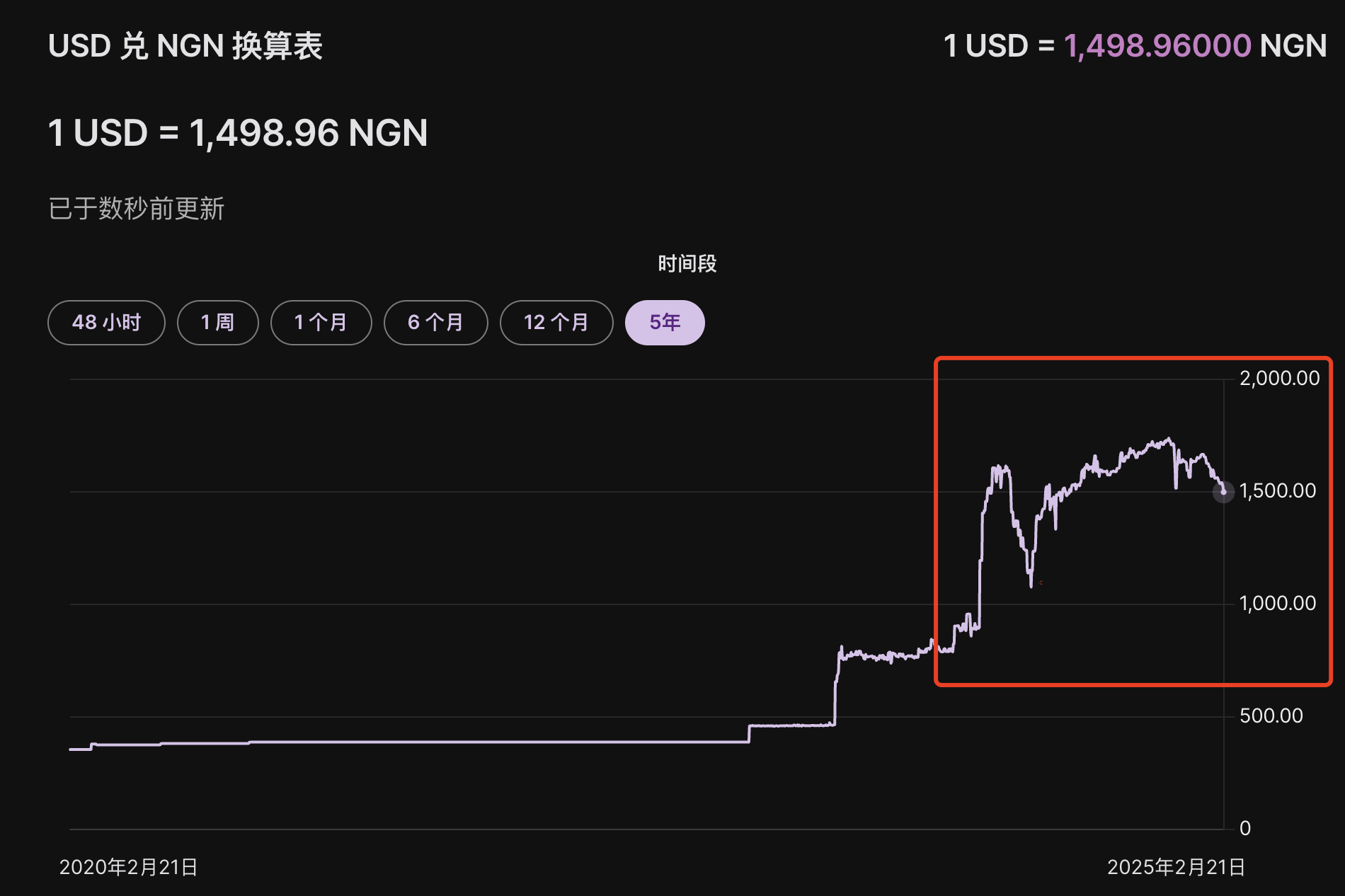
Binance was technically an “accomplice”: its platform provided people with an easy tool to bypass foreign exchange controls. Amid Naira depreciation and dollar shortages, cryptocurrencies became a new “safe-haven asset”—where people once relied on underground remittance networks to obtain U.S. dollars, now all they needed was a smartphone. In March 2024, Binance was forced to shut down Naira trading services, but by then the Naira had already hit record lows, reaching 1605 NGN per 1 USD.
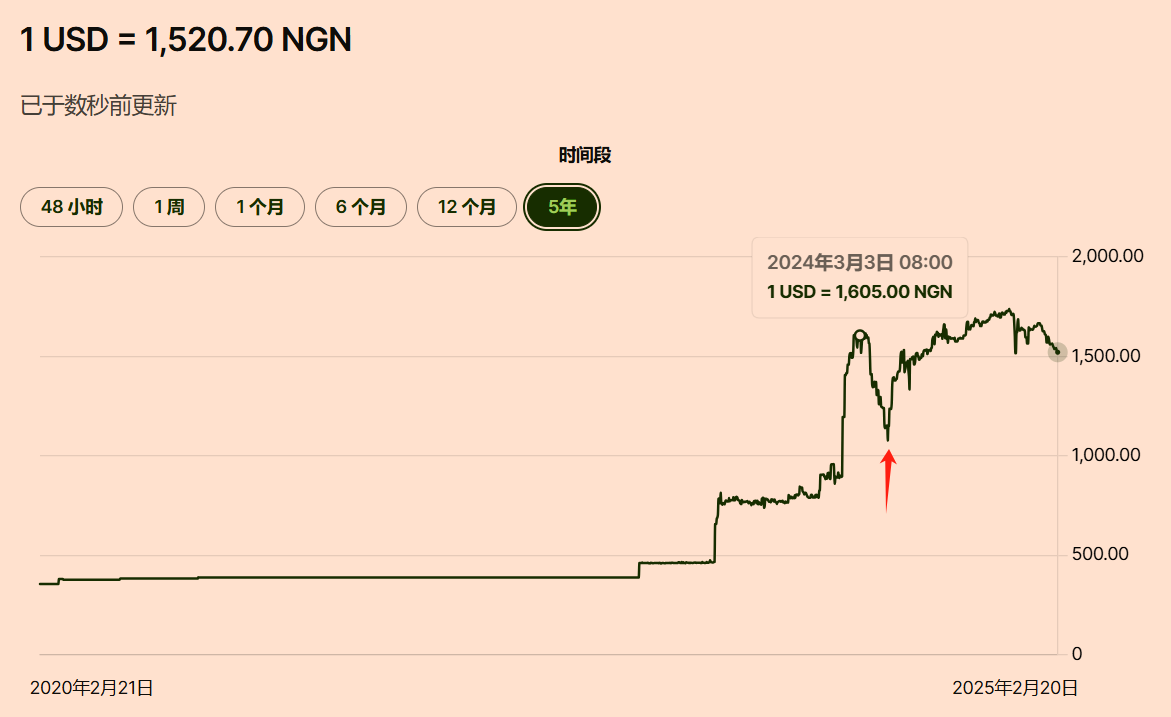
First, we must rule out Binance as the primary culprit behind the Naira’s collapse.
Because after Binance left, the exchange rate briefly recovered to 1100 NGN per 1 USD in mid-April 2024 (see chart above). However, you’ll notice the rate later plunged back near historic lows, currently hovering around 1500 NGN per 1 USD.
Thus, without Binance, the Naira still fell dramatically. The reasons for this will be explained in detail shortly. But for now, we can clearly conclude that Binance was not the real perpetrator.
Then who really is responsible?
2. Who Is the Real Culprit Behind the Currency Crisis?
The real culprit is Nigeria itself, primarily due to three major issues:
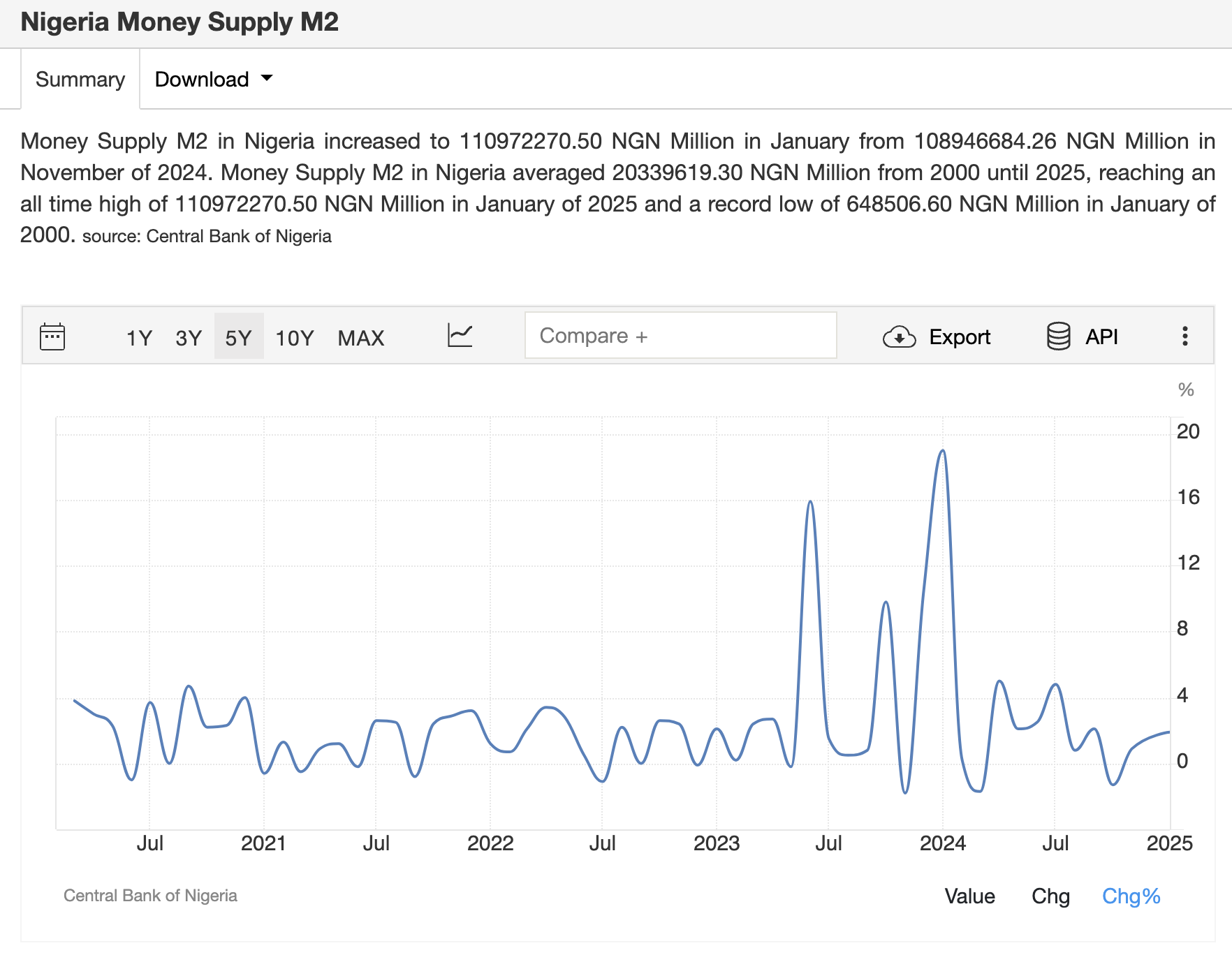
Surging M2 money supply: Since 2019, Nigeria’s M2 has grown over 17%, far exceeding GDP growth, directly fueling inflation.
Oil dependence and foreign exchange shortage: 80% of Nigeria’s foreign revenue comes from oil exports, but unstable production has depleted dollar reserves, pushing up import prices, especially food.
Policy failures: In 2023, President Tinubu relaxed foreign exchange controls to attract foreign investment, but instead triggered a free-fall in the Naira’s value.
Note: In Nigeria, currency depreciation and inflation occurred simultaneously, reinforcing each other in a powerful positive feedback loop.
What is positive feedback?
A simple example: point a microphone at a speaker and shout—you’ll hear a piercing screech. That’s the most basic form of positive feedback in real life.
In Nigeria’s case, the positive feedback loop between currency depreciation and inflation works like this:
As the Naira depreciates, import prices skyrocket, leading to sharp increases in domestic prices. High prices raise living costs, further accelerating inflation.
To protect against Naira depreciation, citizens increasingly use P2P platforms like Binance to convert Naira into cryptocurrencies (Bitcoin or USD-pegged stablecoins), further weakening the Naira.
According to data from Nigeria’s National Bureau of Statistics, the link between Naira depreciation and inflation was especially strong in 2023. For instance, annual inflation reached 32.85%, while food prices rose over 40%.
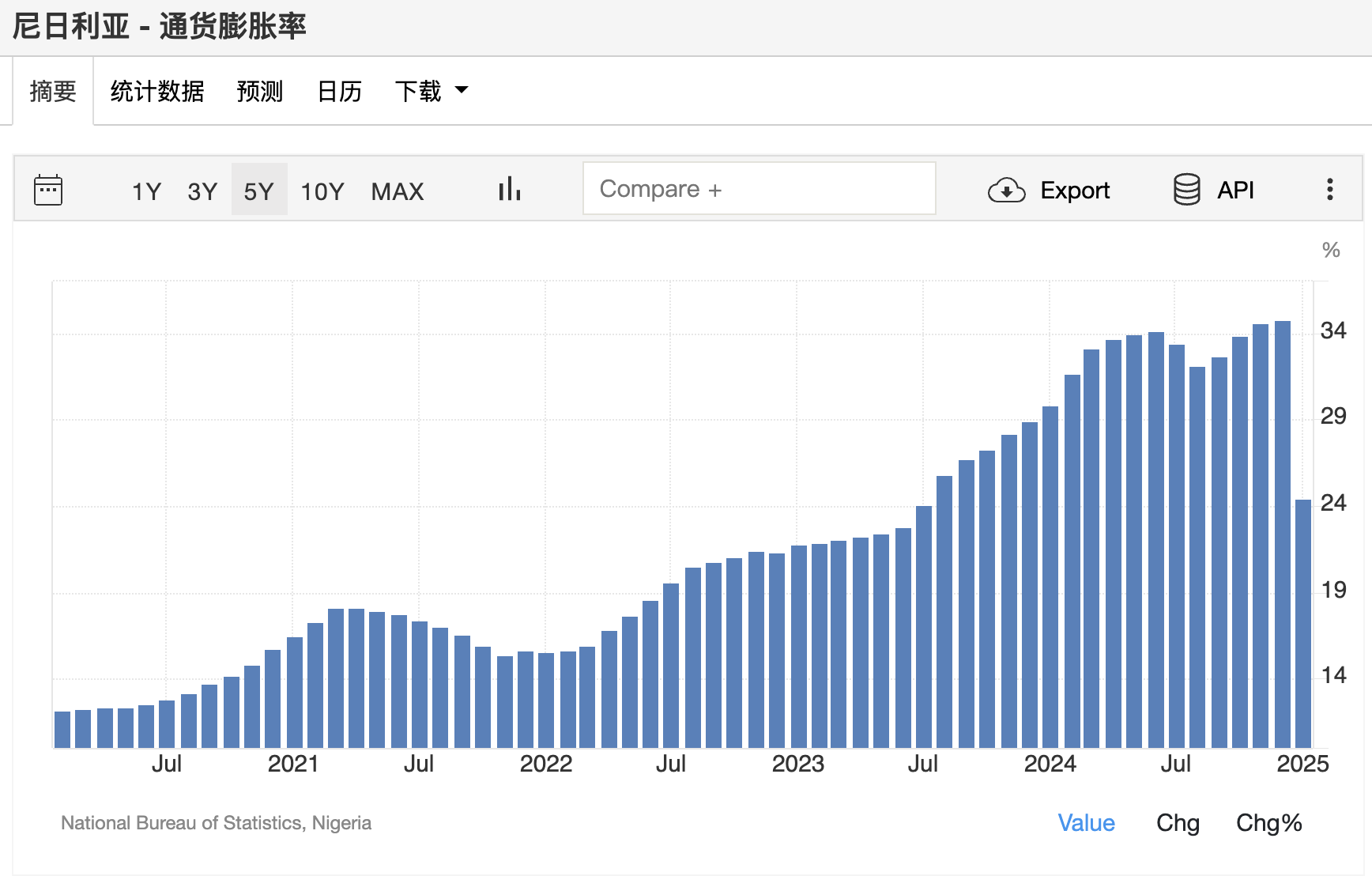
The good news is that since 2025, Nigeria’s inflation rate has declined from a peak of 34.8% to around 24% (see chart above).
However, you should know that 24% inflation is still very high. If Nigeria fails to address this issue, it risks becoming another Venezuela.
Comparing Nigeria’s economic struggles with Venezuela reveals striking similarities.
Venezuela has suffered severe currency depreciation and hyperinflation since 2010, rendering its currency, the Bolívar, virtually worthless.
According to IMF data, Venezuela’s inflation rate remained above 3000% in 2023. Soaring prices have plunged people into poverty, forcing many to exchange Bolívares for foreign currencies, especially U.S. dollars and Bitcoin. In fact, cryptocurrency usage in Venezuela is extremely high, serving as the only viable way for many to hedge against inflation. In 2023, Venezuela ranked among the top globally in crypto transaction volume, particularly on P2P platforms where people use Bitcoin and stablecoins for daily transactions.
If Nigeria fails to effectively resolve the root causes of its currency depreciation and high inflation, like Venezuela, the Naira may also face “Bolívarization”—becoming a currency with no real purchasing power, unable to support people’s daily lives.
Eventually, people may abandon the Naira entirely in favor of cryptocurrencies. But during the eras before cryptocurrencies existed, do you know how national currencies were freely abused?
3. How Do States Use Money to Plunder Their People?
In short: backed by legal violence, they act with impunity.
On Yap Island in the Pacific, ancient tribes used two-meter-wide limestone disks as currency. These multi-ton “stone coins” didn’t need to move; ownership changes were simply recorded—perhaps the earliest prototype of blockchain. When Spanish colonizers carved crosses onto the stones with explosives, they unknowingly enacted the most ironic parable in monetary history: the authority of money always stems from violent endorsement.
From Sumerian clay tablets recording debts to bronze shell money in China’s Shang and Zhou dynasties, humanity took five thousand years to transform money from a measure of value into a tool of domination. After the collapse of the Bretton Woods system in 1971, when the dollar broke its gold peg, the world officially entered the “fiat狂欢 era.”
3.1 Inflation: Wealth Transfer Through Boiling Frogs
The image of German housewives pushing wheelbarrows full of cash to buy bread during the Weimar Republic era evolved in modern times into a more hidden form of plunder. According to IMF data, the global average inflation rate in 2023 was 6.9%. Beneath this seemingly mild figure lies a 51-year-long erosion of purchasing power under the dollar system—$1 in 1971 contained the equivalent of 0.02 grams of gold today, a 98% decline.
-
Inflation, fundamentally, occurs when money supply exceeds economic growth, reducing the currency’s purchasing power. When governments or central banks print excess money, the newly created money doesn’t increase total societal wealth—it merely dilutes the value of existing currency. The wealth transfer is subtle and gradual:
-
Monetary expansion: Governments or central banks increase money supply through quantitative easing or monetizing fiscal deficits.
-
Rising prices: Excess money chases limited goods and services, causing broad price increases. Initially, inflation may affect specific sectors before spreading across the economy.
-
Purchasing power erosion: As prices rise, the amount of goods and services people can buy with their money decreases. Fixed-income earners (like retirees or low-income groups) suffer most, as their income growth typically lags behind inflation.
-
Wealth redistribution: Inflation effectively transfers wealth from currency holders (especially savers) to debtors (such as governments and leveraged companies) and those who receive newly printed money first. Governments reduce their debt burden through inflation, while well-connected firms and financial institutions gain early access to new money, buying assets cheaply before prices fully adjust, thus profiting.
3.2 Three Paths of Wealth Robbery
The state, as designer and controller of the modern monetary system, acts like a master alchemist, turning seemingly intangible money into tangible social wealth—and in the process, silently completing the “plunder” of its citizens’ wealth. This plunder isn’t overt; it’s done under the guise of “legality,” transferring wealth through sophisticated mechanisms whose impact runs deep. Next, we’ll examine how the state quietly completes this “plunder” through three main monetary tools.
1. Seigniorage: The Most Elegant Robbery
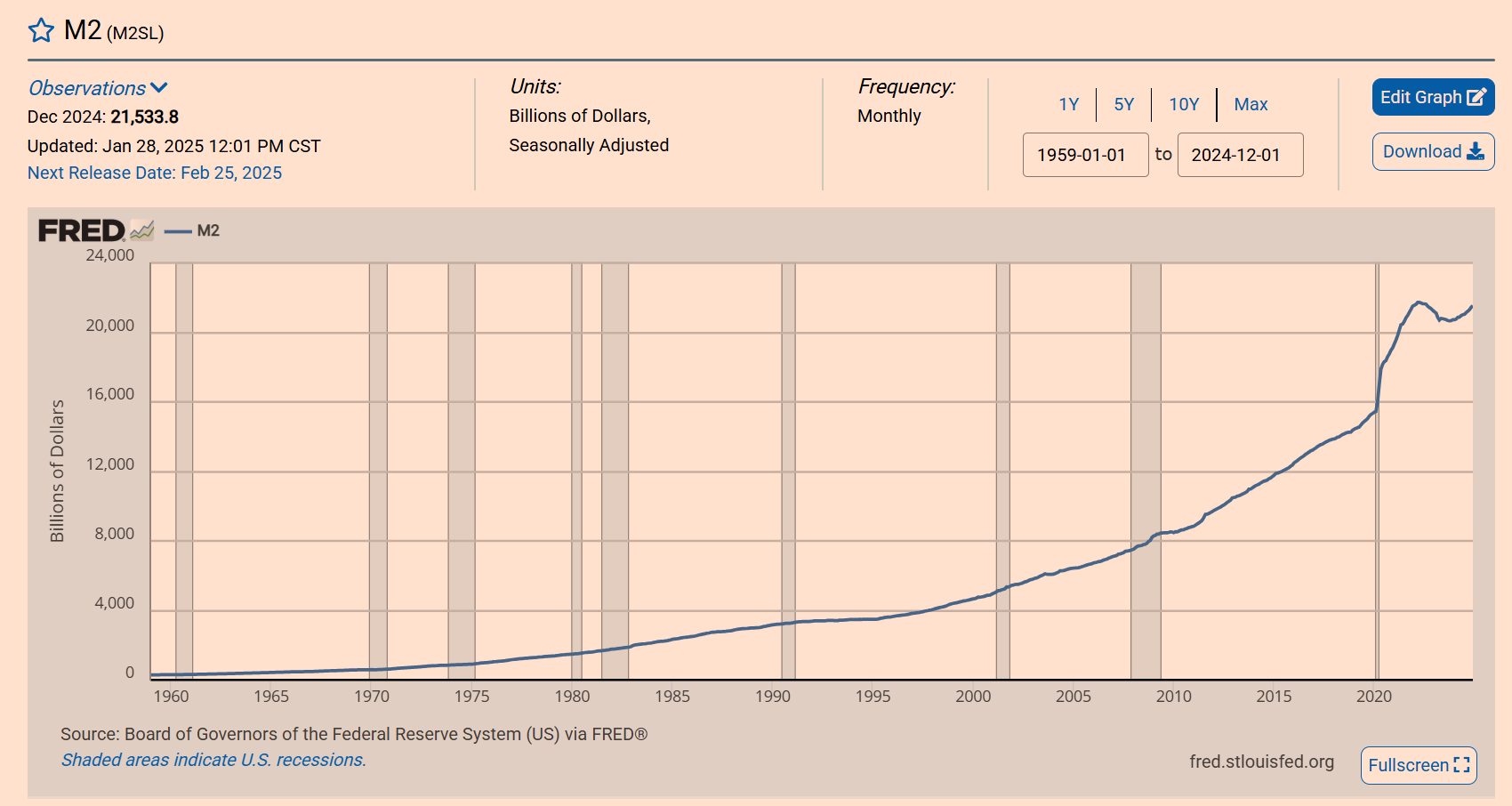
When the Federal Reserve creates $1 trillion out of thin air to buy Treasury bonds, it’s effectively imposing a 4.8% hidden tax on all dollar holders globally (based on the $20.8 trillion M2 money supply in 2024). In 2022, when Sri Lanka ran out of foreign reserves, the government froze citizens’ dollar accounts and forcibly converted them at an exchange rate 40% below market value—that’s outright monetary plunder.
Seigniorage originally referred to the profit governments earn from issuing currency. Under the gold standard, it meant the difference between a coin’s face value and its production cost. In modern fiat systems, the concept expands to include governments increasing money supply to dilute existing currency value and redistribute wealth. Its mechanism resembles inflation, but emphasizes the government’s role as issuer:
Government issues money: Central banks, acting on behalf of the government, issue new money. In today’s digital systems, this is more an accounting operation than physical printing.
Buying assets or covering deficits: Governments use newly issued money to purchase assets like Treasuries or foreign exchange, or directly cover budget deficits or stimulate the economy.
Inflationary effect: Increased money supply eventually reduces existing money’s purchasing power through inflation.
Wealth transfer: The essence of seigniorage remains wealth redistribution—from all currency holders to the government. The government gains revenue while the public’s purchasing power is diluted. Compared to traditional taxation, seigniorage is more concealed and harder to detect—hence called “the most elegant robbery.”
2. Capital Controls: A Prison Drawn by a Golden Cudgel
From late 2023 to early 2024, Argentina tightened capital controls to combat ongoing economic crisis and hyperinflation. Individuals were strictly limited to purchasing only $200 in dollars monthly through official channels. Harsh restrictions fueled a booming black market, where the “blue dollar” (dólar blue) rate soared, exceeding the official rate by over 100% by late 2023. This “golden cudgel” of capital controls ultimately imprisoned not just capital—but people’s economic freedom.
Capital controls refer to government measures restricting cross-border fund flows, including limiting forex trading, outbound capital transfers, or mandatory conversion of foreign earnings. While sometimes seen as necessary to stabilize economies or prevent capital flight, long-term capital controls often distort markets and redistribute wealth:
Artificial exchange rate gaps: Controls artificially separate official and market exchange rates, keeping the official rate artificially low while the black market reflects true supply-demand dynamics. This gap becomes the core mechanism of wealth transfer.
Mandatory or de facto forced conversion: Governments may force exporters to sell foreign earnings to the central bank at the official rate, shrinking actual revenues and transferring wealth to the state.
Rent-seeking and corruption: Capital controls create vast rent-seeking opportunities. Those who can access forex at official rates or bypass controls gain huge profits, fostering corruption and concentrating wealth among privileged elites.
Wealth erosion for ordinary people: For regular citizens, capital controls restrict their ability to hold foreign currency or invest overseas. During currency depreciation, their savings face erosion. Additionally, due to high black-market rates, those needing forex (e.g., for education, travel, imports) must pay much higher prices—effectively robbed of wealth.
3. Debt Monetization: A Bonded Labor Contract for Future Generations
Japan’s national debt stands at 217.4% of GDP—equivalent to every newborn carrying $73,000 in debt. The U.S. government pays $2.38 billion in interest daily on its national debt. These costs are ultimately passed to taxpayers through inflation. As cryptocurrencies begin drawing away bond buyers, foreign holdings of U.S. Treasuries dropped to a historic low of 30% in 2023.
Debt monetization refers to governments converting part of their national debt directly or indirectly into money, usually via central bank purchases of government bonds. In extreme cases, governments may directly order central banks to print money to cover deficits. While debt monetization may ease fiscal pressure short-term, it carries serious long-term risks:
Expanding fiscal deficits: Debt monetization fosters fiscal dependency, encouraging governments to rely excessively on money printing rather than adopting responsible policies to control spending or boost revenue.
Erosion of central bank independence: Direct government interference in money issuance undermines central bank independence, turning it into a mere “printing press” for the government, incapable of controlling inflation.
Risk of hyperinflation: Prolonged, large-scale debt monetization inevitably leads to uncontrolled money supply and hyperinflation. Historically, Weimar Germany and Zimbabwe collapsed economically due to excessive debt monetization, resulting in destroyed currencies and social chaos.
Wealth confiscation: Hyperinflation represents the cruelest form of wealth seizure. All locally denominated savings and assets lose value rapidly. Society undergoes massive wealth redistribution—government debt burdens lighten, but citizens suffer devastating losses. Debt monetization essentially shifts current fiscal risks onto future generations, paying today’s debts with tomorrow’s inflation.
From the “elegance” of seigniorage, to the “prison” of capital controls, to the “bonded labor contract” of debt monetization, the state’s methods of monetary plunder are “endlessly creative and impossible to guard against.” These “legal” forms of robbery often hide behind claims of economic stability, crisis response, or growth stimulation, while silently redistributing wealth and eroding people’s economic freedom.
3.3 The Cost of Monetary Plunder
The impact of state-led monetary plunder extends far beyond economics, permeating society, politics, and culture, creating profound and negative consequences:
Social level:
Widening wealth gap: Monetary plunder tends to make the rich richer and the poor poorer, exacerbating inequality. Privileged classes and vested interests benefit most, while ordinary people, especially vulnerable groups, bear the brunt.
Increased social injustice: Hidden mechanisms like inflation are hard to detect, yet their wealth redistribution effects are real, intensifying perceptions of unfairness and potentially triggering social conflict.
Erosion of social trust: When people realize governments are robbing them via monetary means, trust in government, central banks, and the entire socioeconomic system weakens or collapses, undermining social cohesion.
Political level:
Declining government credibility: Regardless of legality, monetary plunder is essentially a violation of citizens’ wealth. Long-term reliance on such tactics erodes government credibility and challenges its legitimacy.
Trend toward authoritarianism: To maintain rule and conceal monetary plunder, governments may tighten information control, suppress dissent, and slide into authoritarianism.
Risk of political instability: Persistent economic hardship and injustice may ultimately spark political upheaval and regime change. Historically, hyperinflation has often preceded social unrest and revolutions.
Cultural level:
Distorted values: When people widely believe honest work won’t bring prosperity, while speculation and connections yield rewards, societal values become warped, eroding traditional virtues like diligence.
Prevalence of cynicism: Facing unstoppable monetary plunder, people may feel powerless and hopeless, adopting cynicism, apathy toward social and political issues, even mocking ideals and nobility.
Identity crisis: Prolonged economic hardship and injustice may weaken national identity, fragment social unity, and even lead to national disintegration.
Clearly, within the process of monetary plunder, there exists a sharp conflict between state monetary sovereignty and individual property rights. This is precisely when state violence steps in.
4. State Violence Backs Monetary Plunder
“Cannons roar, gold rains down.”
The essence of state violence is not only maintaining order but also serving as the ultimate arbiter of wealth. When state-sanctioned monetary plunder faces resistance, state violence promptly moves to the forefront to safeguard it.
This is exactly what the Nigerian government did.
Previously, two Binance executives—American citizen Tigran Gambaryan and British national Nadeem Anjarwalla—were invited by the Nigerian government to discuss cryptocurrency-related matters. But instead of negotiations, they walked into a carefully laid trap. Charged with “illegal operations” and “causing Naira depreciation,” both executives were detained for extended periods.
Though Nadeem Anjarwalla managed to escape after a daring prison break, Tigran Gambaryan was held for nearly seven months. He contracted malaria, and prison medical care was practically nonexistent, putting his life at grave risk. Ultimately, the U.S. government had to intervene diplomatically to force Nigeria to release him.

Using state violence to back monetary plunder is no “exclusive practice” of Nigeria—it’s a widespread phenomenon throughout monetary history. To uphold the dominance of fiat systems and preserve monopolistic control over money, governments worldwide have repeatedly resorted to state violence.
A historical example: U.S. gold “nationalization.”
In 1933, to address the Great Depression and gold standard crisis, President Roosevelt signed Executive Order 6102, mandating American citizens to surrender their gold to the government at extremely low prices under threat of treason charges. Refusal carried severe penalties and heavy fines. The U.S. government thus “legally” seized citizens’ gold wealth, clearing the way for unchecked money printing and Keynesian policies. Roosevelt’s use of state violence to enforce monetary policy laid the foundation for dollar hegemony.
A recent example: Venezuela’s forced “Bolívar promotion.”
Venezuela has long suffered hyperinflation, rendering the Bolívar nearly worthless. Instead of reflecting on its flawed monetary policy, the government intensified its use of state violence to aggressively promote “Bolívar sovereignty” and suppress foreign currency circulation.
Deploying military and police nationwide, Venezuela cracked down harshly on “illegal forex trading,” arresting street vendors exchanging dollars, seizing “illegally” held U.S. currency. The government even forced businesses to accept Bolívar payments, banning dollar transactions, punishing non-compliance with heavy fines or license revocation. Venezuela used state violence not to rebuild a healthy monetary system, but to maintain control over a discredited currency and continue plundering national wealth through hyperinflation and forced conversion.
An even bloodier case: Argentina’s “Corralito.”
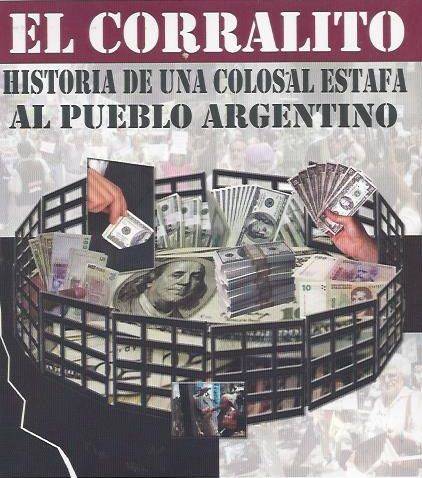
In 2001, amid a severe financial crisis, Argentina imposed the “Corralito” policy—freezing bank accounts and restricting cash withdrawals to prevent bank runs and capital flight. This policy directly stripped people of savings freedom, legally locking their wealth in banks for the government to exploit.
The “corral” sparked nationwide protests. Angry citizens took to the streets, banging pots and pans, demanding the government lift the “fence” and return their deposits.
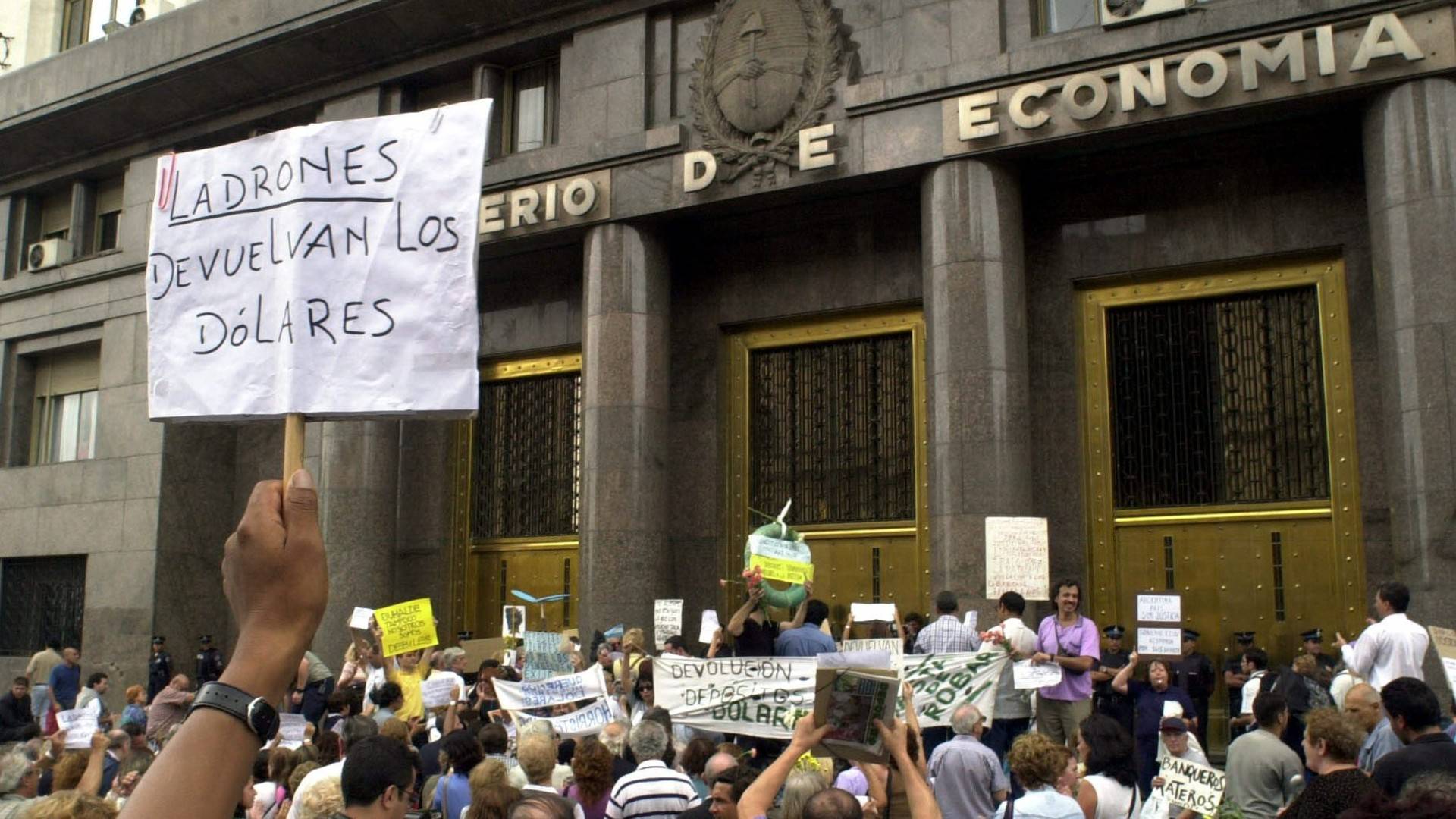
Instead of responding, the Argentine government deployed police and security forces to brutally suppress demonstrations. In December 2001, the country declared a state of emergency. Violent clashes between military police and protesters left dozens dead and hundreds injured.
Clearly, each appearance of state violence reminds us of an undeniable truth: individual property rights are utterly fragile against state monetary sovereignty.
But the story doesn’t end here. Beneath the iron curtain of repeated state violence backing monetary plunder, a glimmer of light is piercing through—the rise of cryptocurrencies.
5. Cryptocurrencies: An Era of Reclaiming Financial Control
The rise of cryptocurrencies acts like a “Sword of Damocles” hanging over governmental monetary power, threatening state machines that recklessly manipulate fiat currencies. It’s not just a payment tool—it’s a profound challenge to the global monetary system, giving people an unprecedented weapon: the ability to reclaim control over their wealth and freedom.
You might ask: Can mere digital currencies really resist powerful state forces?
The answer is yes—cryptocurrencies not only resist centralized financial systems, their very design positions them as key tools against state violence.
5.1 The Power of Decentralization: Restructuring Wealth Control
Bitcoin’s creation was a profound critique of the global financial order.
In 2008, amidst the global financial crisis, Satoshi Nakamoto invented Bitcoin—a new currency independent of central banks or any government. Its supply is fixed, transaction records immutable, and all transactions verified collectively by decentralized nodes worldwide.
Bitcoin’s decentralization makes it a powerful weapon against state monetary violence. Especially in countries where corruption, currency over-issuance, or financial oppression severely erode citizens’ wealth, cryptocurrencies offer safe havens. For example, after Argentina implemented cash controls in 2018, citizens flocked to Bitcoin to circumvent government intervention. According to Blockchain.com, Bitcoin transaction volume in Argentina surged over 200% during that period.
This decentralized nature also makes cryptocurrencies effective hedges against global inflation. In March 2020, as central banks flooded the world with liquidity due to the pandemic, fiat currencies depreciated. Meanwhile, Bitcoin’s returns skyrocketed—since the pandemic began, Bitcoin’s total return approached 400%, compared to just 30% for gold and volatile stock markets failing to preserve value. Cryptocurrencies became the preferred choice for many seeking asset preservation.
5.2 Transparency and Immutability: A Defense Against Wealth Plunder
Beyond decentralization, blockchain’s transparency and immutability make cryptocurrencies another potent weapon against financial violence. Every blockchain-recorded transaction is permanent and unchangeable, meaning all financial flows are publicly auditable, eliminating opportunities for governments to conduct hidden monetary plunder.
For example, Venezuela’s hyperinflation and Bolívar collapse led many to adopt the U.S. dollar. Yet the government enforced strict measures requiring merchants and citizens to use only Bolívars and harshly punished dollar transactions. Still, more and more people turned to cryptocurrencies, especially during economic crises. Statistics show Bitcoin transaction volume in Venezuela surged over 100% in 2018, while traditional finance remained corrupt and monopolistic. Through cryptocurrencies, Venezuelans successfully bypassed government control over traditional money.
Cryptocurrencies provide a reliable channel for financial freedom, allowing Venezuelans to protect wealth and allocate assets across borders without state interference—offering an escape route from domestic currency crises.
5.3 Data and Facts: The Global Momentum of Cryptocurrency Growth
Since Bitcoin’s inception, the cryptocurrency market has grown exponentially. According to CoinGecko, the global crypto market cap rose from less than $100 billion in 2017 to $3.29 trillion today—an over 30-fold increase. This growth stems not only from speculative investors but also from rising public trust in cryptocurrencies amid global economic crises, fiat devaluation, and financial oppression.
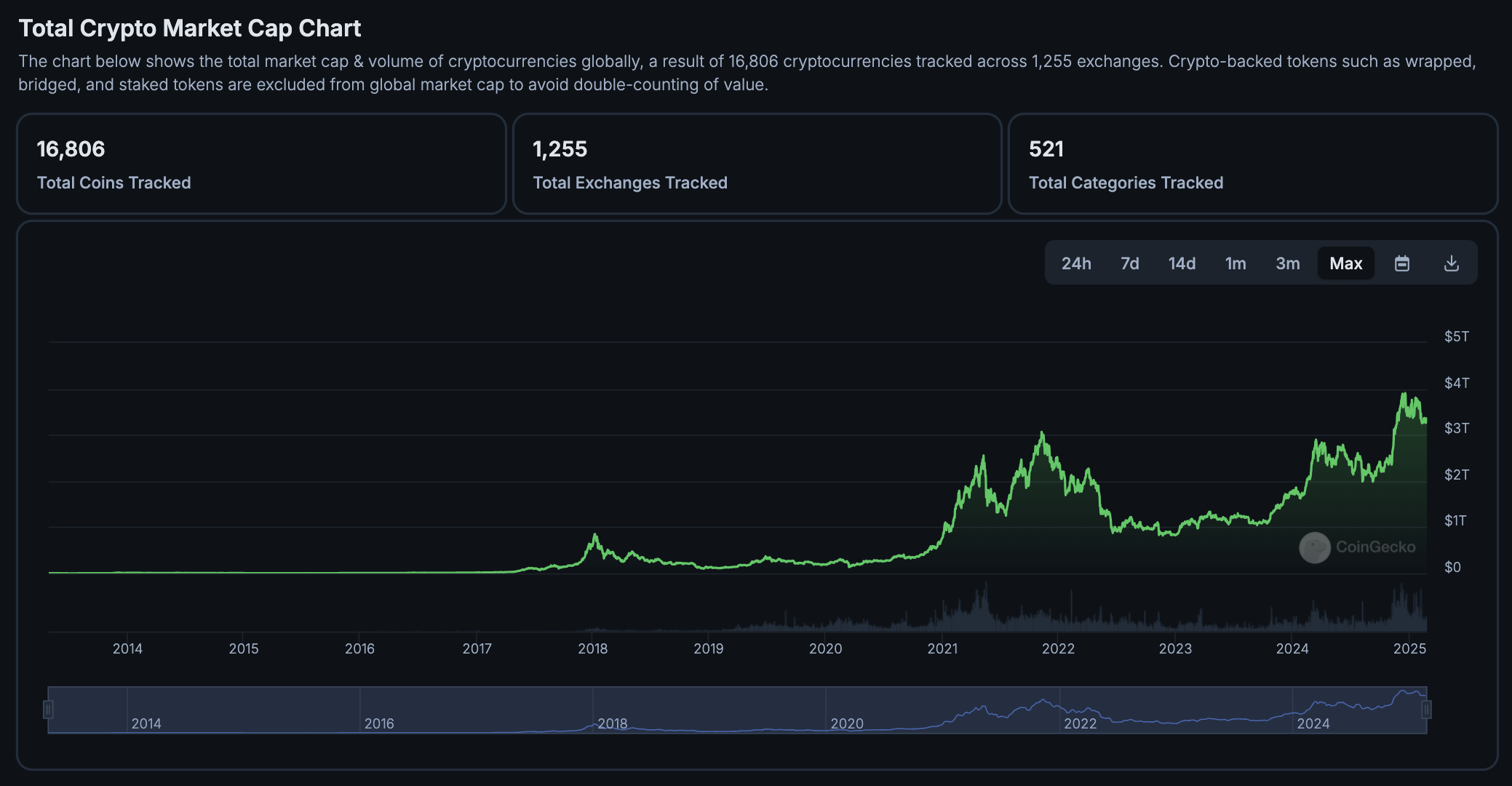
Especially in countries suffering monetary violence—like Argentina, Venezuela, and Turkey—demand for cryptocurrencies has surged. In 2018, Venezuela saw a dramatic spike in Bitcoin transactions, signaling loss of faith in fiat and a shift toward crypto as a store of value. Similarly, when Turkey’s Lira depreciated in 2020, Bitcoin became a safe-haven asset, driving transaction volumes sharply upward.
These figures strongly indicate that cryptocurrencies are becoming a new global choice for personal wealth management, especially under pressure from state violence and currency devaluation.
5.4 The Future of Cryptocurrencies: A New Dawn for Global Finance
Cryptocurrencies are not just tools against oppressive monetary policies—they embody an entirely new philosophy of wealth management. In decentralized, transparent, and tamper-proof systems, individuals can fully control their wealth, free from fear of government infringement. As more people recognize this, cryptocurrency applications will expand, becoming a vital component of future global financial architecture.
The irony of history is this: when governments pervert the right to mint money into an instrument of exploitation, people ultimately use technology to restore money’s original purpose—not as a chip of power, but as a measure of value. In this emerging era, wealth ceases to be subordinate to state machinery and becomes everyone’s private property.
A global financial revolution has quietly begun, driven by cryptocurrencies. The once-unchecked state violence machines that plundered wealth now face an unavoidable opponent—decentralized cryptocurrencies. Bitcoin offers people an effective way to preserve wealth and conduct cross-border transactions under forced exchange-rate regimes. If you’re a beginner wanting to protect your wealth with Bitcoin, here are two zero-knowledge tutorials—one on buying Bitcoin, another on sending Bitcoin to a cold wallet. That should get you started.
Summary: Cryptocurrencies Challenge and Transform State Monetary Violence
The rise of cryptocurrencies isn’t merely technological innovation—it’s a profound reflection on and challenge to traditional financial violence. It empowers individuals to reclaim control over their wealth and provides new mechanisms for global wealth transfer. As Satoshi once said: “We no longer need to trust central banks—we can trust algorithms.”
Not all crows are equally black. One country has recognized the dangers of abused monetary sovereignty and proactively embraced Bitcoin.
6. El Salvador Embraces Bitcoin
El Salvador’s embrace of Bitcoin isn’t just about fighting currency depreciation and inflation—it’s about building an entirely new financial system, freeing itself from the constraints of traditional monetary policy.
On September 7, 2021, El Salvador became the first country in the world to legalize Bitcoin. The government declared Bitcoin legal tender alongside the U.S. dollar, sparking widespread attention and controversy in the global financial community.
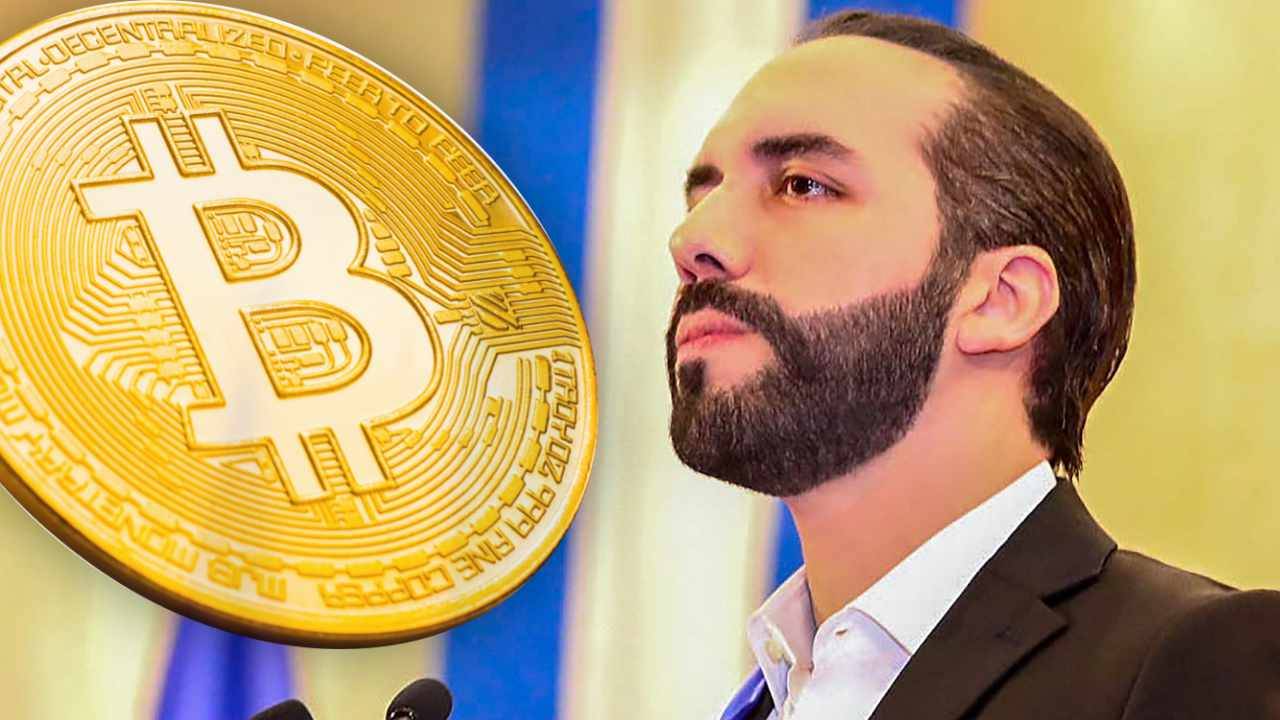
President Nayib Bukele believes the traditional financial system can no longer meet national development needs, especially for the unbanked poor. Bitcoin, he argues, offers new financial freedom. With Bitcoin, Salvadorans can bypass high banking fees and directly participate in the global financial system.
According to government data, by 2023, over 2 million Salvadorans—about 30% of the population—were using the Chivo wallet. Stores and businesses increasingly accepted Bitcoin, boosting tourism by attracting Bitcoin enthusiasts, investors, and visitors. El Salvador also plans to issue “Volcano Bonds” to fund infrastructure projects, investing part of the proceeds in Bitcoin mining to further drive economic growth.
Despite short-term market volatility and international criticism, El Salvador’s Bitcoin experiment has become a crucial testing ground for global blockchain and cryptocurrency development. Among developing nations, demand for Bitcoin as alternative currency is rising, and El Salvador has emerged as a pioneer of this trend.
Yet El Salvador’s Bitcoin journey hasn’t been smooth. Due to Bitcoin’s high price volatility, the government faces significant market risks. For example, the sharp price drop at the end of 2021 caused massive losses to El Salvador’s Bitcoin reserves.
In February 2025, El Salvador’s Congress passed a new policy removing the mandatory requirement for merchants to accept Bitcoin payments, limiting tax payments to U.S. dollars only. Nevertheless, El Salvador maintains Bitcoin’s status as legal tender, adjusting policies to ease external pressures.
Interestingly, despite being crypto-friendly, cryptocurrency adoption remains low. A survey found only 7.5% of respondents used crypto for transactions, while 92% had never used it. Nonetheless, El Salvador plans to build a new capital market around Bitcoin and introduce further regulatory support.
Clearly, El Salvador is an outlier—a nation voluntarily relinquishing monetary sovereignty to embrace Bitcoin. Whether this top-down reform will ultimately succeed remains uncertain. But the government’s decision to return the right to choose currency to its people marks a great step forward.
So why haven’t more countries followed? Why, after expelling Binance, does Nigeria still fail to solve its exchange rate problems?
7. Binance Left—Why Does the Exchange Rate Keep Falling?
The reason is simple: Binance, though the largest exchange, is not the only one.
For many Nigerians, Binance was just one bridge to the crypto world—there are plenty of others.
Indeed, after Binance exited Nigeria, the Naira briefly rebounded to 1100 NGN per 1 USD in April 2024, but quickly fell back to the 1500 NGN historic low.
Today, there are 217 exchanges similar to Binance worldwide. Many offer P2P trading, helping people bypass forex controls and convert Naira into USD-pegged stablecoins or Bitcoin. These platforms not only swiftly filled the void left by Binance but have formed a vast global crypto circulation network.
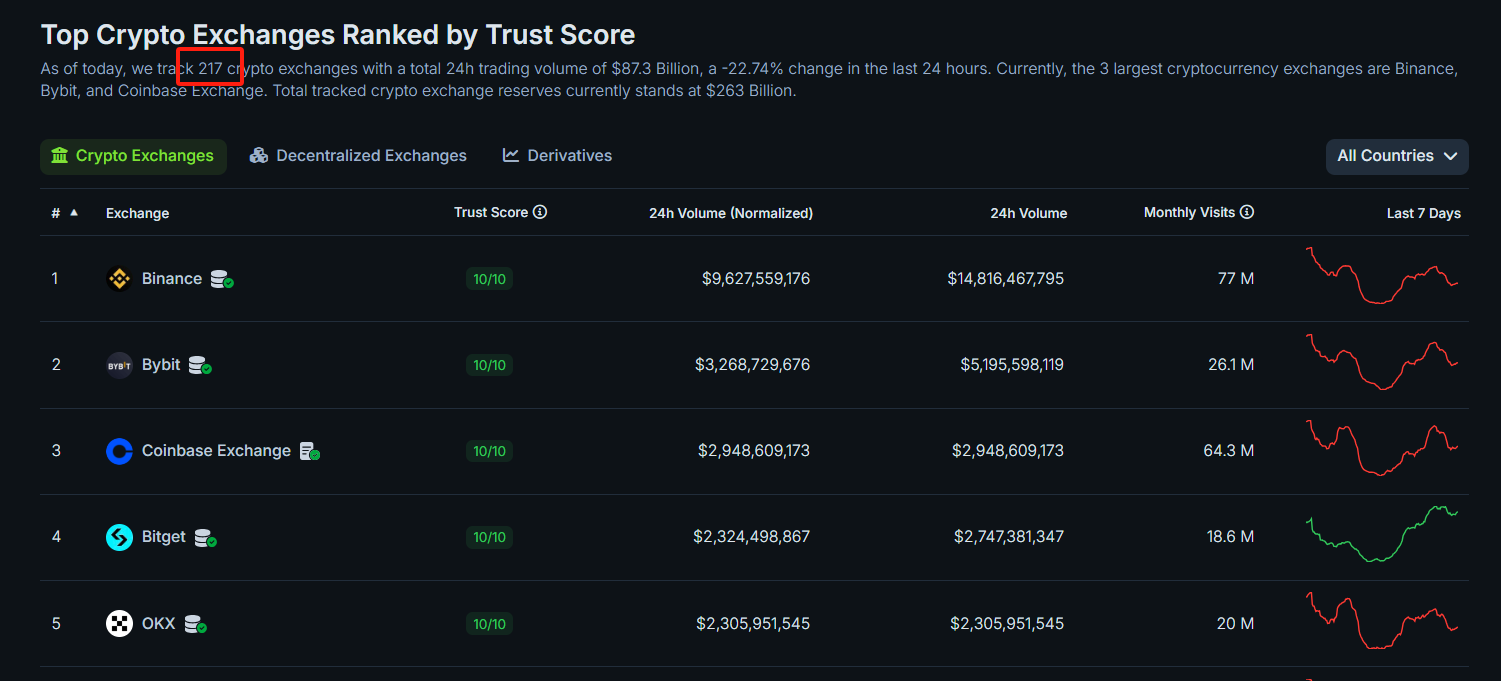
With rapid development of the global crypto ecosystem, competition among exchanges intensifies. Differences lie mainly in user experience and fees, but for people desperate to avoid currency depreciation, platform substitutability is near-total.
Binance has undoubtedly become the scapegoat for Nigeria’s currency crisis. Killing the scapegoat won’t solve Nigeria’s problems—and never will. Solving currency depreciation is Nigeria’s responsibility, not ours.
The only thing we need to worry about is how, in the decentralized finance revolution initiated by Bitcoin, we can prevent state violence from becoming an accomplice to tyranny?
Conclusion
Under the shadow of state violence, monetary sovereignty has long served as a tool for governments to seize wealth under the cloak of legality. The clash between Nigeria and Binance is merely the tip of this iceberg of power games.
As the foundations of the traditional financial order begin to crack, the rise of cryptocurrencies is more than a technological wave—it’s a profound rebellion against “legal violence” in monetary plunder. It heralds a new era: the digital tide is dismantling old orders, redefining wealth, and empowering individuals to reclaim economic sovereignty in decentralized networks.
Going forward, the boundaries between state and individual will be redrawn, and cryptocurrencies may become the pivotal force reshaping this frontier—ultimately pointing toward a more balanced and vibrant global economic landscape.
But before this new vision is realized, we must remain highly vigilant, scrutinizing the power dynamics behind every technological advance, so that in the complex currents of economics and politics, we can find our true “freedom航道.”
Because throughout history, money has never been merely a tool of exchange—it has always been a symbol of power.
With the rise of blockchain, money’s function as a measure of value is being rediscovered. Perhaps this marks the beginning of our redefinition of “wealth” and “freedom.”
Join TechFlow official community to stay tuned
Telegram:https://t.me/TechFlowDaily
X (Twitter):https://x.com/TechFlowPost
X (Twitter) EN:https://x.com/BlockFlow_News
 @yzdxs8











