









In-depth Analysis of the Fundamental Factors Behind Sonic's Market Cap Approaching Previous Highs
TechFlow Selected TechFlow Selected
In-depth Analysis of the Fundamental Factors Behind Sonic's Market Cap Approaching Previous Highs
Compared to the volatility of other tokens, S's outstanding performance has undoubtedly injected a dose of vitality into the current sluggish crypto market.
 Navigating Web3 tides with focused insights
Introduction
In early 2025, optimism in U.S. equities pushed the S&P 500 to new highs, while the crypto market remained under pressure and meme coins experienced sharp volatility. Against this backdrop, Sonic ($S) stood out with price gains and technological upgrades, becoming a market focal point. This article analyzes its performance and potential.
Monday marked Presidents' Day, with U.S. stock markets closed. On Tuesday, overall market sentiment turned positive, with the S&P 500 index rising 0.24% to reach another all-time high, and the Nasdaq Composite index also edging up 0.07%.
In contrast to the strong performance of U.S. equities, the cryptocurrency market faced selling pressure and pulled back.
Recently, the entire cryptocurrency market has undergone sustained downward volatility, resulting in generally weak market sentiment and impacting trading volume and investor confidence. Meanwhile, the meme coin market has been especially turbulent—prices swinging wildly with extreme volatility, leaving many investors uncertain amid such unpredictability. However, within this weak and volatile environment, the token $S has emerged prominently, demonstrating remarkable growth momentum. Not only has its price shown steady upward movement, but also the activity and support from its community have added significant luster to the project. Compared to the instability of other tokens, $S’s standout performance has injected a ray of hope into the current sluggish crypto market, making it one of the key focal points for investors.
1. $S Price Gains Momentum, Showing Strong Potential
Sonic is an EVM Layer-1 blockchain platform evolved from Fantom, focused on delivering high performance and scalability for decentralized applications. The platform features a native token $S used for transaction fees, staking, governance, and running validators. After the new network launches, holders of the legacy FTM token will be able to convert them to $S at a 1:1 ratio.
Key Features:
High Performance: Sonic can process over 10,000 transactions per second with sub-second finality, making it suitable for high-demand applications across sectors like gaming and finance.
Interoperability: The platform emphasizes seamless interactions between different blockchains.
Developer Incentives: Sonic Labs plans to launch various incentive programs to attract developers and foster innovation within its ecosystem.
2. Fantom Upgrades to Sonic, Comprehensive Fundamental Optimization
Three Key Upgrades
-Fantom Virtual Machine (FVM)
-Storage System (Database)
-Bridge (Sonic Gateway)
1) On-chain Internal Optimizations:
- Blockchain Scalability Challenge: Existing blockchains face trade-offs among decentralization, security, and scalability. Fantom aims to achieve balance among all three.
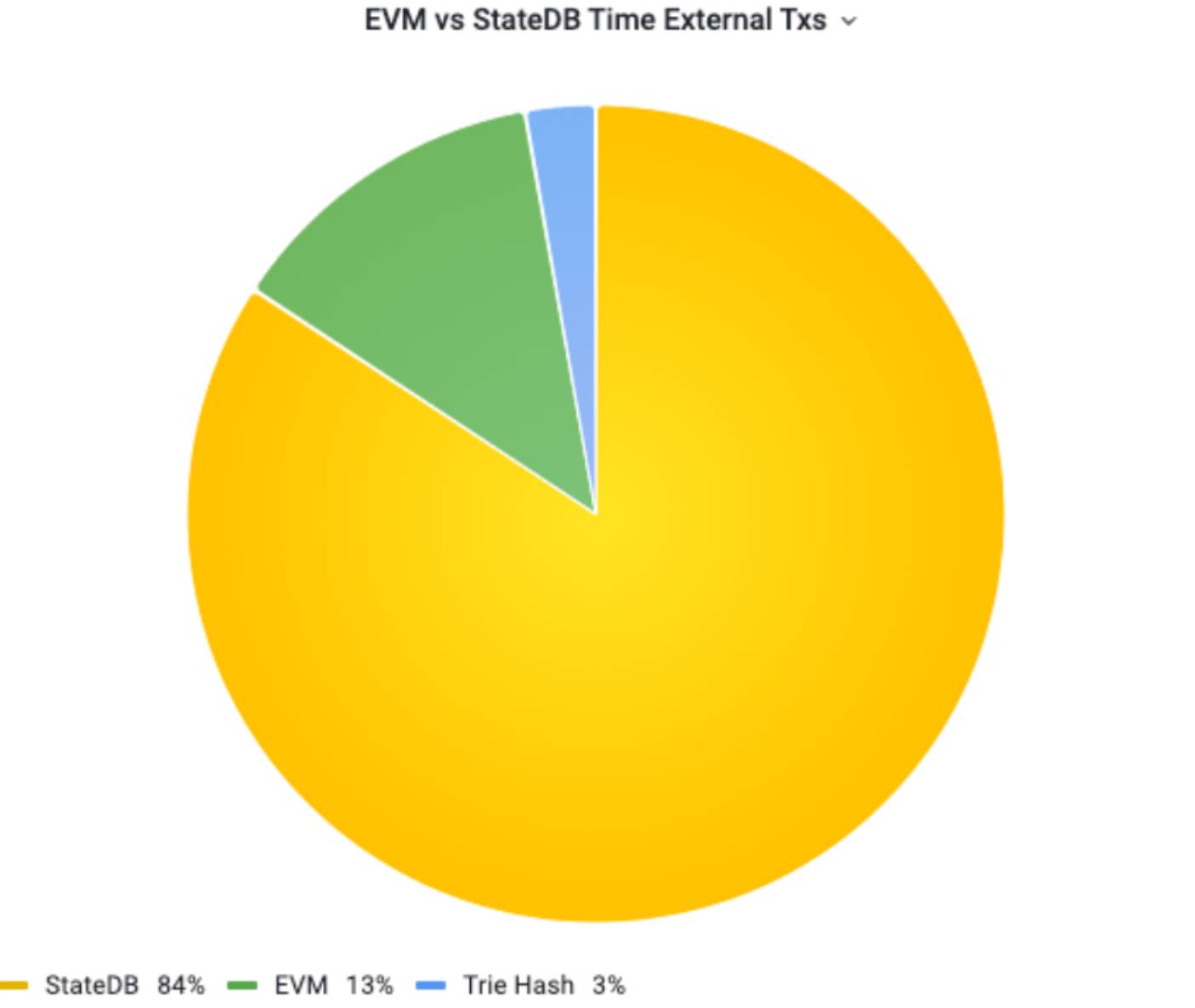
- Bottleneck Analysis (Aida Project): By testing 40 million blocks, it was found that the EVM accounted for only 13% of processing time, while StateDB consumed 84%, identifying storage as the primary bottleneck.
- Storage Upgrade (Carmen Project): The existing Merkle Patricia Trie (MPT) scheme has performance limitations; Fantom adopts a new file-based StateDB to optimize storage efficiency.
- Fantom Virtual Machine Upgrade (Tosca Project): FVM replaces EVM, maintains compatibility with Solidity and Vyper, and uses "super instructions" to improve execution efficiency.
Test Results:
- The FVM solution increased transaction speed by 8.1x and reduced storage usage by 98%, significantly enhancing network performance.
- By upgrading its storage and virtual machine systems, Fantom improves transaction throughput and reduces node operating costs, further enhancing on-chain scalability.
2) Off-chain Optimization:
Sonic Gateway is a decentralized cross-chain bridge designed specifically to connect Ethereum and the Sonic network, aiming to enhance interoperability while eliminating custodial risks for users.
Core Features of Sonic Gateway:
- Enables secure transfers of ERC-20 assets between Ethereum and Sonic.
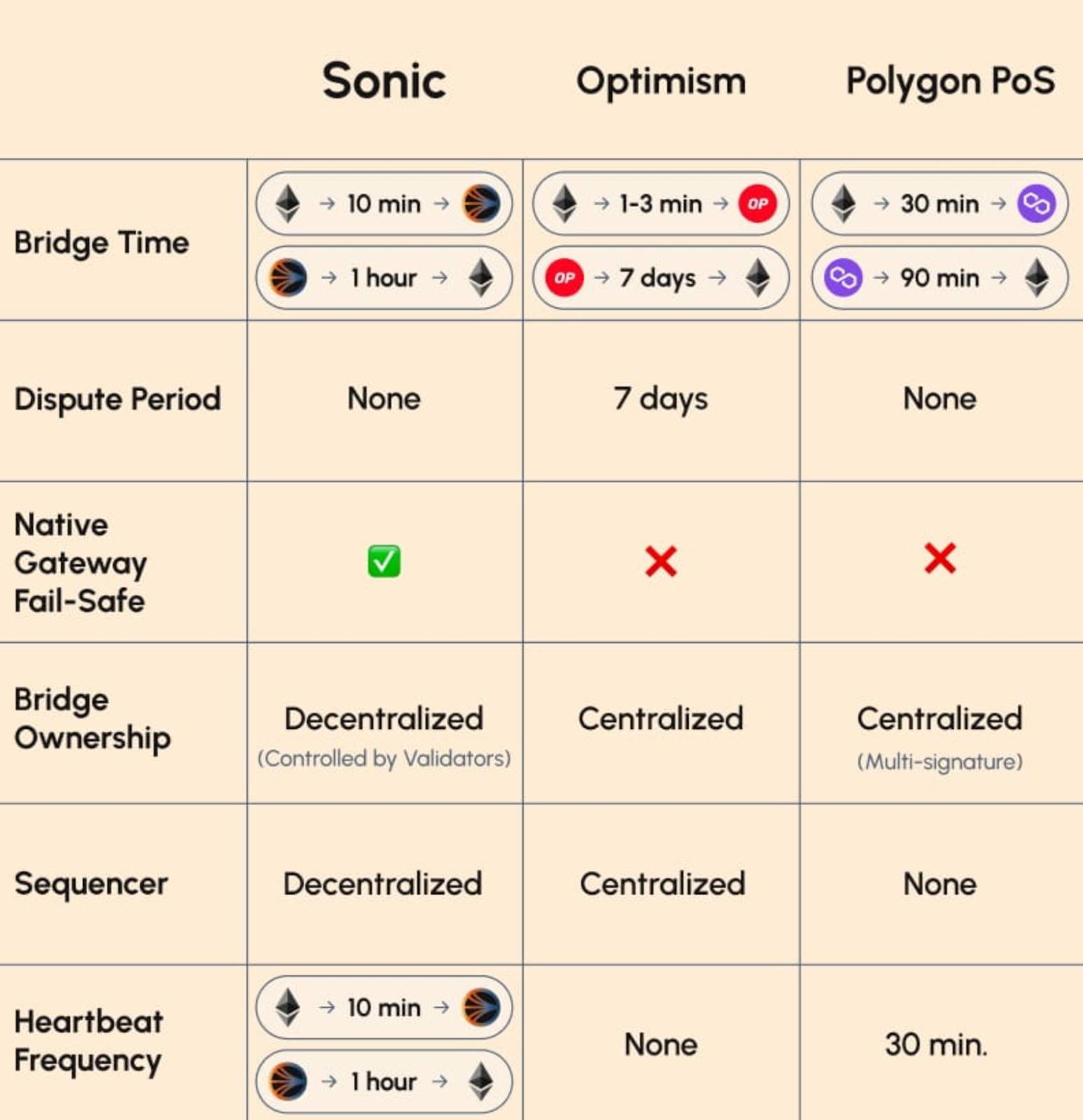
- Transfers from Ethereum to Sonic take approximately 10 minutes; transfers back from Sonic to Ethereum take about 1 hour.
Security Mechanisms:
- Built-in fail-safe mechanism: If the gateway is unavailable for 14 consecutive days, users can reclaim their assets on Ethereum.
- Monitors gateway status via inter-chain "heartbeat" signals to ensure user fund safety.
Comparison with Layer-2 Solutions:
- Sonic offers faster transfer experiences without challenge periods and provides instant finality, outperforming Optimistic Rollup solutions that typically require a 7-day challenge window.
User Benefits:
- Allows users to access native assets (e.g., BTC, ETH, SOL) on Sonic without relying on wrapped assets.
Difference from Layer-2 Operating Model:
- Sonic operates as a Layer-1 blockchain, not an extension layer of Ethereum, using Merkle proofs to verify asset states rather than relying on Ethereum's consensus mechanism.
Efficient Data Storage:
- Stores only Merkle root hashes and block heights, greatly reducing data storage burden on Ethereum and improving on-chain efficiency.
3. Sonic's On-Chain TVL Surges, Accelerating Ecosystem Growth
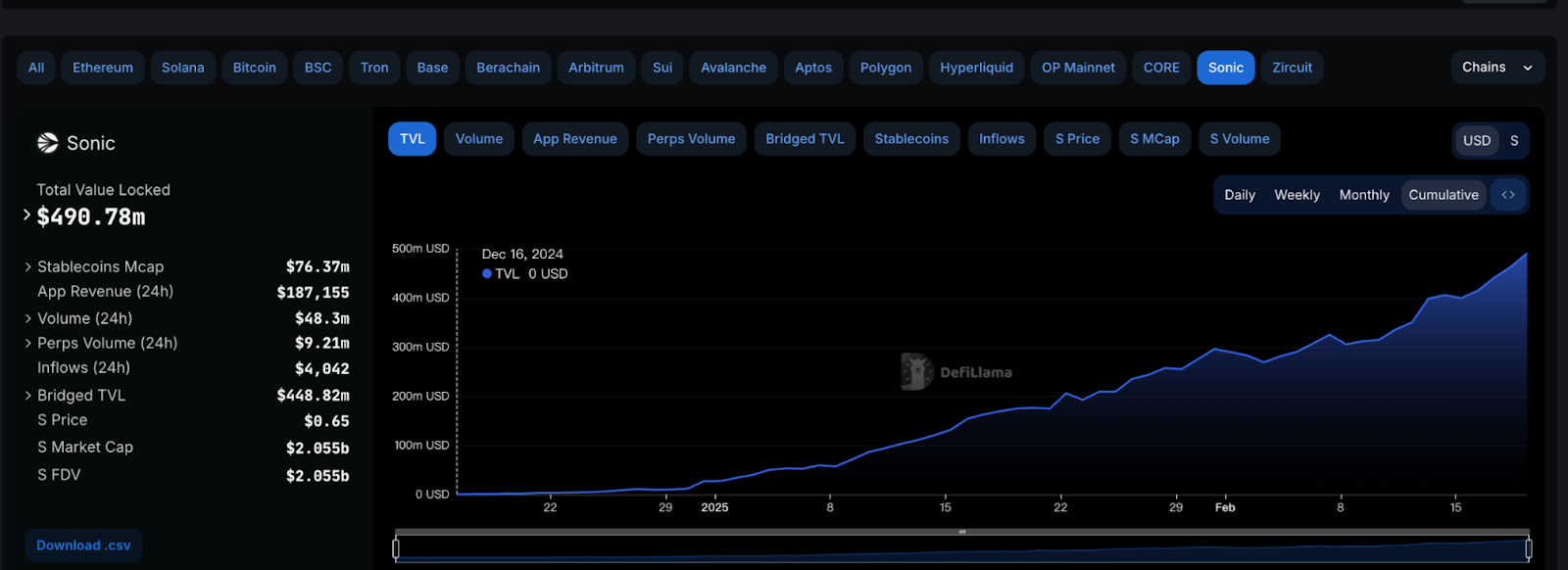
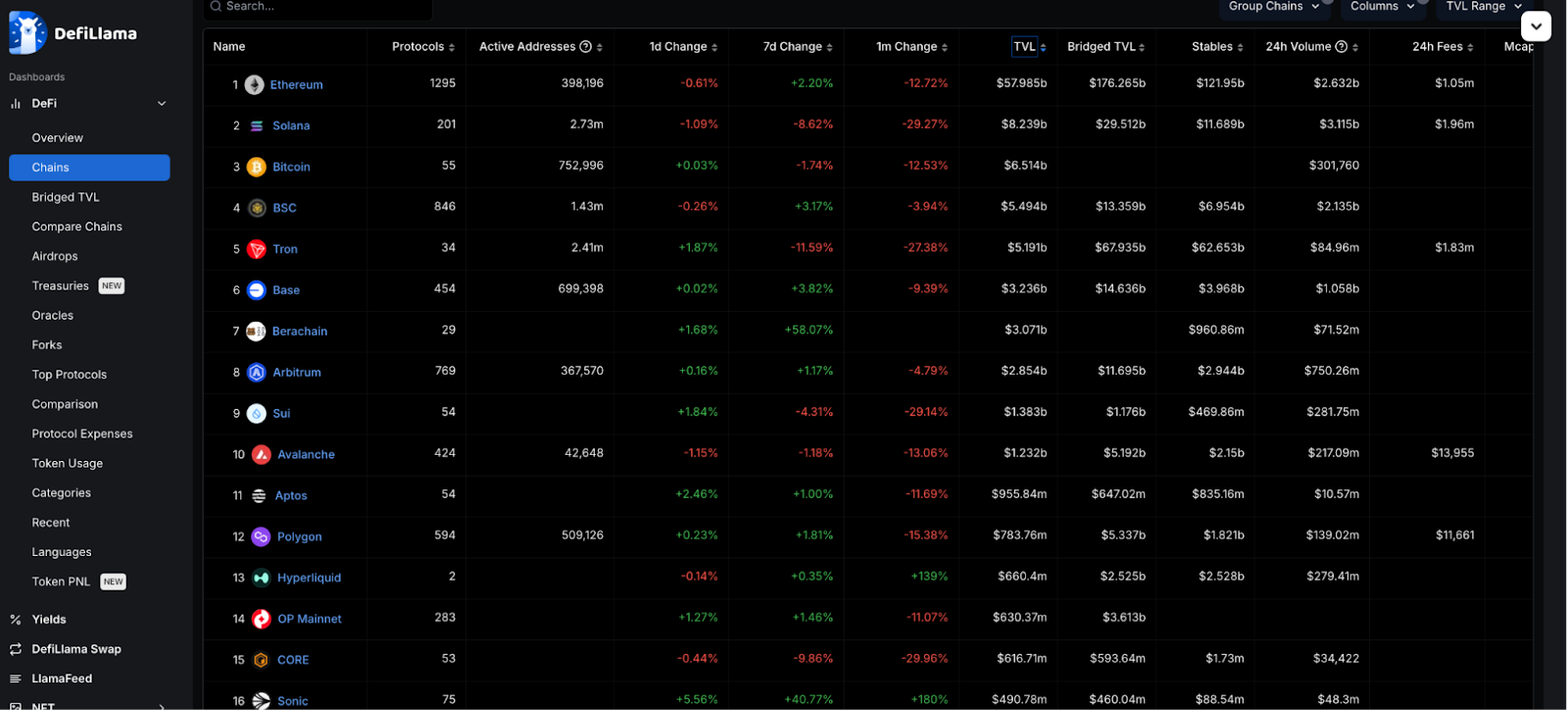
According to the latest data from DefiLlama, Sonic currently ranks 16th among blockchains by total value locked (TVL), demonstrating strong performance in the decentralized finance (DeFi) ecosystem. More notably, Sonic's TVL has surged by an astonishing 180% over the past month, reflecting growing market confidence and significant capital inflows. Furthermore, compared to December last year, Sonic's TVL has nearly tripled, highlighting accelerated expansion within the DeFi space and optimistic investor outlooks for its future. This growth not only reflects internal development momentum but also indicates sustained capital inflows into the Sonic ecosystem, further solidifying its competitive position in the industry.
4. Active On-Chain Data on Sonic, Solid Price Support
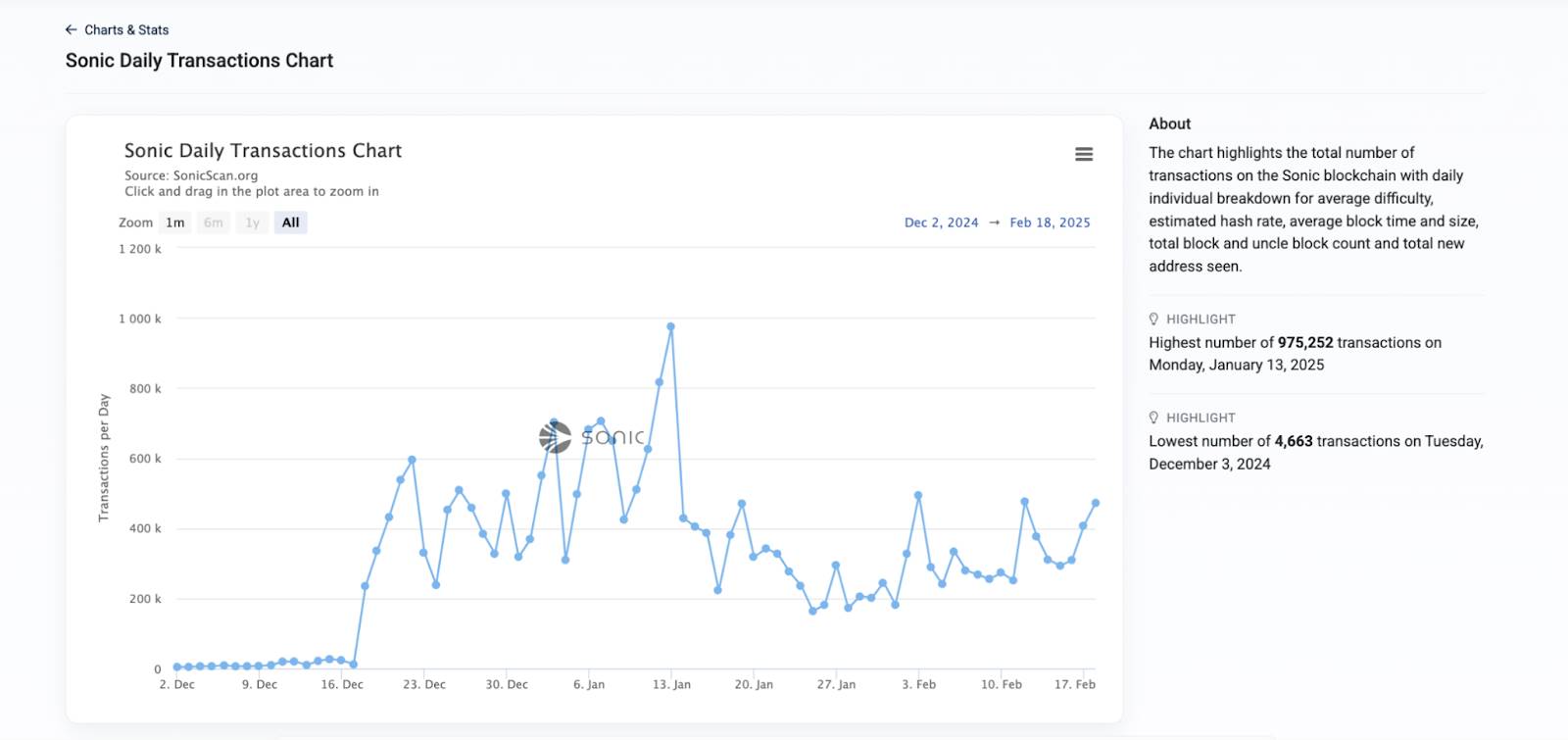
According to transaction volume data provided by SonicSca:
The highest transaction volume on the Sonic chain occurred on January 13, 2025, reaching 975,252 transactions. Transaction volume began rising sharply after December 16, followed by volatile growth. It peaked on January 13, then declined slightly but remained at relatively high levels. In early February, transaction volume rebounded modestly, indicating increased market activity and a return to an upward trajectory—worth watching for future developments. Charts showing gas usage reveal similar trends: the Sonic network experienced a period of active growth from December to January, peaking in gas consumption around mid-January. While gas usage has fluctuated since February, it remains at relatively high levels, indicating continued network activity.
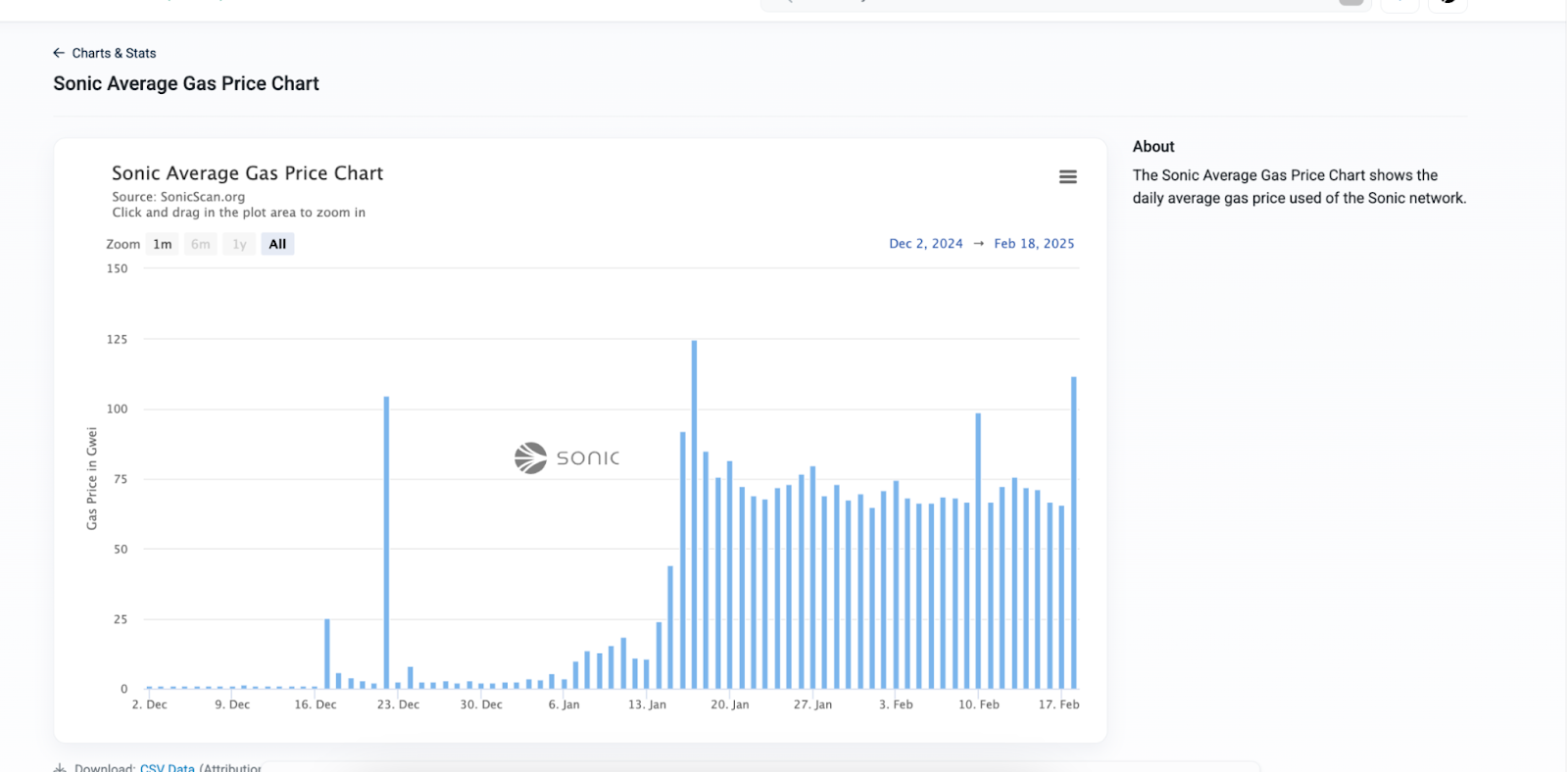
Despite significant TVL growth and robust on-chain metrics, the price of $S has been suppressed by moving averages since its debut at the beginning of the year, failing to fully reflect improvements in fundamentals. It wasn't until February 8 that the price ended its downtrend and began to recover. However, the current price remains far below its historical high. If $S can sustain trading above the $0.57 support level and climb steadily along the moving average, its outlook could strengthen further, with a target near $0.72.
In summary, since rebranding from Fantom, Sonic has demonstrated strong momentum. Its total value locked (TVL) has grown significantly in a short time, and on-chain activity has risen, reflecting rapid ecosystem expansion and increasing user engagement. Nevertheless, the price of $S has yet to fully reflect these positive fundamental changes. As market attention on Sonic grows and ongoing technical and ecosystem enhancements continue, the price of $S holds potential for further appreciation. Investors should closely monitor market dynamics and on-chain data to capture potential upside opportunities in this fast-moving market.
References:
FVM doc:
https://blog.fantom.foundation/fantom...
Bridge (Sonic Gateway) doc:
Join TechFlow official community to stay tuned
Telegram:https://t.me/TechFlowDaily
X (Twitter):https://x.com/TechFlowPost
X (Twitter) EN:https://x.com/BlockFlow_News






