Grok3 by Musk isn't yet the "smartest on Earth," but it's definitely the wealthiest
TechFlow Selected TechFlow Selected
Grok3 by Musk isn't yet the "smartest on Earth," but it's definitely the wealthiest
Money allows for indulgence, but becoming the "strongest" requires much more.
 Navigating Web3 tides with focused insights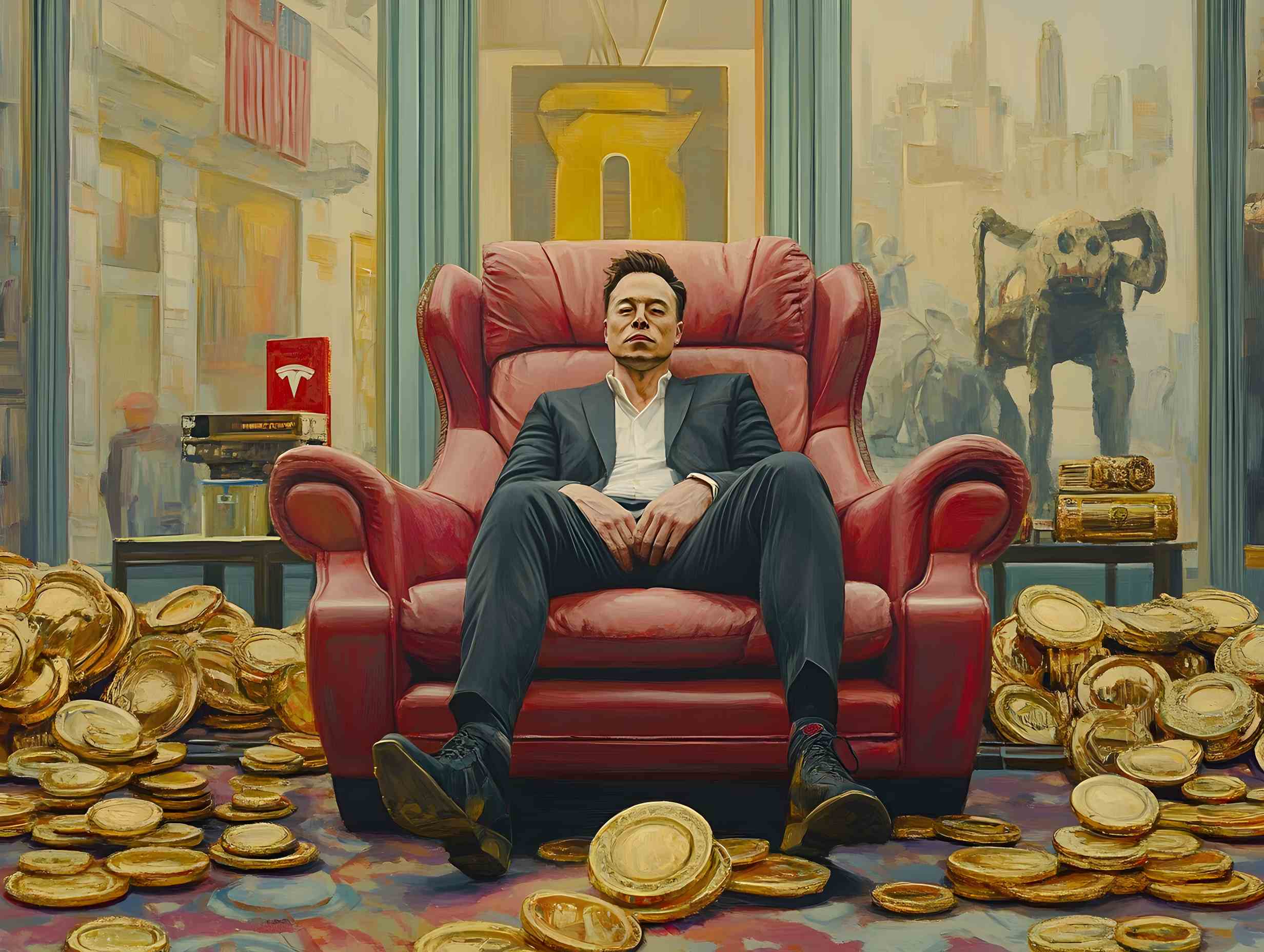
Image source: Generated by Wujie AI
Grok 3, the "smartest AI on Earth" according to Musk, has arrived.
In a livestream watched by millions, Musk launched Grok 3 alongside two Chinese-American researchers: Tony Wu and Jimmy Ba, co-founders of xAI. According to benchmark tests, Grok 3 is indeed astonishingly powerful, and from the investment perspective, its underlying computing cluster with around 200,000 GPUs is equally staggering.
The release of Grok 3 includes a series of models: Grok 3, Grok 3 mini, along with updates such as Reasoning mode, DeepSearch, and Big Brain.
#01 The "Smartest AI" Title Comes From Benchmarks—How Does It Perform in Real Tests?
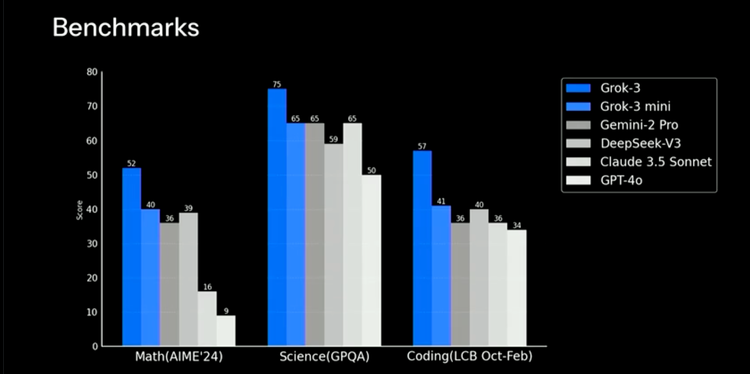
In benchmark evaluations, Grok 3 outperforms other models such as GPT-4o, Gemini-2 Pro, Claude3.5 Sonnet, and DeepSeek-V3 in mathematical reasoning, STEM, and scientific domains. Even the smaller version, Grok 3 Mini, ranks among the top-tier models.
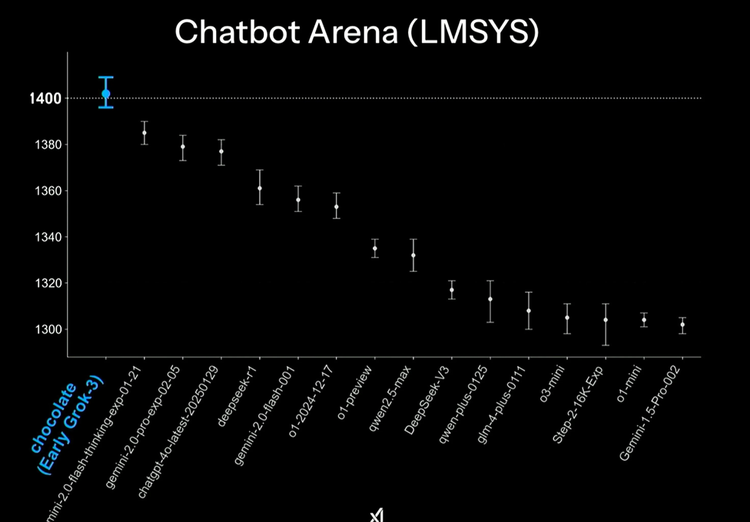
Early versions of Grok 3 also achieved high scores on the large model arena platform Chatbot Arena—a crowdsourced testing platform where different AI models compete and users vote for the best answers. Grok-3 was the first model to surpass 1400 points, ranking first across all categories.
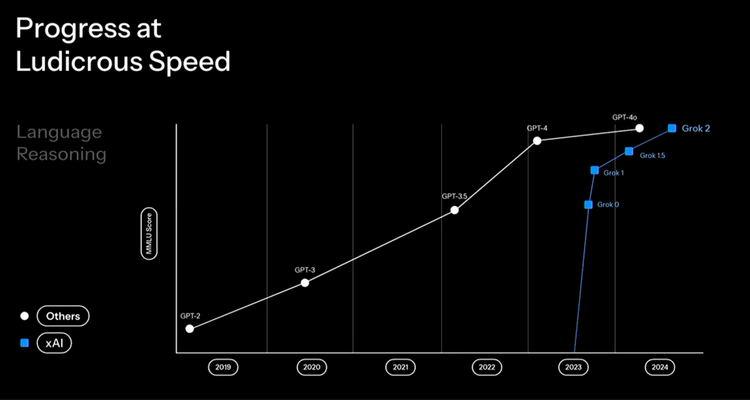
Since its launch in 2023, Grok's MMILU score has rapidly improved, achieving a significant breakthrough with Grok 2 in 2024, demonstrating fast追赶 and progress compared to the GPT series.
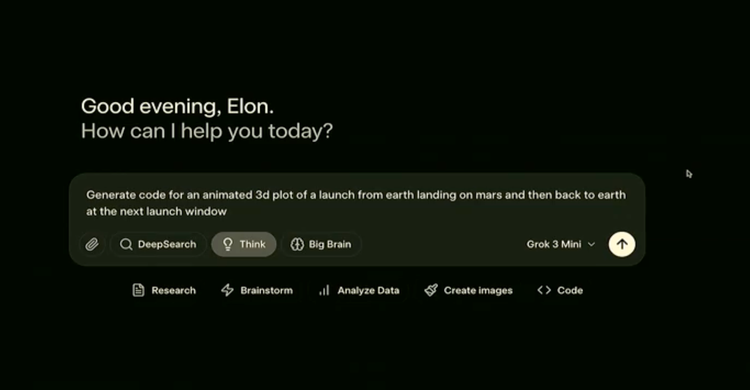
"Grok 3 has extremely strong reasoning capabilities, so in all the tests we've conducted so far, Grok 3 outperforms any released product we know of—an encouraging sign," Musk said via video call at the World Government Summit in Dubai last week.
Grok 3 also introduces a reasoning mode (Think), enabling it to think through problems like DeepSeek-R1 and other reasoning models via Grok 3 Reasoning and Grok 3 mini Reasoning. The model can solve complex problems by considering all possible solutions, self-critiquing, validating solutions, backtracking, and thinking from first principles. However, to prevent distillation, parts of Grok 3's reasoning process have been blurred.
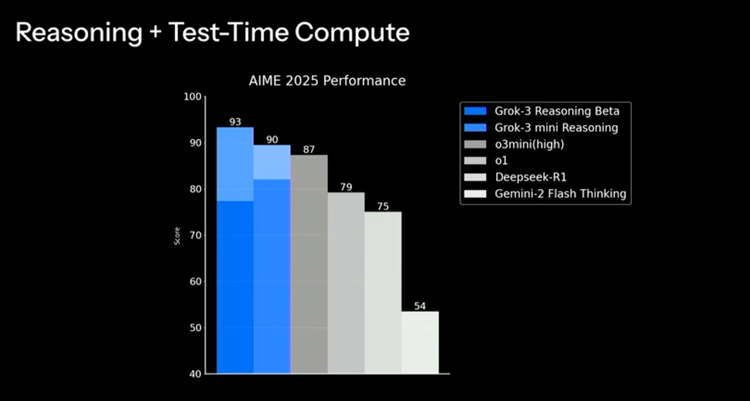
Grok 3 Reasoning surpasses even the best version of o3-mini—o3-mini-high—across multiple popular benchmarks, including the new math benchmark AIME2025.
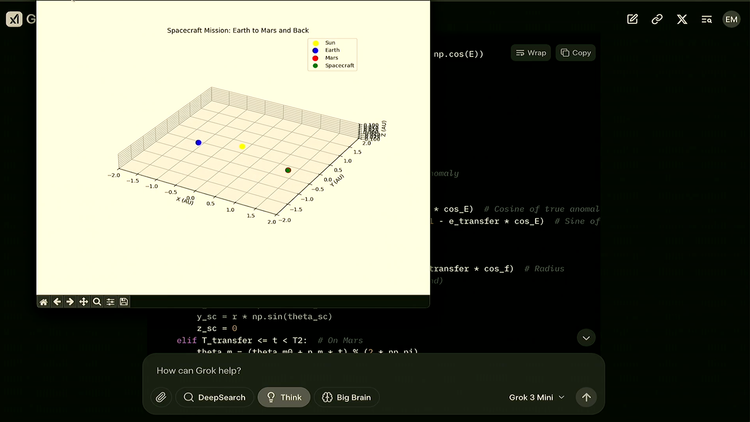
The team demonstrated using Grok 3's Think mode to generate an animated 3D plot showing a spacecraft trajectory launching from Earth to Mars and returning, illustrating the next launch window.
In the demo, Grok 3 provided a Python script using Matplotlib and explained the code. The code appears to numerically solve Kepler's laws. After running the code, Grok animated Earth and Mars, representing the spacecraft's journey between them with a green sphere.
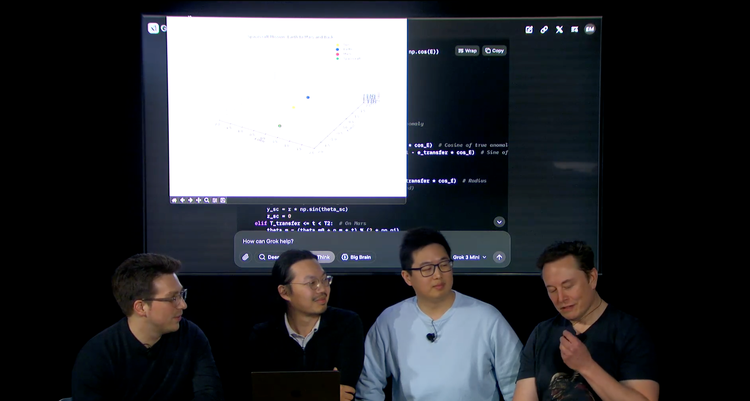
The demonstration was generated live, so the correctness of the solution wasn't verified, but Musk, wearing a pendant depicting Earth-Mars transfer orbits, said it closely matched actual solutions.
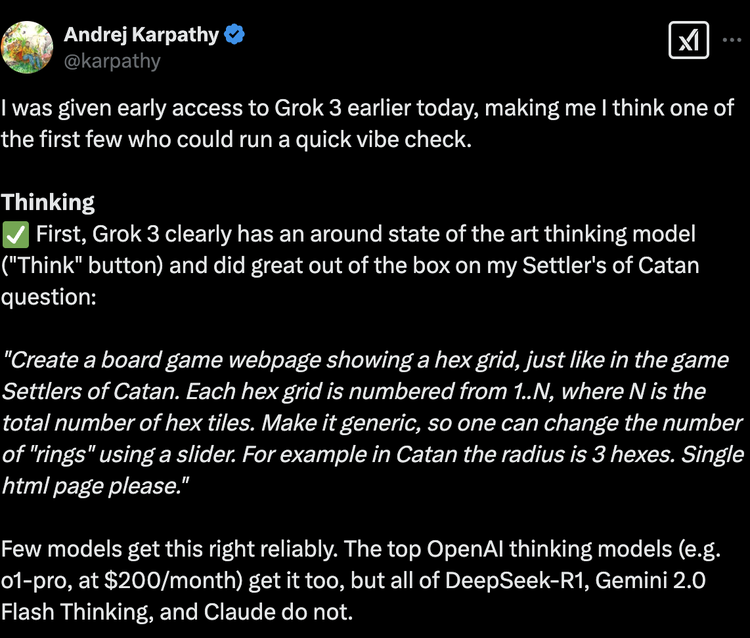
Andrej Karpathy, who had early access to Grok 3, said Grok 3’s Think mode achieves tasks that DeepSeek-R1, Gemini 2.0 Flash Thinking, and Claude failed to accomplish, though he noted that top-tier OpenAI models like o1-pro could do the same.
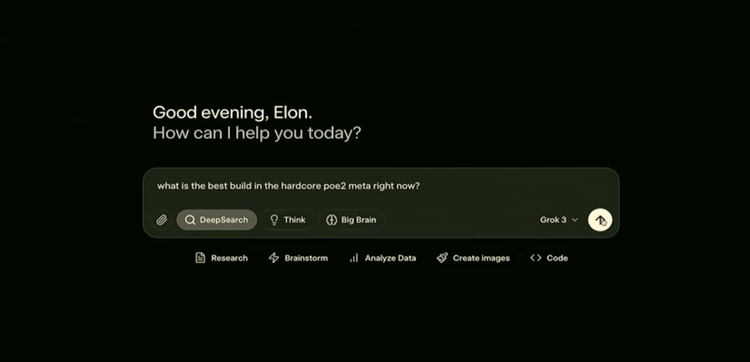
Following OpenAI, Gemini, and Perplexity, Grok has now launched its own deep search feature, Deep Search. The xAI team positions Deep Search as a "next-generation search engine" and the first-generation product of Grok Agent. It goes beyond simple information retrieval, aiming to assist programming, research, and answering everyday questions.
Judging from the demo, Grok 3's Deep Search doesn’t offer many unique features, emphasizing instead that it differs from traditional keyword-matching search engines by deeply understanding the semantics and intent behind user queries, retrieving content from multiple sources, cross-verifying for accuracy, offering greater controllability than traditional search engines, and allowing users to specify sources.
The xAI team particularly highlighted that Deep Search makes the search process transparent to users, enabling them to understand the AI’s "thought" process.
Andrej Karpathy believes Grok 3's DeepSearch is roughly equivalent to Perplexity's DeepResearch, but hasn't yet reached the level of OpenAI's recently released Deep Research.
#02 Full-Power "Big Brain" Mode
For more complex queries, the "Big Brain" mode uses additional computation for reasoning. xAI describes these reasoning models as best suited for math, science, and programming problems—essentially what might be called the "full-power" version.
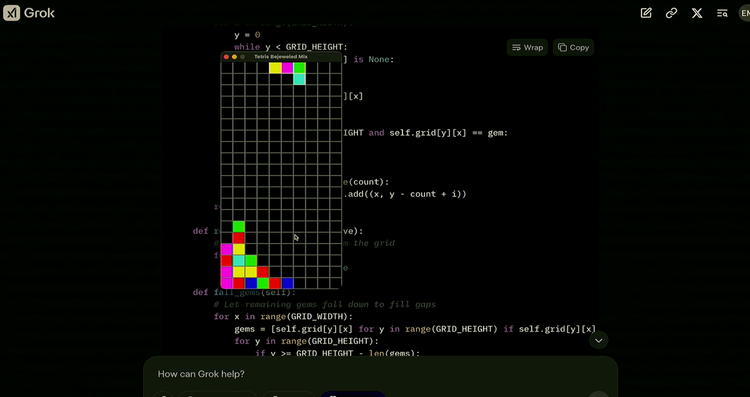
The xAI team demonstrated Grok 3 creating a brand-new game combining Tetris and Bejeweled under Big Brain mode. They explained that since the game was generated spontaneously during the livestream, Grok might make minor coding errors, causing the game not to run exactly as expected. In the live test, the generated game ran properly, but had some color display issues, and it was unclear whether the row-clearing mechanism from Tetris was implemented.
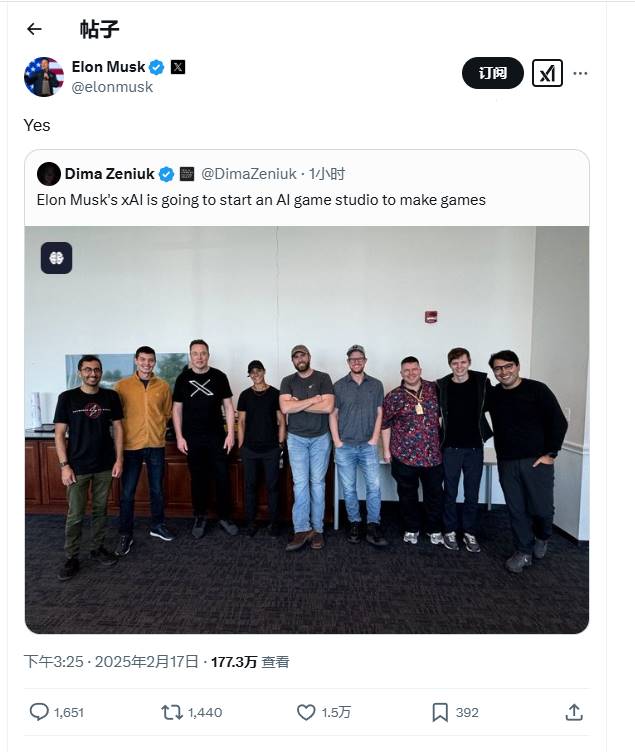
The xAI team also confirmed plans during the livestream to launch an AI gaming studio, which Musk had previously hinted at in a post on X the day before.
#03 Money Buys Freedom, But Becoming the "Strongest" Requires Much More
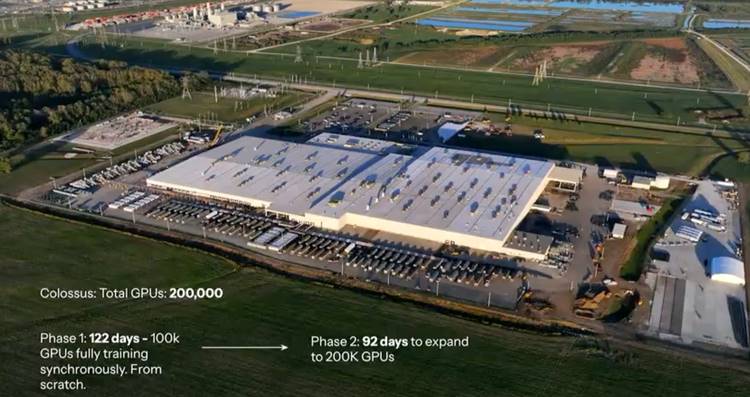
Grok 3 is based on xAI’s Colossus cluster. The first phase, with 100,000 GPU cards, took only 122 days to build, then expanded to 200,000 cards in another 92 days. Approximately 200,000 GPUs were used to train Grok 3, with pre-training completed in early January. Previously, Musk posted on X that developing Grok 3 used "10 times" more compute resources than its predecessor Grok 2, with an expanded dataset reportedly including court case documents. During the livestream, he stated that Grok 3’s computational resources are about 15 times those of Grok 2.
Musk also revealed that xAI is building a new AI cluster with five times the power of the current one.
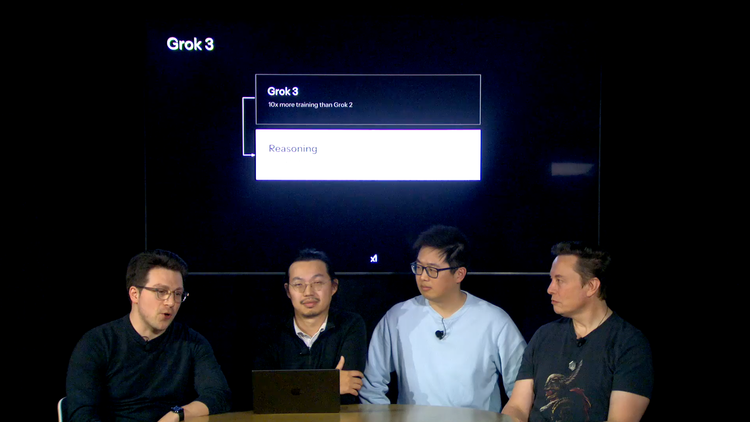
Regarding voice mode, the team didn’t give a specific release date, but Musk said, "It’ll probably come out in about a week."
Technically, voice will be directly generated by a model similar to Grok, capable of understanding speech and generating audio directly. This approach allows the AI to remember details and continue conversations more naturally. Voice mode will be available in both the app and API.
xAI plans to launch the Grok-3 API within the coming weeks. The API will include Grok-3’s reasoning models and Deep Search functionality. The xAI team is highly optimistic about enterprise applications, believing Grok-3’s powerful capabilities combined with Deep Search will bring significant value to business users.

Notably, xAI recently launched a promotion: if users agree to share data and deposit at least $5, they receive $150 in API credits. Clearly, xAI isn't concerned about giving up this small benefit; they prioritize acquiring users and data through this method.
On open-sourcing, Musk said they will follow their previous strategy: when Grok 3 matures and stabilizes (expected within a few months), they will open-source Grok 2.
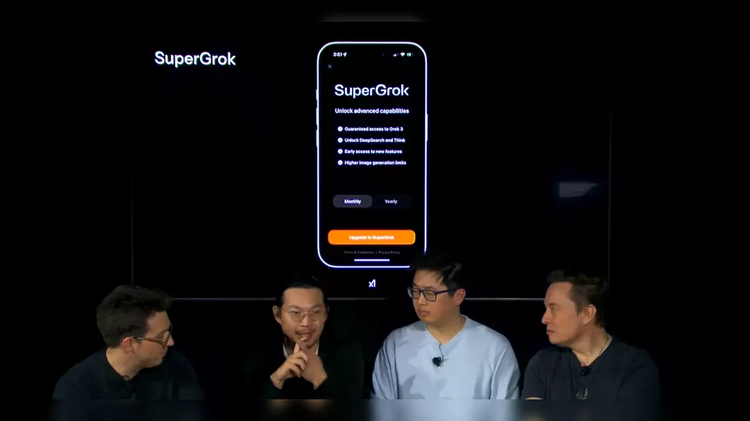
Currently, users can experience Grok via X, the Grok website, and app—not all Grok 3 models and features are fully launched yet (some remain in testing). Grok 3 will initially roll out to Premium+ subscribers on X. Additionally, a standalone subscription service called Super Grok will launch, offering Grok users the most advanced features and earliest access, priced at $30 per month or $300 annually. SuperGrok unlocks higher query limits in DeepSearch and provides unlimited image generation.
The launch of Grok 3 marks xAI's intensified competition in the AI field—not just against OpenAI and Google, but also facing pressure from emerging Chinese companies. For example, DeepSeek has prompted global AI firms to adjust strategies, making deep reasoning models the new "standard," pushing OpenAI to recently offer its reasoning model for free and signal openness toward open-sourcing.
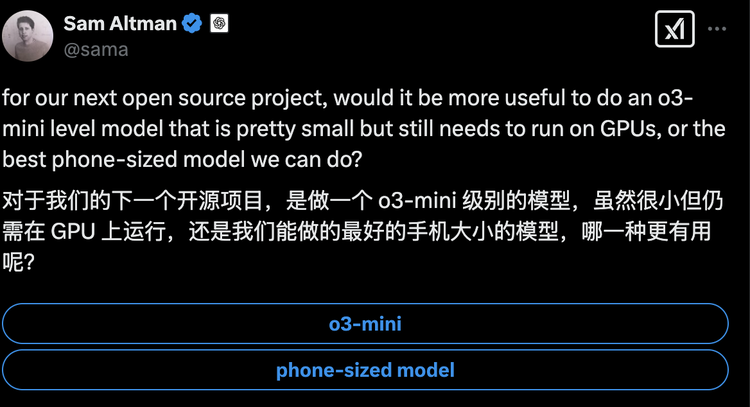
For Musk, OpenAI may be xAI’s biggest rival. Musk founded xAI in 2023 aiming to become an alternative to OpenAI, publicly criticizing OpenAI’s plan to restructure itself as a for-profit entity.
Musk has filed two lawsuits against OpenAI, accusing it of deviating from its founding principles and proposing to acquire OpenAI’s non-profit arm for $97.4 billion—an offer rejected last week by OpenAI’s board. Sam Altman claimed the acquisition bid was a strategy to "slow us down." Although Musk helped found OpenAI, he has been critical of the company since leaving its board in 2018.
Both companies are securing massive funding, with valuations soaring. According to Bloomberg last week, Musk’s xAI is in talks to raise about $10 billion, which would value the company at $75 billion, up from its previous valuation of $51 billion. Meanwhile, OpenAI is negotiating to raise up to $40 billion, potentially increasing its valuation to $300 billion.
Their capital-fueled advantage is evident. SoftBank, OpenAI, Oracle, and MGX backed by Abu Dhabi jointly announced in January plans to invest $100 billion in the U.S., eventually totaling $500 billion, for building data centers and other AI infrastructure. At the same time, Dell Technologies is close to finalizing a deal worth over $5 billion to provide xAI with AI-optimized servers.
Currently, OpenAI remains xAI’s primary competitor. Both are in direct competition in technology, market positioning, and fundraising strategies. OpenAI still leads due to its mature product lineup and strong market share. Although Grok 3 shows advantages in certain metrics, overall the launch lacks major innovation, mostly catching up with industry leaders. What truly supports Grok 3 appears to be less technological breakthrough and more the 200,000 GPUs and endless capital backing. This release was far from what Musk described as "perhaps the last chance for AI to surpass Grok."
At the beginning of the Grok 3 launch, Musk reiterated xAI and Grok’s mission: to understand the nature of the universe, figure out what’s happening, search for traces of extraterrestrial life, explore the meaning of life, understand the origin of the universe, and determine how it ends. Driven by the pursuit of truth, xAI aims to become the ultimate truth-seeking AI.
Yet, whether achieving these grand visions or competing on more practical levels, relying solely on "financial power" and the "strongest" title on leaderboards is clearly insufficient. To become the true "smartest AI on Earth," Musk and his xAI still have a long way to go.
Join TechFlow official community to stay tuned
Telegram:https://t.me/TechFlowDaily
X (Twitter):https://x.com/TechFlowPost
X (Twitter) EN:https://x.com/BlockFlow_News