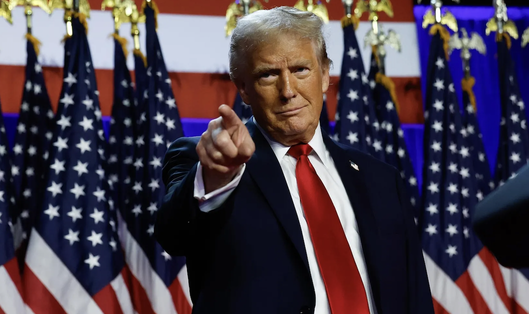
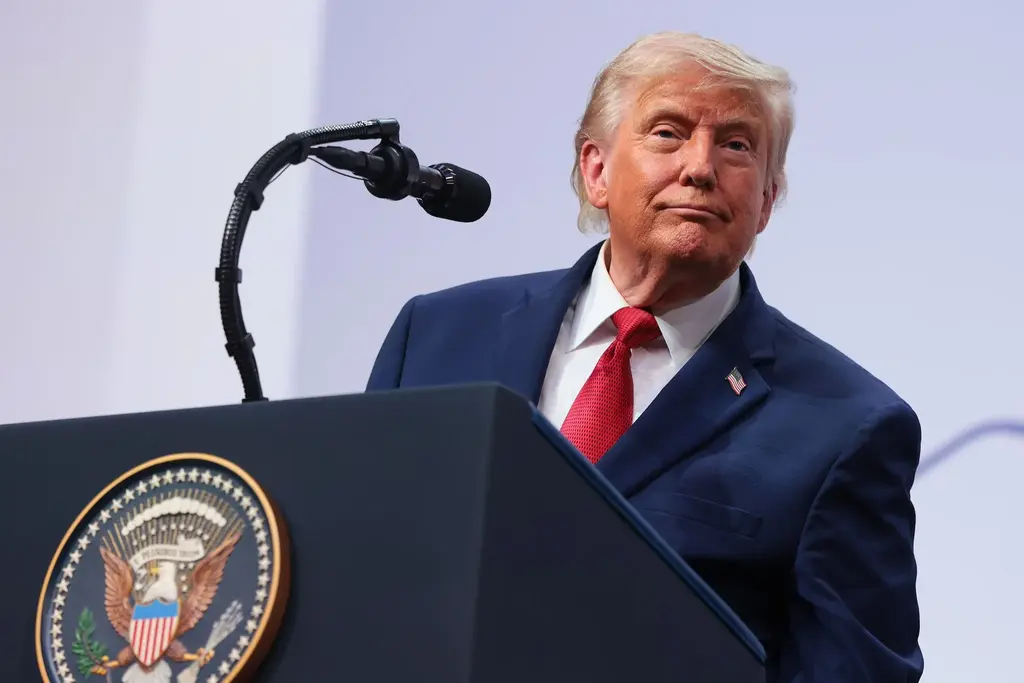
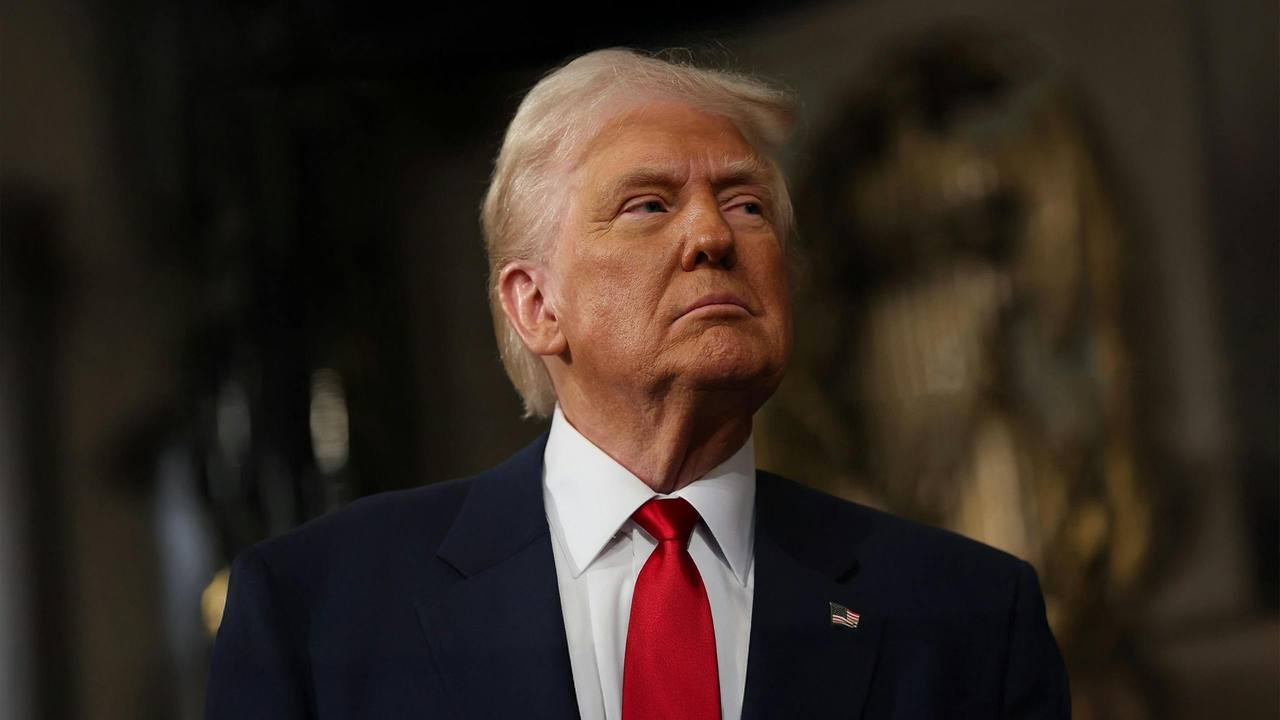
With both regulatory agency heads being "insiders," is Trump's crypto party about to begin?
TechFlow Selected TechFlow Selected
With both regulatory agency heads being "insiders," is Trump's crypto party about to begin?
Trump is putting into practice his long-standing pro-crypto stance before entering the White House, with multiple high-level government officials and regulatory leaders being crypto-friendly.
 Navigating Web3 tides with focused insights
Author: 1912212.eth, Foresight News
Since officially taking office at the White House, Trump has rolled out a series of favorable policies. Recently, he nominated Jonathan Gould, former Chief Legal Officer of Bitfury, to serve as Comptroller of the Currency, overseeing the national banking system. The nomination was submitted to the Senate on February 11 and carries a five-year term.
In addition, he has also nominated Brian Quintenz, policy lead at a16z, as Chair of the Commodity Futures Trading Commission (CFTC).
The Office of the Comptroller of the Currency (OCC) holds significant influence as one of the most powerful bank regulators in the United States. Banks regulated by the OCC control the majority of assets in the U.S. banking sector, including major institutions such as Citibank, JPMorgan Chase, and Bank of America. Given the central role of the U.S. banking system in global financial markets, OCC policies impact international interbank transactions, dollar clearing systems, and global financial stability. In recent years, the OCC has permitted national banks to offer cryptocurrency custody services and explored integrating stablecoins into the banking system, profoundly influencing the compliant development of the crypto industry.
Kristin Smith, CEO of Blockchain Association, a leading advocacy group for the blockchain industry, issued a statement calling Gould an excellent choice for Comptroller of the Currency, noting his experience in the crypto sector equips him to effectively lead the agency. Avichal Garg, co-founder of Electric Capital, also said Gould’s nomination is a highly positive development for fintech and crypto founders seeking better financial services.
So who exactly is Gould that he receives such high praise?
Distinguished Track Record Across Crypto, Law, and Financial Asset Management

Gould graduated from Princeton University and later earned a law degree. During Trump’s first administration (late 2018 to mid-2021), he served as Senior Deputy Comptroller and Chief Counsel at the OCC. Records show that during his tenure, Jonathan led the legal and licensing team through a period of major transformation, driving updates to the agency’s regulatory and licensing frameworks to keep pace with the evolving banking landscape. These reforms included significant revisions to banking regulations, such as implementing the Economic Growth Act. Under his leadership, the OCC granted licenses to fintech and crypto-focused banks for the first time and affirmed the legality of crypto-related business activities.
In 2022, Gould became Chief Legal Officer at Bitfury, a producer of Bitcoin mining equipment valued at $1 billion several years ago. Gould is currently a partner at Jones Day law firm.
He also served as a director at BlackRock from 2014 to 2018. BlackRock is one of the world’s largest asset management firms, currently managing over $10 trillion in assets under management (AUM), holding a pivotal position in global financial markets.
With deep expertise in law, and prior roles at a Bitcoin mining company and the asset management giant BlackRock, Gould brings strong credentials across crypto, finance, and law. If confirmed, this could usher in a more lenient regulatory environment for crypto. Gould recently opposed Chokepoint 2.0 (efforts to sever crypto’s access to banking) and advocated for fair banking access for crypto companies.
CFTC Chair Nominee Is Policy Lead from Venture Firm a16z
Trump has also recently nominated Brian Quintenz, policy lead at a16z, to be Chair of the Commodity Futures Trading Commission (CFTC). Following the departure of the previous CFTC chair, Caroline Pham, nominated by Trump, currently serves as acting chair. Earlier this year, Trump’s team interviewed multiple candidates, including CFTC Commissioner Summer Mersinger and former Kraken Chief Legal Officer Marco Santori, ultimately selecting Brian Quintenz.
The CFTC primarily regulates U.S. derivatives markets, especially futures, options, and other derivative contracts tied to commodities, equities, bonds, foreign exchange, and is one of the most important regulators in the cryptocurrency space.
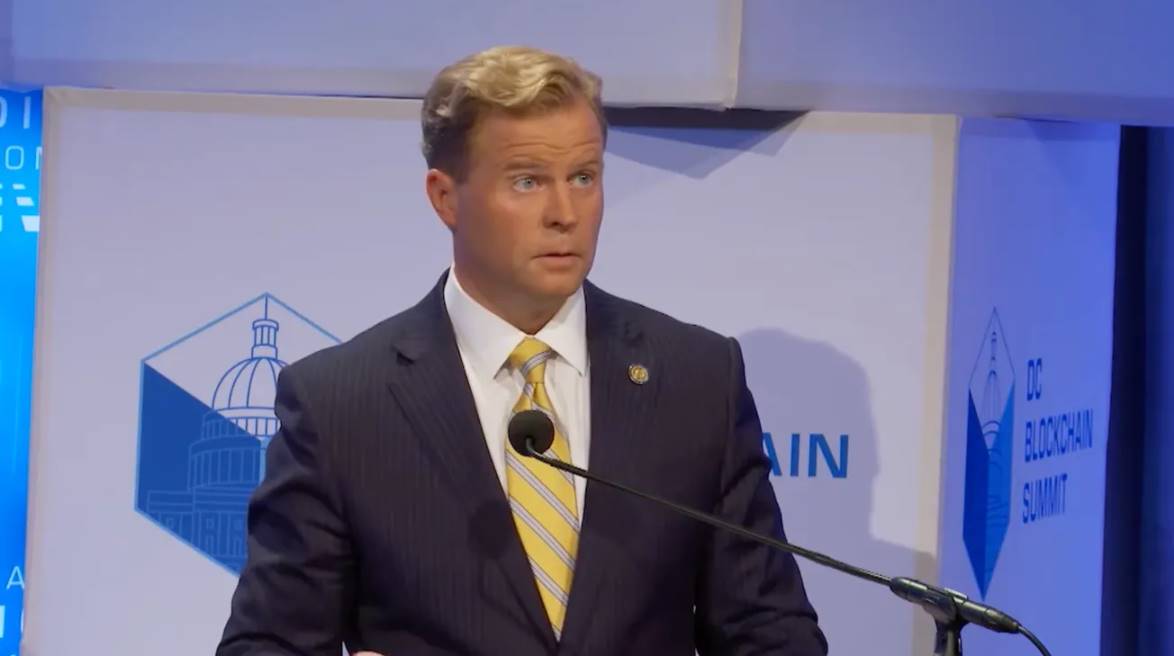
Brian Quintenz graduated from Duke University. From 2001 to 2007, he worked in the office of U.S. Congresswoman Deborah Pryce as a senior policy advisor. In 2013, he founded Saeculum Capital Management, focusing on risk-managed and technical analysis-based investment strategies.
In August 2017, Brian was nominated by Trump to serve as a CFTC commissioner and was confirmed by the U.S. Senate the same month. During his tenure, he chaired the CFTC’s Technology Advisory Committee and led public policy discussions and briefings on cryptocurrency. He also supported developing tailored, risk-adjusted regulatory frameworks for emerging areas like decentralized finance (DeFi).
In September 2021, Brian joined Andreessen Horowitz (a16z) as Head of Policy for its crypto division.
While at a16z, Brian recently wrote, “When it comes to regulation, we can finally relax.” For many, project teams have delayed using tokens to distribute governance rights and build communities due to fears of excessive regulation. Now, there should be greater confidence in using tokens as legitimate, compliant tools.
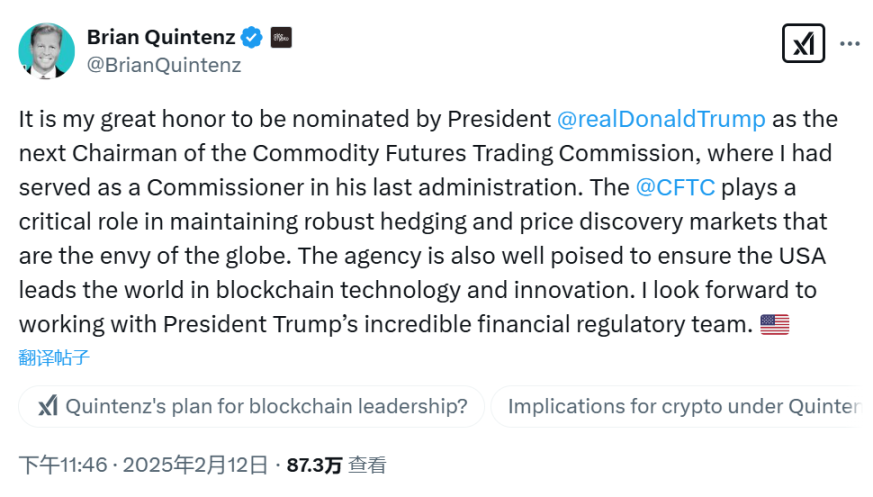
Notably, after being nominated as the next CFTC Chair, Brian responded on X (formerly Twitter), stating that the CFTC plays a critical role in price discovery in markets and is poised to ensure U.S. leadership in blockchain technology and innovation. “I look forward to working with President Trump’s financial regulatory team,” he added.
In past regulatory actions involving the crypto industry, both the SEC and CFTC have participated in enforcement. Beyond that, they have often disputed whether specific tokens qualify as securities. Recently, Forbes business reporter Eleanor Terrett disclosed that as digital asset regulation becomes a priority, the U.S. SEC and CFTC are discussing enhanced cooperation on crypto regulation, considering reviving the SEC-CFTC Joint Advisory Committee, which has been inactive since 2014, to provide a platform for both agencies to discuss emerging regulatory issues.
Summary
Currently, Trump appears to be fulfilling his long-standing pro-crypto stance ahead of returning to the White House, appointing multiple government officials and regulators who support the crypto industry. The dark cloud of strict regulation and suppression that once hung over the crypto sector may soon dissipate, potentially ushering in the most favorable policy environment yet for U.S. blockchain entrepreneurs.
Join TechFlow official community to stay tuned
Telegram:https://t.me/TechFlowDaily
X (Twitter):https://x.com/TechFlowPost
X (Twitter) EN:https://x.com/BlockFlow_News
 Foresight News