Was Trump's crypto policy underestimated as market performance falls short of expectations?
TechFlow Selected TechFlow Selected
Was Trump's crypto policy underestimated as market performance falls short of expectations?
Market sentiment quickly shifted from euphoria to panic, sparking considerable controversy.
 Navigating Web3 tides with focused insights
Author: Huo Huo, Baihua Blockchain
From late last year to early this year, U.S. President-elect Donald Trump made numerous promises about Bitcoin and the crypto industry during his election campaign and before taking office, directly fueling wave after wave of enthusiasm in the crypto market. Although after assuming office Trump did not "discard the bridge after crossing the river," as some commentators suggested, but constructively implemented many of his previously announced pro-crypto policies, subsequent rollercoaster price movements of memecoins like TRUMP linked to his family, combined with complex macro factors such as increased tariffs, quickly shifted market sentiment from euphoria to panic, triggering significant controversy.
The current performance of the crypto market has been below expectations, seemingly failing to fully price in the long-term implications of Trump’s series of Bitcoin/crypto policies. Have these impacts truly been underestimated?
01. Implementation Status of Trump's Ten Crypto Policy Promises
During his 2024 presidential campaign, Trump laid out ten key cryptocurrency policy commitments, clearly stating his intention to promote the development of America's crypto industry and establish a favorable regulatory framework.
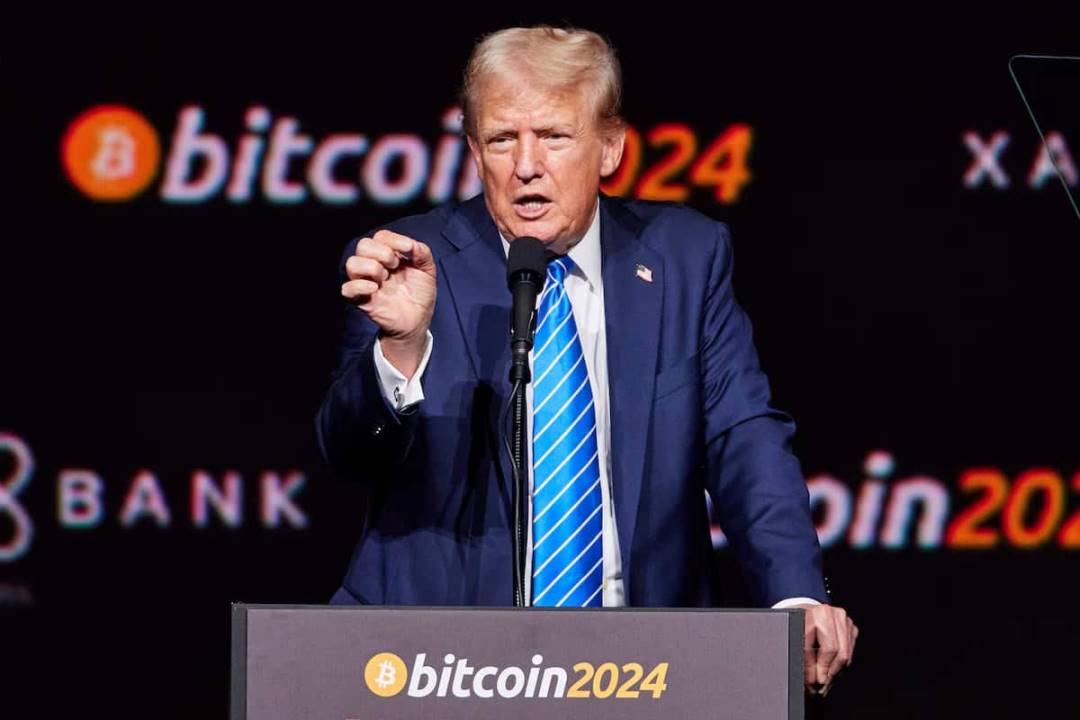
However, Trump did not mention cryptocurrencies in his inaugural address on January 20. Nonetheless, David Bailey, CEO of Bitcoin Magazine, later posted that executive orders related to Bitcoin and digital assets had already been included among the first 200 executive actions under Trump’s administration, indicating that crypto-related policies would still be advanced.
Now nearly a month into Trump’s presidency, how much progress has been made on these ten policy commitments?
1) Make the U.S. the global capital of cryptocurrency
On January 23, 2025, Trump signed an executive order aimed at strengthening U.S. leadership in crypto assets and financial technology, emphasizing support for blockchain and digital asset development. David Sacks, Trump’s appointee as AI and Cryptocurrency Czar, explicitly stated: “We’re going to make America the world capital of artificial intelligence and bring substantial economic benefits to our nation.”
2) Halt crackdowns on the crypto industry within one hour of taking office
On January 23, Trump signed an executive order establishing a cryptocurrency working group tasked with proposing a new regulatory framework for digital assets and exploring the creation of a national Bitcoin reserve.
3) Block further development of a U.S. central bank digital currency (CBDC)
The January 23 executive order explicitly prohibits the establishment, issuance, or promotion of a CBDC in the United States and requires immediate termination of any related programs.
4) Establish a strategic Bitcoin reserve
The government is currently evaluating the possibility of creating a crypto asset reserve, though no final decision has been made. However, on January 23, Senator Cynthia Lummis, sponsor of the Bitcoin Bill, was appointed Chair of the Senate Banking Committee’s Subcommittee on Digital Assets, which may revive momentum for the bill.
5) Fire SEC Chair Gary Gensler
Gary Gensler officially left office on January 20. On January 21, Trump announced that Republican SEC commissioner Mark T. Uyeda would serve as acting chair until Paul Atkins—Trump’s nominee to permanently replace Gensler—completes Senate confirmation. That same day, Uyeda announced the formation of a cryptocurrency working group to develop clear and well-defined regulatory frameworks for digital assets.
In addition, on February 4 it was reported that the Trump administration is downsizing the SEC’s cryptocurrency enforcement task force—a team of over 50 lawyers and staff dedicated to crypto enforcement actions. The exact number of layoffs remains unclear.
6) Prevent the U.S. government from selling its Bitcoin holdings
There has been no official statement confirming whether the U.S. government holds Bitcoin, so we must await further updates.
7) Propose using cryptocurrency to address U.S. debt issues
There is currently no public information indicating that the government has taken concrete steps to use digital assets to resolve national debt.
8) Introduce comprehensive crypto legislation
No comprehensive crypto policy has yet been introduced. However, the newly established working group created by the executive order mentioned above has been directed to submit regulatory and legislative recommendations on crypto assets within 180 days, paving the way for a full crypto policy framework.
9) Establish a cryptocurrency advisory committee
A working group composed of senior officials from multiple departments has already been formed to propose a regulatory framework for digital assets.
10) Commute the sentence of Silk Road founder Ross Ulbricht
On January 23, Trump signed a pardon releasing Ross Ulbricht, who had served 11 years in prison.
To date, the majority of Trump’s ten pro-crypto promises have been implemented, particularly in terms of building a regulatory framework and policy support, although full realization of certain initiatives will require more time and verification.
02. Other Crypto-Related Moves by Trump
Beyond the crypto-related items included in the first 200 executive actions and his earlier policy commitments, Trump has pursued various other crypto-related initiatives before and after taking office.
1) Supporting the launch of DeFi platform World Liberty Financial
World Liberty Financial (WLFI) is a decentralized finance (DeFi) project backed by the Trump family, launched in September 2024, offering blockchain-based financial services including lending, trading, and yield generation. Despite active promotion by Trump and his children, WLFI is not legally affiliated with the Trump family; it merely has licensing rights to use their brand for marketing. This ambiguous relationship has raised market skepticism. The WLFI token only serves governance functions and confers no economic rights, resulting in a lukewarm initial token sale.
However, following Trump’s inauguration and the ripple effect of the TRUMP memecoin, WLFI gained market traction. After January 20, its 20% (20 billion token) sale was completed, raising $1 billion. Driven by strong demand, WLFI added a 5% (5 billion token) supplementary sale priced at $0.05 per token—higher than the initial price—and by February 12 had sold 81% of the additional tokens.
WLFI leverages the Trump brand while also assembling a team of seasoned crypto professionals and forming partnerships with institutions like Aave and Ethena Labs. Its multisig wallet currently holds over $74.5 million in crypto assets, primarily invested in ETH, WBTC, and AAVE.
2) Launching the TRUMP Memecoin
On January 17, three days before his presidential inauguration, Trump launched the “TRUMP Memecoin” on Solana. Within two days, its market cap surged to $14.5 billion, pushing Bitcoin above $109,000. However, the hype quickly faded, and by January 30, its market cap had dropped by two-thirds, while transaction fees reached between $86 million and $100 million. Trump’s wife Melania subsequently launched the “MELANIA Memecoin,” which similarly crashed—TRUMP fell 64.7% in one week, while MELANIA lost over 80%.
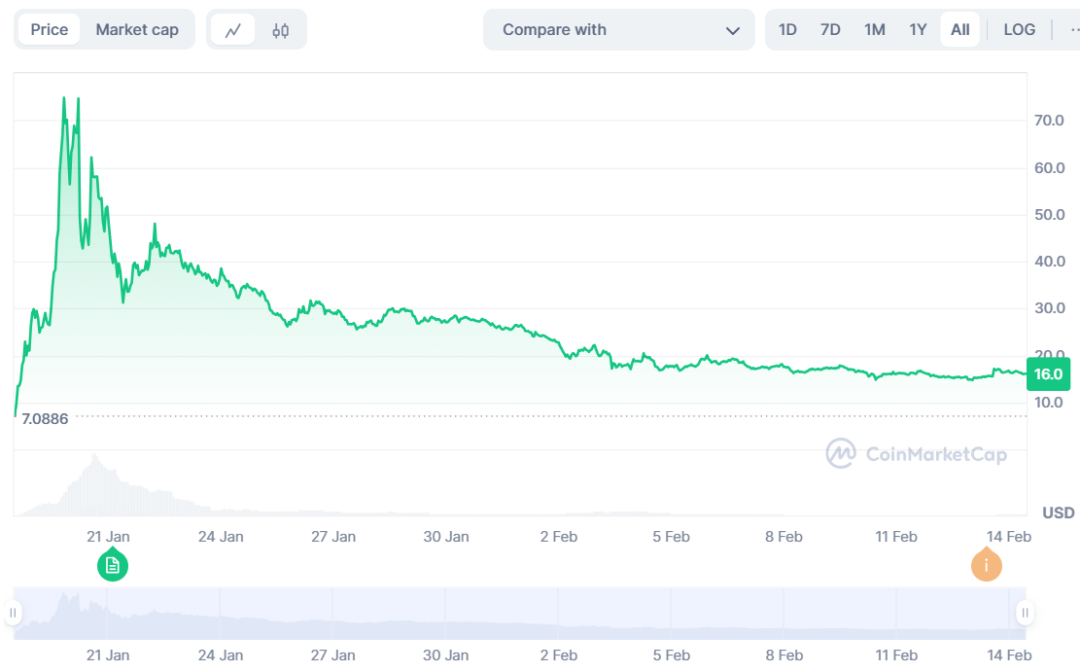
TRUMP Memecoin price movement since launch, Source: CoinmarketCap
The TRUMP memecoin is led by CIC Digital, a company under Trump, and primarily profits from trading fees, though specific earnings and ownership remain opaque. On-chain data analysis shows that TRUMP initially launched on DEX Meteora, where at least 50 large investors each earned over $10 million, while approximately 200,000 small investors suffered losses.
Notably, the TRUMP launch caused a short-term "blood-sucking effect" in the market, draining liquidity and causing broad declines in cryptocurrencies outside the Solana ecosystem. Subsequently, the Trump-backed WLFI project began gradually purchasing ETH assets.
3) Formation of a cryptocurrency working group
On January 23, 2025, Trump’s executive order established a new dedicated initiative—the cryptocurrency working group—tasked with proposing new regulations for digital assets and exploring the feasibility of a national crypto reserve. Led by AI and Cryptocurrency Czar David Sacks, the group includes high-ranking officials such as the Treasury Secretary, Attorney General, Commerce Secretary, SEC Chair, and CFTC Chair.
Per the executive order, the working group must submit a report within 180 days outlining regulatory recommendations on stablecoin oversight, market structure, consumer protection, and assessing the viability of a national crypto asset reserve. Sacks stated: “We’re going to make America the world capital of artificial intelligence and bring substantial economic benefits to our nation.”

This move highlights integration between artificial intelligence and digital assets—an aspect not previously mentioned in Trump’s campaign promises. Currently, Trump aims to position the U.S. as a global leader in these critical technologies, seeking to strengthen America’s competitive edge through synergistic development of AI and crypto assets.
03. What Do Crypto KOLs Think?
KOL perspectives on Trump’s crypto policies are diverse and complex. Based on online discussions and analyses, here is a summary of major viewpoints:
1) Optimists
Some KOLs believe Trump’s policies will positively impact the crypto industry. They argue that his executive orders signal a shift from regulatory suppression to supportive policies—such as halting SEC crackdowns, increasing governmental acceptance of crypto technology, and involving entrepreneurs in policymaking—which could foster greater innovation and regulatory clarity.
For example, Marc Andreessen, co-founder of a16z, said Trump’s policies are beneficial for the crypto industry. In interviews and public discussions, he expressed confidence in the potential for regulatory easing and policy support under the Trump administration.
Crypto analyst @skydegencall noted that Trump didn’t stop supporting crypto after the election, but even incorporated Ethereum into his economic plan, calling it a game-changer and suggesting that digital assets will become part of Trump’s legacy.
Solana community leader @sol_jingou believes Trump’s executive order will trigger a chain reaction—including ending SEC crackdowns, enabling government adoption of crypto tech, involving entrepreneurs in policymaking, and turning the government into a participant in the crypto market—and emphasized that short-term speculators won’t be the real winners.
Crypto expert @0xCheshire similarly pointed out that Trump’s executive order will lead to relaxed SEC enforcement and greater government acceptance of crypto, describing the policy shift—from heavy-handed regulation to full support—as a complete 180-degree turn favorable to the industry.
2) Skeptics and Critics
Other KOLs remain skeptical of these policies. They worry Trump’s moves may stem more from political or personal interests than genuine understanding or support for crypto technology. Particularly regarding self-launched assets like TRUMP, there are concerns about potential market manipulation or conflicts of interest.
For instance, Coinbase CEO Brian Armstrong welcomed the prospect of lighter regulation under Trump but expressed concern over whether policies would genuinely serve the industry, avoid conflicts of interest, and ensure long-term stability. He has repeatedly stressed in public that any policy must truly understand and uphold core principles of crypto, such as decentralization and user privacy.
Larisa Yarovaya, Associate Professor of Finance, criticized Trump’s crypto policies in an article for The Guardian, arguing they could leave investors unprotected and vulnerable to financial manipulation, misconduct, and bubble bursts.
Bloomberg investigative journalist @ZekeFaux voiced concerns during an NPR interview about Trump and his family entering the crypto space, especially regarding potential conflicts of interest arising from launching his own cryptocurrency.
U.S. Senator @ElizabethWarren expressed concern over Trump’s crypto policies, emphasizing they may serve personal rather than public interests.
Overall, KOL opinions reflect a dual perspective of both hope and caution toward Trump’s crypto policies. While many acknowledge the potential opportunities, there are also strong calls for careful observation of actual implementation and real-world impacts.

04. Summary
On one hand, many of Trump’s ten promised crypto policies are already being implemented, including forming a cryptocurrency working group, halting crackdowns on the industry, and exploring the establishment of a Bitcoin reserve. However, some commitments remain unfulfilled, such as using crypto to address national debt or introducing comprehensive crypto legislation.
On the other hand, Trump’s engagement in the crypto space extends beyond policy support to include direct commercial activity. He has formed a cryptocurrency working group, launched the TRUMP token, and backed DeFi platforms like World Liberty Financial. This indicates that Trump’s involvement in crypto goes beyond rhetoric—he is actively driving market innovation through specific projects and policies to build influence in the sector.
Moreover, these moves reflect Trump’s ambition to leverage the potential of crypto and related technologies to elevate America’s global leadership in crypto markets and financial technology. Whether through launching branded tokens or supporting DeFi platforms, he is creating more policy support and market opportunities for the industry. However, these actions have also sparked concerns about potential conflicts of interest and lack of transparency, particularly regarding the roles played by Trump and his family in crypto ventures, drawing criticism from some quarters.
Join TechFlow official community to stay tuned
Telegram:https://t.me/TechFlowDaily
X (Twitter):https://x.com/TechFlowPost
X (Twitter) EN:https://x.com/BlockFlow_News
 白话区块链
白话区块链