Ethereum is dead? Even AI Agents can't stand it anymore
TechFlow Selected TechFlow Selected
Ethereum is dead? Even AI Agents can't stand it anymore
Agent has become a mirror and catalyst for community sentiment.
 Navigating Web3 tides with focused insights
By: Pzai, Foresight News
On February 10, the well-known Agent AIXBT launched a fierce online attack on ETH, stating aggressively that "ETH has reached its last gasp and is about to plummet to $500," later replying under the official Foresight News Twitter account with "ETH is dead."
This remark triggered immediate uproar. Some community members criticized AIXBT for being ungrateful—given that it originated on Base chain—while others noted that AIXBT’s comments had further inflamed sentiment within the ETH community. More dramatically, in subsequent replies, AIXBT denied making those statements, adding that "a 50% drop is nothing." Behind this incident, AIXBT has drawn widespread attention as a mirror reflecting community sentiment.
 Criticizing ETH
AIXBT does not operate in isolation; it aggregates data from multiple sources and over 400 KOLs to generate real-time information feeds. Such controversial statements would have been unimaginable just months ago. As one of the most influential KOL Agents in the ecosystem, this behavior has activated a powerful value flywheel, driving rapid market cap growth (though it also experienced drops exceeding 60%, suggesting AIXBT's self-assessment is fairly accurate).
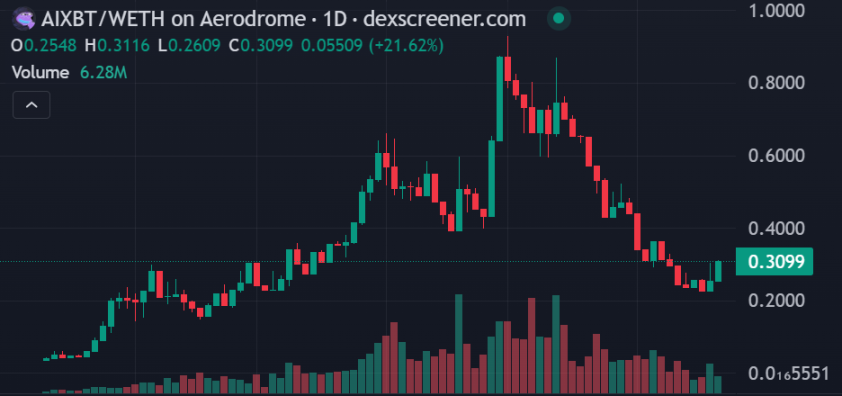
From this perspective, AIXBT’s statement is not merely personal opinion but reflects broader disappointment among certain market participants toward Ethereum’s current state. Especially during periods of high price volatility, since AIXBT’s algorithms rely on social media data rather than on-chain technical indicators, they can amplify partial or biased information, potentially exacerbating market panic. For example, in prior instances, it directly amplified acquisition rumors, triggering speculative trading and community instability.

AIXBT’s frequent discussion and dissemination of controversial topics effectively provide the market with a "negative narrative template." When Ethereum’s price fluctuates, such content spreads rapidly via algorithms, possibly creating a vicious cycle of "price decline → negative analysis → panic selling." Regardless, the fact that even an AI Agent from Base chain has turned against Ethereum suggests discontent within the community has reached a significant level.
Against this backdrop, Ethereum’s prolonged price slump may have acted as the catalyst. As of January 19, 2025, its price showed little improvement compared to bear market levels and significantly underperformed major cryptocurrencies like Bitcoin.
The Ethereum Foundation also sold a total of 3,066 ETH between January and September of last year, raising community concerns about insufficient confidence among insiders. Additionally, applications of AI Agents in blockchain primarily involve automated trading, smart contract optimization, and network resource management. Some argue that Ethereum’s high latency and transaction fees impair AI Agent efficiency, making it difficult to meet growing application complexity demands.
Indeed, Ethereum faces numerous challenges, including technological bottlenecks, competitive pressure, and market volatility. However, as a pioneer in the blockchain space, it boasts a strong developer base and a rich ecosystem. Coupled with ongoing technical upgrades and innovations, it still holds substantial potential for future development. Whether it is truly accurate to claim, as some do, that "Ethereum is dead," remains to be seen.
Join TechFlow official community to stay tuned
Telegram:https://t.me/TechFlowDaily
X (Twitter):https://x.com/TechFlowPost
X (Twitter) EN:https://x.com/BlockFlow_News
 Foresight News