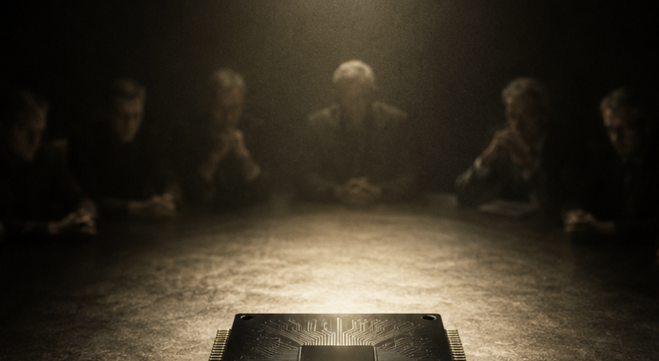
The Top Auction Houses' "Crypto" Last Stand
TechFlow Selected TechFlow Selected
The Top Auction Houses' "Crypto" Last Stand
As the cryptocurrency stage lights up once again, the desperate auction houses can only prepare to join this grand spectacle.
 Navigating Web3 tides with focused insights
Source: Melanie Gerlis, Financial Times
Translation: Kris, Tuoluo Finance
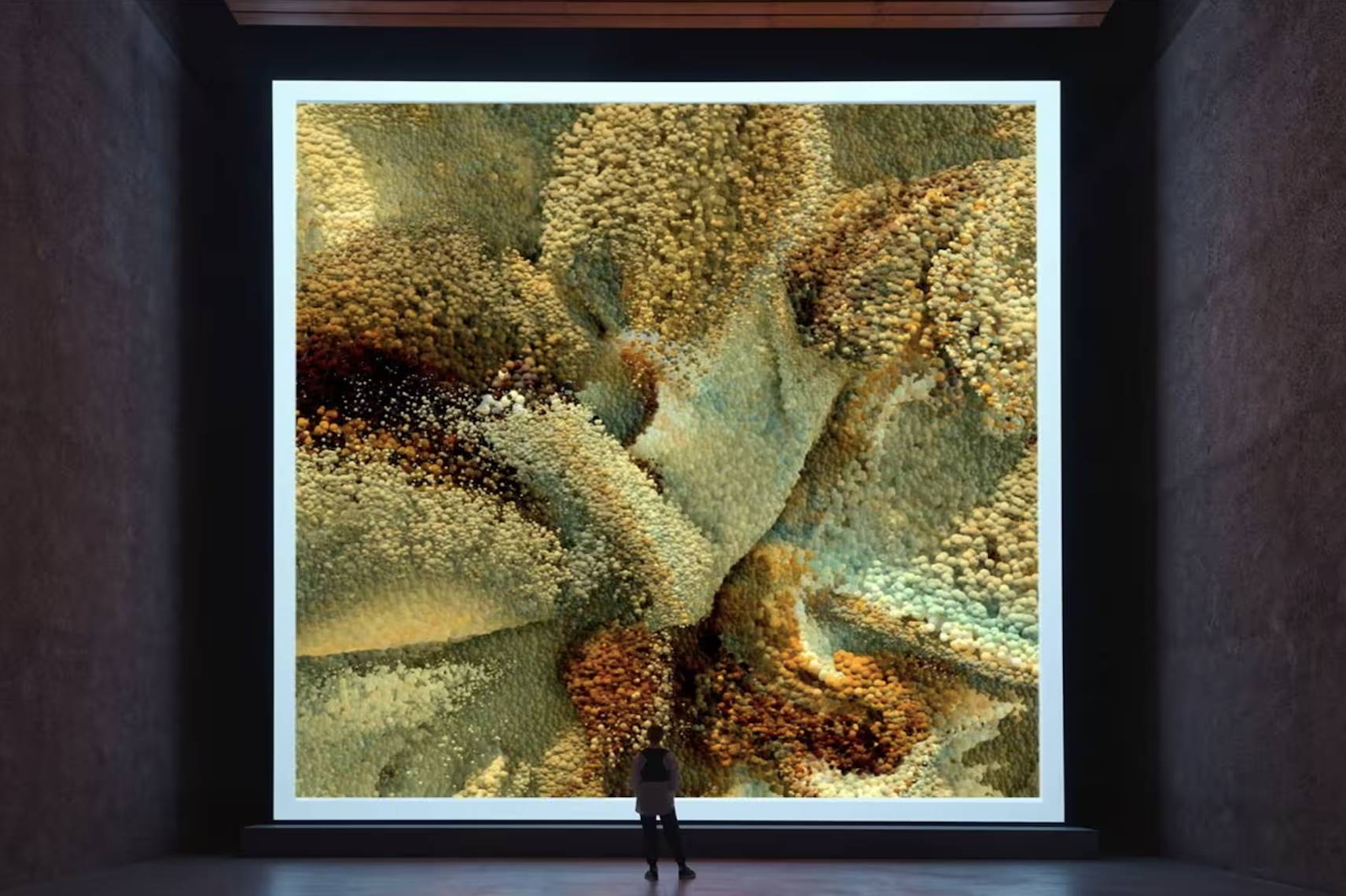
Refik Anadol's generative AI data painting "Machine Hallucinations – Space | Chapter Two: Mars" (2021), included in Sotheby's "Origins" dedicated auction
© Refik Anadol/Sotheby's
"The crypto friends have left. As soon as the music stopped, they fled." Art advisor Wendy Goldsmith said within the grand halls of Paris’s Grand Palais during October’s Art Basel Paris. Yet now, with Bitcoin continuing to hit new highs and Ethereum nearing its 2021 peak, those in the art world who once placed great hopes on cryptocurrency are beginning to stir again.
Early signs suggest先锋 art industry pioneers are gaining real traction. Weeks after U.S. President Donald Trump’s re-election, cryptocurrencies surged as Trump demonstrated strong support for decentralized digital assets. Prior to this, Sun Yuchen, founder of the crypto platform Tron, bought Maurizio Cattelan’s “Comedian” (2019) at Sotheby’s New York for $6.2 million—an artwork consisting of a banana taped to a wall—which landed him headlines across major media outlets, paid entirely in cryptocurrency.
Against this backdrop, next month Sotheby’s will accept payments in ETH or BTC at its first-ever auction in Saudi Arabia, marking the first time a traditional auction house has supported cryptocurrency payments across an entire physical live auction. Sotheby’s says the move could attract a new pool of buyers in regions where digital art and crypto activity are vibrant. The auction features 119 lots, including modern and contemporary artworks from Western and Saudi artists, luxury items, Cristiano Ronaldo’s match-worn jersey, and generative "AI data paintings" by leading practitioner Refik Anadol. His large-scale work “Machine Hallucinations – Space | Chapter Two: Mars” (2021), which uses data from space telescopes to create surreal organic landscapes, carries an estimate of $800,000 to $1.2 million.
In fact, prior to the pandemic, the art market struggled to attract tech figures due to inherent cultural mismatches. The rise of non-fungible tokens (NFTs) brought a wave of newly minted crypto millionaires and billionaires. NFTs are unique digital assets linking art to blockchain technology, used to produce geometric abstractions and cartoon illustrations.
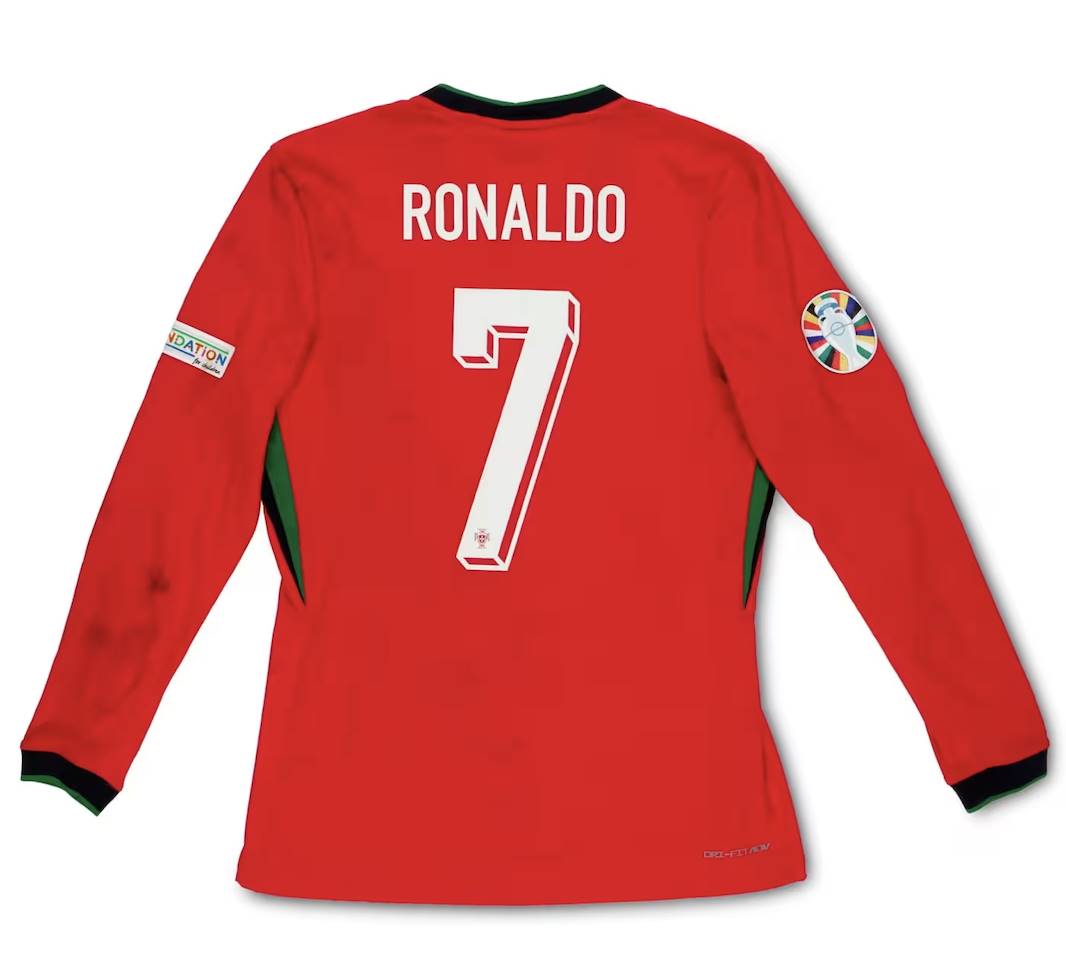
Cristiano Ronaldo’s UEFA Euro 2024 quarter-final match jersey to be auctioned at Sotheby’s “Origins” auction in Saudi Arabia
© Sotheby's
In 2021, Christie’s and Sotheby’s began accepting cryptocurrency for select physical artworks, following Christie’s sale of Beeple’s “Everydays: the First 5000 Days,” an NFT stitching together 5,000 digital images—many satirical, including a giant nude Trump seated in the Capitol. It was acquired by Vignesh Sundaresan, founder of the crypto investment fund Metapurse, known as Metakovan, for a staggering $69 million. Since then, eligible physical works have increasingly catered to tech tastes, including a bright yellow 1984 painting by Keith Haring depicting a crowd mesmerized by computers, sold at Christie’s for £4.3 million, though the auction house declined to confirm whether a cryptocurrency payment was accepted. Christie’s conditions for accepting alternative currencies require seller consent, while bidding proceeds in local fiat currency and fees remain in traditional form; Sotheby’s itself does not hold cryptocurrency. Today, every major auction house operates its own NFT and digital art platform—Sotheby Metaverse and Christie’s 3.0—where both sellers and buyers can use cryptocurrency. For the art market, practitioners hope using NFTs and their associated alternative currencies can broaden access for new buyers into typically high-priced art domains. Sun Yuchen personally completed this journey—spending over $6.2 million in the process. In early 2021, he purchased screen-saver-style “Cube” NFTs by digital artist Murat Pak, sold through Sotheby’s on the dedicated Nifty Gateway platform, each priced at $1,500. Months later, according to Sun’s social media, he acquired “Untitled (Kimposen)” (2001), a painting by sought-after artist KAWS featuring his cartoon character with X-shaped eyes sealed in blister packaging, for HK$2.5 million (approximately $300,000). Just five months later, Sun entered the realm of heavyweight modern art, purchasing Alberto Giacometti’s sculpture “Le Nez” for $78 million—a 1965 cast depicting a long-nosed head imprisoned in a cage. Yet despite this, not everyone in the art market welcomes the crypto surge with open arms. Goldsmith assessed the atmosphere at the Paris fair, noting a calm, strategic market mood clearly distanced from the turbulence caused by crypto speculators. Partly, the predominantly young demographic of crypto buyers clashes with the art auction world’s longstanding lack of diversity. There is also a persistent reality: newcomers are often viewed with suspicion, given the art market’s largely conservative and insular nature.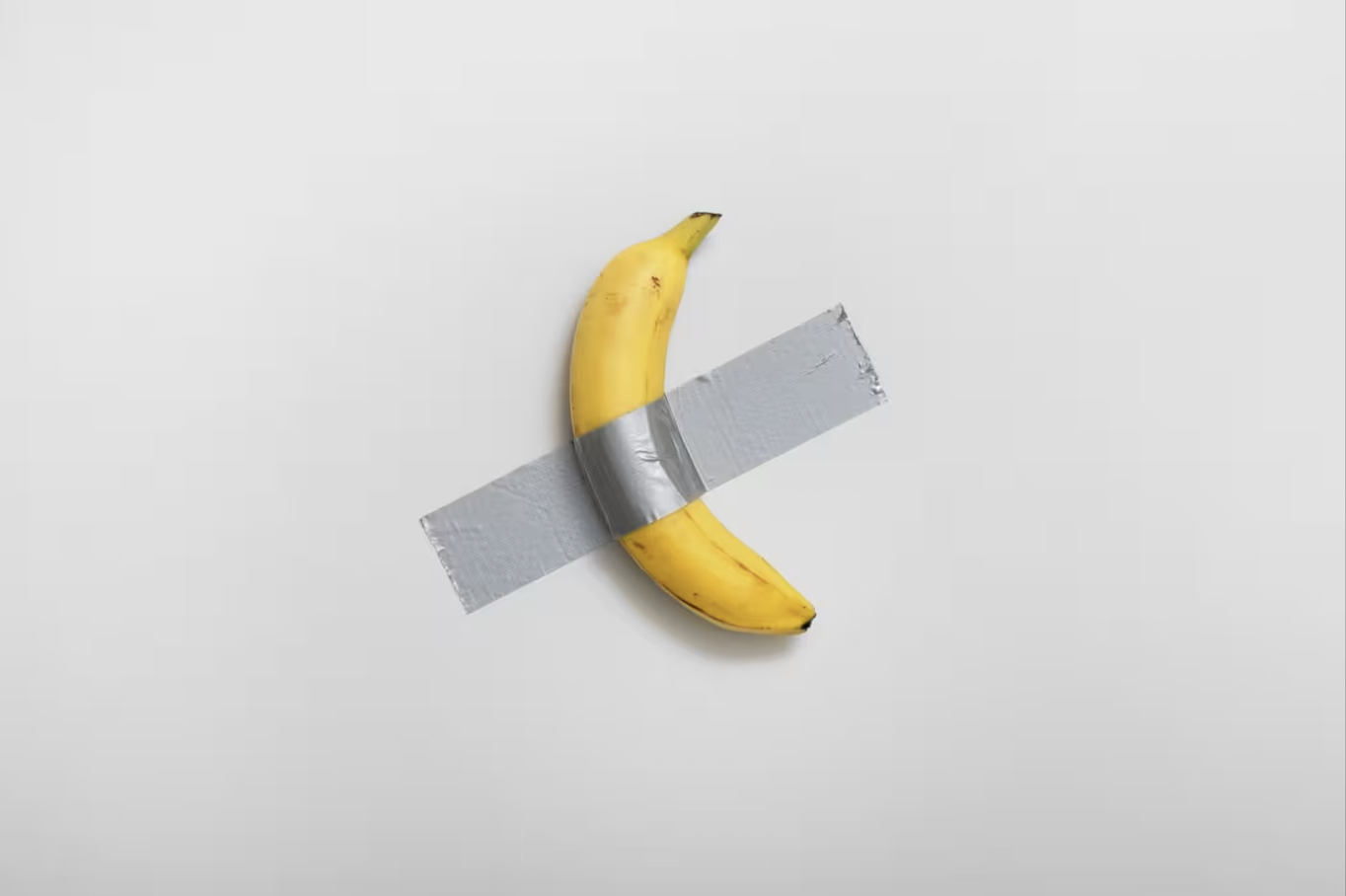
Maurizio Cattelan’s “Comedian” (2019)
© Maurizio Cattelan
In this delicate market, skepticism toward user demographics is merely surface-level; concerns about usage lie at the core. The appeal of art—in a secretive market where volatile paper profits can be converted into transferable tangible assets—already makes it highly attractive to money launderers, and tokenized NFTs could become a new playground for such activities. In China, cryptocurrency is banned “based on numerous anti-money laundering cases,” wrote Angell Xi, partner at Chinese law firm Jingtian & Gongcheng, in the “Art Basel and UBS Art Market Report 2024.” In the EU, the latest anti-money laundering and counter-terrorism financing regulations have tightened oversight on all businesses offering crypto-asset services, including banning anonymous payments. Auction houses’ compliance teams are prepared and remain relatively cautious toward cryptocurrency. Beyond dedicated NFT platforms, only a handful of auction items qualify—until Sotheby’s February 8 auction in Saudi Arabia. Christie’s said its NFT sales to date have reached $150 million, including Beeple and related fees. To date, NFTs have cooled significantly, losing much of their former热度, but with improving market conditions, a turnaround may follow. According to ArtTactic’s “Global Art Market Outlook” released this week, 12% of experts are optimistic about NFT performance this year—a figure still far below the previous high of 73% in 2023, but double that of 2024. Meanwhile, Christie’s reports the average age of its NFT buyers is 42, compared to 54 across all auctions. This aligns with Christie’s strategy of targeting younger generations, a key focus emphasized last week by incoming CEO Bonnie Brennan, who stated her mission is “to preserve cultural heritage while embracing innovation—to attract new audiences, regions, and technologies.” Indeed, the art market has remained visibly sluggish over the past two years, desperately needing fresh blood. According to ArtTactic, total auction sales at Sotheby’s, Christie’s, and Phillips fell 26% in 2024, following a 19% decline in 2023. Under these circumstances, perhaps any available attention is beneficial. As the crypto stage lights up once more, auction houses fighting for survival can only prepare to join the spectacle.Join TechFlow official community to stay tuned
Telegram:https://t.me/TechFlowDaily
X (Twitter):https://x.com/TechFlowPost
X (Twitter) EN:https://x.com/BlockFlow_News
 @FT
@FT