China and the U.S. Look to the Crypto Industry: Divergent Stances on CBDCs, Could Bitcoin Become a Key Battleground?
TechFlow Selected TechFlow Selected
China and the U.S. Look to the Crypto Industry: Divergent Stances on CBDCs, Could Bitcoin Become a Key Battleground?
China continues to closely monitor relevant U.S. policies on Bitcoin.
 Navigating Web3 tides with focused insights
Author: Wu Tianyi, DeThings
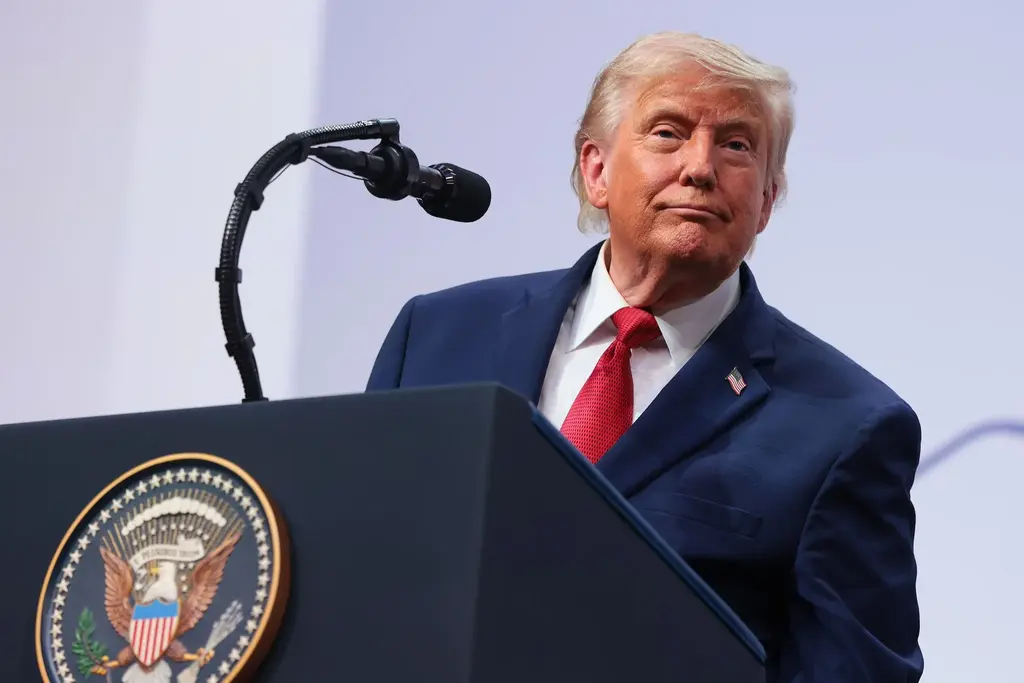
On January 23, U.S. President Donald Trump signed an executive order to promote the development of cryptocurrency in America and committed to establishing a national digital asset reserve. The order was co-signed by venture capitalist David Sacks, known as the "Crypto Czar," alongside Trump.
The order states: "The digital asset industry plays a vital role in American innovation and economic growth, as well as in our nation's international leadership."
According to CoinDesk, China is planning to replace the U.S. dollar. China and Russia have sold off billions of dollars worth of U.S. Treasury bonds while increasing their gold reserves. Countries including China, Iran, and Russia are actively building parallel cross-border economic systems, drawing not only neighboring countries but also allied nations with which they conduct substantial trade into their orbit.
Meanwhile, five departments including the People's Bank of China jointly issued the "Opinions on Piloting Financial Sector Alignment with International High Standards to Advance Institutional Opening in Eligible Pilot Free Trade Zones (Ports)." The document mentions "supporting residents of the Guangdong-Hong Kong-Macao Greater Bay Area to purchase qualified investment products offered by financial institutions in Hong Kong and Macao through financial institutions in these regions, while expanding the range of participating institutions and eligible investment products." This policy could provide opportunities for the potential development of the crypto asset industry.
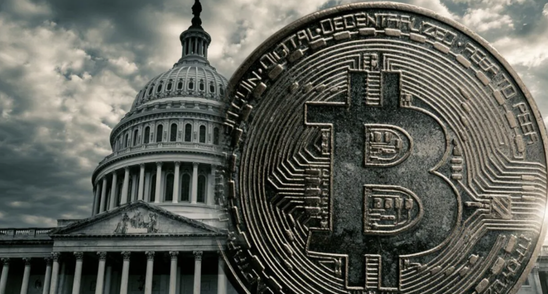
Bitcoin: A Key Battleground?
Much of the content in Trump’s executive order focuses on establishing cryptocurrency technology, regulations, and its development within the United States. One key provision calls for the creation of a task force to explore establishing a national digital asset reserve, "potentially sourced from cryptocurrencies legally seized by the federal government through law enforcement actions."
The order also outlines other critical priorities for the digital asset sector, including protecting individuals and private enterprises using blockchain networks from "persecution." It details certain protections for developers and miners, stating they should be free to "develop and deploy software" and "participate in mining and validation"—a recognition of the technical personnel underpinning the Bitcoin network.
The president also pledged to defend the rights of those who choose to self-custody their digital assets. This means individuals who do not rely on centralized entities like Coinbase to hold their tokens, but instead use personal crypto wallets—some of which may fall outside the regulatory reach of the U.S. Internal Revenue Service (IRS).
The order emphasizes promoting dollar sovereignty by supporting the development of globally used, dollar-backed stablecoins.
CoinDesk argues that U.S. policymakers are too narrowly focused on macroeconomic tools such as sanctions and pushing the dollar as a reserve currency. Today, the real battle is taking place in smartphone wallets and global currency markets. For example, over half of businesses in Japan accept Alipay, and more than one-third accept WeChat Pay.
China continues to closely monitor U.S. policies related to Bitcoin. Wang Yongli, former deputy governor of the Bank of China, wrote in the January 2025 issue of *China Foreign Exchange* titled "Rationally Viewing Trump’s New Bitcoin Policy," noting that at the level of being a "currency," Bitcoin closely mimics gold—its total supply and periodic new issuance are entirely system-determined, even stricter than gold (since the actual amount of gold reserves remains uncertain). The quantity available for exchange is even more limited and cannot scale with the growing value of tradable wealth, thus failing to meet the essential requirements of money. With Trump winning the U.S. presidential election, his proposed new Bitcoin policy has attracted widespread attention and debate. A calm, rational, and objective approach is needed to avoid making catastrophic mistakes.
Earlier, Zhou Xiaochuan, Vice Chairman of the Boao Forum for Asia and former governor of the People's Bank of China, mentioned during the "Boao Forum for Asia New Year Outlook 2025" event that the global economic recovery in 2025 is full of uncertainties and supply chains are being forcibly reshaped. Global public debt is nearing $100 trillion, increasing external financing costs and pressure on currency depreciation for emerging markets and developing countries, while challenging fiscal sustainability in developed economies. The impact of digital crypto assets on global financial stability and security warrants caution.
Regarding the joint document issued by the People's Bank of China and four other departments, Liu Honglin, a lawyer at ManQin Law Firm, said that as the Hong Kong Special Administrative Region government actively explores virtual asset regulation—including launching virtual asset ETFs—it will be worth watching whether these products can eventually be included in the Wealth Management Connect program.
Combining policy provisions, if Hong Kong-based crypto asset products can offer investment channels to mainland investors via Wealth Management Connect, it would not only diversify asset allocation options for mainland residents but also serve as an important tool for advancing RMB internationalization. Once the scope of Wealth Management Connect expands further, virtual asset ETFs or on-chain bonds might become early pilot candidates, opening the door for financial applications in the blockchain industry.
Divergent Approaches Toward CBDC
Notably, Trump’s executive order also bans the "creation, issuance, circulation, and use" of a U.S. central bank digital currency (CBDC) and requires the task force to study the feasibility of establishing and maintaining a national cryptocurrency reserve and a regulatory framework for stablecoins.
Halting any potential CBDC development across federal agencies was one of Trump’s campaign promises to the crypto industry during his presidential run.
Geoff Kendrick, Global Head of Digital Asset Research at Standard Chartered Bank, told Cointelegraph: "Under Trump’s administration, the U.S. CBDC is dead. Instead, they’re going down the route of private stablecoins, and the Federal Reserve is powerless to stop it." Government spokesperson Brian Hughes told Reuters, "The Trump administration will welcome government officials dedicated to defending the rights of the American people, putting America first, and ensuring taxpayers’ hard-earned money is used most effectively."
This rhetoric aligns with the Republican Party’s general skepticism toward government intervention in finance and its desire for broad deregulation of the sector. Thus, it’s no surprise that CBDCs have become a target, given public concerns over privacy.
Although some CBDC developers, such as the European Central Bank, claim privacy is a top priority, few members of the public appear to believe this, hindering CBDC efforts. According to the CBDC Tracker, among 169 ongoing CBDC projects worldwide, only four have officially launched so far.
In contrast, as of July 2024, the e-CNY app had attracted 180 million individual wallet users, with cumulative transaction volumes reaching 7.3 trillion yuan (approximately $1 trillion) in pilot regions. The mBridge project entered its minimum viable product (MVP) phase in mid-2024. Designed to explore a shared multi-central bank digital currency (mCBDC) platform among participating central banks and commercial banks, the project is built on distributed ledger technology (DLT) to enable instant cross-border payments and settlements.
The mBridge project is the result of extensive collaboration since 2021 between the BIS Innovation Hub, Bank of Thailand, Central Bank of the UAE, Digital Currency Institute of the People's Bank of China, and the Hong Kong Monetary Authority. The Saudi Central Bank joined in 2024.
In September 2024, Reuters reported that 134 countries—representing 98% of the global economy—are currently exploring digital versions of their currencies, with nearly half already in advanced stages. Pioneering nations such as China, the Bahamas, and Nigeria are beginning to see rising usage. In particular, e-CNY transaction volume grew nearly fourfold to reach 7 trillion yuan (about $987 billion).
A study released Tuesday by the Atlantic Council, a U.S. think tank, shows that all G20 countries are now researching central bank digital currencies (CBDCs), with 44 nations currently running pilots.
Dong Zhiyong, a scholar at Peking University, believes payment providers’ incentive mechanisms remain a challenge. While merchants face no fees when accepting digital yuan—which benefits them—if adoption remains low, merchants bear additional administrative burdens without earning transaction commissions, reducing their motivation to join. Therefore, he suggests establishing a reasonable fee structure and exploring value-added services together with payment institutions.
Additionally, he recommends building an ecosystem for industrial and commercial use cases, as despite low consumer adoption, enterprises have begun using e-CNY for large-scale transactions. Currently, administrative burdens on retailers are gradually being addressed, and a new "smart account splitting" application is being piloted to streamline accounting and reconciliation processes.
Join TechFlow official community to stay tuned
Telegram:https://t.me/TechFlowDaily
X (Twitter):https://x.com/TechFlowPost
X (Twitter) EN:https://x.com/BlockFlow_News
 @DethingsNews