









Under mounting public pressure, Vitalik calls out to L2s: Come back and support ETH
TechFlow Selected TechFlow Selected
Under mounting public pressure, Vitalik calls out to L2s: Come back and support ETH
Vitalik believes the L2 scaling roadmap should continue, but L2s need to fulfill their commitments, such as contributing a portion of revenue to support ETH.
 Navigating Web3 tides with focused insights
Author: Vitalik Buterin
Translation: Fu Ruheshi, Odaily Planet Daily
Recently, Ethereum's performance in this cycle has sparked widespread dissatisfaction. Community members have expressed disappointment over the perceived inaction of the Ethereum Foundation (EF), and even leading projects within the Ethereum ecosystem have begun questioning EF—some with an almost coercive tone.
Founders of several well-known projects have voiced their concerns about Ethereum’s future direction:
The founders of Synthetix and Infinex believe that EF should require Layer 2 (L2) networks to use their revenue to buy back ETH, thereby increasing demand for ETH and enhancing its value.
The founder of Curve argues that EF should immediately abandon its L2 strategy.
The founder of Aave released a “12-point plan to save EF,” calling on the foundation to take swift action to address the current crisis.
An even more dramatic voice came from Wintermute’s founder, who warned that Ethereum could face a potential “death spiral.”
Faced with such strong criticism from cornerstone projects in the ecosystem, Ethereum co-founder Vitalik Buterin has finally responded today by announcing a new “toll” to be levied on L2 networks.
This change could become a pivotal moment in Ethereum’s future development, revealing how Ethereum adapts and navigates new opportunities and challenges through self-correction.
Below is Vitalik’s original text:
Ethereum’s goal has not changed since day one: to build a global, censorship-resistant, permissionless blockchain platform. This is a free and open platform for decentralized applications, aligned with principles seen in GNU + Linux, Mozilla, Tor, Wikipedia, and many great free and open-source software projects—what we might now call regenerative and cypherpunk ideals.
Over the past decade, Ethereum has also developed another quality I deeply appreciate: beyond innovations in cryptography and economics, Ethereum represents a social-technical innovation. As a whole, the Ethereum ecosystem demonstrates a more open and decentralized model of collaboration. Political philosopher Ahmed Gatnash described his experience attending Devcon as follows:
……It gave me a glimpse into what an alternative world might look like—a world with almost no barriers to entry, disconnected from traditional systems. Here, social status hierarchies are inverted: those held in highest regard are geeks focused on independently solving problems they genuinely care about, rather than individuals playing games to climb institutional ladders and accumulate power. Almost all power here is soft power. I find this beautiful and deeply inspiring—it makes you feel that anything is possible, and such a world is within reach.
Technical and social projects are inherently intertwined. If at time T you have a technically decentralized system maintained by a centralized social process, there’s no guarantee it will remain decentralized at T+1. Likewise, social processes are sustained in various ways by technology: technology attracts users, the resulting ecosystem incentivizes developers to stay, and technology keeps communities grounded in building rather than just networking.
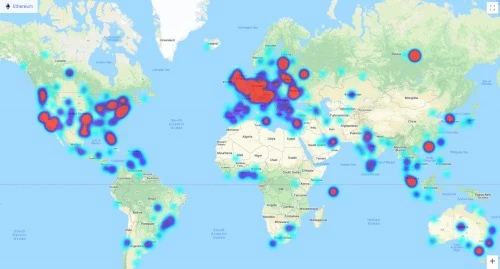
After ten years of effort, governed jointly by technical and social attributes, Ethereum has demonstrated another key quality: the ability to deliver practical services to people at scale. Millions use ETH or stablecoins as savings vehicles, and many use these assets for payments—I am among them. Ethereum offers efficient, usable privacy tools; I use them to pay for VPN services to protect my internet data. It has ENS, a robust decentralized alternative to DNS and broader public-key infrastructure. It also hosts easy-to-use decentralized alternatives to Twitter, and DeFi tools offering hundreds of millions higher returns with lower risk than traditional finance.
Five years ago, I was reluctant to discuss these latter use cases because the infrastructure and code weren’t mature enough. We had just come through painful large-scale smart contract hacks during 2016–2017, and when there’s a 5% annual chance of losing 100% of your funds, a 7% yield isn't meaningfully better than 5%. Transaction fees were too high for mass adoption of these tools. Today, these tools have proven resilient over time, audit tooling has improved, and our confidence in their security has grown. We’ve learned what not to do. L2 scaling technologies are working, and transaction fees have remained very low for nearly a year.
We must continue strengthening both Ethereum’s technical and social attributes and its utility. With only the former but lacking the latter, we risk becoming an increasingly ineffective "decentralized" community, merely protesting mainstream institutions’ "immoral and wrong behavior" without offering real alternatives. With only the latter but lacking the former, we become indistinguishable from Wall Street’s "greed is good" mentality—something many of us joined Ethereum specifically to escape.
This duality between technology and utility has far-reaching implications. In this article, I want to focus on one concrete aspect crucial to Ethereum users in the short and medium term: Ethereum’s scaling strategy.
The Rise of Layer 2
Today, our path to scale Ethereum is through Layer 2 protocols. The state of L2 in 2025 has advanced dramatically compared to early experiments in 2019: they’ve achieved critical decentralization milestones, are securing billions of dollars in assets, and have increased Ethereum’s transaction capacity by 17x while reducing fees by the same magnitude.
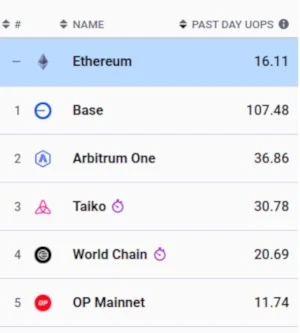
This progress coincides with a wave of successful applications: various DeFi platforms, social networks, prediction markets, and novel projects like Worldchain (now with 10 million users). Additionally, the "enterprise blockchain" movement—once considered a dead end after consortium chains failed in the 2010s—has been revitalized by the rise of L2, with Soneium being a prominent example.
These successes validate the social advantages of Ethereum’s decentralized and modular approach to scaling: instead of EF having to find all users itself, dozens of independent entities are organically driving adoption. These actors also contribute critically to the technology—without them, Ethereum couldn’t have achieved what it has today. Because of this, we’re finally approaching "escape velocity."
Challenges: Scaling and Heterogeneity
Current L2s face two main challenges:
-
Scaling: Current "blob space" is barely sufficient to support existing L2s and their applications, but falls far short of future needs.
-
Heterogeneity: Ethereum’s original scaling vision involved creating a blockchain composed of multiple shards, each an EVM copy processed by a subset of nodes. In theory, L2s fulfill this vision. In practice, however, there’s a key difference: each shard (or group of shards) is created by different participants, treated as distinct chains in the infrastructure, and often follows different standards. This creates problems for developers and users around composability and user experience.
The first issue is a straightforward technical challenge—simple in concept but difficult to implement: provide more "blob space" for Ethereum. Additionally, Ethereum L1 can relieve pressure in the short term through moderate scaling and improvements in proof-of-stake, statelessness and light verification, storage, EVM, and cryptography.
The second issue is a coordination problem that has already attracted significant public attention. The Ethereum ecosystem is no stranger to complex cross-team collaborations—we completed The Merge, after all. However, this coordination is more challenging due to a larger number of participants, more diverse goals, and a later start. Still, our ecosystem has overcome many difficult problems before, and we can do so again.
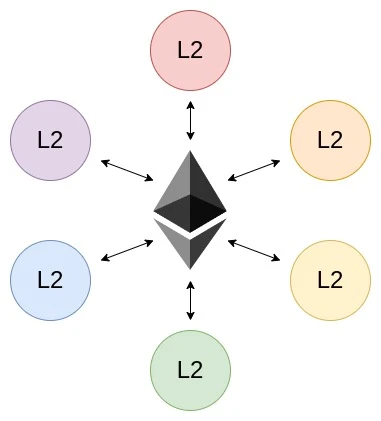
A tempting shortcut to scaling would be abandoning L2s entirely and instead drastically increasing gas limits directly on L1—either via multiple shards or a single shard. However, this would sacrifice too much of Ethereum’s current social structure, which has proven highly effective in integrating diverse research, development, and ecosystem-building cultures. Therefore, we should stick to our current path—scaling primarily through L2s—while ensuring L2s truly deliver on their promises.
This means the following:
-
L1 must accelerate blob capacity expansion.
-
L1 must moderately scale the EVM and raise gas limits to handle activities that will still occur on L1 even in an L2-dominated environment (e.g., zero-knowledge proofs, large-scale DeFi, deposits/withdrawals, special mass exit scenarios, key-storage wallets, asset issuance).
-
L2s must continuously improve security. They should offer the same level of security guarantees as sharding (including censorship resistance, light-client verifiability, no embedded trusted parties, etc.).
-
L2s and wallets must accelerate improvements and standardize interoperability. This includes chain-specific addresses, standardized message passing and bridging, efficient cross-chain payments, on-chain configurations, and more. Using Ethereum should feel like using a single ecosystem—not 34 separate blockchains.
-
L2 deposit and withdrawal times must be significantly reduced.
-
As long as basic interoperability needs are met, heterogeneity among L2s is beneficial. Some L2s will be governance-minimized rollups running exact copies of the L1 EVM; others will experiment with different VMs; some may resemble servers, leveraging Ethereum to provide users with additional security. We need the full spectrum of L2 types.
-
We must explicitly consider ETH economics. Even in an L2-dominated world, we must ensure ETH continues to accrue value and develop solutions across multiple value accrual models.
We’ll now explore each of these topics in detail.
Scaling: Blobs, Blobs, and More Blobs
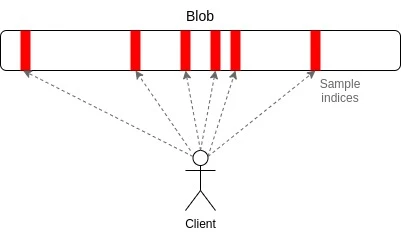
With EIP-4844, each slot contains 3 blobs, providing 384 kB of data bandwidth per slot. A rough estimate shows this equals ~32 kB per second. With each transaction taking up ~150 bytes on-chain, we can support about 210 transactions per second (TPS). According to L2beat data, this estimate aligns almost perfectly.
The upcoming Pectra upgrade in March will double the number of blobs to 6 per slot.
Current Fusaka efforts are primarily focused on PeerDAS, prioritizing only PeerDAS and EOF. PeerDAS could increase blob count by another 2–3x.
The next step is continuous blob growth. When 2D sampling is implemented, blob counts could reach 128 per slot—and beyond. Combined with improved data compression, on-chain TPS could reach 100,000.
This recapitulates the established roadmap before 2025. The key question is: how can we accelerate this? My answers are:
-
More explicitly deprioritize non-blob features.
-
Clearly communicate that blobs are the priority and make related peer-to-peer R&D a top hiring focus.
-
Allow stakers to directly adjust the blob target, similar to gas limits. This would let the blob target grow faster with technical progress, without waiting for hard forks.
-
Consider more aggressive approaches—such as introducing stronger trust assumptions for low-resource stakers—to increase blob counts faster, though we must proceed with caution here.
Improving Security: Proof Systems and Native Rollups
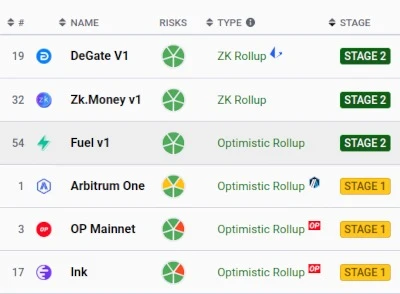
Currently, there are three stage 1 rollups (Optimism, Arbitrum, Ink) and three stage 2 rollups (DeGate, zk.money, Fuel). However, most activity still occurs on stage 0 rollups (i.e., multisig-based solutions). This needs to change. One major reason progress is slow is that building reliable proof systems and gaining enough confidence to fully rely on their security (removing the "training wheels") is extremely difficult.
To achieve this, two paths exist:
-
Stage 2 + multiple proof systems + formal verification: Use redundancy across multiple proof systems and enhance confidence through formal verification (e.g., Verified ZK-EVM projects).
-
Native rollups: Integrate verification of the EVM state transition function directly into the protocol, e.g., via precompiles.
At this stage, both paths should be pursued in parallel. For “stage 2 + multiple proof systems + formal verification,” the roadmap is relatively clear. Collaboration across software stacks can accelerate progress, reduce duplication, and incidentally improve interoperability.
For native rollups, we’re still in early stages, especially regarding how to make precompiles maximally flexible. An ideal goal is supporting not just full clones of the EVM, but also modified versions—allowing altered EVM rollups to still use native rollup precompiles, simply plugging in custom provers for their modifications. This may involve adapting precompiles, opcodes, state trees, and other components.
Interoperability and Standardization
The goal is to make transferring assets and using apps across different L2s feel as seamless as interactions between different "shards" within a single blockchain. There’s already a relatively clear roadmap here:
-
Chain-specific addresses: Addresses should include both account information and a chain identifier. ERC-3770 was an early attempt; newer designs are more sophisticated, even proposing moving the L2 registry onto Ethereum L1.
-
Standardized bridges and message passing: There should be standardized methods to verify proofs and pass messages between L2s, without relying on trust-based mechanisms like multisig bridges. An ecosystem dependent on multisig bridges is unacceptable. If such trust assumptions weren’t acceptable in 2016’s sharding design, they shouldn’t be acceptable today.
-
Faster deposits and withdrawals: "Native" message delays should shrink from weeks to minutes (ideally, one block time). This requires faster ZK-EVM provers and proof aggregation techniques.
-
Reading L1 data from L2: Features like L1SLOAD and REMOTESTATICCALL would greatly simplify cross-L2 interoperability and help enable vault wallet functionality.
-
Shared sequencing and longer-term work: Part of the value of rollup-based designs lies in their ability to more efficiently implement shared sequencing and similar features.
Provided these standards are met, L2s can differ in security, performance, and design models based on their needs. For instance, different VMs, sequencing models, and trade-offs between scale and security can be explored. But for users and developers, the security levels of each L2 must be clearly defined.
To move faster, cross-domain organizations within the ecosystem—such as the Ethereum Foundation, client teams, and major app developers—can take on a larger share of this work. This reduces coordination costs and makes adopting standards easier, as the implementation burden on individual L2s and wallets decreases. Nevertheless, as extensions of the Ethereum ecosystem, L2s and wallets must also strengthen "last-mile" development to ensure these features actually reach users.
ETH Economics
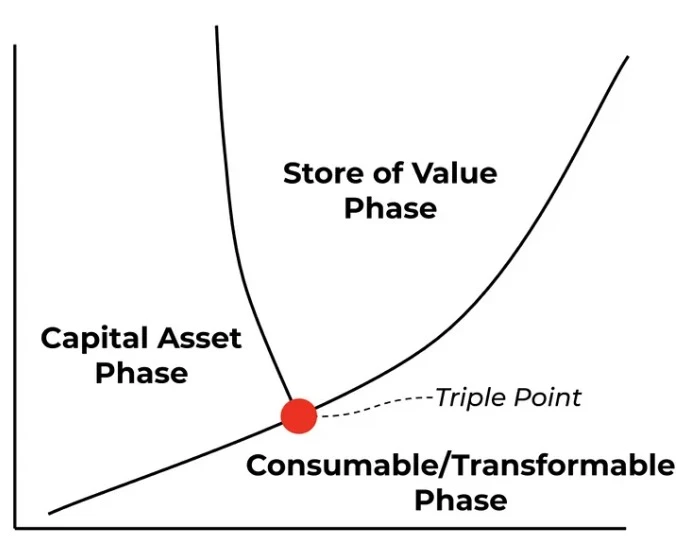
We should adopt a multi-pronged strategy covering all major potential sources of value for ETH as an asset. Key components of this strategy may include:
Widely agree to solidify ETH as the primary asset of the broader (L1 + L2) Ethereum economy, supporting applications where ETH serves as the main collateral.
-
Encourage L2s to support ETH and allocate a portion of fees—through fee burning, permanent staking with proceeds donated to Ethereum public goods, or other mechanisms.
-
Support rollup-based designs as one path for L1 to capture value via MEV, but avoid mandating this design for all rollups, as it doesn’t suit every application and cannot be relied upon alone to solve all problems.
-
Increase blob count, consider setting a minimum blob price, and treat blob fees as another potential revenue stream. For example, if average blob fees over the past 30 days were maintained (driven by demand) while blob count increased to 128, Ethereum would burn 713,000 ETH annually. However, demand curves may not stay favorable, so we can’t rely solely on this.
Conclusion: The Path Forward
Ethereum has matured both technologically and socially, guiding us toward a freer and more open future where hundreds of millions can benefit from crypto assets and decentralized applications. Yet, much work remains—and now is the time to double down.
-
If you’re an L2 developer, contribute to tools enabling safer blob scaling, write code to expand EVM execution, and build features and standards that make L2s interoperable.
-
If you’re a wallet developer, participate in developing and implementing standards so the ecosystem delivers seamless UX while maintaining the same security and decentralization as Ethereum L1.
-
If you’re an ETH holder or community member, actively engage in these discussions. Many areas still require deep thinking and collective brainstorming. Ethereum’s future depends on active participation from each of us.
Join TechFlow official community to stay tuned
Telegram:https://t.me/TechFlowDaily
X (Twitter):https://x.com/TechFlowPost
X (Twitter) EN:https://x.com/BlockFlow_News
 @VitalikButerin






