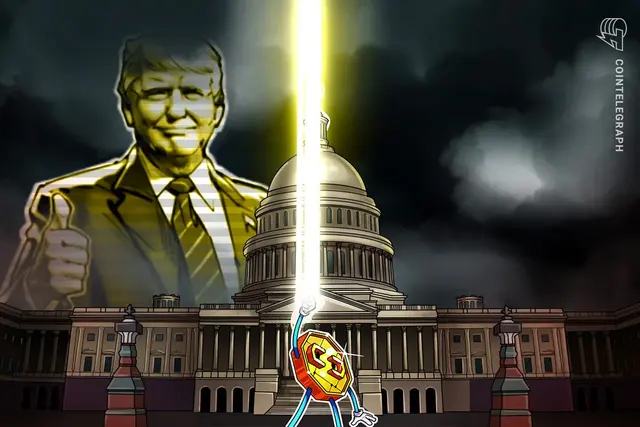
Trump Makes Big Move: Establishes Presidential Digital Assets Task Force to Evaluate Possibility of Bitcoin National Reserves
TechFlow Selected TechFlow Selected
Trump Makes Big Move: Establishes Presidential Digital Assets Task Force to Evaluate Possibility of Bitcoin National Reserves
Senator Lummis, who proposed the bill to establish a U.S. National Bitcoin Strategic Reserve in July last year, has been appointed as chair of the Senate Banking Committee's newly established Digital Assets Subcommittee, which will focus on digital asset legislation including a strategic bitcoin reserve.
 Navigating Web3 tides with focused insights
Article by: Li Dan, Wall Street Insights
After taking office, Trump has moved on cryptocurrency, signing an executive order aimed at advancing the digital asset industry. Meanwhile, positive developments for the crypto sector emerged in the U.S. Congress: a lawmaker who last year first proposed that the United States establish a strategic Bitcoin reserve has now been promoted.
On Thursday, January 23, Eastern Time, the White House announced that President Trump signed an executive order titled "Strengthening American Leadership in Digital Financial Technology." The order mandates the creation of a presidential "Working Group on Digital Asset Markets" within the National Economic Council, an agency responsible for advising the president.
This working group will be led by David Sacks, Trump’s newly appointed "czar" for artificial intelligence (AI) and cryptocurrency, serving as the White House’s inaugural special advisor on AI and cryptocurrency. The group will also include heads or their designated representatives from key government agencies and regulators, including the Secretary of the Treasury, the Attorney General, the Secretary of Commerce, the Chair of the U.S. Securities and Exchange Commission (SEC), and the Chair of the Commodity Futures Trading Commission (CFTC).
The executive order explicitly mentions the Trump administration’s consideration of whether to adopt Bitcoin as a national reserve asset. It states that the working group must submit a report to President Trump within 180 days outlining regulatory and legislative recommendations. The report should focus on establishing a federal regulatory framework for the issuance and operation of U.S. digital assets—including stablecoins—and cover market structure, oversight, consumer protection, risk management, and
“shall assess the feasibility of establishing and maintaining a national digital asset reserve, and propose criteria for creating such a reserve, which could consist of cryptocurrencies lawfully seized by the federal government through enforcement actions.”
The executive order also explicitly bans central bank digital currencies (CBDCs). It states:
“Except as required by law, no agency is hereby authorized to take any action within or outside the United States to establish, issue, or promote a CBDC.”
The order requires that any government agency currently engaged in plans or initiatives related to establishing a CBDC within the United States must immediately terminate such efforts and refrain from further developing or implementing them.
Sacks said the new working group will, under Trump’s leadership, “make America the world capital of cryptocurrency,” while actions in AI will enable the U.S. to “dominate and lead the world in AI.” Speaking about these initiatives, Trump said they “will make America a lot of money.”
Senate Banking Committee Establishes New Digital Assets Panel Focused on Strategic Bitcoin Reserve Legislation
Earlier on Thursday, Senate Banking Committee Chairman Tim Scott appointed Wyoming Senator Cynthia Lummis as chair of the committee’s newly established subcommittee on digital assets. Lummis subsequently released a statement announcing that this new body dedicated to digital assets will prioritize two main areas:
-
Advancing bipartisan digital asset legislation to foster responsible innovation and protect consumers, including legislation on market structure, stablecoins, and a strategic Bitcoin reserve;
-
Conducting rigorous oversight of federal financial regulators to ensure compliance with the law, including preventing another Operation Chokepoint 2.0.
Operation Chokepoint 2.0 is alleged to be a coordinated effort among U.S. federal agencies aimed at cutting cryptocurrency firms off from the traditional banking system, though no official documentation has yet confirmed its existence.
In July last year, Trump pledged at the Bitcoin 2024 conference to designate Bitcoin as a strategic reserve asset for the United States. As a Senate ally of Trump, Lummis introduced the Strategic Bitcoin Reserve Act that same month—the first legislative proposal calling for a national strategic Bitcoin reserve. The bill calls for selling part of the Federal Reserve's gold reserves, without increasing the government deficit, to purchase one million Bitcoins and establish the “strategic Bitcoin reserve” advocated by Trump. Based on prices at the time, the purchase would have cost approximately $90 billion.
In her statement this Thursday, Lummis reiterated support for legislation on a strategic Bitcoin reserve. She stated:
“Digital assets represent the future. If America wants to maintain its global leadership in financial innovation, Congress must urgently pass bipartisan legislation to establish a comprehensive legal framework for digital assets and strengthen the dollar through a strategic Bitcoin reserve.… I look forward to delivering bipartisan legislation to President Trump this year to secure our financial future.”
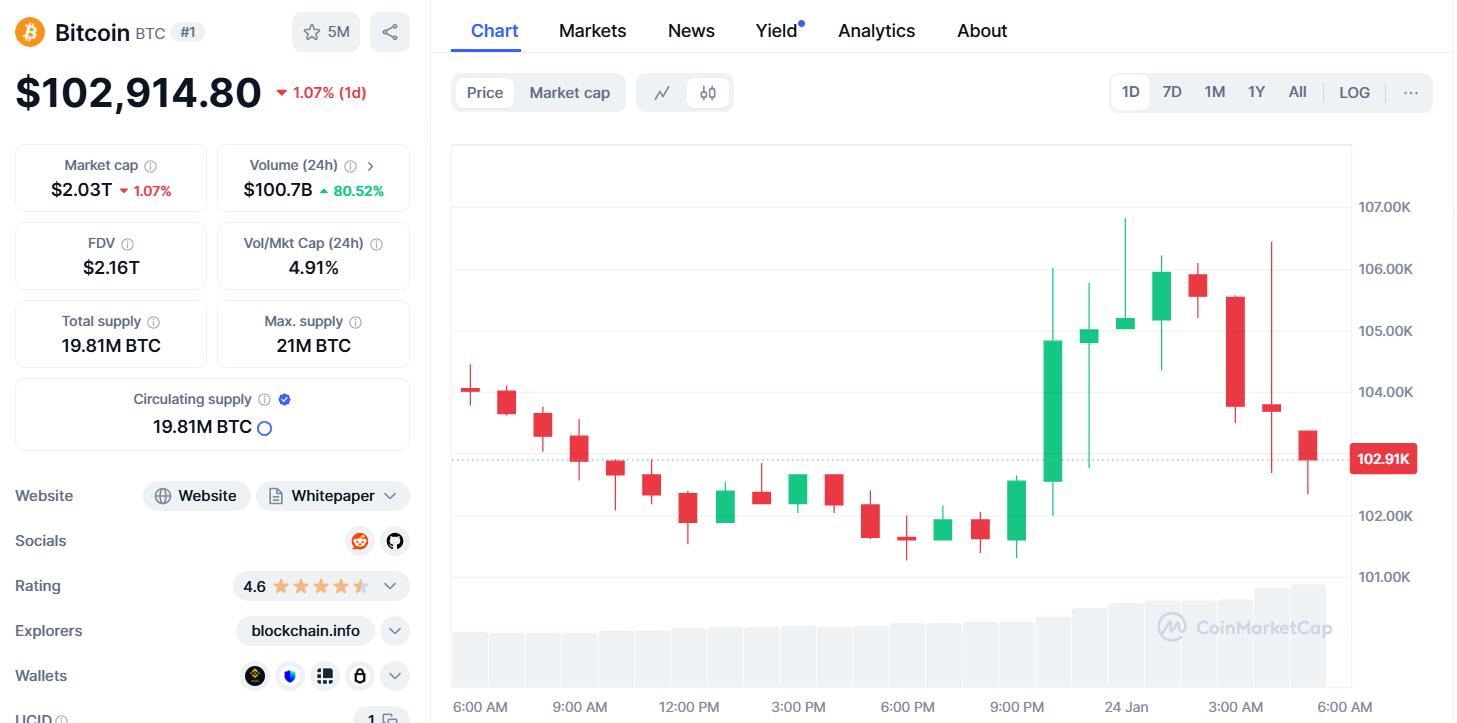
News of Lummis’s appointment quickly ignited the cryptocurrency market. On Thursday, Bitcoin (BTC) reversed earlier losses and turned upward during trading.
Data from CoinMarketCap showed that Bitcoin’s spot price against the U.S. dollar initially dropped below $101,300 during European trading hours, hitting a daily low. After the U.S. market opened, it rebounded sharply, surpassing $106,800 near the end of morning trading—marking a new intraday high and a rise of over $5,000 (more than 5%) from the day's low—approaching Monday’s record high above $109,000. However, it slid again toward the end of U.S. trading and fell below $103,000 after markets closed, ending the day down more than 1% over the past 24 hours.
Related Wiki
Join TechFlow official community to stay tuned
Telegram:https://t.me/TechFlowDaily
X (Twitter):https://x.com/TechFlowPost
X (Twitter) EN:https://x.com/BlockFlow_News