The Game of Power at the Ethereum Foundation: Where Is the Major Reform Heading?
TechFlow Selected TechFlow Selected
The Game of Power at the Ethereum Foundation: Where Is the Major Reform Heading?
Vitalik takes a hardline stance: "It's me who decides the new EF leadership team."
 Navigating Web3 tides with focused insights
Author: Weilin, PANews
In this market cycle, Ethereum's price and ecosystem performance have lagged behind many users' expectations. Recently, its spotlight has been increasingly stolen by Solana, which gained momentum from memecoins like TRUMP. Behind the complaints, the Ethereum Foundation (EF) has come under fire—its executive director criticized as "inefficient," and its periodic ETH sales drawing widespread backlash.
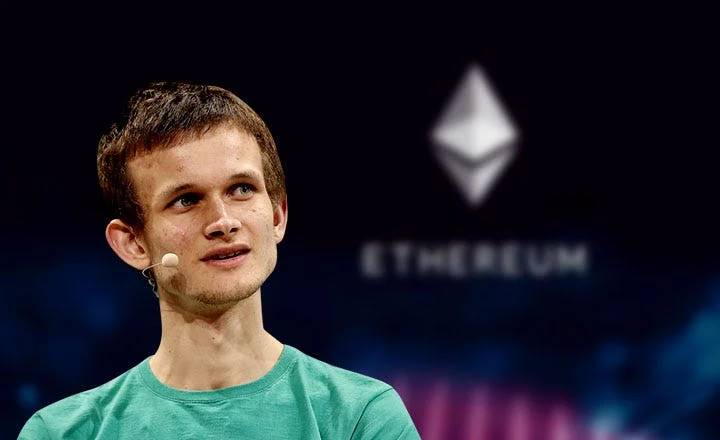
On January 21, Ethereum co-founder Vitalik Buterin posted two consecutive messages on X, pushing back against calls for Ethereum Foundation Executive Director Aya Miyaguchi’s resignation and dismissing concerns about centralization in Ethereum’s future. This sparked broad controversy within and beyond the Ethereum community.
Vitalik’s Firm Stance: I Decide Who Leads the New EF
According to the EF website, the board consists of only three members: Vitalik Buterin, Aya Miyaguchi, and Patrick Storchenegger.
On January 21, Vitalik explicitly stated on his X account that he alone is responsible for selecting the leadership team of the Ethereum Foundation.
He emphasized: “No, that’s not how this game works. The person who decides the new EF leadership team is me. One of the goals of the current reform is to establish a ‘proper board’ for EF—but until then, it’s still my decision.” He further added that any attempts to pressure him undermine the working environment for top Ethereum developers. “And you’re reducing my interest in doing anything you want ever.”
In a follow-up post, Vitalik clarified the future decentralization direction of the Ethereum Foundation. He noted, “The future of the world computer is decentralized. EF is just one part of the world computer. Perhaps what some people actually want to reform isn’t EF at all, but rather Consensys (or similar third-party organizations).”
Vitalik stressed that EF should not aim to be a “mediocre do-everything organization,” but instead confidently represent those aspects of Ethereum it can effectively support, while intentionally creating and nurturing open spaces for other organizations to represent other facets of Ethereum. Some of these areas, he said, may be better suited for for-profit models.
These comments came amid community calls to promote Danny Ryan, a former EF researcher and developer, into a leadership role. Ryan was widely praised for his pivotal contributions during Ethereum’s transition from Proof-of-Work to Proof-of-Stake. However, after seven years at the foundation, Ryan announced his departure in 2024 due to personal reasons—a move that left many supporters deeply disappointed.
Ryan’s supporters argue that his expertise aligns closely with Ethereum’s long-term vision, making him a strong candidate for leadership, despite Vitalik’s insistence on maintaining control over foundation decisions.
Meanwhile, Executive Director Aya Miyaguchi, who has held the position since 2018, has faced criticism—and even online harassment—from some community members who blame her for internal inefficiencies and unmet expectations around upgrades like Cancun. Prior to joining EF, Miyaguchi led Kraken’s operations in Japan.
CoinMamba, a well-known crypto trader known for criticizing the Ethereum Foundation, publicly called for Miyaguchi’s resignation. In response, Vitalik firmly rejected the idea. He also pointed to several X users’ comments, labeling them “pure evil,” as they included vulgar memes, bullying language toward Aya, and even calls to “kill Aya.”
Nonetheless, market commentator abstractXBT expressed concern over the centralized nature of such a rigid stance. They suggested the foundation should focus more on practical solutions—such as hackathons and developer grants—rather than getting caught in philosophical debates over leadership.
Ethereum Foundation Undergoing “Major Leadership Restructuring”
Earlier, on January 18, Vitalik addressed the controversy by stating that major changes to the Ethereum Foundation’s leadership structure are currently underway—changes that have been in progress for nearly a year. Some reforms have already been implemented and announced, while others remain ongoing.
The reform aims to achieve the following goals:
-
Enhance technical expertise within the Ethereum Foundation’s leadership;
-
Improve two-way communication and connections between EF leadership and both new and existing ecosystem participants. EF’s responsibilities include supporting users (individuals and institutions), application developers, wallets, and Layer 2s;
-
Bring in fresh talent to improve execution capability and speed;
-
More actively support application developers, ensuring key values and inalienable rights—especially privacy, open source, and resistance to censorship—are realized for users across all layers, including the application layer;
-
Continue increasing the use of decentralized and privacy-preserving technologies on Ethereum, including for payments and fund management.
Vitalik also clearly stated what the foundation will *not* do: pursue ideological or cultural shifts; actively lobby regulators or powerful political figures (particularly in the U.S., but really anywhere, especially major countries), risking Ethereum’s status as a globally neutral platform; become an arena for vested interests; or evolve into a highly centralized organization—or worse, become Ethereum’s “main actor.”
Trapped in Selling ETH, the Foundation May Have Already Changed—Now Joining DeFi
The Ethereum Foundation’s financial operations, particularly its ongoing on-chain ETH sales, have recently become a focal point of community criticism. According to Spot On Chain, EF made its first ETH sale of the new year on January 8, 2025, selling 100 ETH for 329,463 DAI. On-chain data shows that throughout 2024, EF sold a total of 4,466 ETH, earning $12.61 million at an average price of $2,823. Many KOLs and investors in the community have blamed these sales for ETH’s sluggish price performance.
In response, Vitalik explained there are two main reasons why the foundation does not stake ETH. First, regulatory concerns: given Ethereum’s status as one of the largest cryptocurrency protocols, staking large amounts of ETH could attract unwanted regulatory scrutiny. Such actions might trigger debates over whether Ethereum constitutes a security—a longstanding challenge for many crypto companies.
The second reason is that staking ETH could be seen as “taking a stance in any future contentious hard fork.” Buterin referred here to potential splits within the ecosystem that could lead one faction to favor a particular blockchain version. If the foundation chooses to stake its tokens on one chain over another, it would appear to endorse that specific chain. While Vitalik acknowledged that regulatory risks have eased somewhat over the years, the second concern remains valid.
Additionally, he noted that withdrawing ETH can be more time-consuming than directly selling tokens, typically due to the large number of validators using the network. As a result, if only the foundation initiates withdrawals, the process takes approximately 2.6 days to complete.
Despite Vitalik’s firm tone, the foundation clearly appears to have taken some feedback on board. On January 21, the Ethereum Foundation announced it had set up a wallet to begin participating in decentralized finance (DeFi). The organization plans to deposit ETH worth approximately $150 million into this wallet, though it noted the setup might take several days to finalize.
Hsiao-Wei Wang, recently appointed to a leadership role at the foundation, posted on X: “The Ethereum Foundation has established a new 5-of-3 multi-sig wallet… Operations have begun to send 50,000 ETH to this wallet, but please be patient; due to signature delays, processing will take several days. The Ethereum Foundation will use this new wallet to participate in the DeFi ecosystem.”
Community Jokes About Creating a “Second Foundation,” Calls for Greater Transparency
In response to the debate, on January 22, Lido co-founder and P2P.org founder Konstantin Lomashuk shared a post hinting at forming a “Second Foundation.” He later clarified, “Actually, no second foundation has been formed.” He continued: “Ethereum is the ultimate world computer, and every Ethereum enthusiast can help it grow, evolve, and succeed. If a second foundation were truly created, it must have a clear purpose to complement the tremendous work already being done by current contributors. I appreciate everyone’s support and believe we need more organizations contributing to Ethereum.”
Some core Ethereum developers have also voiced their opinions—with a few stepping away in disappointment. On January 22, Eric Conner, core Ethereum developer and co-author of EIP-1559, posted on X: “I’m no longer part of .eth (Ethereum Name Service). Maybe one day the leaders will realign with the community, but for now, I’ve left. Deep down, I truly hope Ethereum succeeds. Good luck.”
Anthony DOnofrio, an original Ethereum member, published a commentary piece on CoinDesk titled *“The Ethereum Foundation Has Lost Its Way.”* In it, he called for leadership change at EF, stating: “To secure its future, the Ethereum Foundation must transform from a passive institution into an active, visionary driver.” DOnofrio described EF as a contradiction: although committed to decentralization, it operates in a centralized manner—with directors, a finance department, paid developers, and inner circles. While such structures are necessary for coordination, they conflict with Ethereum’s core decentralized ethos.
He argued that in its current form, EF focuses on minimizing internal and external threats, thereby losing sight of its original vision. Ethereum’s next phase needs more than technical research and coordination meetings—it requires visionary leadership: individuals who understand not just the technology, but also its broader social, philosophical, and political implications.
DOnofrio also urged the Ethereum Foundation to increase transparency, strengthen ties with the community, and seize opportunities to engage with lawmakers—especially given the favorable political climate in the U.S.—while maintaining political neutrality. He suggested EF could create or promote frameworks that encourage compliance and innovation.
Brianq, an analyst at on-chain analytics firm Santiment, offered a more optimistic view: despite Ethereum (ETH) recently seeing a 4.7% market value drop—far behind XRP’s 36.9% and Solana’s 32.2% gains—sparking debate over Vitalik’s ETH sales, decentralization levels, and modular strategy—the short-term pressure is offset by growing active addresses and stable market share. The long-term strategy is still seen as conducive to maintaining Ethereum’s leading position in the blockchain space. High negative sentiment on social media may even present opportunities for contrarian investors.
Meanwhile, Joseph Lubin, Ethereum co-founder and Consensys CEO, posted: “One of Vitalik Buterin’s greatest traits is his decision-making process. When issues arise, he listens, gathers information, weighs all factors, and makes decisions once he believes he has assessed most of the necessary data. The best path forward is recognizing that he has heard all of us, and things are moving. Threats of harm or attempts at coercion are deeply troubling and counterproductive. The Ethereum Foundation (EF), Enterprise Ethereum Alliance (EEA), and Consensys have multiple projects underway that will reshape how Ethereum ‘goes to market’ in the near future. Based on what I’ve seen, high-value initiatives will soon be announced at such a pace that you’ll be overwhelmed. It’s best to stay calm and not lose your mind before the wave begins.”
For now, from Vitalik’s response to the controversy to the foundation’s announcement of sweeping reforms, the Ethereum Foundation is navigating a complex debate over power structures, decentralization, and financial management. As reforms progress, how EF balances competing interests while advancing the Ethereum ecosystem—without compromising its foundational principles—will be critical to its future trajectory.
Join TechFlow official community to stay tuned
Telegram:https://t.me/TechFlowDaily
X (Twitter):https://x.com/TechFlowPost
X (Twitter) EN:https://x.com/BlockFlow_News
 PANews