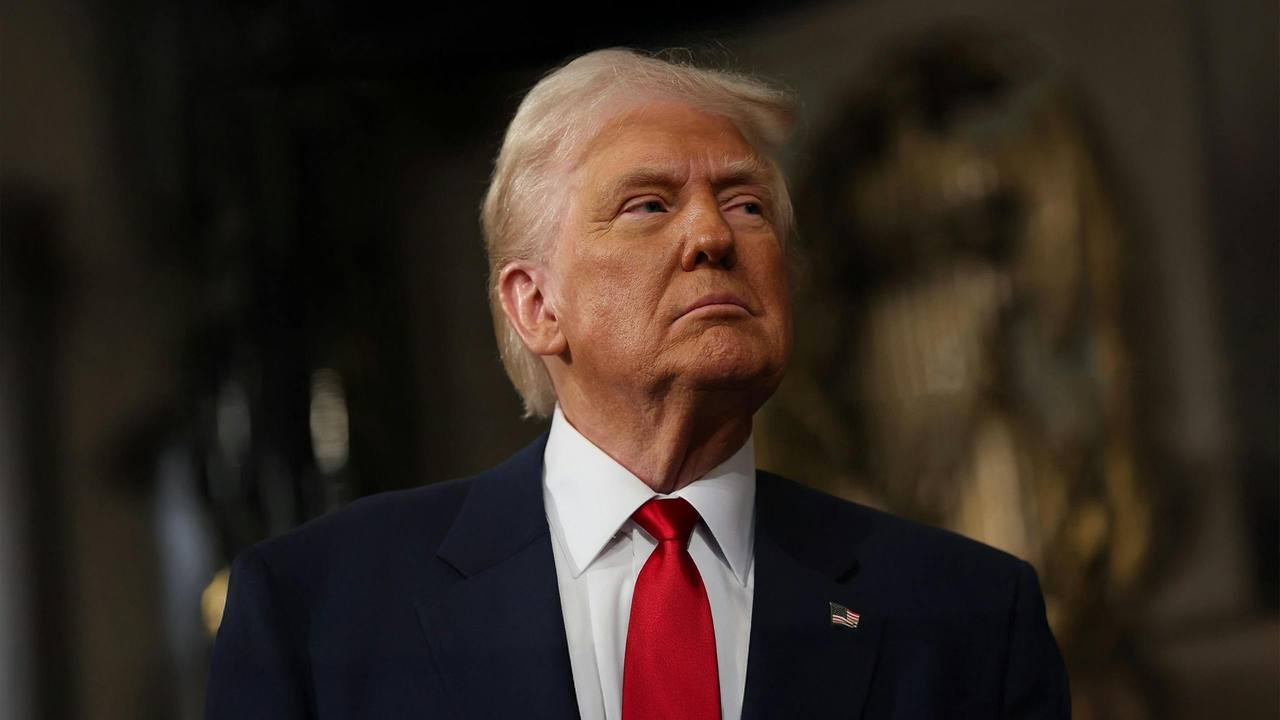
Trump's Coin Launch: The "Sovereignty Shift" in Crypto
TechFlow Selected TechFlow Selected
Trump's Coin Launch: The "Sovereignty Shift" in Crypto
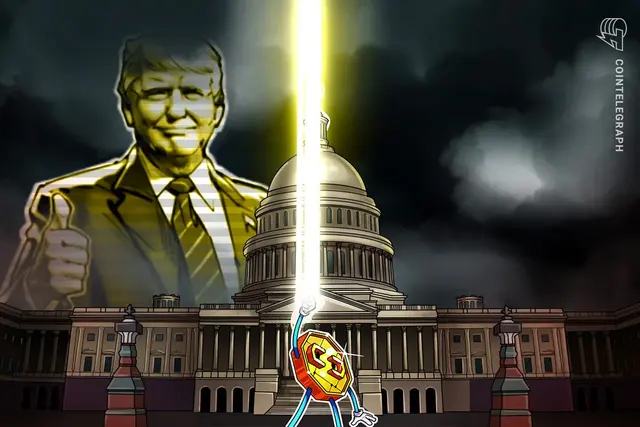
Trump has ushered in a new chapter in the crypto world by launching a token, marking a deep integration of cryptocurrency with American political power.
 Navigating Web3 tides with focused insights
Author: Zeke, YBB Capital Researcher
Introduction
On the evening of January 17, just before the U.S. presidential inauguration, Donald Trump announced via Truth Social—the social media platform he founded—the launch of his personal token, $TRUMP. Initially, many mistook this for a hacked account. However, within minutes, Trump retweeted promotional content about the token from his official X (formerly Twitter) account, confirming its authenticity.
What followed was a rally that will go down in cryptocurrency history. Massive inflows drove $TRUMP’s market cap from zero to a peak of $80 billion in just two days, effectively siphoning nearly all market liquidity. The event's reach rivaled the assassination attempt Trump experienced last year in Pennsylvania, and its surreal nature was no less astonishing than his iconic head-dodge of the bullet. Here are some thoughts on this phenomenon.
Meme
In my home country—an Eastern superpower—private traffic monetization usually culminates in live-streaming sales through an app called Douyin. Across the Atlantic, the 47th President of the United States did something unprecedented: the leader of the "beacon of democracy" is now quantifying influence and power through digital tokens, building immense wealth for his family. Undoubtedly, we are entering a unique era—one where crypto can finally be properly called Web3.0.
The original vision of the internet was to dismantle centralized broadcasters and TV networks monopolizing attention economies, returning control to users. Yet, it ultimately strayed from that path. Early Web2.0 companies controlling chat platforms and search engines evolved into today’s giants like Google and Tencent, amassing vast wealth through dominant traffic gateways and sustaining long-term monopolies. Today, ByteDance dominates social media on both sides of the Pacific. While short-video platforms have enabled grassroots success stories, benefits largely remain concentrated between influencers and platforms—with platforms holding absolute power.
No matter how formats evolve, traffic-driven monopoly remains the enduring theme of Web2.0 behemoths. Ordinary users have limited opportunities to benefit, often contributing only traffic and spending. Meme coins may represent a new opportunity. Yes, participating in meme PVPs is risky, rife with scams, and may involve accepting highly unfair distributions like TRUMP’s 2:8 split. But how often does an average person get to profit from the U.S. president’s attention economy? The $TRUMP surge from $0 to $80B might be the one and only chance.
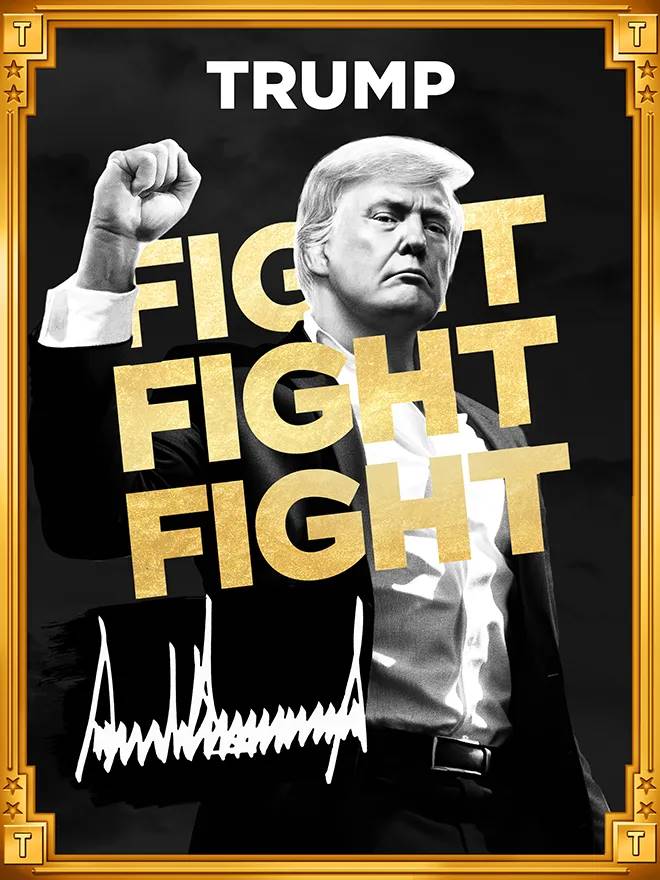
In the past, I struggled to explain what meme coins truly are—vague and intangible. Now, I believe a few simple sentences suffice: A meme coin represents the market’s valuation of a specific event, person, or cultural reference at a given moment—just as the market recently priced Trump’s influence at $80B. On another level, memes fragment traditional internet attention economies. People are drawn to things that capture attention, and memes offer users a rare chance to participate in value distribution during viral moments.
Pump

I once wrote that the best form of SocialFi isn’t rigidly structured DApps like Friend.tech, but rather Pump. And indeed, Trump’s team chose Pump. The reason is simple: people desire belonging, but not at the cost of fairness. Friend.tech’s key-based pricing and complex token mechanics capped its potential and led to its downfall. Looking back at failed SocialFi projects, hierarchical divisions based on token holdings—which dictate access to perks and services—were their fatal flaw.
Small and niche never works for crypto communities built on culture, and this applies beyond SocialFi—even to Trump’s earlier NFTs. Meme coins thrive on massive supply, enabling rapid formation of large communities. Whether you hold $100 or $100,000 worth of tokens, you belong to the same tribe.
In the past, launching a project meant promoting on Twitter, then migrating users to Telegram or Discord to build community. For ancient memes like Doge, you had to scour forums to find your “clan.” Pump succeeded by integrating AMM with traditional social media dynamics while returning rule-setting power to creators. It collapses countless intermediary steps—you can instantly feel belonging among the sea of token icons on Pump’s homepage.
Retro Trend
Regardless of your opinion on Trump’s personal token, we’re entering an age where memes become mainstream and everything gets tokenized. This bears resemblance to the medieval European right of coinage I mentioned in my stablecoin article. Unlike China’s dynasties, which typically maintained unified currency systems, Europe has historically been fragmented—kings, nobles, and bishops all held minting rights.
While $TRUMP isn’t backed by gold or silver, the precedent is set. Many Western celebrities will likely follow this medieval revival trend. More importantly, with Trump retaining 80% of the supply, will this token truly remain a pure meme—as stated on its website: “Trump Memes are intended as expressions of support for and participation in the ideals and beliefs symbolized by '$TRUMP' and associated artworks. They are not intended to be, nor should they be viewed as, investment opportunities, investment contracts, or securities”? Or will it become an asset for power monetization?
Among various conspiracy theories, I lean toward viewing this as the grand opening of the Trump family’s full transition from real estate to crypto. Leveraging media influence runs deep in their DNA. Launching with a seemingly absurd event generates instant hype—meme coins are the perfect vehicle, combining get-rich-quick myths with the irony of a former president embracing internet culture.
The remaining bulk of the token supply—likely allocated across three use cases per the release schedule—could be distributed to voters, used to pay down national debt, or fund public projects. Such moves would cement Trump as a cultural icon and reverse public skepticism toward crypto post-FTX. The family’s shift from industrial capital could begin with this near-$100-billion IP. (According to Jin10 reports, Trump himself appears poorly informed about his own crypto projects, further suggesting operational control lies with his team and children.)
Ethereum
Solana was undoubtedly the biggest winner during this crypto weekend, setting records with new highs in SOL price and daily trading volume surpassing Ethereum by multiples. In contrast, the Ethereum community appeared disheartened, with growing criticism from core OGs toward the Ethereum Foundation and Layer2-centric roadmap.
Yet, Solana’s skyrocketing fees and high failure rates reveal that crypto is still far from true mass adoption. Thus, I maintain my prior stance on Ethereum: the push toward Layer2 was simply too fast, too premature. At the social engagement level, there’s virtually nothing in the entire Ethereum ecosystem capable of competing with Solana—not even Base comes close.
With small, frequent transactions pushed entirely onto Layer2 and no breakthroughs in L2 dApps, vast amounts of block space sit idle. Fees remain abysmally low—a reality mirroring the fate of past so-called "ETH killers."
The blockchain development paradox extends beyond the scalability trilemma—it also includes the conflict between gas revenue and technological advancement. To illustrate simply: imagine Ethereum as a casino requiring tickets for entry. In recent years, business boomed; tickets were in high demand, resold at premiums, and treated as investments, driving up prices. The owner realized the venue was too small, so he built a new one 100x larger and slashed ticket prices by 90%. But attendance didn’t increase accordingly, and the oversized facility sat underutilized—ticket prices collapsed.
This reflects Ethereum’s dilemma: technological progress outpaced demand, causing misalignment with token value. Moreover, unlike chains fueled by social virality, Ethereum’s strength lies in moats built since the ICO era and DeFi Summer. As such, the lack of fresh blood continues to intensify.
Beyond urgent foundation reforms (discussed in my article *“The King of Altcoins, Why Surrounded by Enemies?”*), Ethereum must improve in several areas: gaining social traction (simplifying complex technical concepts for broader audiences, increasing presence on traditional social media), enhancing Layer2 feedback mechanisms (fee buybacks, DA pricing adjustments, ecosystem subsidies to mainnet), and better supporting emerging dApps (expanding Grant programs beyond infrastructure, improving interoperability and compatibility across L2s). With application-layer innovation stalled, competition among blockchains now hinges on details and differentiation.
Crypto 2.0
Trump has entered his 2.0 era, and the next phase of crypto will be shaped by this family. What do they plan to do? Their first major project, World Liberty Financial (WLFI), hasn’t launched yet, but insights can be gleaned from its proposal forum:
The WLFI protocol will provide liquidity for Ethereum (ETH), wrapped Bitcoin (WBTC), certain stablecoins, and potentially other digital assets. WLFI aims to onboard users to over-collateralized lending—one of DeFi’s most critical functions—by offering seamless borrowing and lending experiences. Many users will be DeFi newcomers, helping build brand loyalty for both WLFI and Aave, reinforcing Aave’s leadership in digital asset lending markets.
Initially, WLFI will support USDC, USDT, ETH, and WBTC for lending. Additional assets may be added via future WLFI governance votes.
WLFI will adopt the same reserve ratio system as the main Aave deployment. AaveDAO will receive 20% of protocol fees generated by the WLFI Aave V3 instance, along with approximately 7% of total $WLFI supply to participate in governance, liquidity mining, and decentralization efforts. Revenue distribution will be managed via trustless smart contracts directing fee shares to AaveDAO and WLFI treasury addresses.
Considering recent aggressive purchases of various project tokens, WLFI appears to be Donald John Trump Jr.’s effort to leverage his father’s influence and establish an on-chain lending institution. Left foot sells $WLFI tokens; right foot buys blue-chip assets (and if big projects join, this dual-leg rocket could fly even higher).
Additionally, WLFI has been acquiring numerous domains. According to Cointelegraph’s tweet, WLFI has purchased daolationship.eth, yatogame.eth, WorldLiberty.eth, trumpcoin.eth, erictrump.eth, barrontrump.eth, and 9290.eth. This clearly signals the Trump family’s strategy: leveraging the $TRUMP IP across diverse sectors. Over the next four years, Trump-affiliated projects may become as ubiquitous across blockchains as Trump Organization properties once were across New York City.
The curtain is slowly falling. An extraordinarily unique era is approaching. Whether or not you accept this “crypto president,” one truth remains: over the next four years, most events shaping crypto will originate across the Atlantic. Crypto’s only choices are to follow—or undergo a rebirth that enables such transformations to happen globally.
Join TechFlow official community to stay tuned
Telegram:https://t.me/TechFlowDaily
X (Twitter):https://x.com/TechFlowPost
X (Twitter) EN:https://x.com/BlockFlow_News
 @YBBCapital