Major projects collectively pressure Ethereum Foundation, which remains unmoved
TechFlow Selected TechFlow Selected
Major projects collectively pressure Ethereum Foundation, which remains unmoved
The Ethereum Foundation smirked slightly and sold another 100 ETH...
 Navigating Web3 tides with focused insights
Author: Azuma, Odaily Planet Daily
The Ethereum Foundation (EF) has long been a source of frustration.
As community disappointment over ETH's weak performance this cycle builds and finally erupts, calls for reforming the EF are growing louder.
Over the past few days, the entire Ethereum community has engaged in intense discussions about EF’s leadership structure, personnel, operational model, and financial planning. Aya Miyaguchi, the current EF Executive Director, has come under heavy criticism from the community, and Vitalik himself has been forced to publicly announce under mounting pressure that "a major restructuring of EF's leadership is underway."
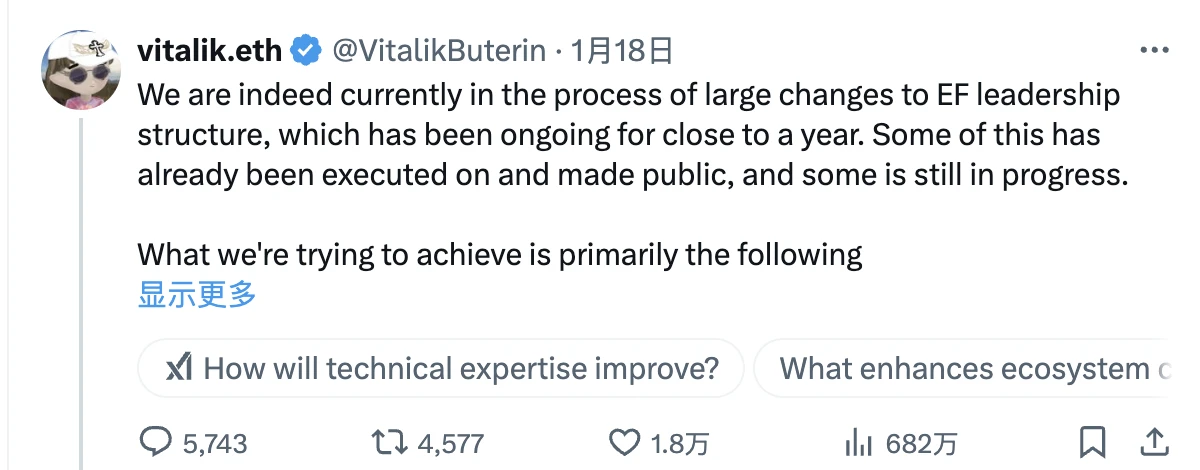
This past Monday, the debate deepened further. Founders and executives from several leading projects within the Ethereum ecosystem stepped forward with strong statements, denouncing multiple failures by the EF. The intensity of their language reveals long-standing grievances among key project teams regarding Ethereum's trajectory.
Below is a compilation by Odaily Planet Daily of these various perspectives.
Kain Warwick, Founder of Synthetix and Infinex: EF Should Require L2s to Buy Back ETH
Kain Warwick launched the first salvo.
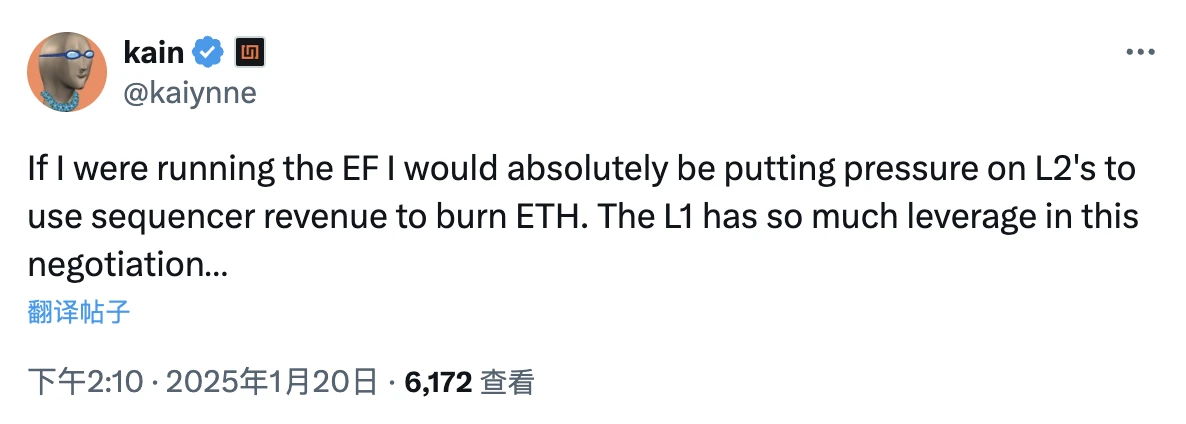
On Monday afternoon, Kain posted on X: “If I were running the EF, I would absolutely pressure Layer 2s to use sequencer revenue to burn ETH. Ethereum holds a strong negotiating position in this scenario…”
Michael Egorov, Curve Founder: EF Should Immediately Abandon Its L2 Strategy
Following Kain, Michael Egorov, founder of Curve Finance, also attacked the Layer 2 focus—but with even sharper rhetoric.
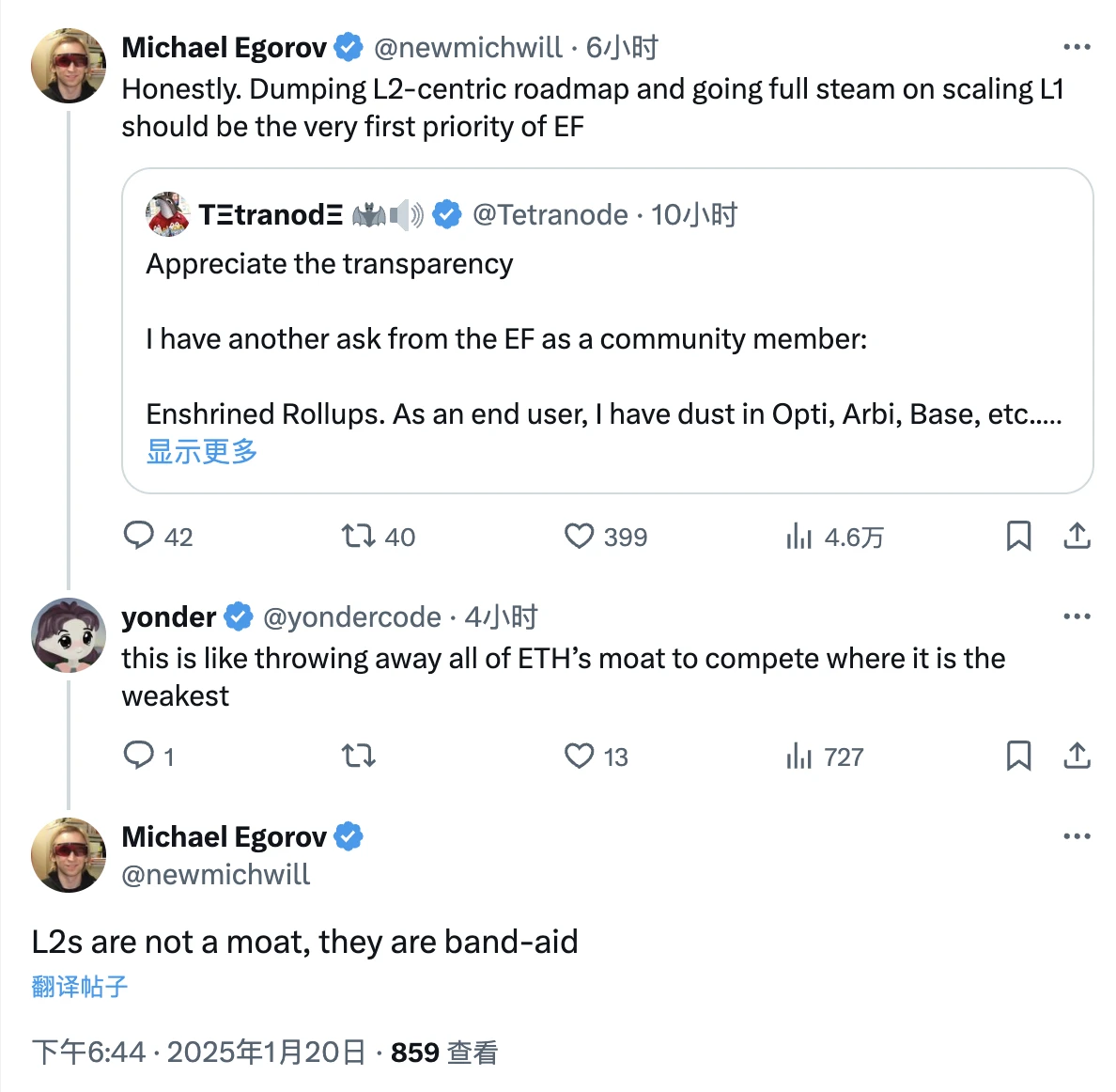
Later on Monday, Egorov wrote on X that the EF’s top priority should be abandoning its Layer 2-centric roadmap and instead focusing all efforts on scaling Layer 1.
In subsequent discussions with community members, he bluntly stated: “Layer 2 is not a moat—it’s a band-aid.”
Stani Kulechov, Aave Founder: 12 Steps to Save the EF
In the evening, Stani Kulechov, founder of Aave, published a lengthy post on X stating he had reviewed the EF annual budget report and believes the foundation must undergo comprehensive reform across 12 dimensions to achieve greater sustainability:
-
Immediately reduce spending from $130 million to $30 million;
-
Reduce staff headcount to 80 people;
-
Carefully review who remains—eliminate senior roles, consultants, part-time positions, interns, freeloaders, cockroaches, and parasites;
-
Prohibit consultants or any conflicts of interest;
-
Ensure 80% of employees are technical staff;
-
Break all technical teams into small groups of five, each focused on specific domains and specializations;
-
Leadership should consist of a five-member committee selected based on merit, one serving as chair responsible for VB;
-
A portion of non-technical teams should focus on financial management (handled internally);
-
Diversify financial reserves into various long-term sustainable assets (LRSTs), as well as DeFi and non-DeFi projects with solid fundamentals and profitability built on Ethereum;
-
Diversify staking yields into stablecoins and deploy capital into DeFi;
-
Borrow via Aave for treasury management and conduct timed sales when ETH outperforms other assets;
-
Create a sustainable revenue model funded by transaction or staking fees to support a reasonable EF budget.
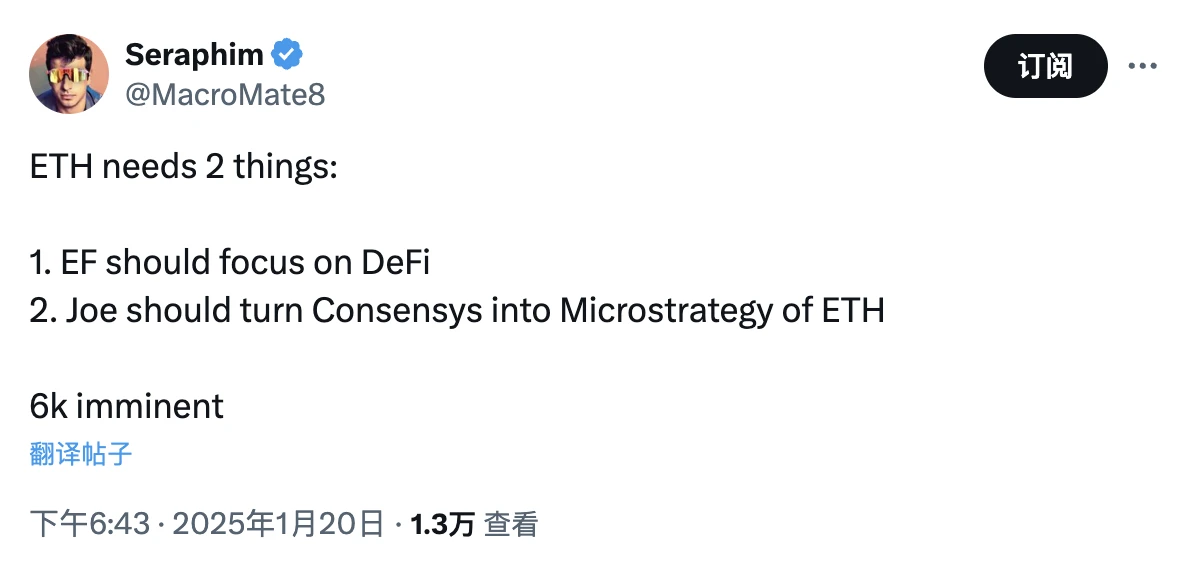
Seraphim, Former Growth Lead at Ethena: EF Should Focus on DeFi
Seraphim, the recently departed former growth lead at Ethena and ex-expansion lead at Lido, shared his views on EF reform.
Seraphim suggested two paths for Ethereum’s self-rescue: first, the EF should refocus on DeFi; second, Consensys—led by Ethereum co-founder Joseph Lubin—should follow MicroStrategy’s approach to BTC. If both steps are taken, ETH could soon break through $6,000.
Evgeny Gaevoy, Wintermute Founder: Ethereum’s Potential Death Spiral
Wintermute, though not exclusively tied to Ethereum, is a top-tier market maker deeply involved in numerous Ethereum-based projects, making its opinion highly influential.
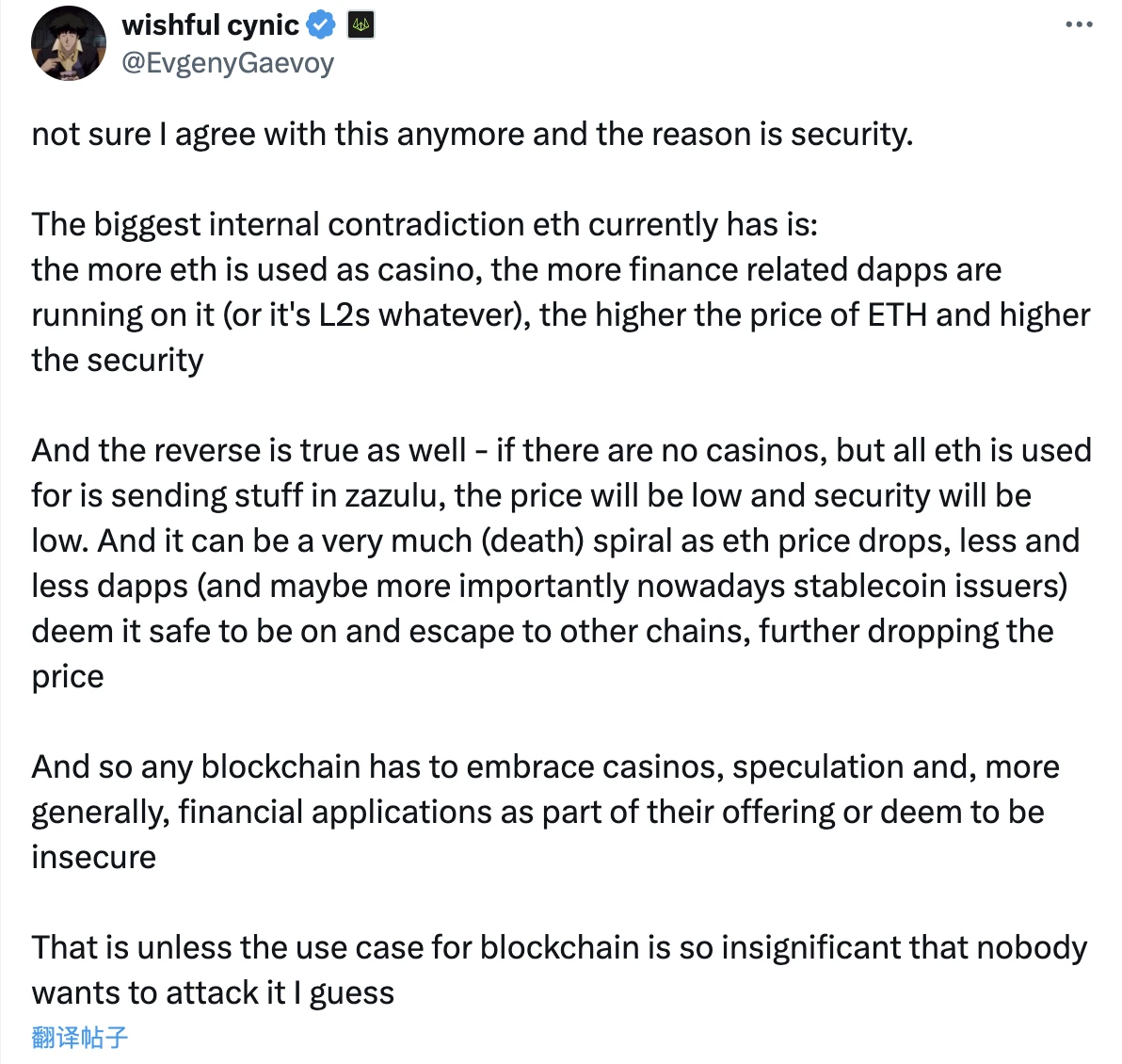
In the evening, CEO Evgeny Gaevoy posted about a potential death spiral facing Ethereum.
He explained that Ethereum’s core internal contradiction lies here: the more ETH used for “gambling,” and the more finance-related dApps running on Ethereum, the higher ETH’s price—and thus network security—becomes. Conversely, without such activity, if ETH is only used for simple transfers on Zazulu, its price will fall, reducing security. As ETH’s value declines, fewer dApps will consider Ethereum secure, prompting them to migrate to other chains, further depressing ETH’s price—a potentially catastrophic downward spiral.
Therefore, any blockchain must embrace gambling, speculation, and broader financial applications as essential components of its product offering—or risk being perceived as insecure.
In the Midst of Outrage, EF Chooses to Sell Again…
At a time of widespread community backlash and rising anger, the EF made another surprising move.
Around 6:20 PM, the EF’s address 0xd77...1f4—which it uses for frequent small-scale ETH sales—sold another 100 ETH at an average price of $3,364.
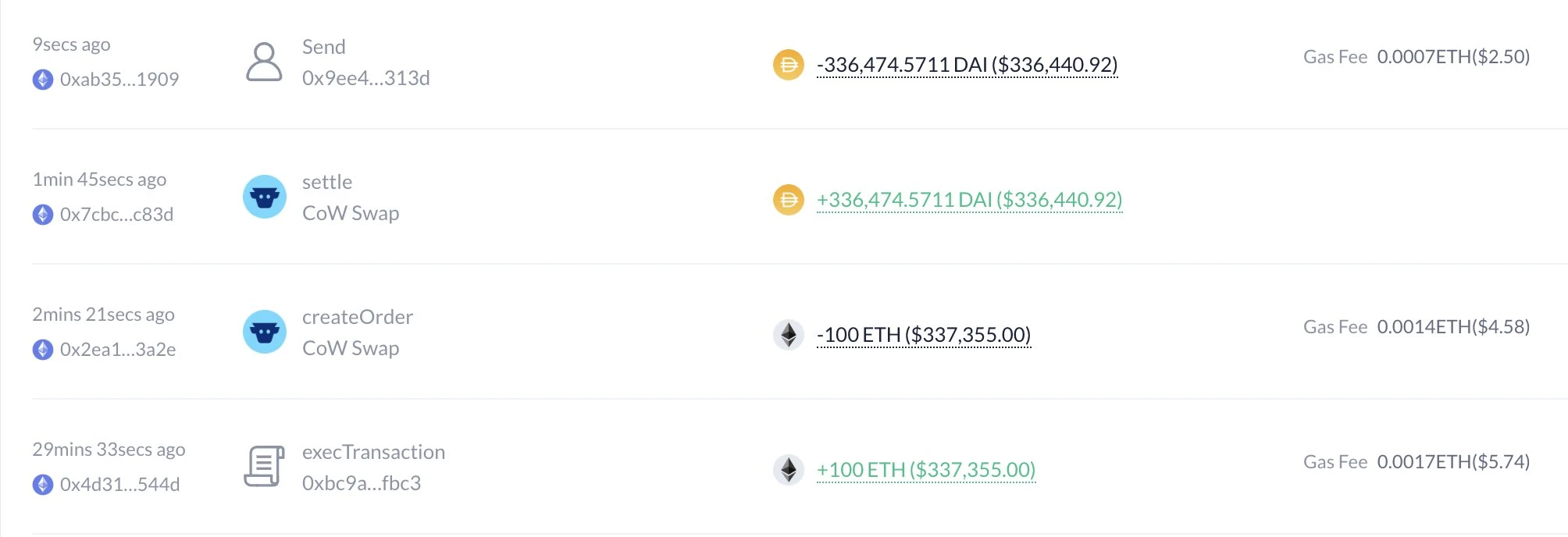
As a long-term ETH holder, I struggle to understand why the EF would carry out such a sale—low in total value but high in symbolic significance—at such a sensitive moment, especially when the community has actively proposed using staking yields instead of direct selling, a solution Vitalik has acknowledged deserves further exploration.
You read that right—the topmost governing body of the Ethereum ecosystem does not stake its own ETH holdings. Vitalik’s explanation cites two reasons: concerns over regulatory issues, and maintaining neutrality. He argues that if the EF stakes directly, it would be forced to take sides in any future contentious hard fork.
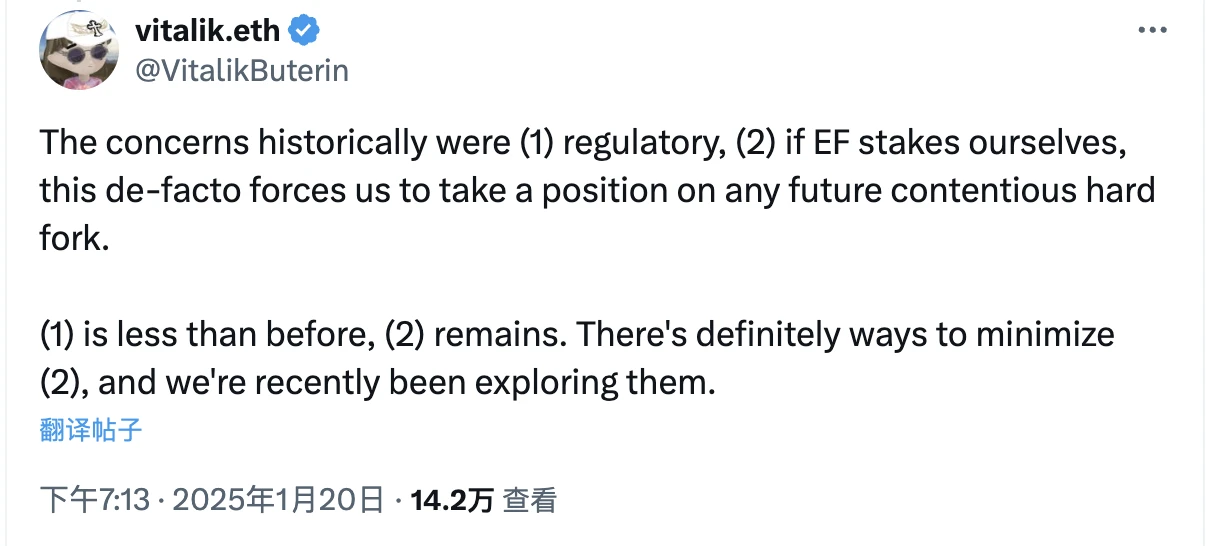
The regulatory concern is worth setting aside for now—as overall regulations ease, this is becoming less of an issue.
But does the second argument really hold water? With Solana advancing aggressively and competition reaching existential levels, the EF is still avoiding action over hypothetical future scenarios.
Oh, and apparently the EF doesn’t care about competition either—today, the Ethereum community unearthed a past interview quote from Aya Miyaguchi: “I’m training people to say no to a culture of competition and winning.”
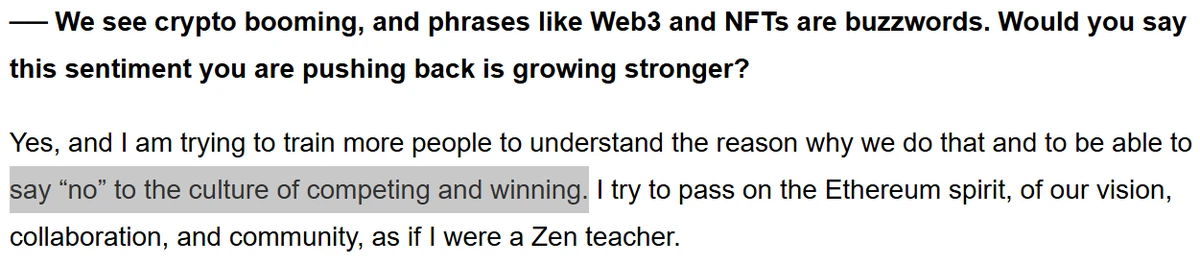
Speechless. Let’s just hope real change comes soon.
Join TechFlow official community to stay tuned
Telegram:https://t.me/TechFlowDaily
X (Twitter):https://x.com/TechFlowPost
X (Twitter) EN:https://x.com/BlockFlow_News
 Odaily