









Bitcoin Reclaims $100,000 Threshold—Is Market Sentiment Shifting Again?
TechFlow Selected TechFlow Selected
Bitcoin Reclaims $100,000 Threshold—Is Market Sentiment Shifting Again?
U.S. core CPI data unexpectedly declined, while Trump's return to power and SEC regulatory reforms boosted market sentiment reversal.
 Navigating Web3 tides with focused insights
By 1912212.eth, Foresight News
Bitcoin has been in a steady downtrend since November 7, at one point falling below the $90,000 mark, triggering widespread market pessimism. A series of macro-level bearish factors had led investors to brace for a drop toward $85,000. Interestingly, Bitcoin stabilized above $89,000 and subsequently rebounded. Following yesterday’s CPI data release, prices climbed further, and in the early hours of January 16, BTC once again breached the $100,000 threshold.
Ethereum, after dropping below $3,000, has steadily recovered and rose above $3,400 this morning. SOL, having fallen below $170, also surged past $200 this morning. The altcoin market is showing signs of recovery, with some altcoins posting gains of 5%–8% over the past 24 hours. The AI sector rebounded sharply, with LMT hitting an all-time high and AIXBT even surpassing $0.90, also reaching a new peak.
In terms of derivatives data, Coinglass reported that total liquidations across all platforms reached $349 million in the past 24 hours, with $221 million in short positions liquidated. The largest single liquidation occurred on Binance, involving an ETH/BTC contract worth $12.6 million.
Recently, Michael Saylor, founder of MicroStrategy, posted for the tenth consecutive week, asking, "Is there a missing green dot on the MicroStrategy portfolio tracker?"—a hint that the company may continue accumulating Bitcoin. Speaking at the Benchmark Investors Conference in Orlando, Saylor mentioned that the perpetual preferred stock MicroStrategy might issue would be “the latest vehicle to provide leveraged Bitcoin exposure for investors.” He noted the company aims to deliver returns and volatility equivalent to 1.5x that of Bitcoin. Saylor’s consistent buying stance has undoubtedly helped alleviate some selling pressure in the market.
What caused this sudden shift from pessimism to optimism?
U.S. Core CPI Unexpectedly Declines, March Rate Cut Odds Edge Up
Last night, the U.S. December unadjusted CPI year-on-year came in at 2.9%, rising for the third consecutive month and reaching its highest level since July 2024, in line with market expectations and up from the previous 2.7%. Meanwhile, the U.S. December unadjusted core CPI year-on-year was recorded at 3.2%, the lowest since August 2024, slightly better than the expected 3.3%.
Following the CPI data release, U.S. stock index futures rallied sharply. Nasdaq futures rose 1.52%, S&P 500 futures gained 1.31%, and Dow futures were up 1.26%. The yield on two-year U.S. Treasuries fell further, declining 6.5 basis points to 4.299%.
Prior to the CPI announcement, the probability of the Federal Reserve holding rates steady in January was 97.3%, while a 25-basis-point rate cut had only a 2.7% chance. For March, the likelihood of maintaining current rates stood at 79.8%. After the data, the odds of a 25-basis-point rate cut in March increased slightly to 28.2%, up from 23.2% the previous day. However, the probability of no rate cut in March remains high at 71%.
Nick Timiraos, a senior Fed reporter known as the "new Fed whisperer," suggested that solid employment data combined with mixed inflation signals have led Fed officials to indicate they are prepared to stay on hold in January, awaiting more evidence that current interest rates are effectively curbing inflation.
Tina Adatia of Goldman Sachs Asset Management stated that while the latest CPI data may not be enough to revive the possibility of a January rate cut, it reinforces the view that the Fed's easing cycle is not yet over.
Ellen Zentner of Morgan Stanley Wealth Management also believes Wednesday’s CPI data won’t alter expectations for a pause in rate hikes by the end of this month but should help dampen speculation about potential rate hikes.
With concerns over CPI data now behind us, capital inflows into the crypto market resumed. According to Trader T and Farside Investors, U.S. spot Bitcoin ETFs saw net inflows of $754.79 million yesterday, reversing five consecutive days of outflows. Spot Ethereum ETFs recorded $59.12 million in net inflows, injecting renewed optimism into Ethereum.
Trump’s Inauguration Nears, SEC Set for Policy Overhaul
Donald Trump’s official inauguration is just four days away, and markets remain hopeful about his upcoming policy moves. As early as January 9, Reuters cited sources saying the industry expects at least one executive order to be issued by January 20.
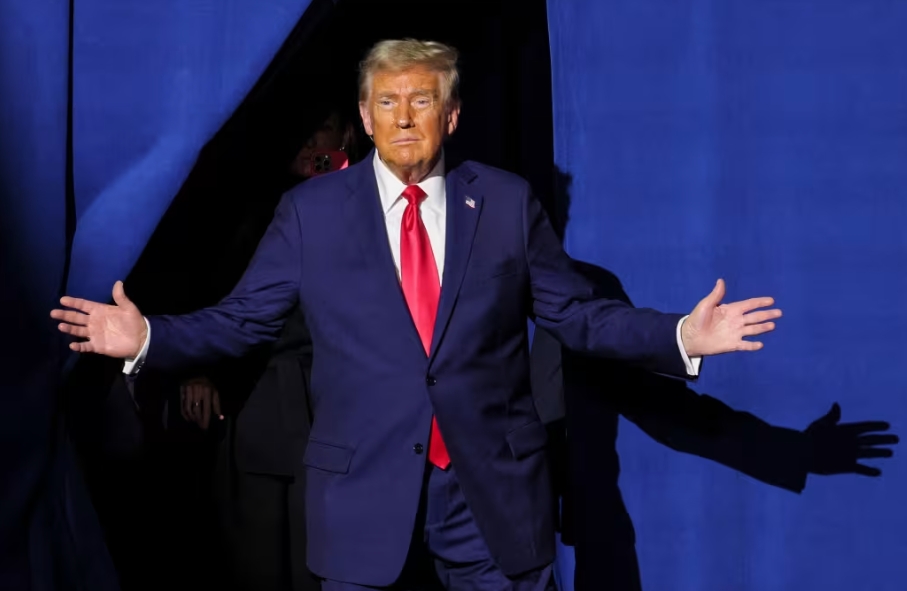
Trader Ansem previously noted that market uncertainty and fear could ease after Trump’s inauguration, depending on his statements.
On January 16, Reuters reported that Trump’s SEC team is reviewing several pending crypto enforcement cases and plans a comprehensive overhaul of crypto policy, potentially freezing lawsuits that do not involve fraud allegations. Three sources indicated that Republican senior officials at the SEC are preparing to begin reforming the agency’s crypto monetary policies shortly after Trump takes office next week.
Two of the sources said Commissioners Hester Peirce and Mark Uyeda are considering measures such as initiating procedures to eventually issue guidance or rules clarifying when the agency will classify cryptocurrencies as securities, as well as reviewing ongoing crypto enforcement cases in court.
Fueled by this news, projects previously embroiled in disputes with the SEC, such as XRP, surged over 17% intraday.
Trump’s incoming administration and anticipated SEC regulatory reforms have significantly contributed to reversing market pessimism.
Summary
Future market trends are drawing close attention. Chris, a partner at Placeholder, recently tweeted that under a supportive U.S. policy environment, the crypto market may see less parabolic growth in the coming years and instead experience more stable appreciation. Drawdowns in major cryptocurrencies may become less extreme. Historically, 85%–95% drawdowns occurred when excessive unrealized profits built up in market structures amid fears that these assets might never rise again. Now, as the world increasingly recognizes that Bitcoin and high-quality crypto assets are here to stay, such “death pricing” episodes in major coins may be behind us (though this does not apply to certain meme coins).
Additionally, Chris pointed out that the introduction of ETFs for BTC and ETH—and possibly SOL soon—will bring more consistent buying pressure to these assets. For insight into potential BTC downside, he recommends watching the 200-week simple moving average (200W SMA), which has proven to be the most reliable technical support during every bear market. Currently around $40,000, this suggests a possible 60% drawdown during a bear market. Nonetheless, Chris remains confident that 2025 will be a volatile but opportunity-rich year.
The crypto market is clearly influenced by macroeconomic and policy developments, often experiencing significant volatility around key events. Investors should remain vigilant about risk management.
Join TechFlow official community to stay tuned
Telegram:https://t.me/TechFlowDaily
X (Twitter):https://x.com/TechFlowPost
X (Twitter) EN:https://x.com/BlockFlow_News
 Foresight News










