
Is it possible for Hong Kong to provide compliant virtual asset trading services to users in mainland China?
TechFlow Selected TechFlow Selected
Is it possible for Hong Kong to provide compliant virtual asset trading services to users in mainland China?
The proposal of "Digital Pass" undoubtedly outlines the possibility for mainland investors to participate in Hong Kong's virtual asset market in a compliant manner.
 Navigating Web3 tides with focused insights
Authors: Iris, Liu Honglin
China's virtual currency trading market presents a stark contrast: while Hong Kong opens its doors to attract participants, the mainland keeps its gates firmly shut. This regulatory divergence has drawn increasing attention from mainland users toward Hong Kong, where they hope to gain "compliant access" to digital asset markets via Hong Kong’s regulated ecosystem.
Recently, remarks by Hong Kong Legislative Council member Wu Jiezhuan reignited market speculation. In an interview with Wen Wei Po, he proposed studying the establishment of a “Digital Connect” mechanism that would allow mainland investors to buy and sell Hong Kong-approved digital assets through a special channel. Wu emphasized that as a testing ground for “One Country, Two Systems,” Hong Kong is well-positioned to explore compliant interconnectivity in virtual asset trading. He added that Digital Connect could not only deepen financial integration between the mainland and Hong Kong but also drive financial innovation and digital economic development.
Market enthusiasm for “Digital Connect” is not unfounded. As Hong Kong refines its virtual asset regulatory framework and China advances its RMB internationalization strategy, Digital Connect may emerge as a new attempt at Web3 interoperability between the two regions.
In this article, ManQin Law will analyze the feasibility of this proposal under current policy conditions.
Mainland Users Cannot Comply with Virtual Asset Trading Regulations
First, from the mainland regulatory perspective, although it's often said that the 924 Notice does not explicitly ban individual virtual currency trading, the prohibition on virtual currency-related businesses means there are currently no compliant domestic cryptocurrency exchanges available. Mainland individuals seeking to trade cryptocurrencies must rely on offshore platforms—this route often brings risks such as foreign exchange violations and exposure to illicit or gray-market assets.
Following Hong Kong's opening of its virtual asset market and publication of licensed exchanges, many mainland investors believe they can now participate in compliant crypto trading via Hong Kong. However, reality paints a different picture.
Take HashKey Exchange—the largest licensed exchange in Hong Kong—as an example. Currently, the platform only accepts account applications from Hong Kong residents (holders of Hong Kong ID cards or non-permanent residents) or qualified investors from certain designated jurisdictions.
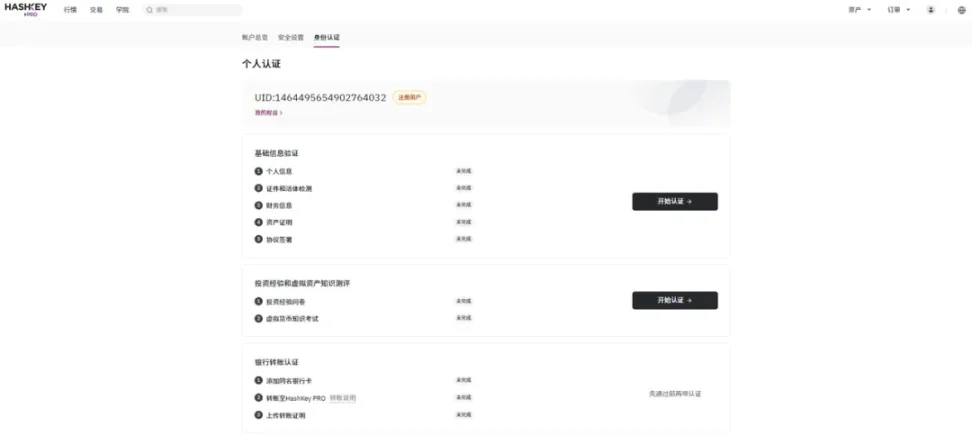
More importantly, HashKey requires all deposits and withdrawals to be conducted through bank accounts regulated in Hong Kong, ensuring transparency and compliance in fund flows. This effectively means mainland users who cannot provide proof of Hong Kong residency or local banking credentials do not meet the eligibility criteria—and thus cannot legally engage in virtual asset trading on compliant Hong Kong platforms.
Furthermore, in December 2024, China’s State Administration of Foreign Exchange issued the *Trial Measures for Reporting Foreign Exchange Risk Transactions by Banks*, which included illegal cross-border financial activities involving virtual currencies within its scope of foreign exchange risk monitoring. This implies that even mainland users—for instance, “Hong Kong sojourners”—who manage to open Hong Kong accounts and trade digital assets may still face account freezing or investigation if their cross-border capital movements involve concealed sources, fictitious trade, or evasion of foreign exchange controls, potentially being classified as “illegal cross-border financial activity.”
It is precisely these barriers that make the “Digital Connect” proposal particularly appealing to both mainland and Hong Kong markets. But can this mechanism truly offer a compliant pathway for mainland investors?
Can “Digital Connect” Unlock Cross-Border Virtual Asset Access?
Historically, Hong Kong has served as a pilot zone for mainland financial liberalization. From Stock Connect to Bond Connect, a series of cross-border mechanisms have enabled market integration through closed-loop capital channels. These systems ensure controllable and compliant cross-border fund flows by recording every transaction step via banks and clearing institutions.
The Shanghai-Hong Kong Stock Connect, for example, allows mainland and Hong Kong investors to trade listed stocks on each other’s markets. Yet crucially, trading funds remain within their respective jurisdictions and are managed through designated bank accounts in a closed system. The core principles of this model include:
-
Quota Management: Total and daily trading quotas are set to keep cross-border capital flows within manageable limits.
-
Closed Account System: Investors must use designated securities and bank accounts; all fund movements are monitored and subject to dual review by banks and clearing houses to ensure legality and compliance.
-
Regulatory Mutual Recognition: Regulators from both sides establish mutual recognition agreements defining responsibilities and enhancing risk control through information sharing.
This structure creates a compliant闭环 (closed loop) in fund flows and provides regulators with a complete audit trail, effectively mitigating risks associated with cross-border capital movement. As LegCo member Wu pointed out, such interconnectivity mechanisms between the mainland and Hong Kong have operated smoothly and with manageable risk to date.
By analogy, “Digital Connect” should adopt a similar financial product framework and architecture. Under joint regulation, it could enable mainland investors to access Hong Kong’s virtual asset market through a dedicated channel, conducting legal and compliant cryptocurrency transactions under Hong Kong’s regulatory regime. This would satisfy compliance requirements while reducing risks linked to using offshore exchanges, including regulatory arbitrage and fund security concerns.
However, unlike traditional financial products like stocks and bonds, virtual asset trading inherently features anonymity, decentralized operations, and seamless cross-border mobility. Combined with the mainland’s stringent stance on cryptocurrencies, these characteristics present far more complex compliance hurdles for implementing “Digital Connect.”
1. Constraints Imposed by Mainland Regulatory Policies
While Hong Kong has established a relatively comprehensive virtual asset regulatory system and permits licensed operation of virtual asset trading platforms, the mainland continues to enforce strict oversight over cryptocurrency trading.
From the 2021 “924 Notice,” which banned all services related to cryptocurrency trading, to the 2024 revision of the Anti-Money Laundering Law explicitly criminalizing the use of virtual currencies to transfer illicit proceeds, and further to the inclusion of illegal cross-border cryptocurrency activities in foreign exchange risk monitoring under the *Trial Measures*, it is clear that virtual currency trading remains a high-risk domain in the eyes of mainland regulators.
Therefore, even if “Digital Connect” is deemed lawful and compliant in Hong Kong, acceptance by mainland regulatory authorities remains the biggest uncertainty blocking its implementation.
2. Legal Boundaries of Cross-Border Transactions
The viability of “Digital Connect” hinges first on resolving the compliance of cross-border capital flows.
Currently, the mainland maintains tight control over cross-border capital movements. Whether under foreign exchange quota rules or anti-money laundering (AML) requirements, transparency and traceability of fund pathways are paramount. In contrast to traditional mechanisms like Stock Connect and Bond Connect—which fully leverage banking networks to ensure compliant fund transfers—virtual currency transactions lack equivalent systems of regulatory mutual recognition and centralized clearing, resulting in significant gaps in regulatory alignment and information sharing.
Additionally, when investment returns from virtual asset trading flow back into the mainland, questions arise about how these funds should be classified: as investment income? Capital inflows? Or taxable earnings? Such classifications directly impact tax compliance and foreign exchange reporting obligations. Given the mainland’s strict capital controls and return regulations, the absence of clear guidelines could lead to suspicions of regulatory evasion during repatriation—potentially triggering fund freezes or investigations.
ManQin Law Summary
The proposal of “Digital Connect” undoubtedly sketches a promising path for mainland investors to access Hong Kong’s virtual asset market in a compliant manner. However, based on the current policy landscape and regulatory framework, turning this vision into reality faces substantial challenges—especially given the mainland’s strong regulatory stance against virtual asset trading.
Notably, China’s journey toward financial openness has typically evolved from tight control to pilot cooperation—the success of Stock Connect and Bond Connect being prime examples. As global markets increasingly embrace virtual assets, mainland China may eventually confront the question of how to open up virtual asset trading under conditions of regulation and security.
ManQin Law believes that if “Digital Connect” can draw lessons from existing cross-border mechanisms and achieve breakthroughs in quota management, fund flow tracing, and regulatory mutual recognition, it may become a vital bridge linking the mainland and Hong Kong virtual asset markets.
The future of China’s virtual asset market holds promise—but the road to compliance remains long and challenging.
Join TechFlow official community to stay tuned
Telegram:https://t.me/TechFlowDaily
X (Twitter):https://x.com/TechFlowPost
X (Twitter) EN:https://x.com/BlockFlow_News