Wang Yongli: Rationally View Trump's New Bitcoin Policy
TechFlow Selected TechFlow Selected
Wang Yongli: Rationally View Trump's New Bitcoin Policy
Wang Yongli believes that Bitcoin can only be a new type of tradable wealth or digital asset, and it is difficult for it to become real money.
 Navigating Web3 tides with focused insights
Author: Wang Yongli, Joint Chairman of Digital China Information Service Group, Former Deputy Governor of Bank of China
Source: China Foreign Exchange, Issue 1, 2025
Key Points
Bitcoin can only be considered a new type of tradable wealth or digital asset. It is extremely difficult for it to become genuine money, impossible to replace sovereign currencies, and highly questionable whether it could substitute gold as a strategic national reserve.
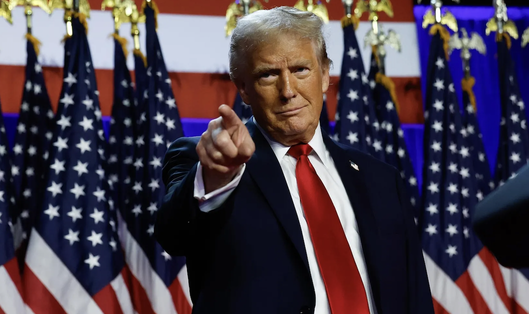
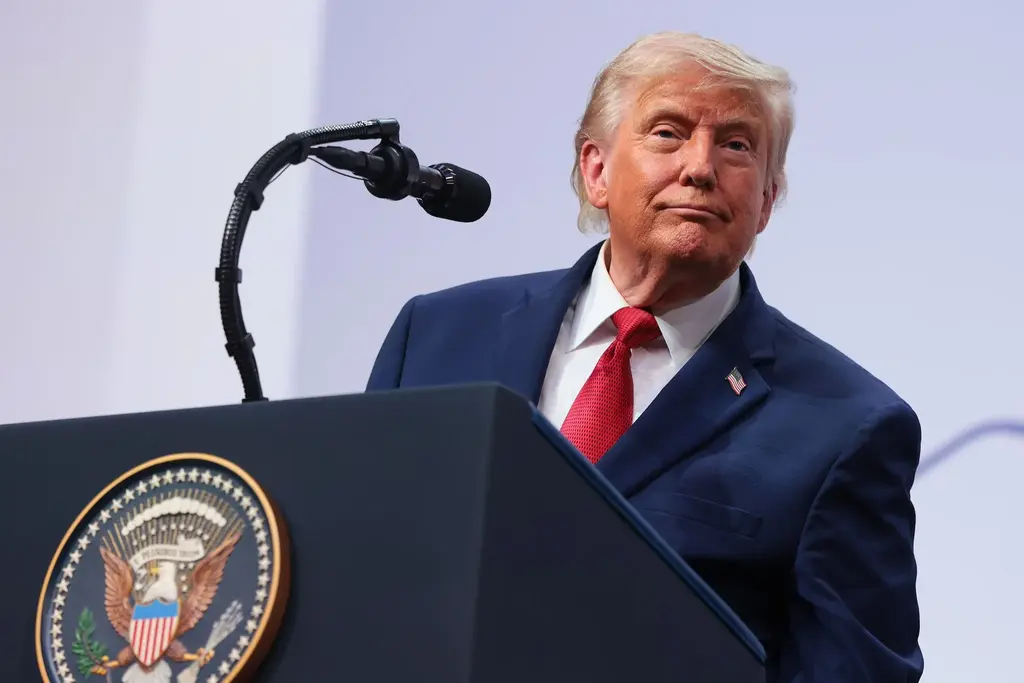
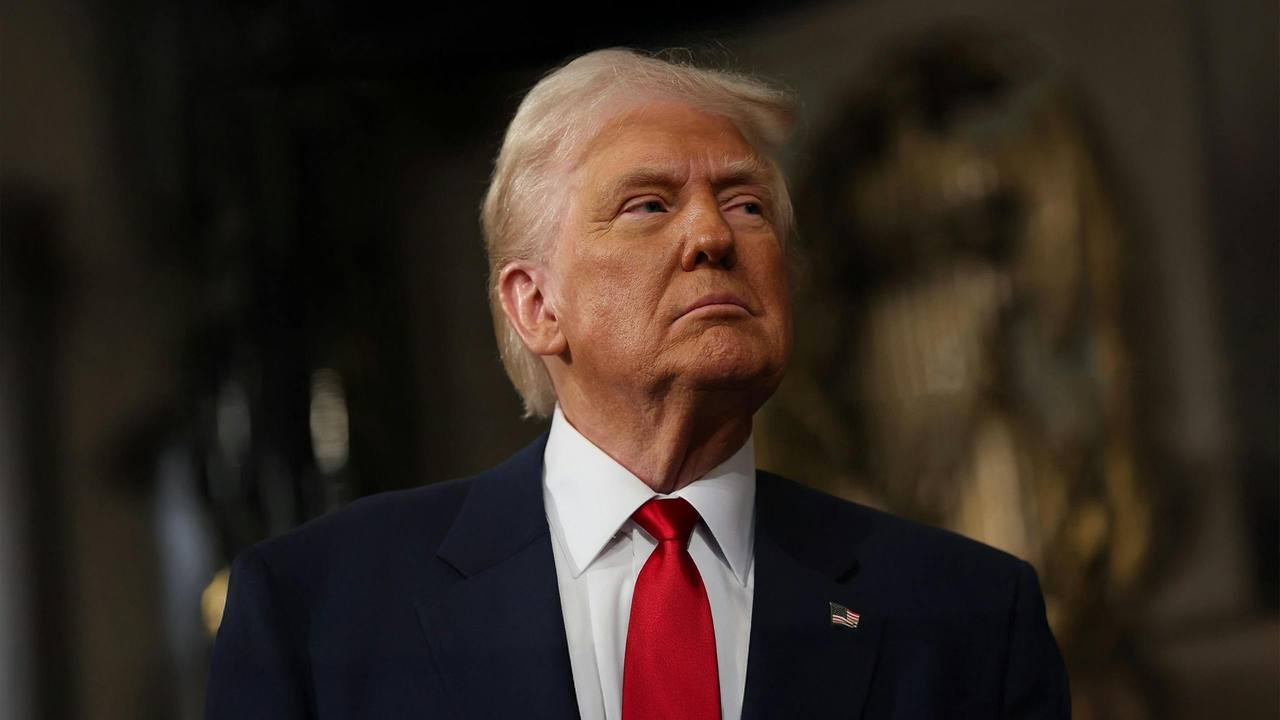
Following Donald Trump’s victory in the U.S. presidential election, his proposed new policy on Bitcoin has attracted widespread attention and debate. Undoubtedly, Trump's new Bitcoin policy will have significant implications for both the United States and the world. In my view, we must remain calm and approach this rationally and objectively, avoiding catastrophic mistakes.
President-elect Trump’s Radical Bitcoin Policy
During his previous presidential term, Trump viewed cryptocurrencies not as real money, criticizing their extreme volatility and calling them scams. He warned that unregulated crypto assets could facilitate drug trafficking and other illegal activities, describing them as “a massive disaster waiting to happen,” while insisting that the only true currency of America was the U.S. dollar. However, starting in 2022, he shifted his stance, stating that the crypto industry is “like the steel industry 100 years ago—still in its infancy,” and even speculated that Bitcoin’s market capitalization might surpass that of gold. He began actively investing in crypto assets and strengthened ties with the cryptocurrency community.
After announcing his candidacy for the 2024 presidential election, Trump adopted an even more favorable attitude toward Bitcoin, declaring his intention to become the "pro-innovation, pro-Bitcoin president." His radical new Bitcoin agenda includes: making the U.S. the undisputed global leader in Bitcoin mining; ensuring America becomes the world capital of cryptocurrency and a Bitcoin superpower; guaranteeing electricity supply for Bitcoin mining operations; relaxing regulations on cryptocurrencies; firing the current chair of the U.S. Securities and Exchange Commission (SEC), who advocates strong regulatory oversight, on his first day in office; establishing a national strategic Bitcoin reserve by purchasing over one million additional Bitcoins beyond those already seized by the government; pledging never to launch a digital dollar (CBDC) during his presidency; and increasing presidential control over the Federal Reserve.
These proposals have been enthusiastically embraced by the crypto community, which has poured substantial financial support into Trump’s campaign. Many of Trump’s nominees for key positions are also known supporters—or even ardent enthusiasts—of cryptocurrency. For example, Elon Musk, a key campaign ally nominated to lead the newly established Department of Government Efficiency, is often called the "godfather of crypto" and holds a large personal portfolio of digital assets. Vice President-elect J.D. Vance revealed he owns hundreds of thousands of dollars’ worth of Bitcoin. On December 5, 2024, Trump nominated Paul Atkins, a known supporter of cryptocurrency, to succeed as the next SEC chair. He also named David Sacks, former COO of PayPal, to head the newly created White House Office of AI and Cryptocurrency Affairs (leading the President’s Technology Advisory Council), tasked with developing a legal framework to provide clarity and foster growth for the crypto industry in the U.S.
Trump’s statements and actions have reignited a wave of enthusiasm across the crypto sector. After Trump won the presidency on November 6, 2024, Bitcoin prices surged from below $69,400 at closing the prior day. By December 5, 2024, Bitcoin reached a record high above $104,000, briefly crossing the $100,000 threshold for the first time, pushing its total market cap past $2 trillion.
Trump’s Bitcoin policy has sent shockwaves globally. Changpeng Zhao (CZ), founder of Binance—a major cryptocurrency exchange previously heavily penalized by U.S. authorities—commented that due to its scarcity and decentralized nature, Bitcoin is increasingly favored by investors and offers stronger value preservation than traditional financial assets. He believes it is inevitable that nations and large institutions will build strategic Bitcoin reserves, leading to intense global competition. Some analysts project Bitcoin could reach $200,000 per coin by the end of 2025. Others go further, predicting Bitcoin may exceed $1 million per coin by 2035, arguing that given the fixed supply of 21 million coins, there remains enormous upside potential relative to the world’s total tradable wealth.
Of course, Trump’s Bitcoin policy and these optimistic projections have sparked considerable controversy worldwide. There are notable voices of opposition within the U.S., although they appear relatively weak amid the current frenzy.
Understanding Bitcoin Accurately
On October 31, 2008, the Bitcoin white paper titled *Bitcoin: A Peer-to-Peer Electronic Cash System* was released. On January 3, 2009, the first block of Bitcoin—the genesis block—was mined, bringing 50 Bitcoins into existence. Since then, Bitcoin has operated securely without interruption.
On May 22, 2012, someone famously exchanged 10,000 Bitcoins for two pizzas valued at $25—an early benchmark where 1 Bitcoin equaled $0.0025. From that point until reaching $100,000, Bitcoin appreciated approximately 40 million-fold. This extraordinary return has fueled deep conviction and anticipation among many regarding future gains, despite frequent and severe price fluctuations along the way.
So how should we truly understand Bitcoin? At minimum, we need clear answers to the following two questions:
Question One: Can Bitcoin Become a New Type of Supranational Currency?
Currency has evolved over thousands of years through four main stages: natural commodity money (e.g., shell money in ancient China), standardized metal coins (gold, silver, copper), metallic standard paper money (representing claims on metal), and finally pure fiat credit money detached from physical commodities. This evolution shows a clear trend toward dematerialization. Gold, in particular, has had the longest and broadest history as money or monetary anchor. The Bretton Woods Agreement of July 1944 formally re-established a gold-convertible international monetary system, cementing gold’s role as the world’s preferred store of value.
However, when the U.S. suspended its commitment to exchange $35 for one ounce of gold in August 1971, gold was fully removed from the monetary system and reverted to being merely a tradable asset. Money itself completely detached from tangible backing, becoming purely a unit of account and medium of exchange—what we now call "credit money." Why did this happen?
The fundamental reason lies in money’s core purpose: facilitating exchange. Its essential attributes are serving as a stable value measure and transaction medium. To fulfill this function, money must maintain relative price stability (severe fluctuations disrupt trade). Any attempt to peg money to a finite physical commodity inevitably runs up against the problem of limited supply—such as Earth’s finite reserves of gold—which cannot keep pace with the potentially infinite growth of tradable wealth. This leads to a chronic shortage of money known as the “commodity money scarcity curse,” which ultimately constrains economic development and forces such systems to be abandoned.
Therefore, money must脱离 physical anchors so that its supply can dynamically adjust in line with the total value of tradable goods and services (“aggregate-to-aggregate” alignment). Only then can sufficient liquidity be maintained while preserving price stability. The shift toward intangible, digital, and intelligent forms of money improves efficiency, reduces costs, strengthens risk controls, and enhances monetary functionality. Thus, credit-based money represents the inevitable direction of monetary evolution—not a reluctant fallback under pressure. Any attempt to return to a metallic standard or re-anchor money to physical commodities contradicts the essence and developmental logic of money and is bound to fail.
To grasp money correctly, we must look beyond appearances. Shell money, coins, and banknotes are merely carriers or manifestations of money—not money itself. A complete definition of money is: its essential attribute is value measurement; its core function is exchange facilitation; its ultimate guarantee is the highest level of trust (sovereign credit); and it serves as the most liquid form of value token (a transferable claim on value).
Once detached from physical commodities, credit money requires a new mechanism for issuance—primarily through lending channels (loans, bond purchases, overdrafts, bill discounting, etc.) by financial institutions. The principle is simple: lenders assess borrowers’ existing or expected future wealth and extend credit accordingly. As long as individuals or entities possess real, tradable assets, financial institutions can issue corresponding amounts of money, aligning the money supply with changes in overall wealth. This breaks the “commodity money scarcity curse” and enables adequate money supply, greatly boosting trade and socioeconomic development. Indeed, without credit-based issuance, there would be no true credit money—and without credit money, modern globalization in finance and economics could not have reached today’s scale.
To prevent excessive money creation, credit issuance must require repayment with interest—it cannot be distributed freely (which would fall under fiscal policy). Central banking systems must be established: central banks no longer lend directly to the public but instead serve financial institutions via refinancing tools, acting as supervisors of monetary aggregates and implementers of monetary policy. Commercial banks become the primary agents of money creation but operate under strict central bank supervision. Multiple competing institutions are necessary to create interbank settlement constraints that limit unchecked credit expansion. Losses from unrecoverable loans constitute actual money overissuance and must be timely provisioned for or written off to mitigate inflationary risks. Banks facing insolvency or liquidity crises should undergo restructuring or bankruptcy. Robust mechanisms must exist to control credit issuance at the source and curb monetary excess.
Credit issuance (including central bank refinancing) is directly credited to borrowers’ deposit accounts. These deposits can be used immediately for payments via electronic transfers and book-entry settlements, drastically reducing the need for physical cash. Cash is only withdrawn when depositors specifically request it. Therefore, cash is no longer the primary channel for money circulation. In the long run, like shells and coins before it, cash is destined to disappear entirely from the monetary system.
In a world of sovereign states, the highest form of credit today is national sovereignty. National authority must protect both money and the wealth it exchanges to maintain the aggregate alignment between money and real value. Hence, modern money takes the form of sovereign or legal tender, backed by state credit rather than the individual balance sheet of any issuing institution (unlike metallic standard notes). Attempts to de-nationalize money (e.g., returning to commodity money) or make it supranational (e.g., structurally linking to multiple currencies to create a supranational currency like the IMF’s SDR) are impractical and unlikely to succeed. Stablecoins pegged one-to-one to a single sovereign currency are effectively digital proxies of that currency—they can exist but must be regulated by monetary authorities and cannot replace the underlying currency.
While Bitcoin represents a technological breakthrough, its design mimics gold closely: just as easily accessible gold tends to be mined first, leaving less available over time, Bitcoin’s protocol caps total supply at 21 million. A new block is added roughly every ten minutes, with the reward halving every four years (starting at 50 BTC, currently 3.125 BTC), tapering nearly to zero by 2140. This programmed scarcity fuels speculation about massive future appreciation, encouraging participation in mining or investment. But unlike adaptive monetary systems, Bitcoin’s supply is rigidly predetermined—even stricter than gold (whose total reserves remain uncertain)—and incapable of scaling with growing global wealth. Given that gold itself has exited the monetary stage, it is implausible that Bitcoin could become a true circulating currency.
Bitcoin is a purely blockchain-native digital asset. Its network performs only three functions: mining, transferring between nodes, and distributed validation and ledger recording. While highly secure and closed, it solves no real-world problems. Without the ability to exchange Bitcoin for sovereign currencies, its value outside speculative use would be negligible, limiting its impact on the real economy. The Bitcoin blockchain must persist indefinitely, growing ever longer and traceable to its origin, making it resistant to attacks or displacement by other cryptos. Yet mining and system maintenance grow increasingly costly and inefficient, failing to meet the real-world demands for scalable money supply and fast payment processing. All of this makes Bitcoin unsuitable as real money and incapable of replacing sovereign currencies.
Question Two: Can Bitcoin Replace Gold as a Strategic Reserve?
Because Bitcoin closely imitates gold in design, it is often dubbed “digital gold.” But Bitcoin is a purely digital creation, not a natural physical asset. Its value depends entirely on the development of its use cases and the collective faith and investment of users. Though divisible down to hundred-millionths (satoshis), offering greater payment flexibility, Bitcoin lacks any physical gold backing and does not qualify as “paper gold” in the traditional sense. If confidence collapses, Bitcoin could vanish instantly, becoming worthless—posing far greater risks than gold.
Mining, trading (spot, futures, derivatives, ETFs), and holding Bitcoin are generally permissible unless banned by governments due to concerns like high energy consumption or regulatory challenges. However, as a product and platform accessible globally 24/7 via the internet, Bitcoin requires stringent international regulatory cooperation to prevent manipulation, fraud, and illicit activities. Complete deregulation would invite serious consequences and constitutes gross negligence.
Currently, Bitcoin’s main applications include initial coin offerings (ICOs), speculative trading, and serving as an intermediary for cross-border transfers of fiat currencies used in money laundering, bribery, ransomware, and terrorist financing. While sovereign currencies face strict anti-money laundering (AML) and counter-terrorism financing (CTF) regulations and international cooperation, the use of cryptocurrencies as intermediaries bypasses these controls, creating a dangerous regulatory loophole. The focus of regulation should remain on fiat currencies, with enhanced global coordination to prevent their misuse through crypto transactions.
Clearly, the regulatory risks associated with Bitcoin and other cryptocurrencies far exceed those of gold.
At its core, Bitcoin is a speculative asset. Investor returns depend almost entirely on price appreciation, but its volatility dwarfs that of stocks, bonds, foreign exchange, and even gold, making it extremely risky. Beyond service providers like exchanges, only a shrinking number of participants actually profit from Bitcoin trading or investment. Moreover, Bitcoin’s price correlation with assets like stocks and gold has increased over time, weakening its effectiveness as a hedge against systemic risk.
Given all this, although Bitcoin may appear to offer greater upside potential than gold, its risks are significantly higher. Whether it can realistically replace gold as a strategic national reserve remains deeply uncertain.
Trump’s Bitcoin Policy Is Unlikely to Succeed
First, acquiring large quantities of new Bitcoin will be difficult for the U.S. With over 19.8 million Bitcoins already mined out of a maximum 21 million, fewer than 1.2 million remain. Mining difficulty and energy consumption continue to rise, competition intensifies, and because mining is decentralized, the U.S. cannot ensure that new Bitcoins are generated domestically or owned by the government. Additionally, an estimated 4 million Bitcoins are permanently lost ("dead coins"), and ownership is increasingly concentrated among a small group. Purchasing another million Bitcoins would be extremely challenging. Government-led buying would drive prices sharply upward, inflating bubbles and increasing the risk of a crash. Furthermore, advances in quantum computing pose a serious threat to the cryptographic security underpinning Bitcoin and similar cryptocurrencies.
Second, the concept of a national Bitcoin strategic reserve—whether held by the government (fiscal authority) or the Federal Reserve (central bank)—carries significant risks and uncertainties. If referring to a government reserve, expanding holdings beyond the current 210,000 confiscated Bitcoins (some of which were stolen by hackers, raising legal questions about restitution) by purchasing over a million more would dramatically inflate Bitcoin prices. The U.S. Treasury’s Exchange Stabilization Fund (ESF) stands at about $215 billion—insufficient to fund such purchases. Additional borrowing would further swell the federal debt, already exceeding $36 trillion. Relying on future Bitcoin appreciation to stabilize the dollar or repay debt introduces uncertainty, as large-scale sales would depress prices. If the Fed were to buy millions of Bitcoins using dollars, it would massively expand the monetary base, likely fueling inflation. Swapping gold reserves for Bitcoin might reduce direct monetary impact, but could collapse gold prices while inflating Bitcoin’s, with highly uncertain net benefits.
Moreover, under a credit-based monetary system, a nation’s currency credibility rests fundamentally on its economic growth and monetary management—not primarily on the value of reserve assets. Replacing gold reserves with Bitcoin would offer little practical benefit to the dollar and would not help repay government debt.
Third, Trump’s Bitcoin policy contradicts his stated goal of strengthening the dollar’s global dominance. Bitcoin is decentralized and supranational. Even if the U.S. accumulates vast Bitcoin reserves, it would not enhance the dollar’s international standing. Conversely, drastically loosening crypto regulation—allowing unrestricted cross-border movement of fiat currencies via Bitcoin—while blocking the development of a digital dollar could severely undermine the dollar’s global role.
The U.S. dollar’s status as the world’s primary reserve currency stems from America’s comprehensive national power and global influence. So long as the U.S. remains the world’s strongest nation, displacing the dollar is improbable—unless America itself commits a self-inflicted, catastrophic error by eroding the dollar’s credibility and position. Once lost, the dollar’s preeminence would deal a devastating blow to the United States.
In conclusion, Bitcoin can only be regarded as a novel form of tradable wealth or digital asset. It is highly unlikely to become real money, impossible to replace sovereign currencies, and remains highly questionable as a substitute for gold in strategic national reserves. The international community should respond to Trump’s Bitcoin policy with冷静 objectivity, avoiding blind bandwagoning.
Join TechFlow official community to stay tuned
Telegram:https://t.me/TechFlowDaily
X (Twitter):https://x.com/TechFlowPost
X (Twitter) EN:https://x.com/BlockFlow_News