








ArkStream Capital Q4 2024 Quarterly Report: DeFi Strong Recovery, Stablecoin Demand Continues to Grow
TechFlow Selected TechFlow Selected
ArkStream Capital Q4 2024 Quarterly Report: DeFi Strong Recovery, Stablecoin Demand Continues to Grow
With the political environment stabilizing in November, value investing is beginning to show signs of recovery.
 Navigating Web3 tides with focused insights
Industry Overview
On December 5, Bitcoin broke through the $100,000 mark, making history as anticipated by the market. At this historic moment, global financial industries turned their attention to Bitcoin, marking a new milestone in the cryptocurrency sector and significantly demonstrating the expanding influence and growing recognition of the crypto market, while also signaling immense future growth potential. This not only validates ArkStream Capital’s long-held beliefs and expectations but also affirms the entire cryptocurrency industry's collective conviction. Across the ecosystem—whether it's the high-risk, high-reward primary market, the efficient and diversified secondary market, or the vibrant on-chain landscape—all segments have been energized by Bitcoin’s breakthrough, delivering strong performance in Q4.
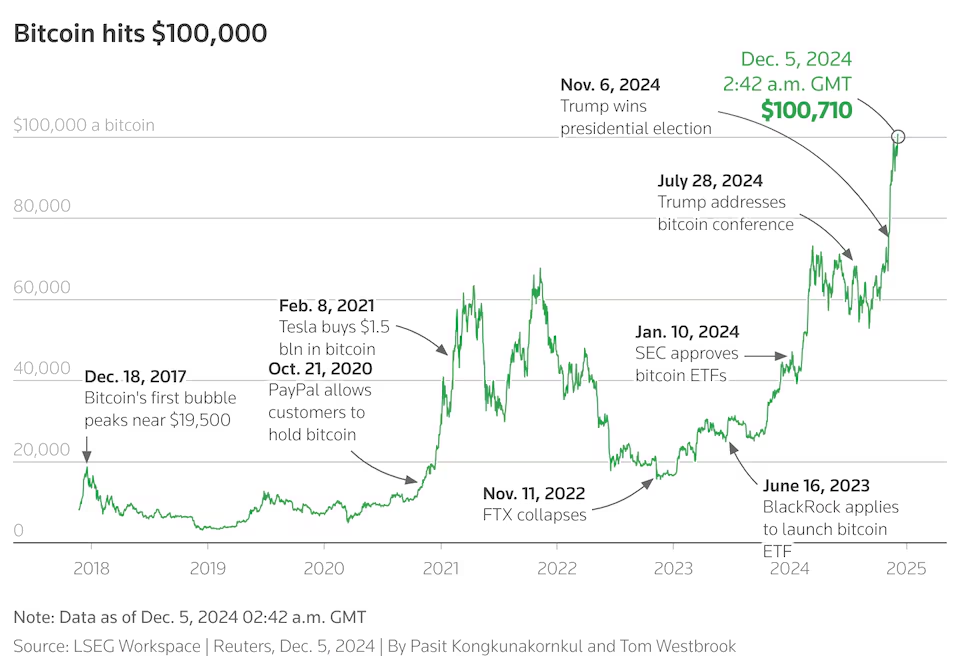
Bitcoin price chart, Source: LSEG Workspace
Bitcoin’s successful crossing of the $100,000 threshold was driven by multiple factors, with two key catalysts standing out: macroeconomic interest rate cut expectations and Donald Trump winning the U.S. presidential election.
The Federal Reserve’s two rate cuts during the quarter had a profound impact on markets, further stirring market dynamics. Lower interest rates reduce borrowing costs, encouraging investors to seek higher-yielding assets and channeling more capital into the cryptocurrency market. Additionally, lower rates improve overall market liquidity, helping support asset prices. Moreover, the stablecoin market benefited from macro-level rate cuts, reaching record issuance levels, significantly increasing market liquidity and reinvigorating market activity. ArkStream Capital expects that with the implementation of quantitative easing policies in 2025, liquidity will further increase, leading to substantial gains in crypto assets and continued market expansion.
During the U.S. presidential campaign, Trump clearly expressed his support for Bitcoin and the broader cryptocurrency industry, making several positive commitments. Specifically, he proposed establishing a national strategic Bitcoin reserve, aiming to incorporate Bitcoin into the framework of national financial strategy and ensure government ownership of a certain amount of Bitcoin. Furthermore, Trump pledged to take proactive measures regarding regulatory policy and support for startups to promote healthy development within the crypto space. After winning the election, Trump took two significant actions to support the crypto industry: first, he nominated Paul Atkins, an advisor at Reserve Rights with deep experience in cryptocurrencies, to serve as SEC Chair. Second, he created a new White House role—Director of Artificial Intelligence and Cryptocurrency Affairs—and appointed David Sacks, a former PayPal executive and expert in big data and cryptocurrency, to fill the position.
World Liberty Financial (WLFI), led by the Trump family, is dedicated to integrating DeFi by combining innovative financial solutions with blockchain technology to provide users with fairer, more efficient, and secure financial services. WLFI has actively invested and partnered in key areas such as lending, RWA, and stablecoins. Its collaboration with Aave offers a mature and reliable lending protocol platform and integrates new stablecoin assets like sUSDe from Ethena, broadening the range of collateralizable assets and diversifying funding sources. In addition, according to data from Spot On Chain, since November 2024, WLFI’s main wallet addresses have aggressively purchased major crypto assets including ETH, cbBTC/wBTC, LINK, AAVE, ENA, and ONDO. This has drawn close market attention to WLFI’s asset movements and sparked investor enthusiasm for WLFI-affiliated DeFi projects, especially those involving deep collaborations generating real yields. A notable example is WLFI’s mid-December 2024 partnership with Ethena, which integrated Ethena’s yield-bearing stablecoin sUSDe into its lending platform as collateral, enhancing deposit sources for WLFI’s lending offerings. Immediately after the announcement, the ENA token surged over 10% in a short period, highlighting market recognition of WLFI’s influence.
Following Trump’s victory, MicroStrategy significantly increased its investment in Bitcoin. According to the latest data, the company acquired nearly 150,000 additional BTC in Q4 2024, spending close to $13.5 billion at an average cost of approximately $90,000 per coin. In comparison, the total net asset value of spot Bitcoin ETFs grew from $60 billion at the end of Q3 to nearly $110 billion by the end of Q4, representing $50 billion in new inflows—MicroStrategy alone accounted for nearly 25% of all spot Bitcoin ETF net inflows. Additionally, MicroStrategy plans to propose a special shareholder meeting to raise up to $21 billion in equity financing and $21 billion in bond issuance to continue investing in Bitcoin. CEO Michael Saylor is also actively encouraging other traditional giants to invest in Bitcoin, such as Microsoft, although Microsoft shareholders voted against the related proposal. The market views MicroStrategy’s ongoing purchases with both anticipation and concern—on one hand, hoping it will join forces with traditional titans to drive industry growth and push Bitcoin to new highs; on the other, fearing potential black swan events that could disrupt the market.
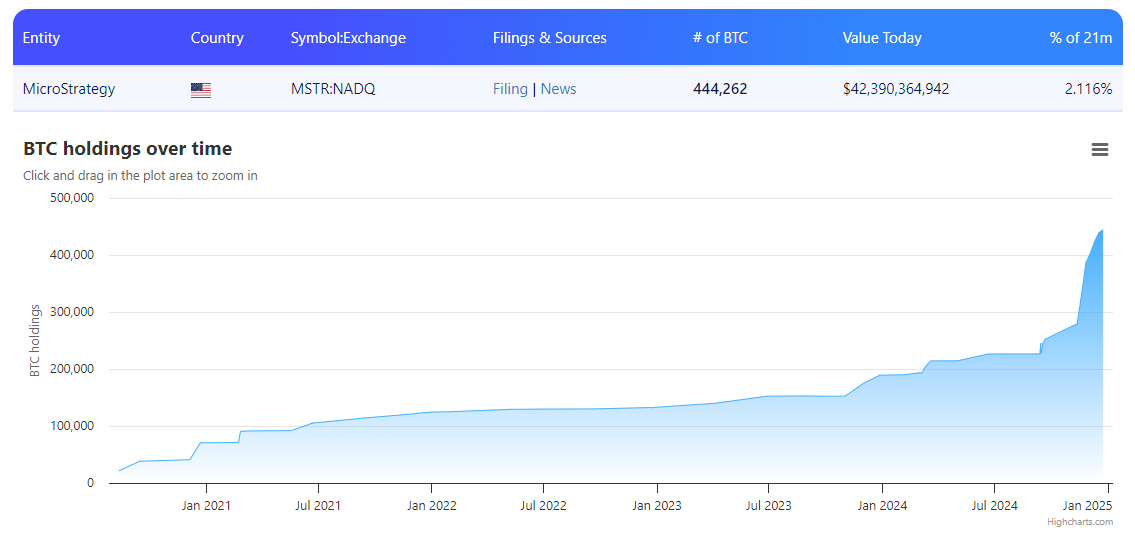 MicroStrategy’s BTC holdings, Source: https://treasuries.bitbo.io/microstrategy/
Within the crypto market, value investing focused on infrastructure development and real-world applications had nearly fallen into a pessimistic trough, as market focus was previously centered on Bitcoin itself and meme-driven on-chain speculation. However, with political stability returning in November, value investing began showing signs of recovery. Sectors such as DeFi, infrastructure, and emerging public chains are gradually regaining market recognition. Investors who held firm are now receiving steady returns, and value investing is once again gaining prominence. From specific projects, the popularity of Ethena and Usual reflects growing market preference for RWA and stablecoins. Meanwhile, protocols like Curve have performed strongly due to their low-slippage stablecoin swaps. Fundamentally sound projects launching TGEs this quarter, such as HypeLiquid and Morpho, along with application-focused projects like Virtuals, have delivered robust data performance and seen their respective tokens consistently reach new highs. These trends indicate a resurgence of value investing, with innovation remaining a core driver of the crypto industry and capital shifting toward these areas.
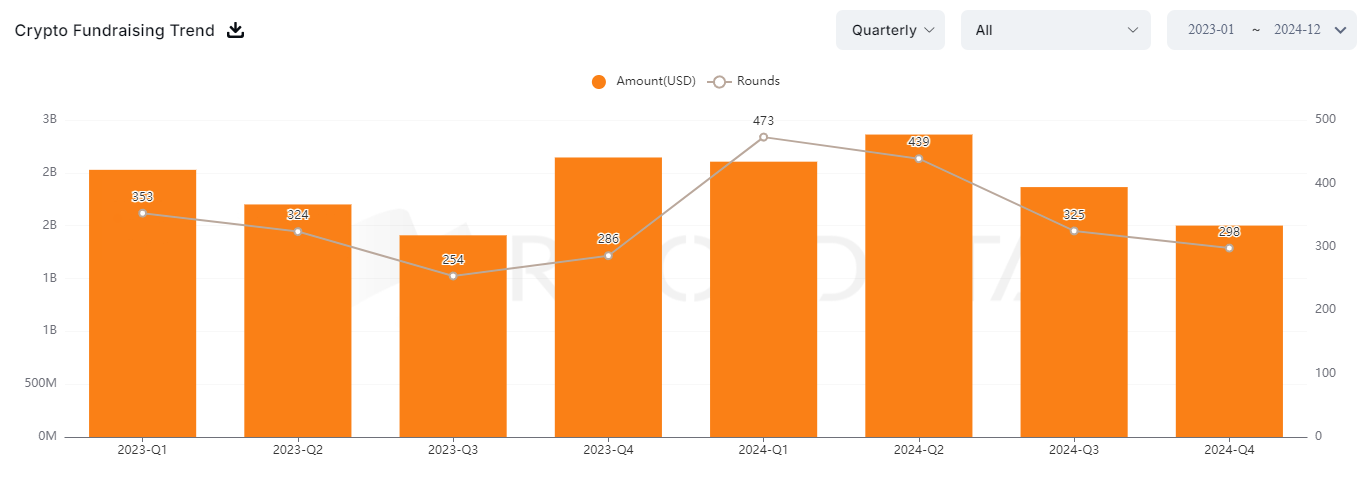
Quarterly primary market fundraising amounts, Source: https://www.rootdata.com/
However, there are two sides to every story. Recently, fundraising activities in the primary market have declined in both number and size, becoming decoupled from secondary market trends. Projects funded over the past two years now face listing backlogs on tier-one exchanges, while tier-two exchanges continue to suffer from insufficient liquidity. Moreover, the speculative on-chain frenzy and rising anti-traditional VC sentiment in early Q4 negatively impacted post-listing pricing for primary market projects, further compressing investment return margins. Transitioning to the secondary market, these projects must overcome liquidity window challenges, fierce competition within their sectors, and limited exchange resources. These combined factors have placed primary market投融资 activities under unprecedented pressure.
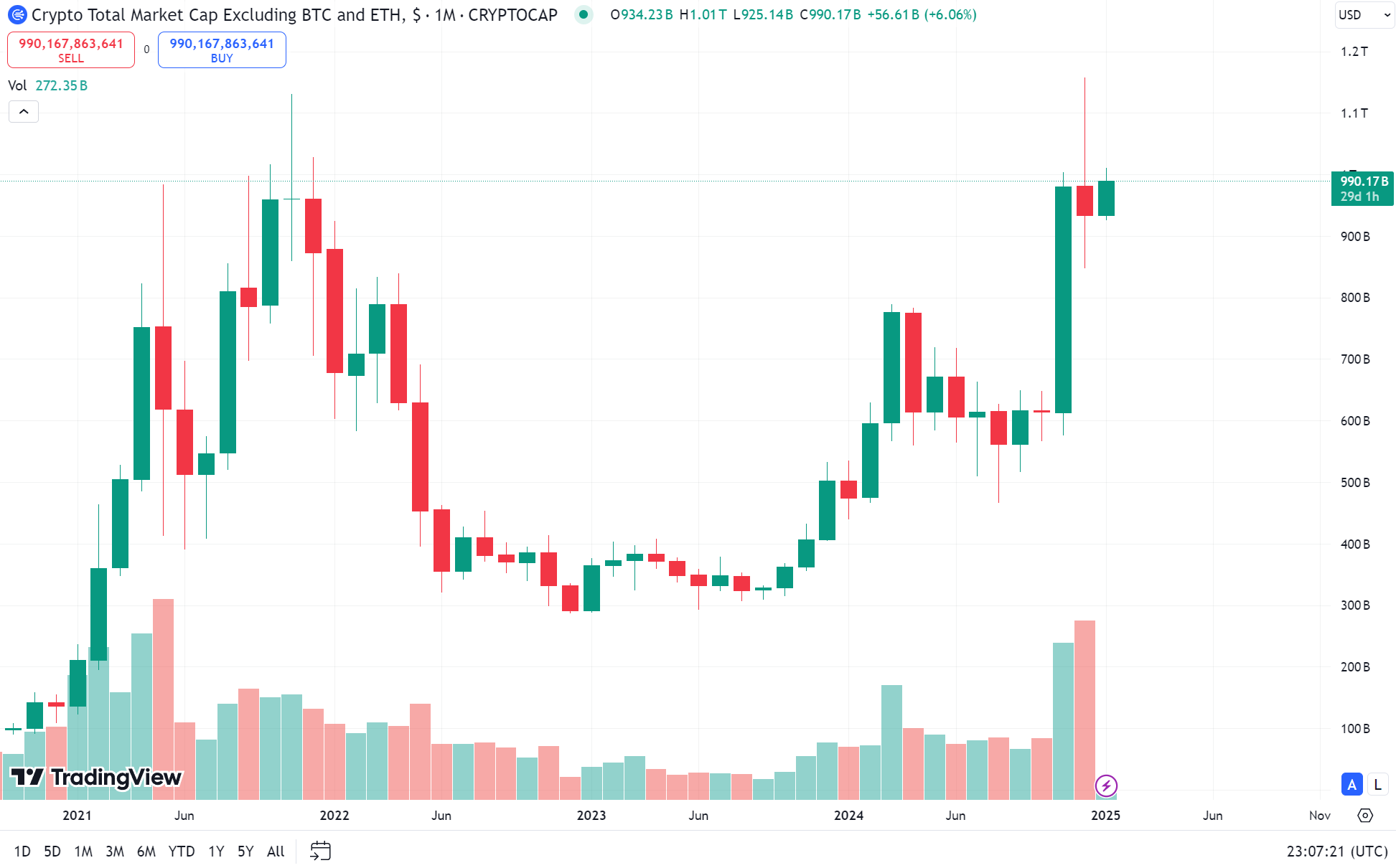
Overall altcoin performance, Source: https://www.tradingview.com/symbols/TOTAL3/
Focused Sectors
DeFi
In 2024, the DeFi sector experienced a strong recovery. As a transformative force in the previous cycle, DeFi continues to enjoy broad recognition within the industry. Meanwhile, with the rise of BTC and altcoin ETFs and potential large-scale capital inflows from U.S. policy shifts, demand from new users for lending, DEX, and stablecoin trading is steadily increasing, offering significant potential for TVL and asset scale growth in DeFi.
Post-election market trends have begun validating this. According to DefiLlama, between November 6 and December 15, incremental capital from new and existing investors and rising lending demand pushed DeFi’s TVL from $87 billion to $130 billion—an increase of over 50%.
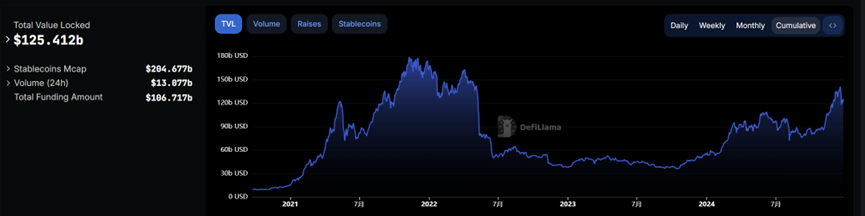
DeFi TVL, Source: https://defillama.com/
As a pillar of the DeFi sector, the lending segment stood out particularly in Q4 2024. Decentralized lending markets reached a TVL of $55 billion, surpassing the previous cycle peak of $51.2 billion. Aave maintained its market leadership this quarter, capturing over 40% of the market share and controlling nearly 70% of the DeFi lending market, managing active loans between $7–8 billion. Aave’s TVL growth was driven by several factors: improved market conditions post-U.S. election increased investor appetite for higher yields, boosting loan demand; additionally, heightened interest in leveraged trading during “easy money” periods further fueled borrowing activity. Data shows that ETH, as a core lending asset, saw its supply APY rise from 1.8% in early September to 2.5% by mid-December, while stablecoins USDT and USDC saw supply APYs climb from 3% and 4% to peaks of 15% and 17%, indicating surging demand for high-yield assets. Concurrently, LTV rose from $7.5 billion in early September to $16 billion by mid-December, reflecting a significant expansion in borrowing volume. Currently, Aave’s TVL stands at approximately $21 billion—about 11% above its prior cycle high of $19 billion—while its token price sits at $370, still about 80% below its previous cycle peak of $665. Anticipated reductions in U.S. bank lending rates may further drive capital into DeFi lending, boosting Aave’s TVL.
As a rising star among Q4 listings, Morpho inherited advantages in security and reputation from top-tier lending protocols and quickly attracted substantial liquidity amid renewed market demand for lending. Morpho Blue, Morpho’s lending layer, enables permissionless creation of isolated markets, catering to diverse risk preferences and use cases. MetaMorpho, built on the Morpho Blue protocol, allows different types of lenders to create vaults without permission, customize exposure, and allocate deposits across one or more Morpho Blue markets.
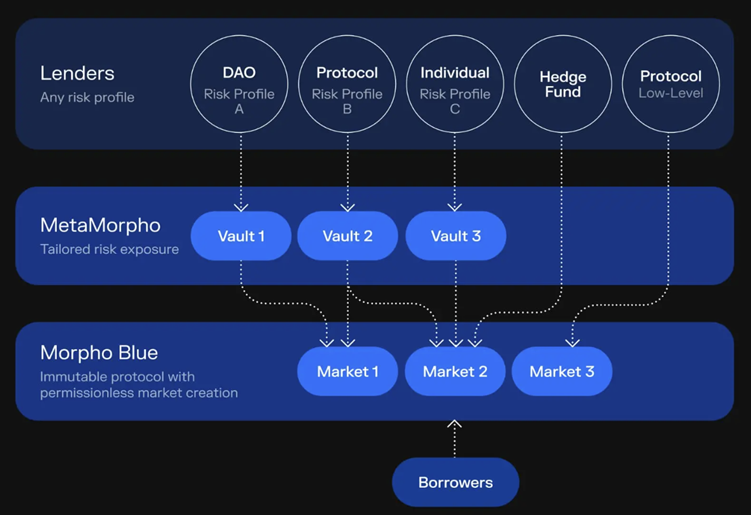
Morpho architecture, Source: https://docs.morpho.org/
This design provides whales holding stablecoins and stable-like assets with efficient yield-generating solutions, meeting their demand for secure and high-return investments. Additionally, Morpho incentivizes lenders with Morpho tokens, boosting net APY to 110%-120% of base APY. By integrating rewards from emerging stablecoin protocols such as Usual and ENA, Morpho further enhances platform appeal and offers users more diversified earning opportunities. At TGE, Morpho’s market cap was just $50 million. However, as the market recognized its product strengths, investors showed strong confidence in secondary markets, driving its market cap to $460 million in Q4. As of now, Morpho’s TVL has reached $3.2 billion. Given sustained demand for DeFi lending and Morpho’s ability to innovate and optimize its products in a competitive environment, its growth trajectory is expected to continue. Morpho exemplifies how even in a mature DeFi sector, protocol-level innovation based on user needs still holds vast growth potential.
In trading and liquidity services, decentralized exchanges (DEXs) remain vital pillars of the DeFi ecosystem. Curve’s primary value lies in providing ultra-low slippage depth for stable asset swaps, enabling fast, low-cost exchanges between large volumes of stablecoins. However, Curve’s founder once used CRV for highly leveraged positions, which were liquidated when the token price dropped, causing temporary market devaluation and undervaluation of the project. According to DefiLlama, Curve’s TVL was only $2 billion at the start of Q4 2024, rising modestly to $2.5 billion by quarter-end. Nevertheless, the stablecoin market remained active throughout the quarter—Tether alone issued an additional 3 billion USDT between October 30 and November 14—while emerging stablecoins like sUSDe, USDe, and USD0, backed by popular real-world assets (RWA), significantly boosted trading volume. This is reflected in fees and revenue: Curve’s monthly fee income reached around $1.5 million, still far below its historical high of $11.5 million in January 2022, but showing improvement from earlier periods. Its token price rebounded from a low of $0.23 in September–October 2024 to around $1—a 330% gain—though still well below its previous cycle peak of $6.4.
Hyperliquid is an innovative decentralized platform focused on efficient perpetual contract trading, utilizing an order-book model. It offers perpetual and spot trading and achieves low-latency, high-throughput execution on Layer 1. The platform consists of the HyperBFT consensus layer and RustVM execution layer. HyperBFT, derived from LibraBFT, supports up to 2 million TPS. Through continuous optimization, Hyperliquid now delivers a trading experience comparable to centralized exchanges. Its HIP-1 mechanism enables deployment of native tokens and on-chain spot order books, reducing risk and latency; HIP-2 (Permanent Liquidity Commitment) differs from traditional AMMs by dynamically adjusting liquidity based on market conditions rather than using a fixed xy=k formula. Combined with no KYC requirements and low fees, it has become an ideal choice for arbitrage traders. Unlike GMX, which relies on Chainlink oracles, Hyperliquid avoids oracle manipulation risks; compared to dYdX, which uses an order book, Hyperliquid faces no performance bottlenecks, avoiding slippage caused by network congestion or slow confirmations. Additionally, Hyperliquid strengthens community engagement and confidence through HYPE token airdrops.
Hyperliquid maintains massive open interest (OI) via HIP-1 and HIP-2 mechanisms, with major trading pairs including ETH-USD, BTC-USD, and SOL-USD. Currently, Hyperliquid accounts for over 50% of trading volume among perpetual DEXs, holding a dominant position. According to Coinalyze and CVI.Finance, its OI is about 10% of Binance’s. In December 2024, Hyperliquid generated approximately $30 million in USDC revenue, implying an annualized revenue exceeding $360 million—second only to Ethereum, Solana, and Tron. The HYPE token price surged from $3 at launch to over $30, achieving nearly a 10x gain within a month, reinforcing its status as a market leader. Although Hyperliquid’s market cap remains below other L1 and L2 platforms, its ratio of annualized revenue to circulating market cap leads the industry.
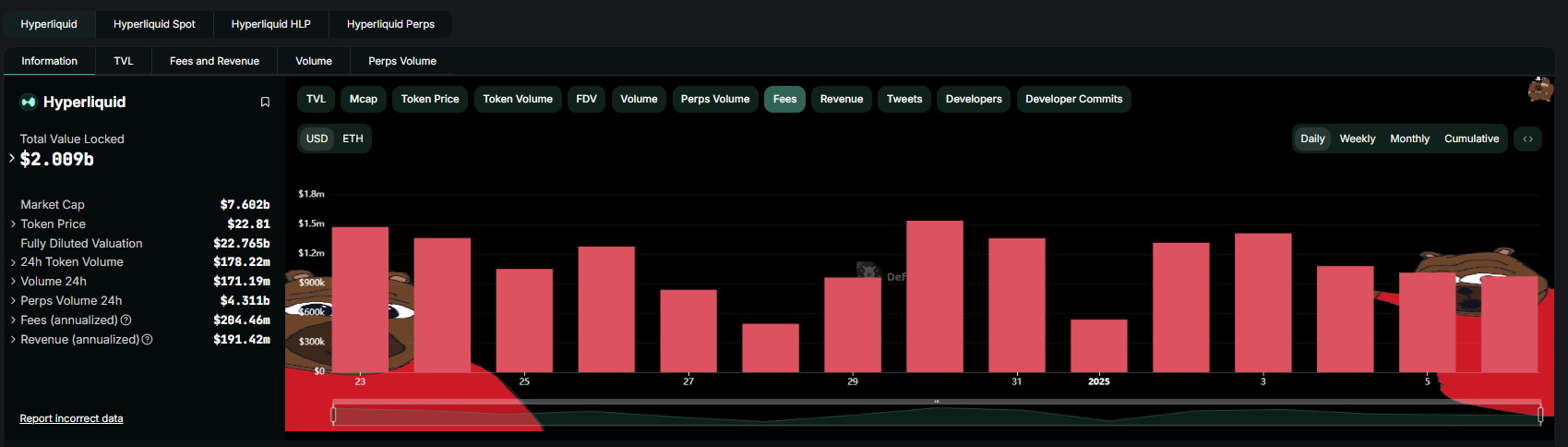
Hyperliquid revenue, Source: https://defillama.com/protocol/hyperliquid?tvl=false&fees=true&groupBy=daily
Overall, DeFi’s recovery in Q4 2024 was primarily driven by products offering real yields, where usability and security became key competitive advantages. For instance, Aave and Morpho attracted substantial users in lending by delivering reliable, efficient services. Curve continues to play a critical role in stablecoin swaps, meeting demand for fast, low-cost transactions. Emerging DEXs like Hyperliquid have rapidly risen in derivatives trading, enriching the DeFi ecosystem. Major exchanges’ Web3 wallets also continue drawing users into DeFi, fueling sector growth. Overall, DeFi is steadily expanding through interactions across lending, DEXs, and stablecoins, with future large-scale breakout likely supported by favorable policies and ongoing innovation.
RWA and Stablecoins
RWA encompasses a wide range of asset classes, including stablecoins, private credit, U.S. Treasuries, commodities, and equities. Among these, stablecoins stand out due to their uniqueness and importance, warranting treatment as a separate category. Non-stablecoin RWAs remain relatively small in scale due to complexities in asset standardization and incomplete regulatory frameworks, so we will focus on the stablecoin segment.
In the crypto market, dollar-pegged stablecoins have played a pivotal role since 2018. They serve not only as benchmark units of account but also function as shadow dollar assets, widely used in transfers and payments. As of December 1, 2024, the total market cap of stablecoins reached $193 billion, up 48% year-on-year. Daily on-chain transfer volumes consistently remain in the $25–30 billion range, never dropping below $10 billion even during bear markets. In terms of trading volume, CoinMarketCap data shows November’s monthly trading volume hit $6 trillion, meaning stablecoins accounted for 30% of centralized exchange volume—excluding on-chain stablecoin trades, their actual share may be even higher. Beyond issuance metrics, stablecoins generate positive externalities by incorporating yield-generating real-world assets like U.S. Treasuries, providing sustainable returns and further bridging Web3 with the real world.
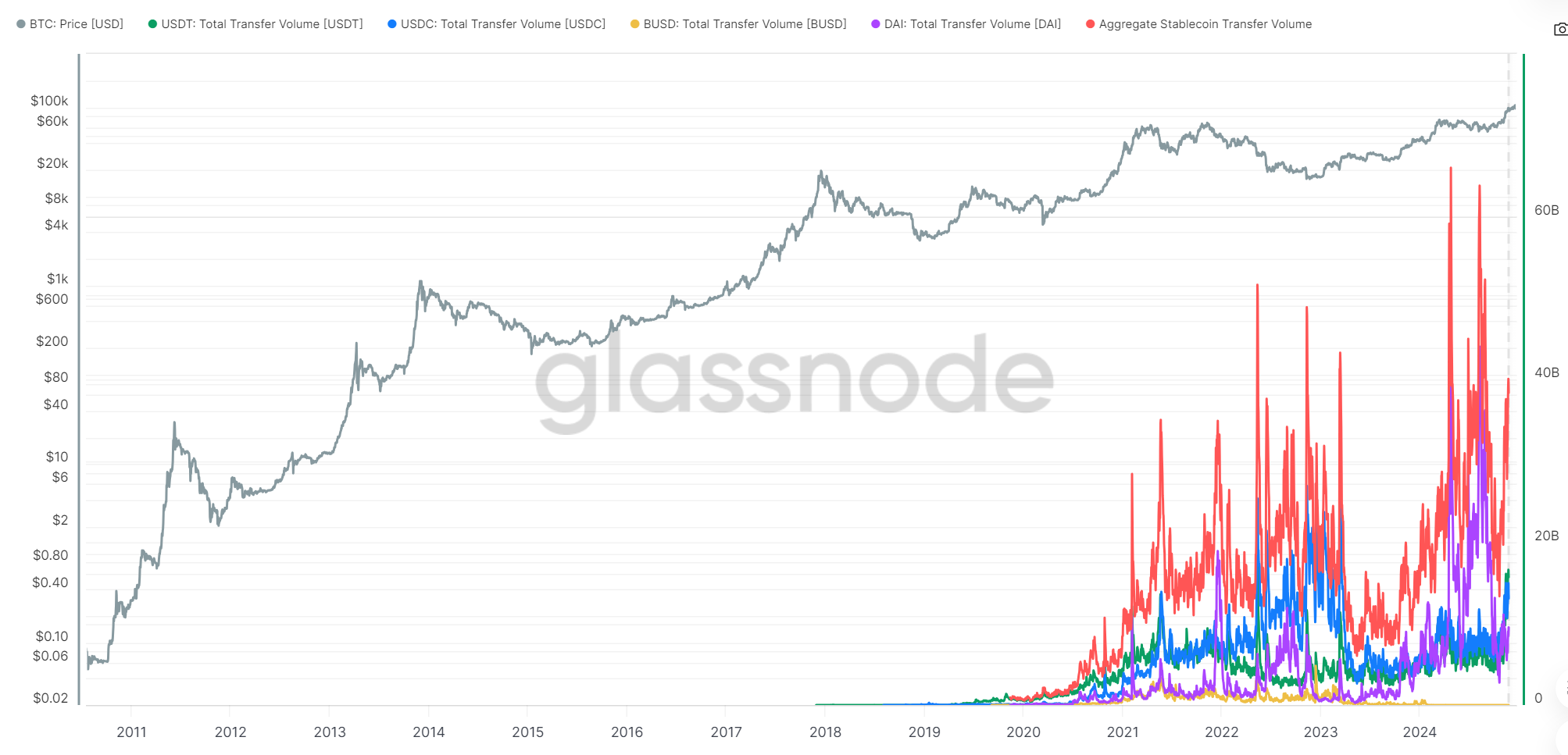
Daily stablecoin trading volume, Source: https://studio.glassnode.com/charts/usd-transfer-volume
Within the stablecoin market, growing demand has led to the emergence of various types: fiat-backed, decentralized collateralized, and algorithmic stablecoins. Fiat-backed stablecoins dominate the market and continue to grow, yet decentralized alternatives keep exploring new paths to meet evolving transaction demands.
Among them, Ethena has emerged as a leader. Its synthetic dollar USDe has secured a place in DeFi through innovative financial engineering. USDe uses advanced delta hedging strategies to maintain its peg to the dollar, setting it apart from traditional stablecoins. Within just over a year, USDe’s issuance has grown steadily, surviving the market downturns of Q2 and Q3, now ranking third behind USDT and USDC, and entering another phase of rapid growth.
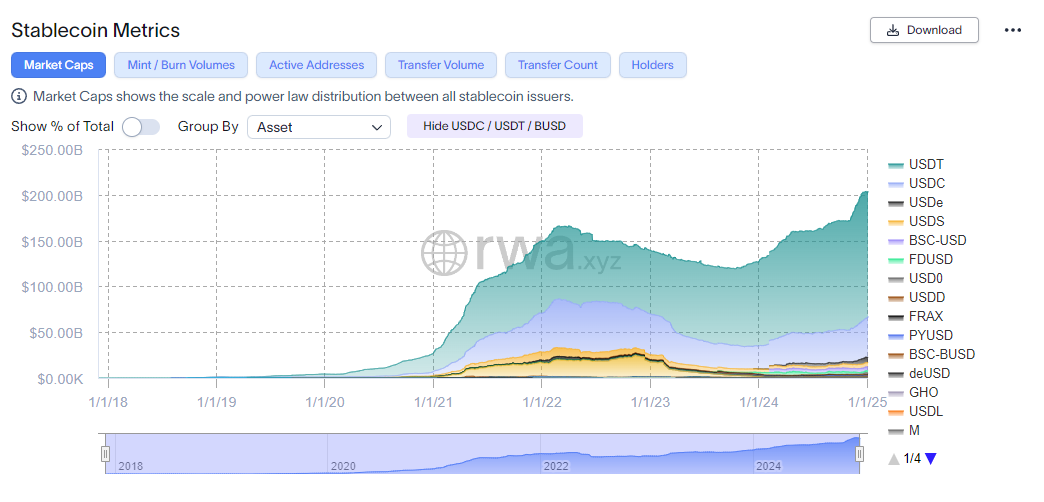
Stablecoin data, Source: https://app.rwa.xyz/stablecoins
Additionally, USDtb, a new institutional-grade stablecoin launched by Ethena in partnership with BlackRock’s BUIDL, operates independently from USDe and offers users a distinct risk profile. Its existence allows USDe to better navigate market challenges—during periods of negative funding rates, Ethena can deactivate USDe’s hedging positions and reallocate assets to USDtb, mitigating risk and enhancing system-wide stability and resilience.
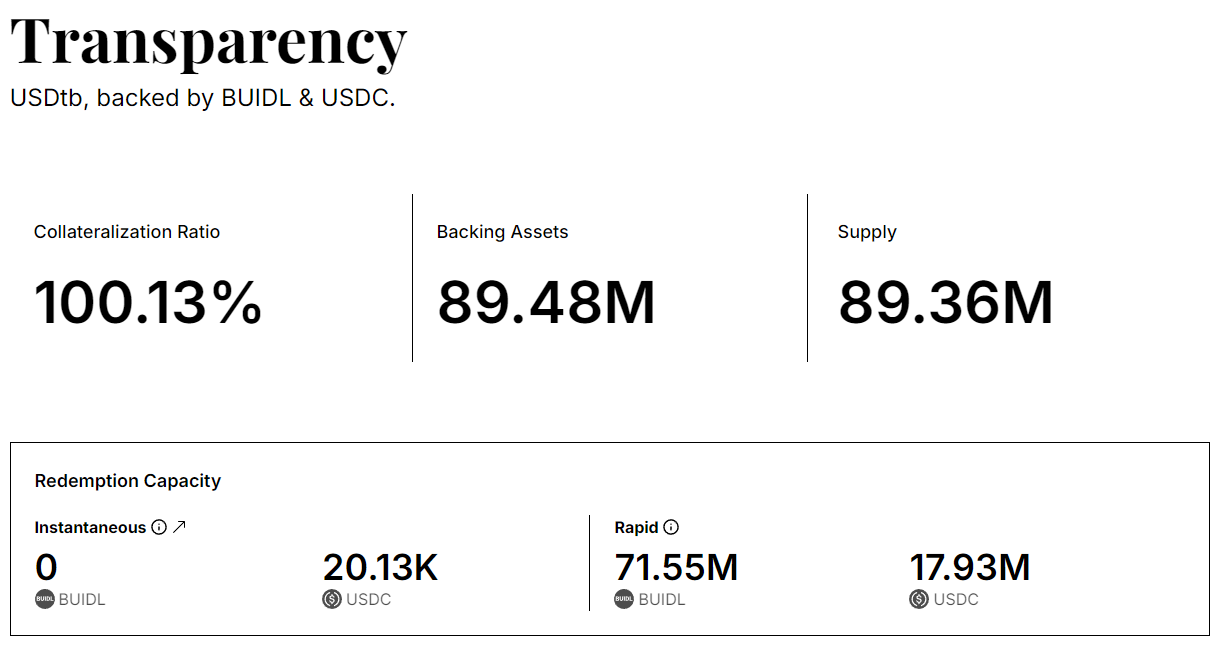
USDtb data, Source: https://usdtb.money/transparency
Besides Ethena, Usual’s USD0 is also noteworthy. Backed by RWA, USD0 deeply integrates the stability of traditional finance with DeFi’s transparency, efficiency, and composability. With a permissionless, compliant framework, USD0 directly returns real-world yields to community users, showcasing the competitiveness of next-gen stablecoins. The emergence of these new stablecoins enriches market diversity and expands user choices and investment opportunities.
ArkStream Capital believes stablecoins play a crucial role in navigating market cycles within the crypto industry. Their growth momentum won’t stall—across both payments and trading, stablecoin metrics will continue rising. Decentralized stablecoins offer clear advantages over traditional ones in transparency, decentralization, and yield, making them worthy of long-term attention and investment. Currently, Ethena shows signs of dominance, while Usual actively seeks market share expansion. Going forward, decentralized stablecoins will not only grow with the broader sector but also hold significant potential to capture market share from traditional centralized stablecoins.
AI Agent
In Q4 2024, the AI Agent sector in crypto saw unprecedented attention and rapid growth. AI Agents have evolved from auxiliary tools in traditional AI models into core drivers of community ecosystems, transcending their initial "tool-like" identity. This quarter, whether it’s ai16z and ELIZA on Solana or VIRTUAL and AIXBT on Base, their market caps multiplied amid rising market enthusiasm. Meanwhile, traditional AI Agent projects underperformed relatively. Amid this transition, the positioning of AI Agents has fundamentally shifted. Previously, crypto-based AI Agents mainly assisted product updates—for example, FET and OLAS focused on integrating blockchain with AI training or building workflows, emotional companionship, etc., akin to humanity’s original intent in creating robots to aid daily life. Now, the model has shifted from “product-centric” to “community-centric,” focusing more on the growth of AI Agents themselves and ecosystem building—akin to creating an autonomous society fully composed of robots.
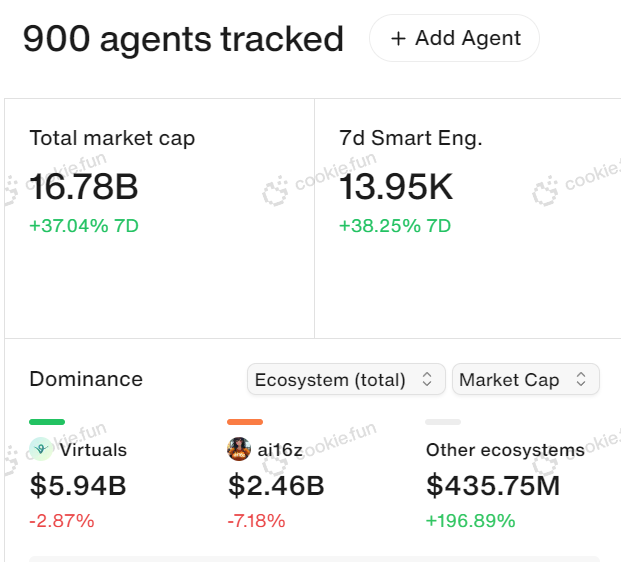
AI Agent market cap and share, Source: https://www.cookie.fun/
In this current “community-centric” paradigm, ai16z and Virtuals stand out as the two most prominent representative projects. According to Cookie.fun, the total market cap of AI Agents has approached $16.7 billion, with a near 37% weekly gain in the final week of Q4 2024. Together, ai16z and Virtuals account for nearly 50% of the AI Agent market. ai16z is essentially a decentralized DAO leveraging AI for investment management. Its core component is ElizaOS, an open-source AI agent framework for creating, deploying, and managing AI agents. Under this framework are two key applications: ai16z, a governance token allowing holders to vote on investment proposals and share fund profits, and degenai, an autonomous trading AI chatbot serving as the AI trader within ai16z, with users able to interact and influence its trading decisions.
Similar to ElizaOS, Virtuals Protocol aims to advance the AI agent field. Originally the gaming guild Path DAO, it strategically rebranded to Virtuals Protocol in 2023. Through its fun.virtuals platform, Virtuals enables users to easily build and deploy their own AI agents, supporting one-click deployment. Virtuals provides a full-stack AI agent creation and token issuance platform akin to an “Apple ecosystem,” forming a closed-loop system. While ai16z emphasizes open-source frameworks and decentralized governance, both differ in technical architecture, tokenomics, and market strategy to serve varied user needs.
The wave originated with GOAT and ACT, two AI Agent memes. Despite lacking utility, they broke the single-tech narrative of traditional AI Agents by merging with meme culture, quickly capturing user and capital attention. Subsequently, market interest shifted from pure memes to infrastructure projects with compelling narratives. Virtuals introduced its unique IAO (Initial Agent Offering) model, combining “AI Agent functionality + Token + Meme” into a powerful new format. Within the Virtuals ecosystem, these AI Agents serve not only as virtual personas and analytical tools but also as cultural memes. In the crypto industry, AI Agents are no longer mere service providers—they’ve become central figures driving user interaction and community evolution.
Currently, the AI Agent market falls into two main categories: “infrastructure layer” projects focused on providing foundational tech and support, and “application layer” projects aiming to deploy AI Agents in real-world use cases to deliver tangible value.
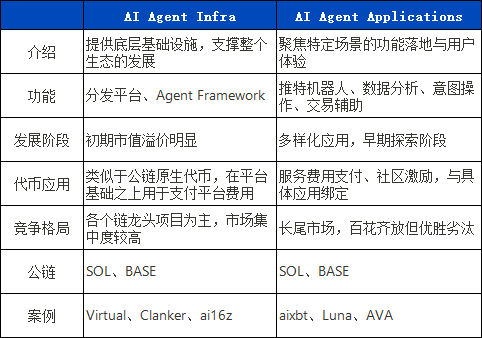
Amid the rapid evolution of AI Agents, their trajectory resembles early blockchain industry booms. Platforms like Virtuals, vvaifu, Zerebro, and frameworks like ElizaOS, ARC, Swarms currently compete similarly to early Layer 1 blockchains. Applying the time machine theory, infrastructure projects for AI Agents—due to their strategic importance—are likely to receive greater attention from mainstream capital in terms of survival duration and market cap, enjoying scarcity premiums compared to application-focused counterparts.
As infrastructure matures and saturates, co-development between infrastructure and applications will become the next phase’s core theme, ushering in a period of deep integration. Unlike traditional project development, AI Agent applications emphasize pre-validating market demand post-Roadmap and TGE, then continuously driving ecosystem innovation via ecological or linked tokens. Their total market cap has multiplied this quarter. As wealth effects emerge, more new projects appear, revealing vast potential across niches—from market analysis and on-chain operations to intent execution. For example, Aixbt’s Twitter bot provides 24/7 user support and real-time market analysis, acting as an AI-powered opinion leader; AVA focuses on social interaction, offering emotional companionship via AI avatars; CGPT integrates trading, market analytics, and NFT generation into a comprehensive AI Agent tool.
ArkStream believes the current sector’s fervor is evident—with FOMO driving capital inflows as participants rush to get involved. This rapid expansion has led to an explosion of new projects, yet none have yet crossed the $10 billion market cap threshold. This stage represents the “early phase” of the Web3 AI Agent sector, characterized by time sensitivity: market participants generally adopt speculative mindsets, rushing to enter the space as quickly as possible.
ArkStream Capital predicts the “second phase” is approaching, where market focus will shift to product quality, triggering a major shakeout—low-quality, opportunistic projects will be swiftly eliminated by mainstream capital. With continued iteration of traditional AI technologies, ArkStream Capital remains optimistic about the sector’s outlook. The current intensity underscores its latent potential, and the first AI Agent projects to surpass $10 billion in market cap are expected to emerge soon, marking important milestones in the industry’s development.
Meme
Over the past three months, Memes have seen significant growth and evolution, particularly in total market cap, trading activity, thematic diversity, and exchange support. From October to early December, meme coin market cap grew substantially, hitting record highs, with trading volume also sharply increasing. The market witnessed new types of meme coins emerge, including AI Agent memes (GOAT, ACT), art-themed BAN linked to Sotheby’s auctions, squirrel PNUT tied to Trump and Elon Musk, and CHILLGUY attracting massive TikTok followings. These new memes injected vitality into the market, boosted on-chain liquidity, and brought in many new investors, contributing to the vibrancy and growth of both the meme and broader crypto sectors.
Compared to emerging memes, traditional ones like DOGE, PEPE, and WIF also performed strongly. Notably, PEPE and WIF successfully listed on Robinhood in November 2024, highlighting North American regulated exchanges’ recognition of memes and further expanding the market influence of these legacy projects.
Looking at meme sector data over the past year, by the end of 2023, only a handful of top 500 market cap memes existed—mainly DOGE, SHIB, BONK, PEPE, FLOKI, and ELON—while most others had low valuations. By the end of 2024, however, the number of top 500 meme coins had grown significantly to 48, accounting for nearly 10%, with a total market cap of about $104.7 billion and 24-hour trading volume reaching $7.4 billion. These figures demonstrate that meme recognition and market consensus are continually breaking new ground.
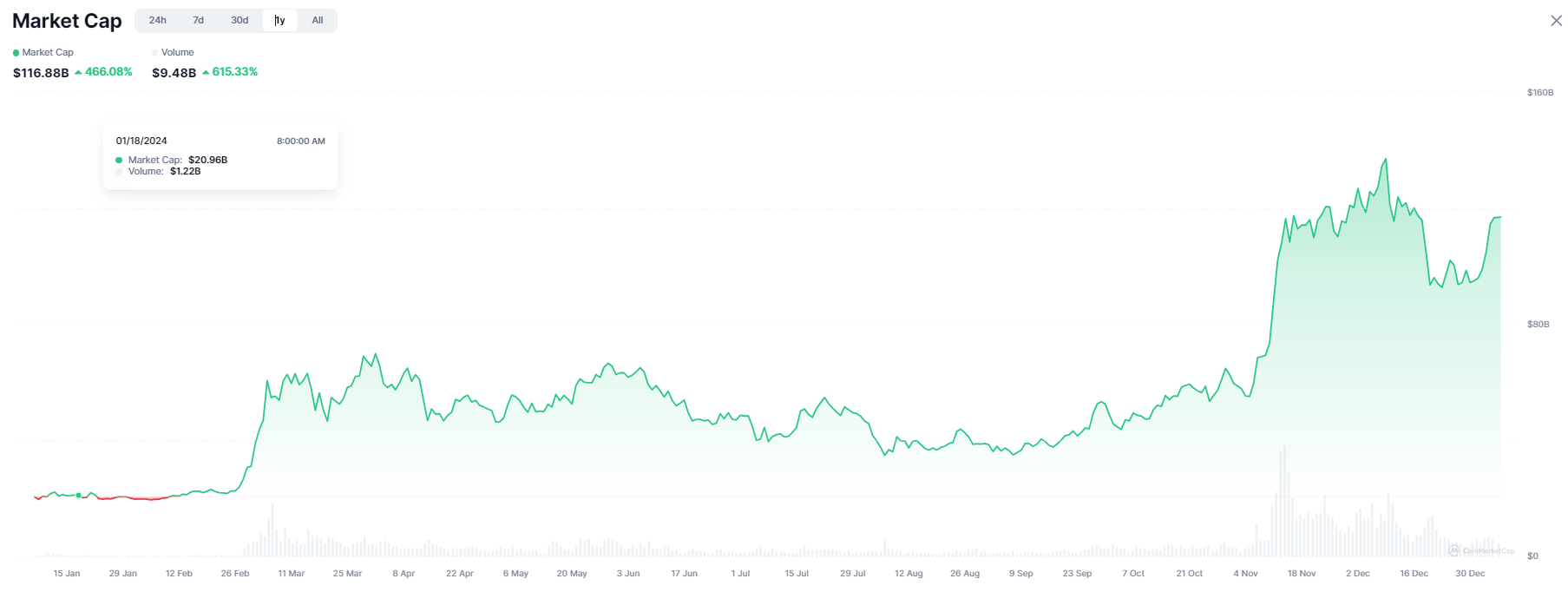
Meme sector market cap, Source: https://coinmarketcap.com/view/memes/
Especially this quarter, memes became the focal point of the crypto market, drawing intense investor attention. As value investment trends returned in November, some capital began flowing out of memes, but newly listed popular memes quickly gained traction on major exchanges like Binance and Upbit due to strong performance and large user bases. Although insufficient follow-up capital caused sharp pullbacks from highs, ArkStream Capital believes such corrections perfectly reflect the economics of attention—meme capital flows respond dramatically to shifts in market focus. Many memes rapidly grow to $100 million or more in market cap within short periods, so experiencing pullbacks and time-based validation is reasonable.
ArStream believes meme prosperity isn't fleeting—they act as bridges connecting Gen Z to Web3, and thanks to their accessibility and inclusivity, they are likely to persist and bring emotional resonance and value to the market. Therefore, ArkStream Capital is actively seeking opportunities to position within the meme sector. Two areas are particularly targeted: first, portal platforms providing token information and trading data, Bot products offering ease of trade and strategy customization, and novel meme launch platforms like Pump Fun—these represent core infrastructure with sustainable revenue streams in the meme space; second, memes are increasingly becoming a vehicle for fair-launch asset distribution, with many fundamentally sound projects adopting meme formats to attract users, embracing organic growth, low initial market caps—a healthier growth model reflecting primary market innovators’ active exploration of memes.
Project Investments

Ethena
Project Introduction
Ethena, an innovator in the DeFi space, is committed to providing multiple stable and scalable crypto-native monetary solutions. Its first stablecoin, USDe, is a crypto-native synthetic dollar whose core innovation lies in maintaining intrinsic value stability through delta hedging—holding spot positions in major crypto assets alongside corresponding short positions. This design does not rely on traditional banking infrastructure or dollar-denominated assets, allowing USDe to match USDC and USDT in stability while significantly improving capital efficiency and yield. The second stablecoin, USDtb, was jointly developed with Securitize, a renowned RWA institution, leveraging BlackRock’s BUIDL to connect dollars, short-term U.S. Treasuries, and repo agreements, creating a digital dollar backed by real-world assets yielding stable returns. USDtb combines high liquidity, low risk, and stable yield, while leveraging Web3 technology for transparent transactions and efficient settlement. Together, USDe and USDtb expand Ethena’s footprint in the stablecoin market, enhancing the overall robustness and credibility of Ethena’s stablecoin solutions through synergistic effects.
Why Invest in Ethena
Ethena’s vision is to reshape the cryptocurrency ecosystem by bridging DeFi, CeFi, and TradFi to foster the next generation of internet finance. Its first stablecoin, USDe, has achieved deep integration across key DeFi areas—including money markets, leveraged collateral in derivatives markets, stablecoin infrastructure, interest rate swap protocols, and spot AMM DEXs. In exchanges, Ethena’s liquidity pools support both existing centralized and decentralized platforms and help emerging exchanges overcome initial liquidity hurdles, establishing itself as a leading provider of depth and OTC liquidity. For TradFi, USDe is highly attractive due to its unique yield—combining native yields from two billion-dollar-scale crypto assets—and its weak negative correlation with traditional financial rates, with underlying assets custodied by TradFi-recognized institutions. USDe offers large investors a convenient way to achieve outsized crypto market returns through a single asset.
The ENA token plays a critical role in Ethena’s ecosystem—as a governance token granting holders voting rights on key decisions such as electing risk committee members and shaping policy direction, and as a staking asset (sENA) offering additional yield. As ENA becomes a voting tool for Ethena’s derivative exchange in the future, its strategic importance in Ethena’s roadmap grows. These functions solidify ENA’s role as the core of the Ethena protocol and are essential for maintaining decentralized governance and incentivizing user participation. In liquidity, ENA performs exceptionally on major exchanges, consistently ranking among the top in trading volume—evidence of Ethena’s market vitality and broad market acceptance.
Through deep partnerships with major exchanges, Ethena implements various hedging strategies to handle unexpected situations in derivative markets, ensuring USDe’s stability and security. Additionally, USDe’s adoption as a trading pair quote currency is gradually taking shape, thanks to Ethena’s efforts in boosting liquidity to mitigate risks. In resources, Ethena collaborates with several top global market makers who provide liquidity and depth, further strengthening USDe’s market adaptability and resilience.
ArkStream Capital believes the stablecoin landscape remains unsettled—while USDT and USDC lead, emerging players can still challenge their dominance. The key is identifying protocols with unique mechanisms, stable pegs, growing market caps, and expanding use cases. Just as DEXs now capture 10% of CEX trading volume, decentralized financial products—thanks to verifiability and convenience—are rapidly claiming market share. By 2025, ArkStream forecasts decentralized stablecoins like Ethena will grow to 10% market share—$20 billion. Moreover, Ethena is poised to become a key financial instrument for implementing Trump’s policies. The rollout of Trump’s agenda will elevate Ethena’s strategic role in America’s economic revival and global financial restructuring, anchoring U.S. domestic and global digital finance systems.

TRex
Project Introduction
TRex aims to build a publisher network within the blockchain industry focused on gaming and entertainment content projects. It guides project teams through high-quality, scalable, and sustainable development, offering support in resource connection, token economics design, strategic consulting, and marketing. Two recently incubated games, Legend of Arcadia and Last Odyssey, have already attracted over 100,000 active users. Legend of Arcadia is a multi-chain mobile card game that captures 7% of total transaction volume on X Layer, while Last Odyssey is an MMOSLG strategy game occupying 1.2% of opBNB’s total transaction volume.
Why Invest in TRex
Backed by the powerful EVG ecosystem, TRex enjoys significant advantages in funding and resources. EVG is one of the most successful Web3 incubation and investment firms in the Asia-Pacific region, with investments and incubations including Celestia, Wormhole, Berachain, Animoca Brands, The Sandbox, Yuga Labs, and Kraken. Additionally, TRex has established a deep partnership with Animoca Brands. The Sandbox, under Animoca, is a metaverse pioneer widely recognized by traditional internet and luxury brands, demonstrating Animoca’s exceptional incubation capabilities. Both EVG and Animoca are richly resourced, strong, and experienced institutions in the Asia-Pacific Web3 space, with team members largely from Hong Kong’s traditional financial capital background. Leveraging these strengths, TRex can deliver high-quality, scalable, and sustainable strategies, offering project teams comprehensive support in resource access, tokenomics, strategic advice, and marketing promotion.
Moreover, ArkStream Capital observes that the trend toward entertainment content applications is becoming increasingly clear—whether it’s Nexon’s Web3 gaming fund, Sony’s planned Layer 1 blockchain, or the ongoing development of games in the Ton ecosystem. From Web2’s *Black Myth: Wukong* to the viral success of Taptap games on blockchain, market recognition and demand for such applications continue to grow. It is foreseeable that more developers and project teams will actively engage in this domain. TRex’s one-stop, customizable publishing and incubation services will help projects develop at lower cost and access better resources, providing strong momentum for their growth.
ArkStream believes TRex, with its outstanding track record and high-caliber team, has earned support from seasoned experts in both Web2 and Web3 gaming and TMT sectors. Its planned publisher network platform and gradually expanding ecosystem make TRex a valuable investment opportunity. As on-chain applications diversify and scale, the TRex network and its platform token are poised to become indispensable components of the GameFi landscape.
Research Reports
ArkStream Capital: Why We Invested in Ethena After Trump’s Victory
https://x.com/ark_stream/status/1872216686428074462
ArkStream Capital: The Meme Craze | A New Battlefield for VCs – Opportunity or Trap?
https://x.com/ark_stream/status/1853743227557556457
ArkStream Capital: How PayFi Unlocks a New Chapter in Crypto Payments
https://x.com/ark_stream/status/1849408148207288620
 TechFlow is a digital media platform dedicated to exploring cutting-edge developments in technology and finance. Covering blockchain, artificial intelligence, fintech, and emerging innovations, TechFlow delivers timely, in-depth analysis and insights to help readers understand and navigate the future of the digital economy.
Website: https://techflowpost.com/
Medium: https://medium.com/@techflowpost
X: https://x.com/techflowpost
Join TechFlow official community to stay tuned
Telegram:https://t.me/TechFlowDaily
X (Twitter):https://x.com/TechFlowPost
X (Twitter) EN:https://x.com/BlockFlow_News
 Arkstream Capital










