Forbes Analyst's Personal Account: Why a Diehard Value Investor Is Betting on Bitcoin?
TechFlow Selected TechFlow Selected
Forbes Analyst's Personal Account: Why a Diehard Value Investor Is Betting on Bitcoin?
The reason is simple: my sons think it's valuable.
 Navigating Web3 tides with focused insights
By Taesik Yoon, Forbes
Translated by Luffy, Foresight News
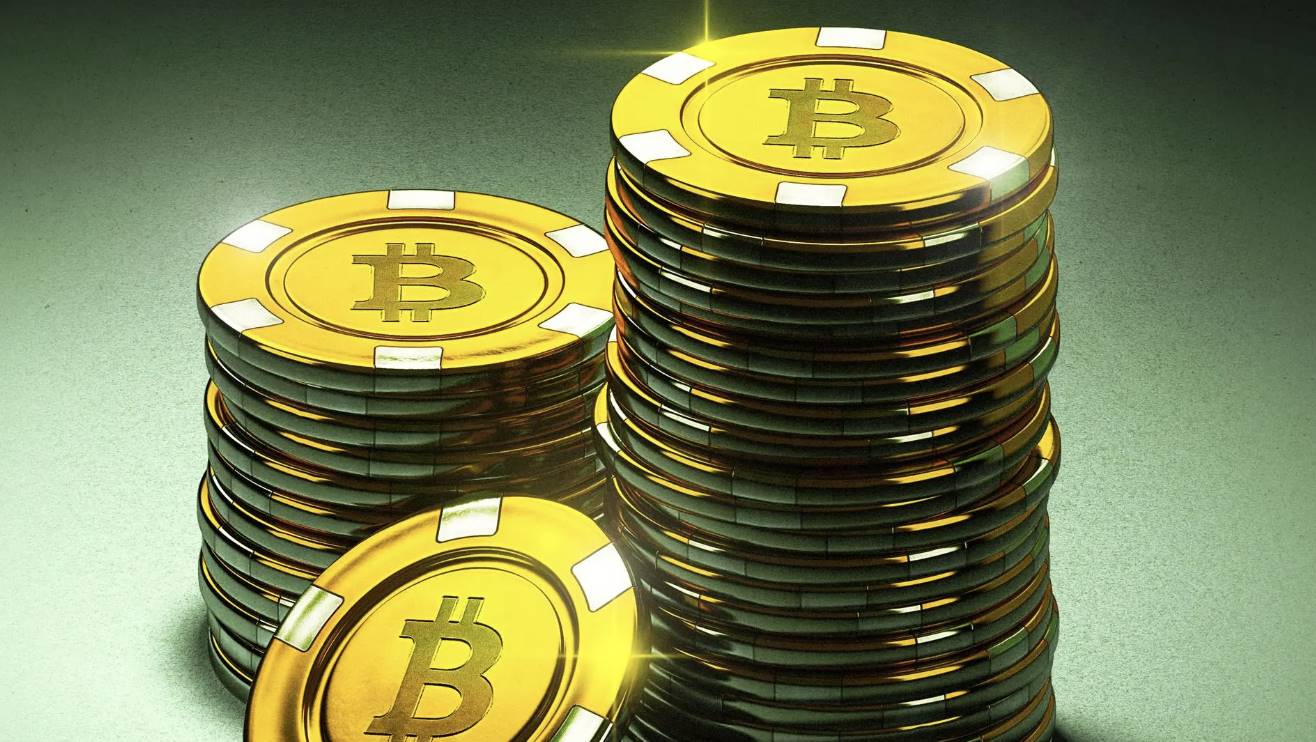
My first trip to Las Vegas remains vivid in my memory. It was just one year after college graduation when my best friend gave me a free plane ticket and invited me for a few days of fun. We stayed at the Hard Rock Hotel & Casino—the party-like atmosphere, smaller and more intimate table games compared to the massive casinos on the Strip, and incredibly generous comps made it a paradise for someone my age.
Even 27 years later, the memories remain sharp. I remember playing blackjack for hours. We started at $10 minimum tables, but an early winning streak quickly led us to increase our bets. In the first two days, I won about $1,700. But on day three, luck turned. By evening, my friend—up a few hundred earlier—ended up losing $750. Frustrated, he decided to head back to the room early.
I was worse off: my $1,700 profit had shrunk to just $300. Unlike my friend, I wasn't ready to quit. Losing that much money left me不甘心 (unwilling to accept defeat), so with my remaining $300, I spotted an empty $100 minimum table and thought, why not give it a try? Lady Luck smiled again—I turned that $300 into $3,000 in under 20 minutes. When I finally went home, I'd won roughly $3,600. For a 23-year-old living in New York City in the late '90s, that was a fortune.
The First Lesson in Stock Investing
I recount this because early experiences often shape one’s worldview. My first Las Vegas trip felt perfect. I gambled recklessly—not only due to incredible luck but also youthful ignorance. Back then, with only $700 in my bank account, I didn’t grasp how reckless it was to bet $100 per hand.
Stock investing was similar. My first exposure came when I began working at Forbes, right at the peak of the dot-com bubble in early 2000. In the six months before I joined, our department recommended stocks like eToys, VerticalNet, and Healtheon—names riding the frenzy around anything internet-related, from new websites to companies enabling internet infrastructure. These three stocks surged 66%, 92%, and 99% respectively in just three months. The biggest winner, Qualcomm, saw its share price explode nearly 2,600% the prior year. That’s not a typo.
I had saved some money and opened my first brokerage account—a terrible timing, as it marked the beginning of the tech stock crash. My first two buys were stocks our department recommended within my first three months: Net Perceptions and Wind River Systems—both now defunct. I don’t even recall what they did. But I do remember holding on as they plummeted with the market, ultimately losing 75%–80% of my investment. It was a painful lesson that taught me I knew nothing about stock investing and shouldn’t have been doing it at all.
Becoming a Value Investor
In the following years, things changed. I pursued the Chartered Financial Analyst (CFA) program, became a stock analyst, and gained experience identifying undervalued stocks across nearly every industry. But the pain of my initial losses never faded. I lost heavily on those early stocks because, like many others, I fell for the hype.
Influenced by that early experience and the value-oriented strategy of the stock-picking service I worked for, I made a conscious effort to avoid market fads. I studied Warren Buffett’s philosophy, read Benjamin Graham and David Dodd’s Security Analysis—still considered the bible of fundamental analysis—and began focusing on buying shares of companies trading far below their intrinsic value based on my research. In short, I became a full-fledged value investor.
This meant seeking companies with strong future cash flow potential, while exercising enough discipline to buy only when prices were deeply discounted. For example, after the 9/11 attacks in 2001 caused a market plunge, our department recommended Amazon at $7.48 per share—I bought some myself. But less than four months later, when we advised subscribers to sell at $12.20, I followed suit. (By the way, those 200 shares I bought would be worth about $880,000 today. Yes, that still stings.)
Still, over time, my wins outnumbered my losses, and I remained reasonably satisfied with my financial position—especially since I hadn’t taken excessive risks. While I regret selling Amazon too early, that same discipline also helped me avoid dozens, perhaps hundreds, of failures like Kozmo.com. Never heard of Kozmo? Exactly.
First Encounter with Cryptocurrency
Given all this, you might be surprised that a few years ago, I began investing in Bitcoin. After all, many would argue Bitcoin is the epitome of speculation—the very thing risk-averse value investors like me should avoid. It produces nothing. It has no earnings.
Yet, this didn’t stop me from dipping my toes in late 2020. I bought 500 shares of Grayscale Bitcoin Trust (GBTC), which at the time was almost the only way to gain Bitcoin exposure via a fund. Since then, I’ve steadily increased my position through additional GBTC purchases, along with stakes in Grayscale’s Ethereum Trust (ETHE) and another Bitcoin ETF—Bitwise Bitcoin ETF (BITB).
One could point out that, given my entry points and the performance of the underlying cryptocurrencies (Bitcoin and Ethereum) both then and now, these investments have done quite well—potentially creating a bias similar to my first gambling win in Vegas. But it hasn’t always been smooth. In fact, during the disastrous 2022, my holdings一度 plunged over 80% from cost. In dollar terms, it was the largest paper loss I’ve ever experienced.
For many, that would’ve been reason enough to abandon ship and never look back. But I did the opposite—I kept buying on the way down. Then I did something I rarely do: I bought on the way up. Take my BITB position: this fund wasn’t launched until earlier this year, after the SEC approved Bitcoin ETFs. I bought BITB in mid-January when Bitcoin traded around $43,000—significantly higher than my last GBTC purchase price of ~$28,000.
Why I Hold Crypto
So why is a self-proclaimed old-school value investor, who’s spent over two decades avoiding hype, increasing exposure to an asset I believe has no intrinsic value? The answer is simple: my sons believe it has value.
During the pandemic-ridden 2020, shortly after my eldest son started first grade, he asked me if I owned Bitcoin. Despite social distancing rules, he’d heard a classmate brag about how his dad made a fortune from Bitcoin and wanted to know if I had any. I told him I didn’t—and dismissed Bitcoin as worthless. Yet, he still wanted to buy some. He was six years old.
That’s when it hit me: Bitcoin had existed longer than both of my sons. It had been present throughout their entire lives. More importantly, to them, it had always held value. This belief has only deepened over time. In fact, my now 10-year-old checks GBTC’s price almost daily. He owns 10 shares, bought with years of saved allowance. To him, he’d rather hold those than cash. And seeing me increasingly invest in Bitcoin has further cemented his belief in its real value—even though he was the spark that ignited my crypto journey.
My generation and the one before likely hold the most wealth today. I believe this is one major reason gold prices surged to record highs last year. We see gold as a safe-haven asset—a store of value and inflation hedge—because that’s the role it’s played throughout our lives. But the gold my son knows is the necklace around his neck. The gold chain he wears now was bought by his grandfather about 40 years ago, for the same reason my son holds Bitcoin: because, to him, gold has always had value and always will. Sadly, my father is gone. When our generation passes, it will be our children who decide what has value—and what doesn’t.
Some may argue it’s unfair to compare Bitcoin to gold, as gold is a physical asset with industrial applications in technology and other fields. But truthfully, only about 7% of mined gold goes into industrial use. The rest is used for jewelry, coins, and bars. I believe gold’s appeal in jewelry stems not just from its beauty, but from its perceived scarcity—precisely why it’s widely accepted as a store of value. More importantly, in my lifetime, gold’s value has never fallen below its intrinsic worth.
The same applies to my sons and Bitcoin—we’re all products of our time. I grew up in a largely analog world. I associate value with tangible things. Music and movies came on cassette tapes, VHS, CDs, DVDs. Heck, I’m old enough to remember 8-track tapes and Betamax. My sons have no idea what those are. To them, streaming from the cloud feels as natural as renting VHS tapes did to me and my friends. They are digital natives—everything comes from nothing. If the people most likely to determine Bitcoin’s future value don’t need (or even want) it to have physical form, then Bitcoin doesn’t need one either.
Prepare for Total Loss
That said, the cryptocurrency market remains highly uncertain and risky. Most importantly, the number of crypto assets needs to shrink by about 99.9%. Compare this to gold: the periodic table has 94 metals, but only three are widely recognized and accepted as stores of value: gold, silver, and platinum. Meanwhile, Coinbase lists about 270 cryptocurrencies, and globally there are nearly 18,000!
All my crypto holdings are concentrated in Bitcoin, with only a small allocation to Ethereum. In my view, these two have achieved the greatest legitimacy in the public eye and are deeply embedded in people's worldviews—they will effectively become the gold and silver of today’s global digital economy. I suspect most other cryptocurrencies will end up like Kozmo.com.
However, investing in crypto requires preparing for the possibility that the entire market could go to zero. That’s why, if you choose to invest, it should only be with money you can afford to lose. I’m no longer the naive young man in his early twenties, unaware of the consequences of foolish financial decisions, naively believing the internet boom would make me rich overnight. I fully understand the risks I’m taking. But I also know that the vast majority of my family’s investment portfolio remains in value-oriented stocks.
Adoption Is Key
Of course, being accepted as a store of value or medium of exchange—and thus retaining value—is one thing. For Bitcoin to be worth buying at current prices, there must be strong reason to believe its price will keep rising.
This largely depends on supply and demand. Supply is known and favorable: Bitcoin’s total potential supply is capped at 21 million (over 19 million already mined), and the rate of new supply slows with each halving event.
This means price growth hinges on rising demand. The good news is we keep seeing positive market dynamics driving adoption and demand upward. The most significant recent development was the approval and launch of multiple Bitcoin ETFs in January 2024. In my view, this was the main catalyst behind Bitcoin’s 66% surge in 2024, leading up to the U.S. election on November 5.
Since Election Day, Bitcoin’s remarkable rally has reinforced this view. Its price recently broke $100,000 for the first time—driven by market expectations that President-elect Donald Trump, a strong crypto supporter, will implement policies that further boost demand for Bitcoin and other tokens.
Therefore, adoption is critical. Most importantly, buying Bitcoin must be based on the belief that demand will continue to grow. For some, this belief stems from Bitcoin’s key advantages—its decentralized blockchain technology enabling fast, accurate, low-cost or even zero-cost global money transfers. For me, the belief comes not from today’s users, but from those most likely to define Bitcoin’s value in the future. Whatever their motivations, if this drives growing demand, it will create an increasingly unbalanced supply-demand equation. Some Bitcoin bulls even predict the price could reach $1 million by 2030.
That would be two years before my eldest son graduates high school. Why does this matter? Because I’m not investing in Bitcoin to get rich quick. It’s part of a financial plan aimed at funding my two sons’ college education. Assuming they both attend traditional four-year universities without financial aid, paying for their higher education will be the largest expense my wife and I face before retirement—far exceeding our next biggest liability, our remaining mortgage.
I know some readers will think my rationale for buying Bitcoin is utterly absurd. It certainly contradicts the principles I’ve long upheld as a value investor—there’s no denying that. If I’m wrong, it will be the most expensive lesson my son and I have ever faced. But it won’t bankrupt me, because my crypto holdings represent only a small portion of our overall investment portfolio—even a total loss wouldn’t cause serious damage. Nor should it jeopardize our ability to pay for our children’s education, as, like many families, we’ve also been making more traditional investments toward that goal.
Yet, my crypto position isn’t trivial either. If I’m right, it could significantly ease what would otherwise be a heavy financial burden. I may no longer be the carefree gambler I once was. But even for an old-school value investor like me, such potentially outsized returns are hard to resist.
Join TechFlow official community to stay tuned
Telegram:https://t.me/TechFlowDaily
X (Twitter):https://x.com/TechFlowPost
X (Twitter) EN:https://x.com/BlockFlow_News
 Forbes