Unlocking a New Era of Cryptography: Outlook on Industry Events in 2025
TechFlow Selected TechFlow Selected
Unlocking a New Era of Cryptography: Outlook on Industry Events in 2025
These major events and trends will collectively drive market standardization, technological innovation, and mainstream adoption, accelerating the deep integration of the crypto industry with the global financial system.
 Navigating Web3 tides with focused insights
Author: Lei, Golden Finance
2025 is widely regarded as a pivotal year for the maturation and institutionalization of the crypto industry. A series of major events and technological breakthroughs will propel the market into a new phase while exerting profound influence on the global financial system. Below are eight key crypto industry developments to watch in 2025, along with their background and implications.
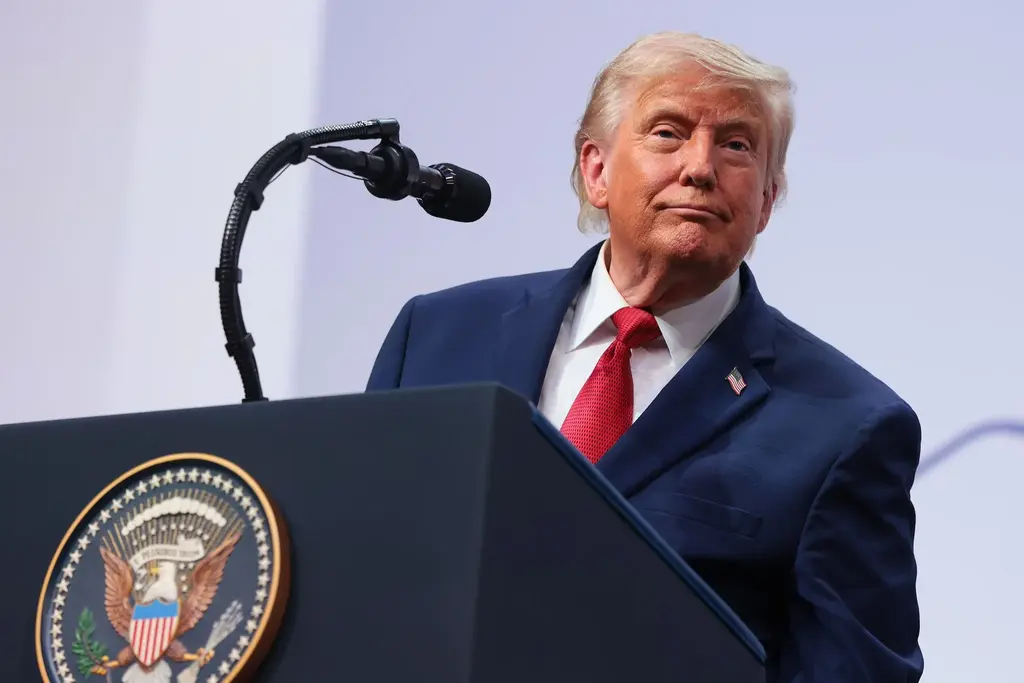
1. Trump's New Administration Takes Office: A Turning Point for Crypto Regulation
The second term of Donald Trump is expected to bring a new direction to U.S. financial regulation, particularly in policy-making at the Commodity Futures Trading Commission (CFTC) and the Securities and Exchange Commission (SEC). The incoming leadership may adopt a more open and flexible regulatory stance to foster market growth.
Background
1. CFTC Advancements
-
Expanded oversight of commodity-class crypto assets: The CFTC may classify additional mainstream cryptocurrencies such as Solana and Polygon as commodities, clarifying their regulatory framework.
-
Expansion of crypto derivatives markets: The CFTC could accelerate approvals for more crypto futures and options products, providing institutional investors with broader hedging tools.
-
Global cooperation: Strengthened collaboration with international regulators may promote compliance and standardization in cross-border transactions.
2. SEC Shifts
-
Expansion of spot ETFs: Following the approval of Bitcoin and Ethereum spot ETFs, ETFs for other major assets like Solana and Hedera may be greenlit, further driving capital inflows.
-
Stablecoin regulatory framework implementation: Stablecoins may be classified under a "payment instrument" framework, facilitating integration with mainstream payment and settlement systems.
3. Joint CFTC-SEC Initiatives
-
Introduction of unified crypto asset classification standards.
-
Facilitation of smoother institutional capital entry into crypto markets.
Impact
-
Increased market transparency: Clearer regulatory frameworks will reduce uncertainty and attract substantial institutional capital.
-
Industry consolidation: Stricter compliance requirements may phase out smaller or less compliant projects, steering the market toward greater centralization and maturity.
2. Ethereum Dencun Upgrade and Pectra Innovations
In 2025, Ethereum is set to undergo several technical upgrades, including the full implementation of Danksharding and the "Pectra" upgrade. These enhancements will significantly improve scalability and user experience.
Background
-
Account abstraction (EIP-7702): Simplifies user interactions and supports complex decentralized applications (DApps).
-
Zero-knowledge proof support (EIP-2537): Enhances privacy and scalability.
-
Increased validator staking limits (EIP-7251): Improves network efficiency and facilitates institutional participation in staking.
-
Data availability sampling (PeerDAS): Reduces Layer-2 transaction costs and accelerates ecosystem expansion.
Impact
-
Attracts more developers and users to the Ethereum ecosystem.
-
Accelerates growth in decentralized finance (DeFi) and NFT markets.
3. Global Stablecoin Regulatory Framework Implementation
In 2025, the G20 is expected to finalize a global regulatory framework for stablecoins, which will have significant implications for issuance, reserve requirements, and cross-border payments.
Background
-
Funding trends: In 2024, stablecoin-related funding reached $1.86 billion, including Stripe’s $1.1 billion acquisition of Bridge Network.
-
Traditional institutions entering the space: PayPal’s PYUSD has surpassed $1 billion in market cap, accelerating the convergence of stablecoin payments with traditional systems.
-
Regional regulations: The EU’s MiCA regulations and Hong Kong’s stablecoin sandbox initiative are scheduled for full implementation in 2025.
Impact
Accelerated adoption of international payments: Stablecoins will play an increasingly important role in high-inflation regions and global trade.
Market expansion: The total market cap of stablecoins is projected to exceed $400 billion, making it one of the fastest-growing sectors in crypto.
4. Deep Integration of AI and Blockchain
The convergence of artificial intelligence (AI) and blockchain is driving innovation, particularly in areas such as AI wallets, decentralized AI agents, and AI training networks. In 2025, this integration will spawn new technologies and mainstream applications.
Background
1. Decentralized Autonomous Chatbots (DACs): Blockchain-based AI chatbots capable of autonomously managing assets and executing complex tasks.
2. AI Wallets: AI agents enabling autonomous investment and payment functions.
3. Identity verification and privacy protection: Combined use of AI and blockchain ensures authenticity and data privacy in digital interactions.
4. AI Agents: Virtual, as a next-generation AI and blockchain protocol, enables rapid deployment of autonomous agents and plug-and-play infrastructure, advancing AI applications in the metaverse and Web3, attracting strong community engagement and investment. Eliza, the world’s first chatbot, laid the theoretical foundation for human-computer interaction and provided critical historical insights that continue to shape modern AI agent logic and functionality.
5. Tech giants like Google and Apple launch AI agent products. Decentralized AI networks such as Fetch.ai become market focal points.
Impact
-
The fusion of AI and blockchain will lower technical barriers in Web3, enhance user privacy and security, and drive integration between virtual and real-world economies. By 2025, this synergy is expected to yield more mainstream applications and technological breakthroughs, guiding the industry toward maturity.
5. Global Expansion of Bitcoin and Ethereum ETFs
The approval of spot Bitcoin and Ethereum ETFs brought significant capital inflows and mainstream validation to the crypto market. In 2025, more digital assets may enter the ETF landscape.
Background
-
Capital inflows: As of December 2024, Bitcoin ETFs managed over $100 billion in assets under management (AUM).
-
Expansion to other assets: Multiple firms—including Bitwise, VanEck, 21Shares, and Canary Capital—have filed applications for Solana ETFs, mostly submitted in November 2024, with final decision deadlines expected by early August 2025. Additionally, Canary Capital and Bitwise have submitted applications to the SEC for spot XRP ETFs.
Impact
-
Accelerated mainstream adoption: Wider ETF availability will enhance market liquidity and transparency.
-
Greater institutional involvement: Traditional financial players will deploy capital at scale into crypto markets.
6. Breakthroughs in Real-World Asset (RWA) Tokenization
RWA tokenization achieved notable success in 2024, and the market is poised for further expansion in 2025.
Background
-
Total value locked (TVL) in 2024: The RWA market reached $60 billion in value.
-
Leading projects: Ondo Finance, Maple Finance, and Centrifuge are leading efforts to bring real-world assets on-chain.
-
Stablecoin market cap: As of March 2024, stablecoins—the largest RWA segment—surpassed $1.5 trillion in market value.
-
Tokenized financial products: Institutions such as BlackRock, Franklin Templeton, and Ondo Finance have launched proprietary tokenized financial instruments.
Impact
-
Market size expansion: RWA TVL is expected to surpass $200 billion.
-
Broadened asset classes: Tokenization of equities, real estate, and commodities will accelerate.
7. NFT Revival
NFTs (non-fungible tokens) are evolving from digital collectibles and speculative instruments into practical on-chain tools. In 2025, advances in blockchain technology and the expanding Web3 ecosystem will unlock broader real-world utility for NFTs.
Background
-
Utility as the core driver: NFTs are moving beyond art and collectibles to serve functional roles such as on-chain identity (DID), in-game assets, membership passes, and consumer rewards.
-
Emerging markets and cross-industry collaborations: Projects like Sofamon integrate NFTs with emoji markets to develop economic value in digital identities and wearable NFTs.
-
Technical and industry support: In 2024, NFTs demonstrated greater technical flexibility, being used to tag, transfer, and evaluate both digital and physical assets.
Impact
-
Maturity of the Web3 ecosystem: The functional evolution of NFTs injects new vitality into Web3 through identity management, membership rights, and cross-sector innovations.
-
Reinvention of brand-consumer relationships: The entry of legacy brands like IWC indicates that NFTs have become essential tools for redefining user experience and brand loyalty.
-
Intellectual property protection and monetization: Projects like Story Protocol demonstrate how NFTs can protect IP, combat counterfeiting, and empower creators.
-
Integration of on-chain and off-chain economies: Through tokenization and valuation capabilities, NFTs strengthen the link between crypto and traditional economies, enhancing transparency and liquidity in capital markets.
-
Active and regulated investment markets: By 2025, the NFT market will become more standardized, transitioning from speculative instruments to asset classes with long-term value foundations.
8. DeFi 2.0: Enhanced Capital Efficiency and Compliance
In 2025, DeFi protocols will evolve through improved capital efficiency, on-chain credit systems, and integration of RWAs.
Background
-
DeFi protocols made significant strides in capital efficiency during 2024 by optimizing fund utilization. Traditional platforms like Aave and Compound rely on high collateral ratios, resulting in inefficient capital use. Emerging models now employ Protocol-Owned Liquidity (POL), where protocols hold liquidity pool assets or implement locking mechanisms to reduce reliance on external capital. For example, Balancer and Curve’s “liquidity lock-up rewards” have greatly enhanced liquidity stability.
-
The introduction of on-chain credit was a key trend in 2024, using users’ on-chain behavior (e.g., transaction and repayment history) to assess creditworthiness, thereby reducing collateral requirements and unlocking liquidity. Credit scoring protocols like Arcx and Spectral are already integrated into multiple lending platforms, while major protocols such as Aave and Maple Finance are testing low- or zero-collateral lending models, opening new pathways for capital release in DeFi.
-
Integration of real-world assets (RWA) emerged as another highlight in 2024, improving capital efficiency by tokenizing bonds, real estate, and receivables. For instance, MakerDAO added U.S. Treasuries and corporate bonds as collateral, increasing Dai supply by over 20%. Ondo Finance, focused on tokenizing U.S. Treasuries, achieved over $600 million in TVL.
-
Hyperliquid’s innovative token standards HIP-1 and HIP-2 enhance token utility and liquidity. HIP-1 allows users to create fungible tokens directly linked to on-chain spot order books, transforming tokens into specialized financial instruments. Compared to ERC-20, HIP-1 ensures instant tradability and high performance, designed specifically for financial assets.
Impact
-
Improved capital efficiency: POL and dynamic interest rate models will attract more capital, pushing total DeFi TVL past $300 billion in 2025.
-
On-chain credit reshapes lending: Widespread adoption of credit scoring will lower collateral barriers, doubling low-collateral lending volumes and drawing in more users and capital.
-
RWA tokenization expands available asset classes.
-
Compliance and institutional adoption accelerate: The emergence of regulatory frameworks will draw institutional capital, fostering diversified growth and deeper integration with traditional finance.
Summary
2025 will mark a year of maturation and diversification for the crypto industry. These pivotal events and trends will collectively advance market standardization, technological innovation, and mainstream adoption, drawing in more traditional institutions and retail users, and accelerating the deep integration of crypto with the global financial system.
Join TechFlow official community to stay tuned
Telegram:https://t.me/TechFlowDaily
X (Twitter):https://x.com/TechFlowPost
X (Twitter) EN:https://x.com/BlockFlow_News