








Sonic Mainnet Launch: Can Performance Narrative, Token Swap, and Airdrop Replicate Fantom's Heyday?
TechFlow Selected TechFlow Selected
Sonic Mainnet Launch: Can Performance Narrative, Token Swap, and Airdrop Replicate Fantom's Heyday?
From former明星 public blockchain Fantom to today's Sonic Labs, 2024 has been a year of sweeping changes on this Layer1 chain.
 Navigating Web3 tides with focused insights
Author: Frank, PANews
From the once-starred Layer1 chain Fantom to today's Sonic Labs, 2024 has been a year of sweeping transformation for this blockchain ecosystem: foundation rebranding, mainnet upgrade, token swap. Fantom is attempting a "second startup" through a series of bold moves. However, with Total Value Locked (TVL) having fallen below $100 million, ongoing controversies around token inflation, and lingering shadows over cross-chain security, Sonic still faces significant skepticism and challenges. Can its promised high performance deliver? Can the token swap and airdrop revive its ecosystem?
Telling a Performance Story: Returning to Market with Sub-Second Speed
On December 18, 2024, the Fantom Foundation officially rebranded as Sonic Labs and announced the launch of the Sonic mainnet. As a new public chain known for sub-second transaction speeds, performance naturally became Fantom’s core technical narrative. Just three days later, on December 21, official data showed that one million blocks had already been produced on the Sonic network.
So what’s the secret behind this speed? According to official documentation, Sonic has deeply optimized both the consensus and storage layers, introducing technologies such as live-pruning, accelerated node synchronization, and database瘦身 ("database slimming"), enabling nodes to confirm and record transactions with significantly reduced overhead. The team claims that compared to the legacy Opera chain, node sync speed has improved tenfold, while large-scale RPC node costs can be reduced by up to 96%, laying the groundwork for a truly high-performance network.
It’s worth noting that while high TPS is no longer novel in the competitive public chain landscape, it remains one of the key metrics for attracting users and developers. Fast, seamless interaction lowers the barrier to blockchain adoption and enables complex smart contracts, high-frequency trading, and metaverse gaming applications.
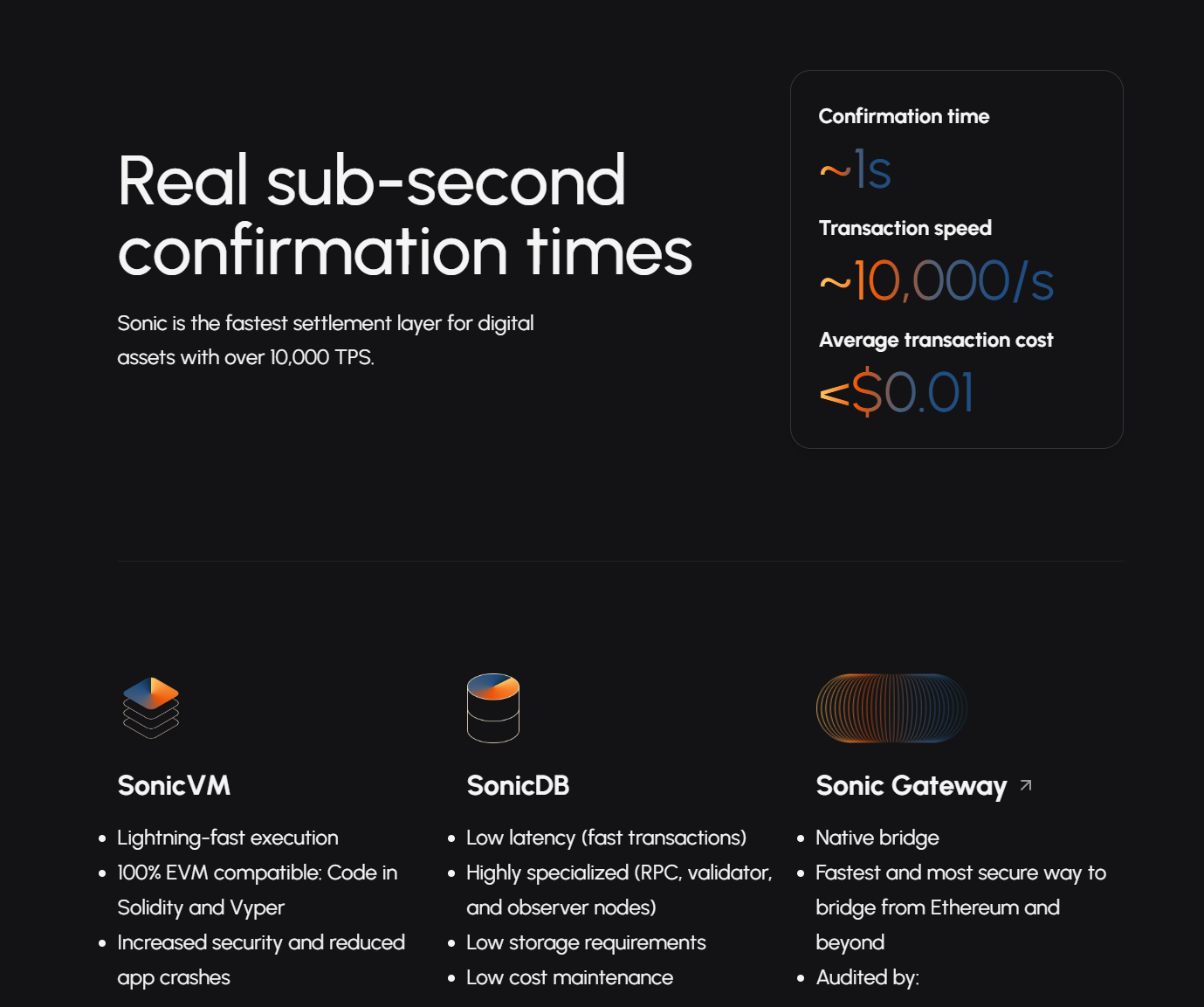
Beyond raw performance, Sonic states full EVM compatibility and support for mainstream smart contract languages like Solidity and Vyper. While “custom VM vs. EVM compatibility” was once a dividing line among new chains, Sonic chose the latter path. This decision lowers the barrier for developer migration—any smart contract originally written for Ethereum or other EVM-compatible chains can be deployed on Sonic with minimal changes, saving substantial adaptation effort.
In a fiercely competitive public chain market, abandoning EVM typically means starting from scratch in cultivating developers and users. Clearly, Sonic aims to leverage superior performance while seamlessly inheriting Ethereum’s vast ecosystem, allowing projects to deploy quickly. According to official Q&A sessions, the team did consider alternative approaches but ultimately concluded that EVM offers the greatest common denominator, helping rapidly accumulate apps and users during early stages.
Additionally, given Fantom’s past troubles with Multichain-related cross-chain failures, Sonic’s cross-chain strategy is under intense scrutiny. The technical documentation highlights the Sonic Gateway as a key component and details its security mechanisms. Sonic Gateway uses validators running clients on both Sonic and Ethereum, featuring a decentralized, tamper-proof “Fail-Safe” protection mechanism. This Fail-Safe design is particularly notable: if the bridge fails to report a "heartbeat" within 14 days, original assets are automatically unlocked on the Ethereum side, safeguarding user funds. Cross-chain transfers are batched by default every 10 minutes (ETH→Sonic) and every hour (Sonic→ETH), though instant triggering is available via fee payment. Sonic’s own validator network operates the gateway by running clients on both chains, ensuring the Sonic Gateway is as decentralized as the Sonic chain itself, eliminating risks of centralized manipulation.
Overall, Sonic’s major upgrades aim to attract a new wave of developers and capital through specs like multi-thousand TPS, sub-second finality, and EVM compatibility—reintroducing this veteran public chain into the market spotlight with renewed identity and performance.
Tokenomics: One Hand Inflates, the Other Burns
In reality, the most discussed topic within the community revolves around Sonic’s new token economics. On one hand, the 1:1 FTM-to-S conversion appears to simply mirror existing holdings. On the other, the planned six-month airdrop—effectively an additional 6% supply increase (approximately 190 million tokens)—has been criticized as dilutive to token value.
At launch, Sonic set an initial total supply of 3.175 billion S tokens, identical to FTM, ensuring existing FTM holders could receive S at a 1:1 ratio. However, closer inspection reveals that inflation may only be part of the picture—Sonic’s tokenomics also include several balancing mechanisms aimed at controlling total supply.
According to official documents, starting six months after mainnet launch, an annual 1.5% issuance (about 47.625 million S) will continue for six years, allocated to network operations, marketing, and DeFi promotion. Crucially, any unspent portion of this allocation in a given year will be fully burned, ensuring these newly issued tokens are used solely for actual development rather than hoarded by the foundation.
For the first four years, the 3.5% annual validator reward on Sonic Mainnet will primarily come from unused FTM “block reward” allocations from the Opera chain, avoiding excessive minting of new S tokens during the critical early phase and preventing恶性 inflation. After four years, new token emissions will resume at a rate of 1.75% annually to fund block rewards.
To counterbalance inflationary pressures from these emissions, Sonic has implemented three burning mechanisms:
-
Fee Monetization Burn: If a DApp does not participate in FeeM, 50% of gas fees generated by user activity on that app are directly burned. This effectively imposes a higher “deflationary tax” on non-cooperative apps, incentivizing DApps to join the FeeM revenue-sharing program.
-
Airdrop Burn: 75% of airdropped tokens require a 270-day vesting period. Users who opt for early unlocking forfeit a portion of their airdrop, which is then permanently burned—reducing circulating supply.
-
Ongoing Funding Burn: The annual 1.5% emission for network development—if not fully utilized in a given year—the remainder is 100% destroyed. This prevents foundation accumulation and limits long-term token concentration among insiders.
Overall, Sonic attempts to balance controlled inflation to fund ecosystem growth with multiple deflationary burns to curb inflation. The most notable is the burn mechanism under FeeM, which ties directly to DApp participation and transaction volume. The fewer apps joining FeeM, the greater the deflationary pressure; conversely, more FeeM participants mean less burn but increased revenue sharing for developers—creating a dynamic equilibrium between profit distribution and deflation.
TVL Down to Just 1% of Peak: Can Cashback and Airdrops Reclaim DeFi Momentum?
The Fantom team enjoyed prominence during the 2021–2022 bull run, but over the past year, on-chain performance has declined sharply. Currently, Fantom’s TVL stands at around $90 million, ranking 49th among DeFi public chains. At its peak, Fantom’s TVL reached approximately $7 billion—meaning current levels represent just about 1% of former highs.

Possibly aiming to revitalize its DeFi ecosystem, Sonic introduced the Fee Monetization (FeeM) mechanism, promising to return up to 90% of network gas fees to project teams. This allows projects to generate sustainable income based on actual usage without heavy reliance on external funding—an approach inspired by Web2 platforms’ traffic-based revenue sharing, intended to attract and retain more DeFi, NFT, and GameFi developers.
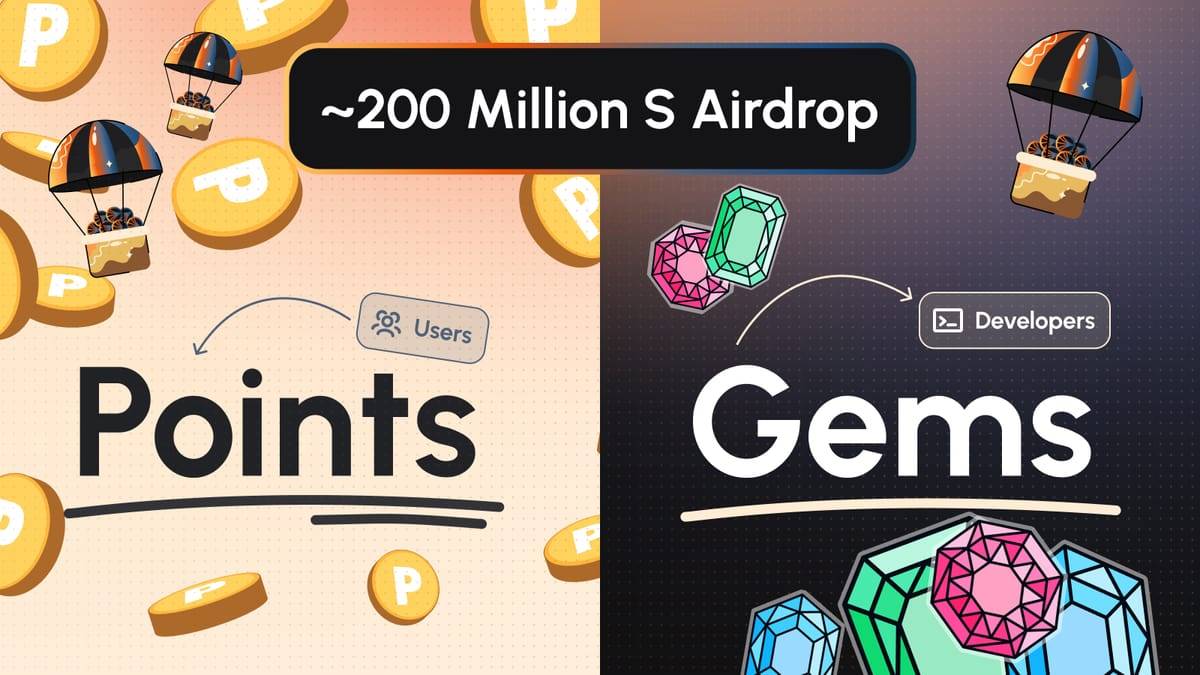
In addition, the team established a 200 million S token airdrop pool with two incentive programs: Sonic Points, encouraging regular users to actively interact with Sonic, hold tokens, or demonstrate historical activity on Opera; and Sonic Gems, targeting developers to build engaging, high-utility DApps on Sonic. These airdropped tokens incorporate mechanisms such as linear vesting, NFT locking, and early-unlock penalties with associated burns, seeking balance between immediate incentives and long-term user retention.
Mainnet launch, the milestone of 1 million blocks, and announcements of upcoming cross-chain bridges have temporarily boosted Sonic’s visibility. But the reality remains: the ecosystem is far from its former glory. Today’s market, crowded with competitive Layer2s, Solana, Aptos, Sui, and others, has entered a multi-chain era of diverse options. High TPS alone is no longer enough. Without launching one or two breakout “killer apps,” Sonic may struggle to compete with leading chains.
Still, Sonic has secured support from some industry-leading projects. In December, the Aave community proposed deploying Aave v3 on Sonic, and Uniswap announced it had completed deployment on the chain. Moreover, Sonic inherits a base of 333 staking protocols previously built on Fantom—an advantage over completely new chains.
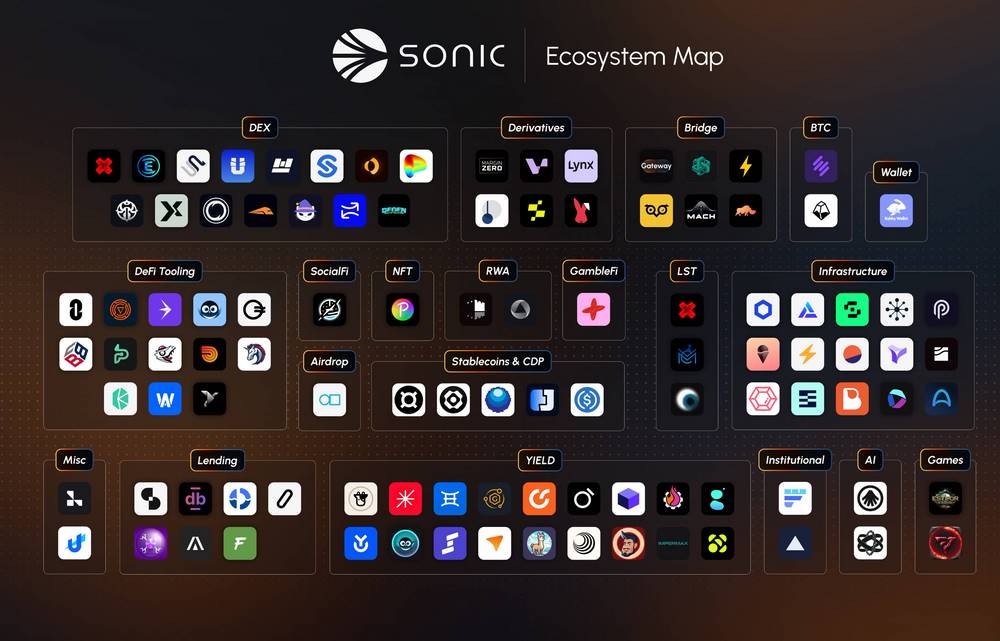
Can high performance and generous incentives bring back capital and developers? The answer likely depends on whether Sonic can deliver convincing results in 2025 across real-world application adoption, governance transparency, and cross-chain security. If all goes well, Sonic might reclaim the luster Fantom once held. But if it remains confined to hype, unable to resolve internal tensions or address security concerns, this “second startup” could fade quietly into obscurity amid the fierce multi-chain competition.
Join TechFlow official community to stay tuned
Telegram:https://t.me/TechFlowDaily
X (Twitter):https://x.com/TechFlowPost
X (Twitter) EN:https://x.com/BlockFlow_News
 PANews






