sBTC Complete Guide | Analyzing the sBTC Ecosystem from Mechanisms, Yields, Use Cases, and More
TechFlow Selected TechFlow Selected
sBTC Complete Guide | Analyzing the sBTC Ecosystem from Mechanisms, Yields, Use Cases, and More
By providing a channel to bring 2 trillion BTC of liquidity on-chain, sBTC has the potential to fully activate BTCFi.
 Navigating Web3 tides with focused insights
By Maggie
In a sense, Bitcoin—the $2.1 trillion asset (as of December 18, 2024, per latest CoinGecko data)—is the largest "sleeping capital pool" in the crypto world.
Unfortunately, most of the time it neither generates returns for holders nor injects vitality into on-chain financial ecosystems. Although numerous attempts have been made since DeFi Summer 2020 to unlock Bitcoin's liquidity, many have simply reinvented the wheel, attracting only limited BTC inflows and failing to truly catalyze the BTCFi market.
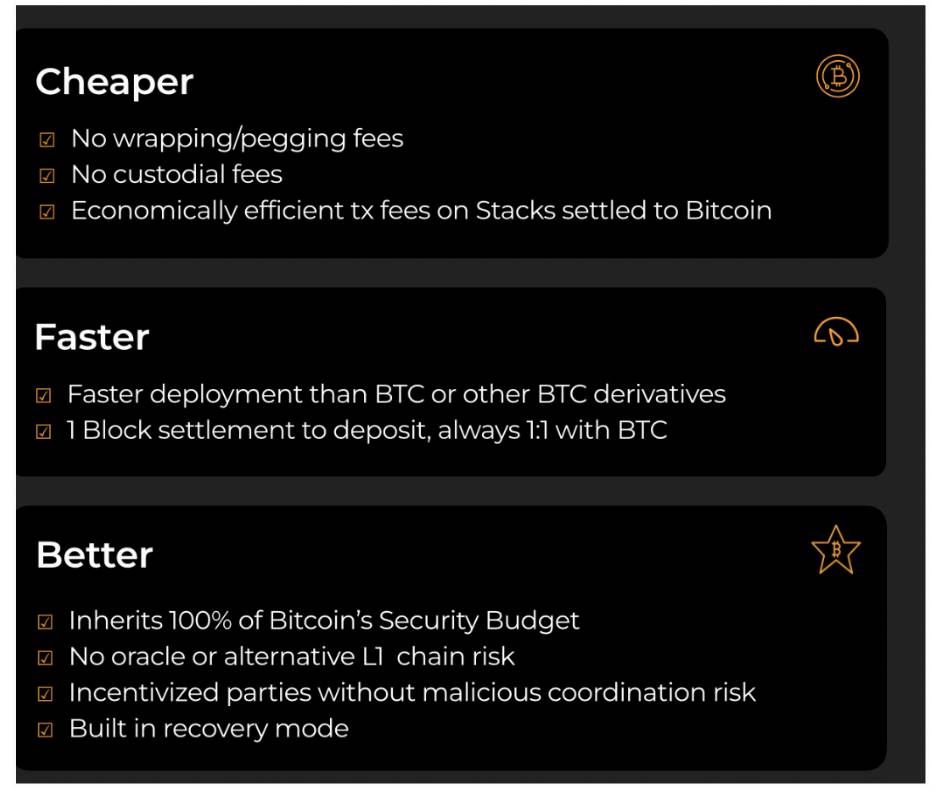
Against this backdrop, sBTC—recently launched on the Stacks mainnet—is a 1:1 Bitcoin-backed asset on the Stacks L2 designed to unlock BTC capital and create new use cases by leveraging Bitcoin’s security (100% Bitcoin finality) and faster transaction speeds, thereby fully revitalizing the Bitcoin economy.
sBTC is currently operated by a large-scale signer network composed of institutions such as BitGo, Asymmetric, and Ankr, positioning it as one of the most decentralized L2 Bitcoin assets and bringing unprecedented opportunities to DeFi, dApps, and beyond. This article explores in detail how sBTC works and its relative advantages.
How Does sBTC Work?
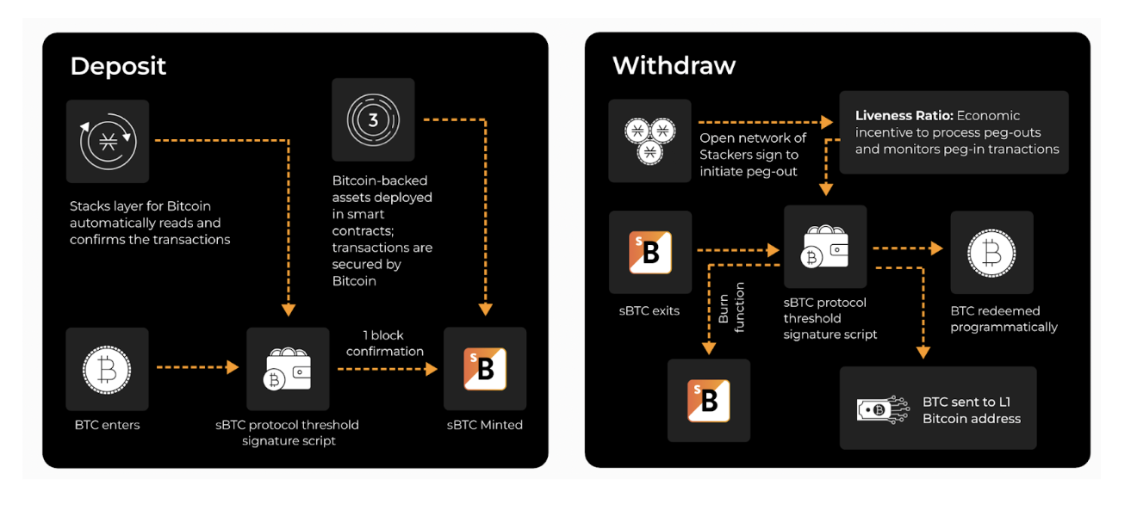
Users first deposit BTC into a multi-signature protocol monitored by a decentralized group of signers on the Stacks network via a Bitcoin mainnet transaction.
Once BTC is deposited, an equivalent amount of sBTC is minted on Stacks, enabling users to interact with DeFi dApps.
Users can seamlessly access Bitcoin DeFi—for example, Zest Protocol will support direct BTC deposits and automatically convert them into sBTC. In the future, sBTC may also become the fee token on Stacks, further enhancing user experience.
Is There a Deposit Cap for sBTC?
Currently, the deposit cap is set at 1,000 BTC to enable controlled testing and gradual strengthening of security measures.
In the early phase, only deposits are supported; withdrawals are temporarily unavailable.
Does sBTC Generate Yield?
Imagine earning Bitcoin yields just by holding BTC.
No staking, no points, no complex procedures—simply holding BTC earns rewards. Early sBTC users who connect their wallets to https://bitcoinismore.org/ (launched December 17, 2024, Beijing time) will receive a 5% annualized Bitcoin yield.
Now, thanks to the sBTC Rewards Program, this is possible. Early users earn BTC rewards simply by holding sBTC, with rewards distributed in the form of sBTC.
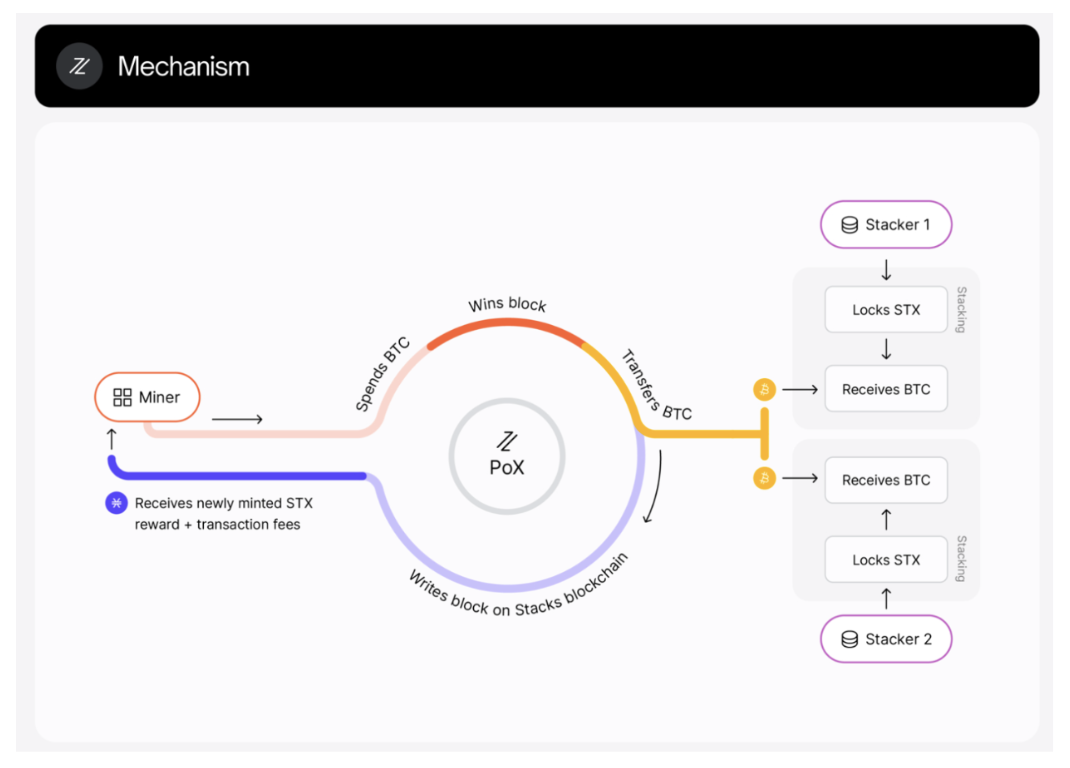
The sBTC Rewards Program is funded by STX "stackers" participating in Stacking.
When users stake STX, they earn BTC through Stacks’ consensus mechanism. To support the sBTC Rewards Program, these stackers contribute their PoX (Proof-of-Transfer) BTC rewards into the sBTC reward pool.
BTC from the reward pool is directly deposited into a smart contract that mints sBTC and proportionally distributes rewards to sBTC holders. The protocol takes a daily snapshot of each user's sBTC balance and disburses rewards every two weeks—one full PoX cycle.
The current estimated annual BTC yield is 5%, paid out biweekly.
Key Features of sBTC:
Where Can sBTC Be Used?
Multiple DeFi protocols will support sBTC, enabling users to earn additional yield on top of the 5% APY:
-
Liquidity Pools: Users can deposit sBTC into Bitflow’s liquidity pools, facilitate trades, and earn a share of trading fees.
-
Yield Farming: Liquidity providers can stake their LP (Liquidity Provider) tokens in yield farming programs to earn extra rewards, typically derived from trading activity or platform incentives.
-
Early Estimate: Deploying sBTC could yield an additional 10%-30% annualized return.
-
Bitflow Runes AMM
-
Bitflow has launched a Runes AMM (Automated Market Maker) on Stacks L2, allowing users to bring Runes to L2 for a better user experience.
-
sBTC will be available on day one of Zest Protocol’s lending market launch.
-
Zest Protocol will initiate a boosted yield campaign on day one, offering up to 10% BTC yield on supplied sBTC.
Zest will also unlock more DeFi strategies involving sBTC, including:
-
Deposit sBTC to earn up to 10% annualized BTC yield;
-
Use BTC (or other stablecoins) as collateral to borrow USDh stablecoin, then swap it into USDh;
-
Stake USDh on Hermetica to earn up to 25% annualized yield.
Note: Hermetica’s DeFi protocol offers USDh, the first yield-bearing stablecoin backed by Bitcoin. Yields are sustainably generated through funding fees from perpetual contracts on centralized exchanges and are paid daily.
stSTXbtc is a new liquid staking token that users can deploy across the Stacks DeFi ecosystem. Holders of this token will earn up to 10% annualized yield through staking rewards, which are paid directly in sBTC to their wallets.
-
Liquidity Provision: Users can supply sBTC to Velar’s liquidity pools, facilitate trading, and earn a share of platform-generated trading fees.
-
Yield Farming: By participating in yield farming initiatives, users can stake the LP (Liquidity Provider) tokens earned from providing sBTC liquidity to earn Velar’s native token or other incentive rewards.
-
Staking: If Velar offers staking options for sBTC, users can lock their sBTC in staking contracts to earn rewards such as additional tokens or a percentage of revenue supporting network operations.
-
Velar will launch its own incentive program, allowing users to earn Velar’s native token VELAR by deploying sBTC into its DEX pools.
Arkadiko - USDA Stablecoin
-
Arkadiko will allow sBTC as collateral in its protocol through governance voting, enabling users to borrow USDA or other assets using their Bitcoin holdings as collateral.
ALEXDEX
-
Users can deposit sBTC into ALEX’s liquidity pools, pairing it with other assets like STX or stablecoins. In doing so, they provide liquidity for platform trading and earn a portion of fees generated within the pool.
-
ALEX will offer additional yield rewards in its native token ALEX as part of its Surge campaign. This means that in addition to the 5% annualized yield from the sBTC Rewards Program, users can earn extra ALEX token rewards by providing sBTC liquidity.
Granite - Lending Protocol (Not Yet Live)
-
Borrowers can use Bitcoin as collateral to obtain stablecoin loans, while liquidity providers earn yield by supplying stablecoins to the protocol.
-
Borrowing: Users can use sBTC as collateral to borrow stablecoins, which can then be deployed into various DeFi strategies to generate yield.
-
Participation in Liquidations: Users can act as liquidators, repaying undercollateralized loans in part to claim collateral and rewards, thus earning profits through the liquidation process.
Granite currently has a waitlist that grants early registrants priority access. Eventually, the system will introduce a points-based system offering additional benefits, with early registrants receiving significant advantages.
Granite Waitlist
How Is sBTC Different From Other BTC Assets?
Most existing BTC assets require sending BTC to intermediaries or rely on trusted federations or small multisig entities.
sBTC initially relies on 15 signers—including enterprise-grade institutions like BlockDaemon, Figment, Luganodes, and Kiln—to handle asset pegging and unlocking. Over time, this responsibility will transition to all Stacks signers, enabling anyone to participate in securing and decentralizing the network. Institutions such as BitGo and the Aptos Foundation are also expected to join this process.
In addition, thanks to Stacks’ architecture, sBTC achieves 100% Bitcoin finality, meaning transactions on the Stacks layer are irreversible just like those on Bitcoin.
Note: Signers are responsible for verifying and approving each produced block. Anyone who stakes sufficient STX can become an independent signer, similar to the concept of validators.
Additional Information:
1) sBTC Resources:
sBTC Website: https://www.stacks.co/sbtc
sBTC Documentation: https://docs.stacks.co/concepts/sbtc
sBTC Presentation: https://www.stacks.co/sbtc-deck
2) Nakamoto Upgrade Information:
Nakamoto Website: https://www.nakamoto.run/
Documentation: https://docs.stacks.co/nakamoto-upgrade/nakamoto-upgrade-start-here
The Nakamoto upgrade is critical because it introduces:
-
Faster blocks (reduced from current 10 minutes to under 1 minute, with ongoing optimization)
-
100% Bitcoin finality
Faster Blocks: Fast blocks deliver a Solana-like transaction experience and improved interaction with Bitcoin DeFi, greatly enhancing the overall user experience when engaging with Stacks L2.
The Stacks DeFi ecosystem has grown rapidly this year, now enabling DeFi strategy deployment in seconds—making onboarding and retention much easier for users.
Prior to the Nakamoto hard fork, Stacks blocks were settled synchronously with Bitcoin blocks (averaging 10 minutes), making the chain too slow for DeFi activities. That limitation no longer exists. Instead, Stacks blocks now settle in seconds, with performance improvements ongoing. At the same time, once settled on Bitcoin, Stacks continues to inherit Bitcoin’s security.
100% Bitcoin Finality: With the Nakamoto upgrade, transactions on Stacks L2 leverage 100% of Bitcoin’s security budget. This means that once subsequent Bitcoin blocks confirm, Stacks transactions become irreversible just like Bitcoin transactions.
Unlike previously when each Stacks block was tied to a single Bitcoin block, Bitcoin blocks now correspond to miner tenures during which multiple Stacks blocks are mined and settled within seconds.
There are currently 50 signers—including enterprise-grade institutions such as BitGo, Aptos, Luganodes, and Kiln—responsible for validating and approving blocks produced during each miner tenure.
The combination of fast block times and Bitcoin finality makes Stacks the most secure and scalable Bitcoin L2, powered by a decentralized network of signers. Future upgrades to sBTC will further enable decentralized liquidity for Bitcoin.
3) Stacks Analytics Platforms:
Signal 21: https://signal21.io/
DefiLlama: https://defillama.com/chain/Stacks
Stacks Block Explorer: https://explorer.hiro.so/
Join TechFlow official community to stay tuned
Telegram:https://t.me/TechFlowDaily
X (Twitter):https://x.com/TechFlowPost
X (Twitter) EN:https://x.com/BlockFlow_News