Primitive Ventures: The Logic Behind Backward Investment in Movement and the Secrets to a Billion-Dollar FDV Growth
TechFlow Selected TechFlow Selected
Primitive Ventures: The Logic Behind Backward Investment in Movement and the Secrets to a Billion-Dollar FDV Growth
This article will deeply share Primitive Ventures' struggles and reflections in investment decision-making, as well as Movement's growth and transformation over the past 20 months.
 Navigating Web3 tides with focused insights
Compiled by: Nancy, PANews
Recently, Movement—an Ethereum L2 built on the Move language—has sparked a massive airdrop frenzy, achieving a full listing across major exchanges and briefly entering the billion-dollar FDV club. Against this backdrop, investment firm Primitive Ventures shared its investment story behind Movement, with founding partner Dovey Wan being one of the participants in Movement’s Series A round.
Looking back to 2023, the Primitive Ventures team initially decided against investing in Movement—but that decision was ultimately overturned by Dovey Wan, prompting the team to reevaluate the project. Now that $MOVE has officially launched, it marks an epic narrative about how a non-consensus, contrarian bet evolved into a leading player in the industry. Even more striking is that it was co-built by two college dropouts. This article dives deep into the internal struggles and reflections within Primitive Ventures’ investment process, as well as Movement’s growth and transformation over the past 20 months.
Rejection
Initially, Movement was just a decentralized application (dApp) built on Aptos. However, after the Aptos ecosystem faced liquidity challenges last year, the team decided to pivot to another platform. Movement's vision was to overcome the limitations of the Move ecosystem and build a bridge between Move and EVM. Yet at the time, this market niche appeared too small and fraught with challenges—especially given the team’s limited resources and the fact that both members were university dropouts.
Although Primitive Ventures had long supported alternative virtual machine (VM) narratives and young founders, it was difficult to envision how Movement could compete against well-resourced projects like Sui and Aptos—both hailed as the “aristocrats” of the Move ecosystem, backed by strong funding and extensive networks. In contrast, Movement seemed to have dim prospects, leading Primitive Ventures to initially pass on the investment.
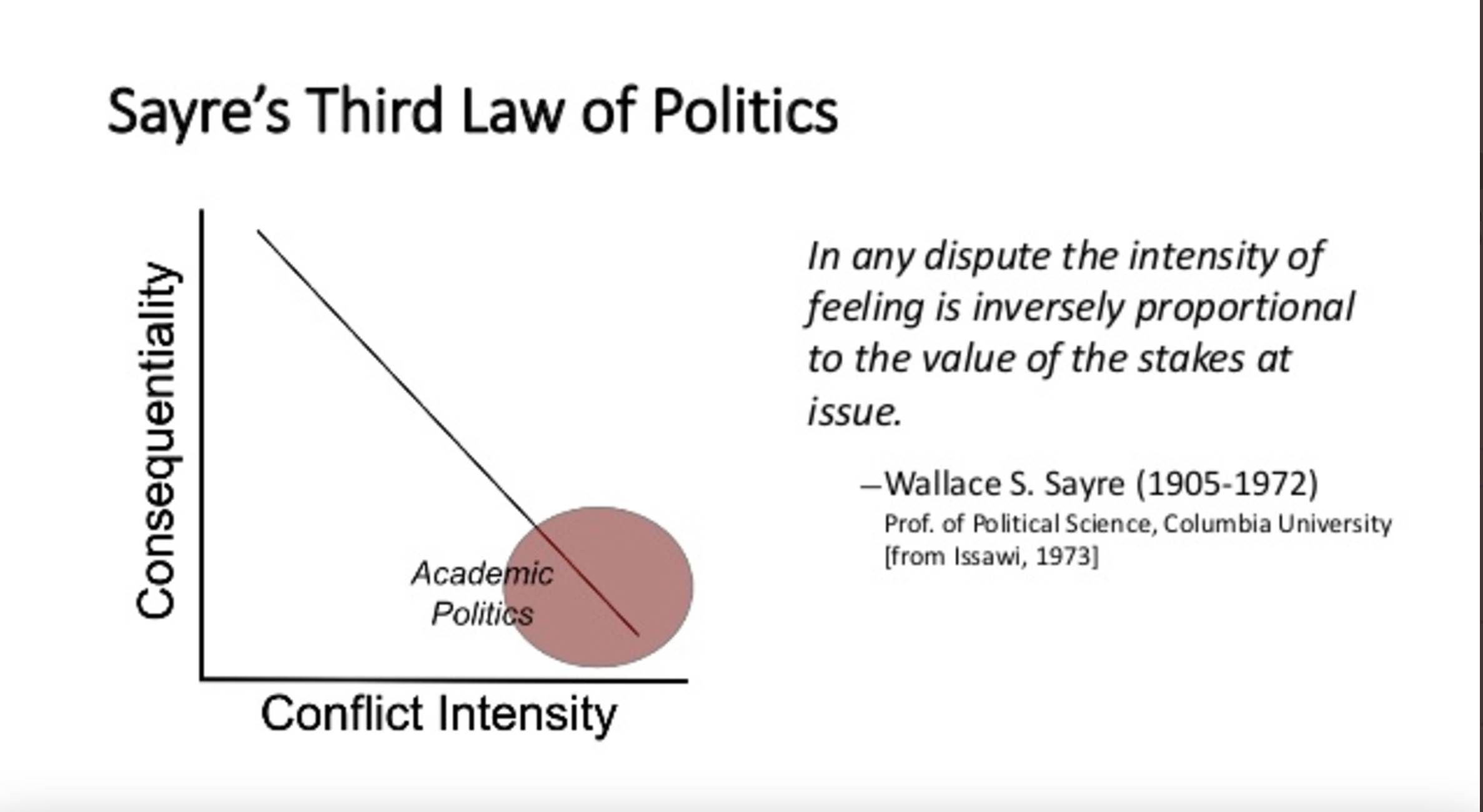
The crypto industry’s approach to infrastructure investing has long favored a "super-mind" paradigm—overemphasizing minor technical improvements while overlooking the critical human factors that ultimately drive success. This pattern isn't new—Sayre's Third Law of Academic Politics states: "Academic politics are so vicious because the stakes are so small." This perfectly captures the endless disputes among “super-mind researchers” and the intense yet often counterproductive dynamics in intellectual-led projects.
However, after multiple in-depth conversations with Rushi, Dovey introduced a fresh perspective: a people-first investment philosophy. Success doesn’t hinge solely on assembling a group of “super minds,” but rather on individuals who can transcend technical echo chambers, unite communities, inspire developers, and build sustainable ecosystems. As the industry matures, true builders—not merely idealists or crypto geeks—are increasingly being rewarded—a trend already evident in this cycle through Hyperliquid, Ethena, and Solana’s resurgence.
Adopting a new programming language requires more than showcasing technical advantages—it demands creating a sense of identity among developers. It’s not just a technical breakthrough; it also requires a clear distribution strategy and alignment with developer identity. Crucially, there must be a charismatic leader capable of inspiring the next generation of developers—especially those beyond traditional crypto-native circles—to embrace the language and its ecosystem.
This is precisely where Movement and Rushi stand out. As an independent third party, Movement has the potential to fill this gap. Rushi’s founder journey reflects resilience, ambition, independence from conventional paths, and relentless perseverance—qualities that define his unique founder DNA and make him a compelling dark horse to back. From this vantage point, Dovey reversed the initial call, and the team committed firmly to supporting Rushi. What followed, as they say, became history in the crypto world.
Why the Move Language?
There is indeed market fatigue around infrastructure, but it’s essential to distinguish work that genuinely advances the industry from mere micro-optimizations. The space often gets bogged down in pseudo-intellectual debates over marginal gains, while the real power of blockchain lies in its role as an ongoing experiment in human coordination and capital formation.
Currently, smart contract security remains one of the biggest obstacles to such experimentation. Billions of dollars are lost annually due to exploits, making the cost of securing on-chain activity far exceed its benefits—thereby hindering true mainstream adoption.
This is where the Move programming language plays a pivotal role. Originally developed by Meta’s (formerly Facebook) crypto team, Move fundamentally rethinks how secure, modular, and verifiable smart contracts should be written. In short, Move aims to provide developers and builders with a superior overall programming experience. As detailed in Movement Labs’ documentation, Move offers a safer and more predictable development environment, significantly reducing the risk of catastrophic vulnerabilities.
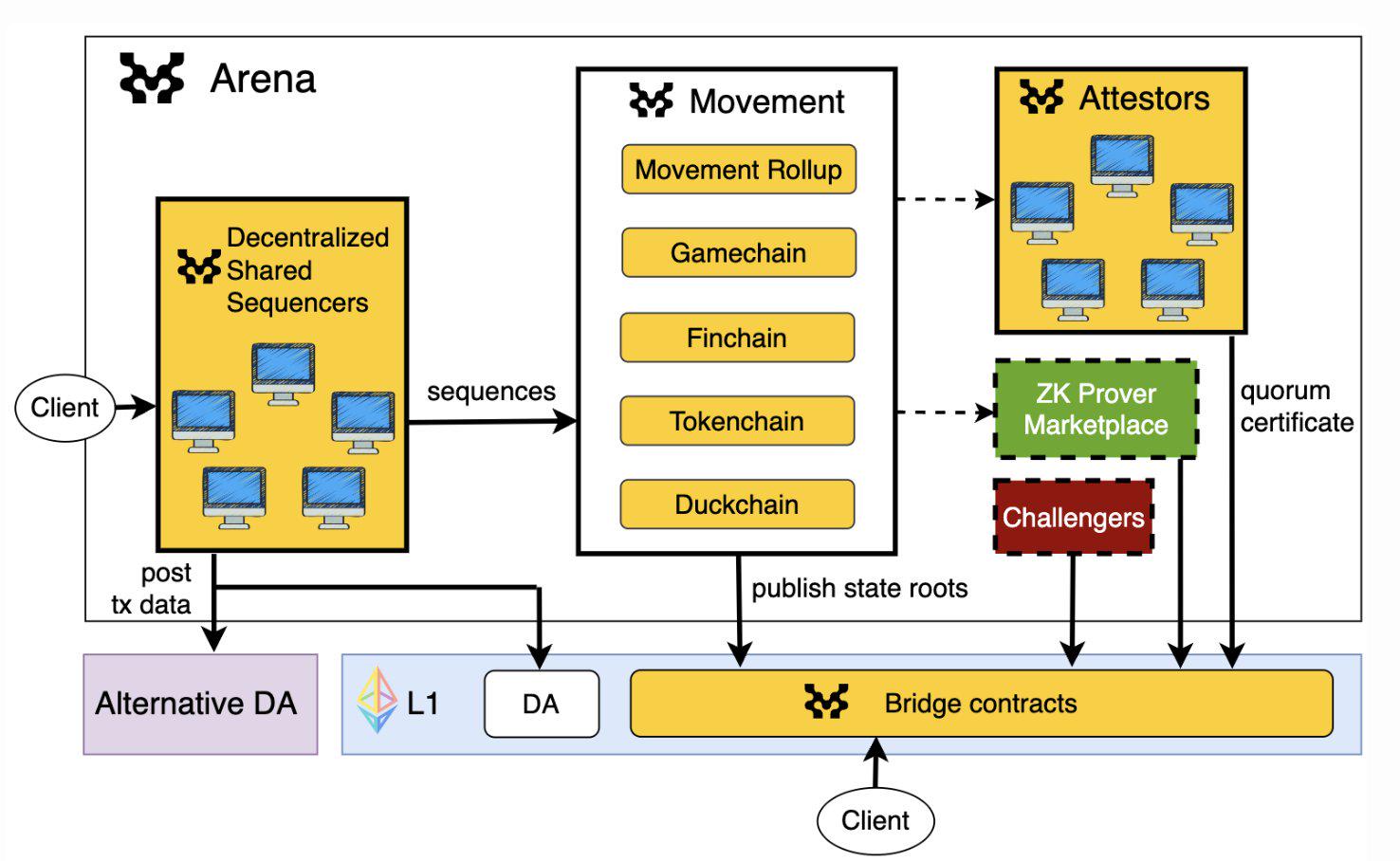
At its core, Move prioritizes correctness and security in its language design. The result is an optimized development environment that protects both developers and users, enabling innovation without constantly exposing the community to risk.
Thanks to early work by the Aptos and Sui teams—projects launched by engineers and architects who originally developed Move at Meta—the language now has real-world validation. Aptos and Sui have demonstrated that Move-based blockchains can deliver strong performance and fulfill their promises of enhanced security.
Why $MOVE?
Despite progress in Move-based development, gaps remain. While Sui and Aptos—projects with “noble lineage”—have abundant resources, they haven’t fully unlocked developer adoption (at least not when the team invested in Movement). Both protocols raised substantial funds since 2023 but failed to break through market cycles or gain genuine traction. Whether due to misaligned priorities or institutional inertia, their efforts fell short in cultivating grassroots communities and vibrant developer ecosystems.
As previously noted, adopting a new programming language depends less on technical superiority and more on fostering a sense of identity among developers. With the founding team demonstrating exceptional resilience and execution, Movement Labs emerged as the ideal advocate for the Move language. In just 18 months, the team achieved remarkable milestones:
- $45 million raised in private funding
- 60 applications running on testnet
- Over 2,000 hackathon participants
- $150 million in TVL commitments
- 1 million active addresses
- 52 active Movement communities across regions
Movement Labs’ vision is to create a safer, more scalable future for crypto by extending the advantages of the Move programming language into the broader cryptocurrency ecosystem.
· Ethereum L2 based on the Move language: This solution combines the security and efficiency of Move with Ethereum—the largest smart contract ecosystem—enabling developers to enjoy the strengths of both environments.
· Fractal: An Ethereum Virtual Machine (EVM) interpreter. To improve developer experience and cross-chain integration, Movement Labs introduced Fractal, allowing developers to port their Solidity codebases into Move-based environments.
· Community-driven participation: Recognizing that technology adoption relies on social norms, Movement Labs invested heavily in grassroots initiatives such as developer education, community engagement, and hackathons. Rather than imposing a top-down vision, they invited the community to co-create an environment conducive to growth.
Why Rushi?
The crypto market has gradually drifted away from its original cypherpunk ethos, becoming increasingly dominated by privileged elites. At the heart of Primitive Ventures’ core values is the principle of “substance over status”—prioritizing meaningful growth potential over pedigree or background.
For years, Primitive Ventures has consistently backed anonymous founders and entrepreneurs overcoming adversity, exposing the hypocrisy of self-proclaimed elites. This belief fosters deep empathy for founders who lack resources but push forward through resilience and determination.
Embracing the spirit of the “Roman Empire,” Movement Labs aims to build an ecosystem from the ground up—one that is inclusive, resilient, and meritocratic. Just as ancient Rome was built by people from all classes—not only welcoming elites but also outsiders, exiles, refugees, and those from lower social strata—Movement Labs is creating a home for these “homeless developers.” Their strategy provides a supportive environment for talented developers lacking elite connections or resources, ensuring innovation stems from ability, not privilege.
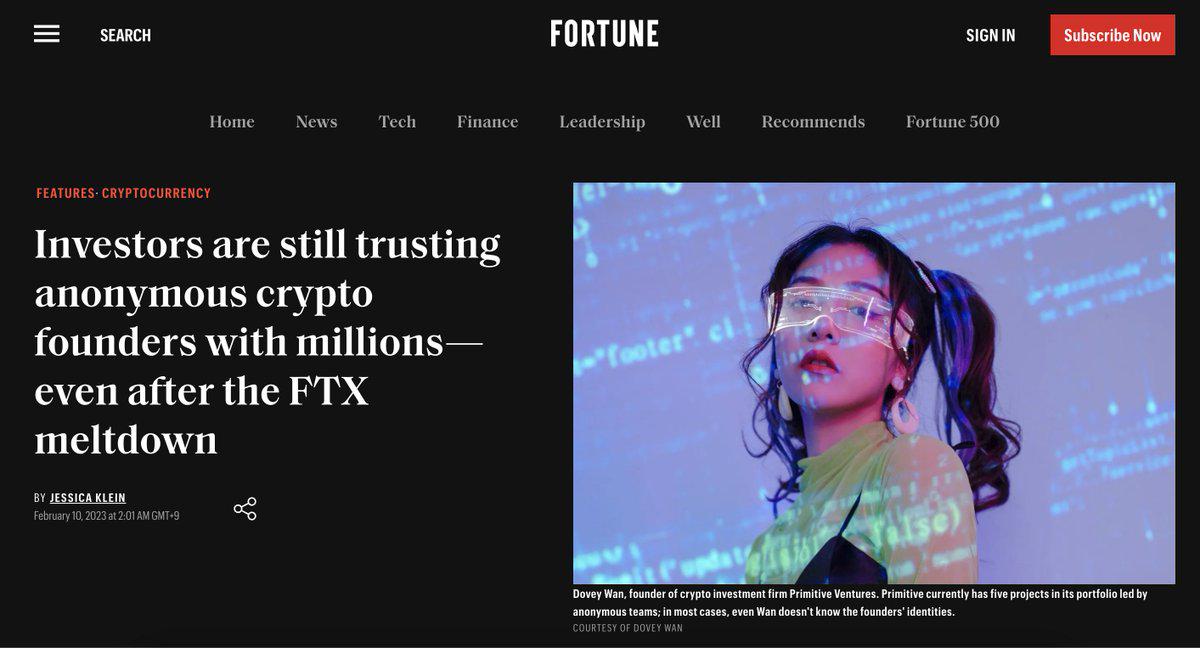
In this market cycle, we’ve seen a decisive shift in founder demographics: those deeply attuned to global communities and cultures are emerging as dominant forces. This is a key reason why we invested in both Movement and Berachain—and even Solana’s revival benefited from East-West collaboration. As second-generation Indian-American founders, Rushi and Smokey bring a fresh perspective, blending Eastern philosophy with Western technological and capital market expertise.
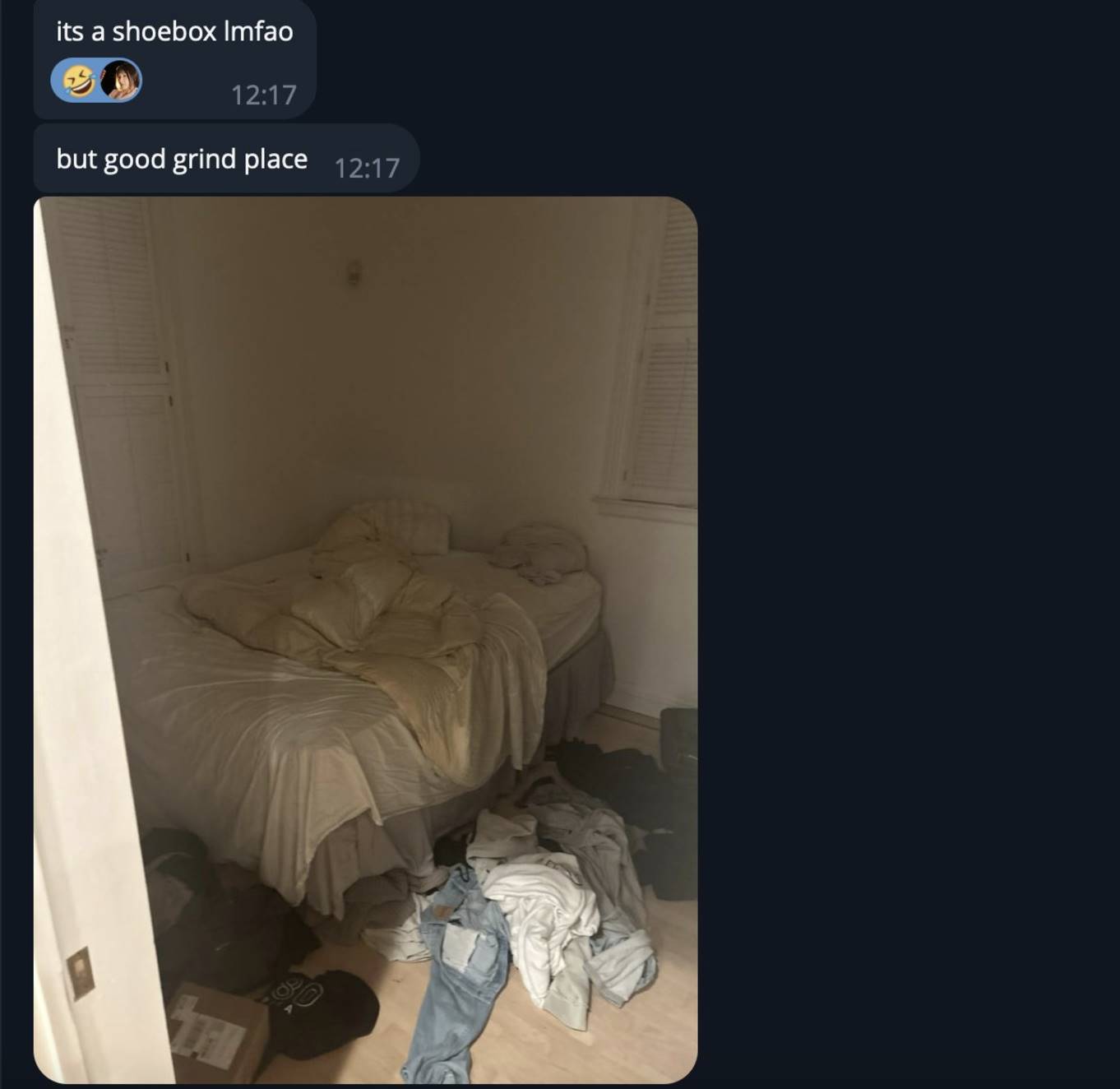
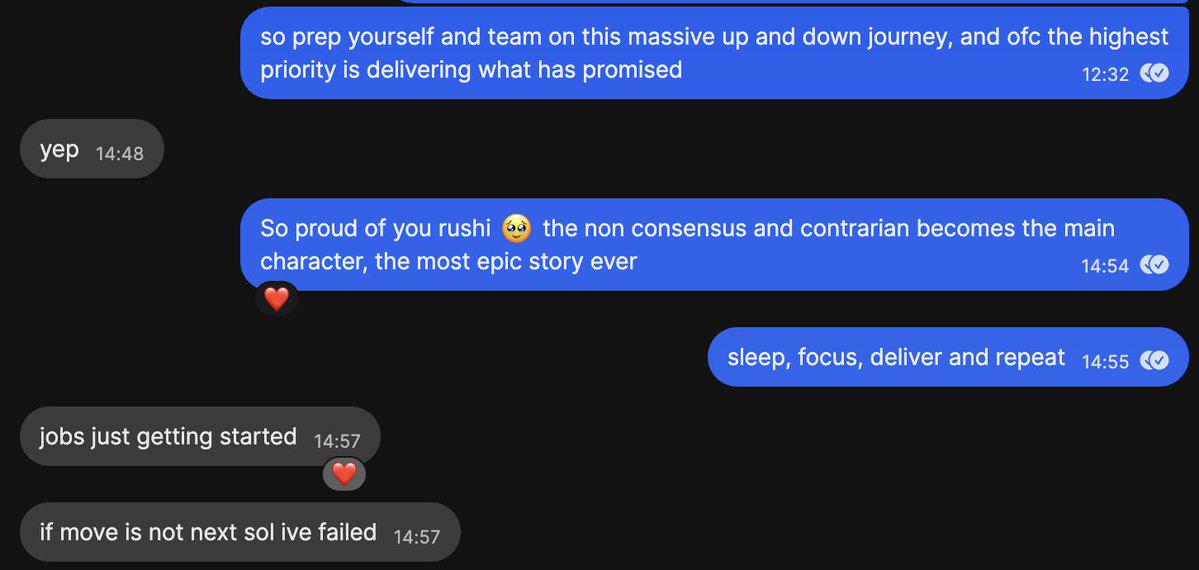
Their authentic qualities stand out: humility, openness, rapid iteration, and disinterest in politics or ranking games. For example, Rushi still lives in a small rental apartment and has promised to finally do his laundry only after the “wartime” chaos of Movement’s TGE (Token Generation Event) ends (as shown below). This unpolished resilience embodies the spirit of a new generation of builders.
When Movement’s testnet launched, its task design drew widespread criticism, with many users complaining on Twitter about excessive burdens. The team’s response set a benchmark for transparency. Within 10 minutes of receiving feedback, Rushi went live to directly address community concerns. He published a detailed written clarification within an hour, ensuring community members felt heard and valued.
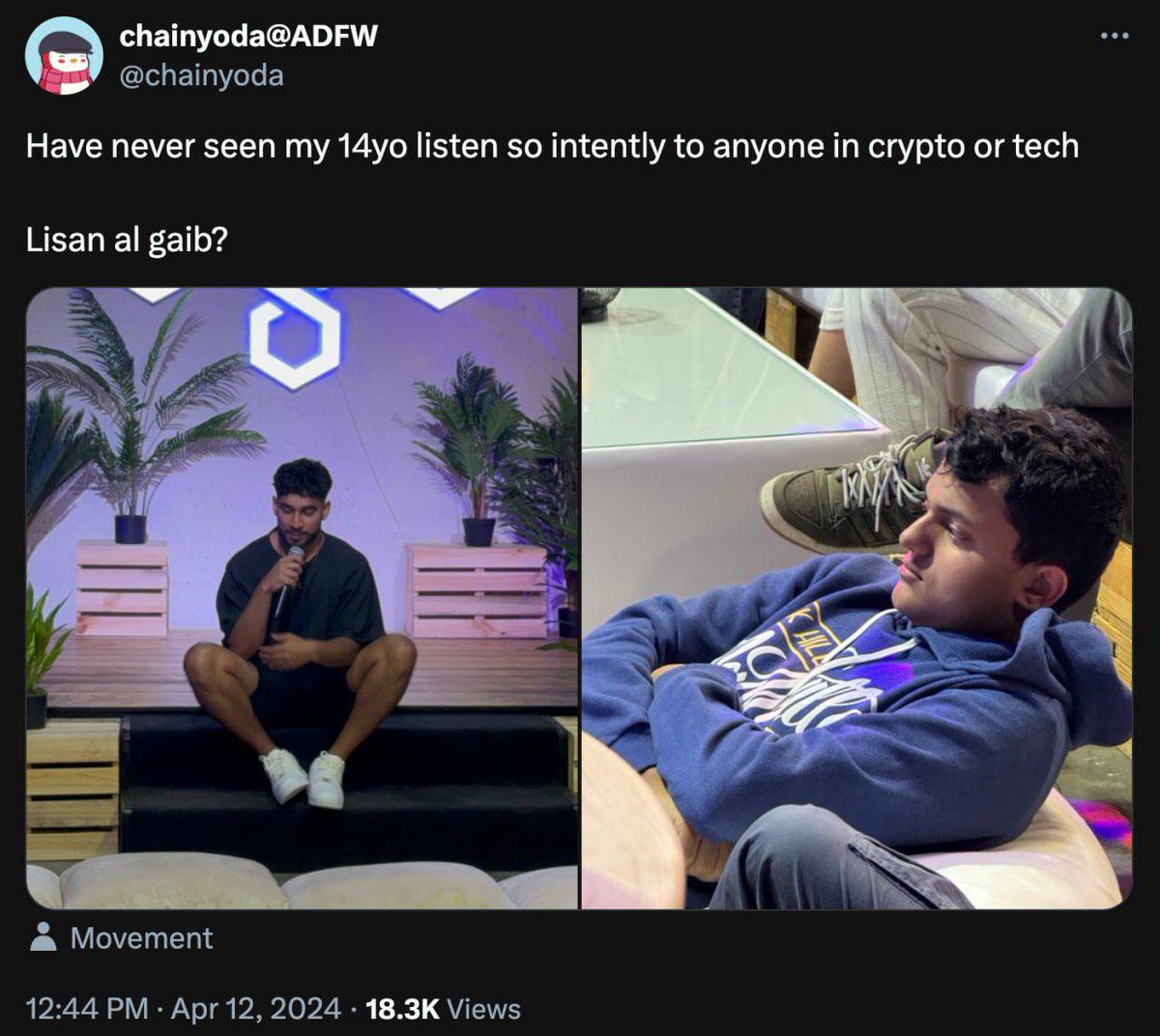
It’s rare to encounter a team that responds to criticism so swiftly and remains so grounded. Rushi’s leadership is defined by honesty and directness—traits rooted in his background. He actively engages with the community in real time, attending over 50 different breakout sessions during conferences to understand grassroots sentiment and developer pain points, inspiring countless peers.
Building an ecosystem requires immense coordination and trust. As a first-time founder, Rushi excels at forging meaningful relationships. In early 2023, when GMX core contributor Coinflip introduced Movement to Primitive Ventures, the team was struck by Rushi’s unwavering support. Despite a generational gap of over 20 years, Coinflip’s pride in Rushi’s growth was palpable—proof of Rushi’s ability to build deep intergenerational trust.
Some may argue that “community-driven” development is incompatible with raising millions via private rounds. But is that really true? Ultimately, both venture investors and the community share the same goal: the project’s success and its positive impact.
The essence of venture capital is backing bold, contrarian bets—supporting ideas and founders when no one else dares. That’s the true spirit of “risk” capital.
We believe in this principle. Although Primitive Ventures does not follow typical VC playbooks nor rely on external capital like most firms, we fund 100% internally—making every investment a genuine risk. This shared commitment aligns us closely with early community members who also believe in the project’s potential.
What people truly resent isn’t VC funding itself, but clique culture, privilege, legacy games, hypocrisy, and political maneuvering. When projects prioritize fundraising milestones over tangible results and authentic community engagement—even openly mocking others as “digital beggars”—they betray the original cypherpunk ethos and financial populism, ultimately leading to failure.
Under Rushi and Coop’s leadership, Movement Labs has proven these forces can be harmonized. By prioritizing transparency, humility, and execution, they’ve demonstrated how to build a lasting project loyal to community values.
Korean Market & Financial Populism
Tokens represent a financialized belief system, where market dynamics, human nature, and social psychology are key drivers of growth and adoption. The interplay of these elements creates a unique synergy between financial incentives and community engagement, shaping how products resonate with their target audiences. For crypto founders, entrepreneurship is a multidimensional challenge requiring mastery of capital markets, cultural development, and technological adaptation.
The Korean market exemplifies financial populism in practice. In our deep dive, “Culture Meets Capital: Decoding Korea’s Crypto Landscape,” we explored how extreme wealth inequality combined with intense societal and peer pressure—not only contributing to the world’s lowest birth rate—but also nurturing a fiercely loyal fan culture willing to YOLO (“You Only Live Once”) into projects that resonate with them, both emotionally and economically. Founders who invest time building local connections, cultivate “local heroes,” and maintain consistent presence can develop powerful followings.
The Movement Labs team deeply understands these unique market dynamics and tailored their strategy accordingly. By organizing local developer workshops, establishing regional community centers and hotlines, and becoming a major sponsor of Korea Blockchain Week, they demonstrated serious commitment to the Korean market. This hands-on approach earned them a reputation closely aligned with local cultural and economic nuances.
The last international project to engage Korea so deeply before launch was Cosmos—but after Terra’s collapse, the market left room for a new generation of crypto leaders to rise. Movement Labs is ready to fill that void.
The results speak for themselves: $MOVE’s TGE became the hottest event in Korea’s crypto market this year. On day one, $MOVE saw a 100% premium on Korean CEXs, with Upbit’s price significantly outperforming Binance, and $MOVE becoming the highest-volume trading pair of the year. TGE momentum and price action are among any project’s most powerful marketing tools—and $MOVE successfully captured the Korean market with explosive traction.
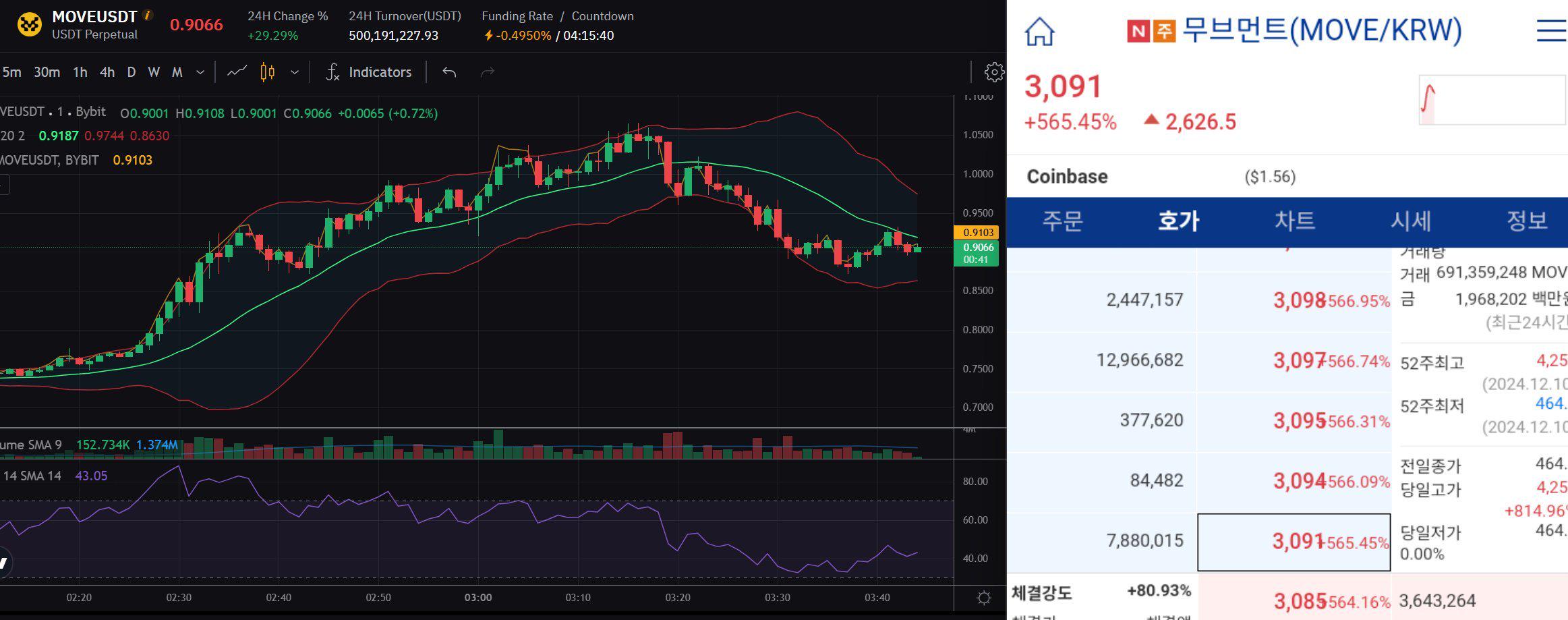
MOVE premium on Korean CEXs (Source: @kysmeplzz)
If Move represents the next evolutionary leap in smart contracts, then Movement Labs is undoubtedly the driving force ensuring this potential is realized—unconstrained by geography or demographics, seamlessly integrating into the global crypto ecosystem. Embodying the spirit of the Roman Empire, Movement Labs is building a digital global city open to everyone: developers, users, and communities from every corner of the crypto world. This city thrives on cohesion, transcending age, race, language, nationality, and belief, uniting people around a shared vision of innovation and inclusion.
As Rushi said on TGE night: “The work has just begun.” Welcome to the Movement.
Join TechFlow official community to stay tuned
Telegram:https://t.me/TechFlowDaily
X (Twitter):https://x.com/TechFlowPost
X (Twitter) EN:https://x.com/BlockFlow_News
 @primitivecrypto