








Blockchain's New Trend: Could Identity Verification Be the Killer App?
TechFlow Selected TechFlow Selected
Blockchain's New Trend: Could Identity Verification Be the Killer App?
Blockchain, as a transparent and immutable source of truth, can serve as a tool for verifying information in both digital and physical worlds.
 Navigating Web3 tides with focused insights
Source: cryptoslate
Compiled by: Blockchain Knight
Over the past two years, crypto asset developers and venture capitalists have been overly focused on supporting infrastructure projects, neglecting consumer-facing applications.
Looking around the crypto industry, one finds a wealth of tools available for developers to integrate privacy features, decentralize information, and scale platforms, yet a lack of applications that actually utilize these tools.
Blockchain may offer a solution to this problem.
Crypto assets and the underlying blockchain technology have the potential to transform how we interact both online and in the real world.
In particular, as an authentication tool, blockchain can address the growing crisis in the consumer goods market by providing an immutable source of truth for verifying information.
In this area, deeper integration with the physical world is needed—something that can be referred to as "non-fungible tokens" (NFTs).
The collapse of the NFT market and the failure of the metaverse, coupled with the onset of the crypto winter, led many developers to retreat from consumer-facing applications and instead focus on improving decentralized infrastructure.
In the same year, media coverage of FTX's bankruptcy severely damaged the industry's reputation.
Perhaps it wasn't the right time then to attract mainstream users, so developers concentrated on solving issues such as scalability, user experience, and security.
Now, progress has been made in these areas.
Zero-knowledge (ZK) rollups have improved the speed and efficiency of Layer 1 protocols, account abstraction enables a Web2-like user experience, and hacking incidents have decreased from Q1 to Q2 this year.
This year saw approval of Bitcoin and Ethereum ETFs, growing mainstream attention on stablecoins and tokenization of real-world assets, and Bitcoin prices reaching all-time highs.
For builders of decentralized applications, this is now the ideal moment to expand into Web2 users and enterprises.
All that’s needed is to prove that blockchain is more than just a platform for speculative assets.
As a transparent and immutable source of truth, blockchain can serve as a verification tool for information in both digital and physical worlds.
This year alone, the secondhand apparel market is valued at approximately $230 million, while the secondhand collectibles market is estimated at $134 billion.
It's foreseeable that as the secondhand goods industry grows—from eBay to Depop and The RealReal—the opportunities for counterfeiting also increase.
In fact, by the end of this decade, the counterfeit goods market could reach nearly $2 trillion.
Imagine if there were an on-chain certification solution capable of verifying the provenance of goods. This would create unprecedented opportunities for integrating blockchain into fashion and luxury markets.
In the digital realm, the development of decentralized finance (DeFi) means more people are trading assets without centralized intermediaries.
While privacy is a core value of DeFi, there remains a need for identity verification to prevent fraud. Blockchain-based identity verification tools can again play a role here.
Blockchain and artificial intelligence can be combined to enhance verification methods.
Currently, verification is done manually. But AI can enable large-scale image and pattern recognition and object detection. Blockchain can store the data collected by AI tools, providing secure records.
NFIs bring real-world utility to NFT technology.
By cryptographically linking physical assets to their "digital twins" on the blockchain, NFIs can serve as powerful authentication tools.
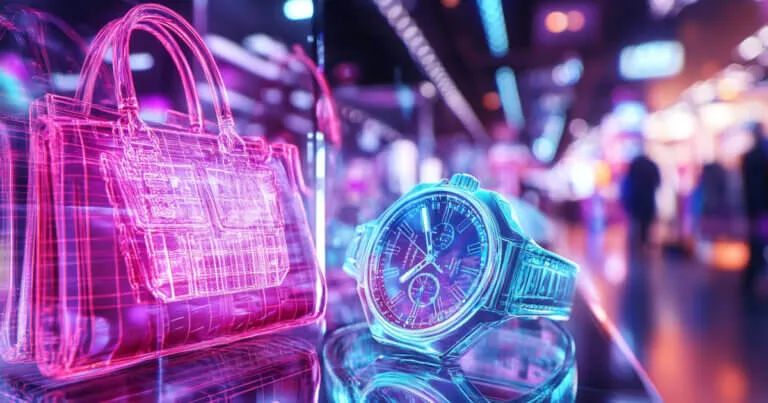
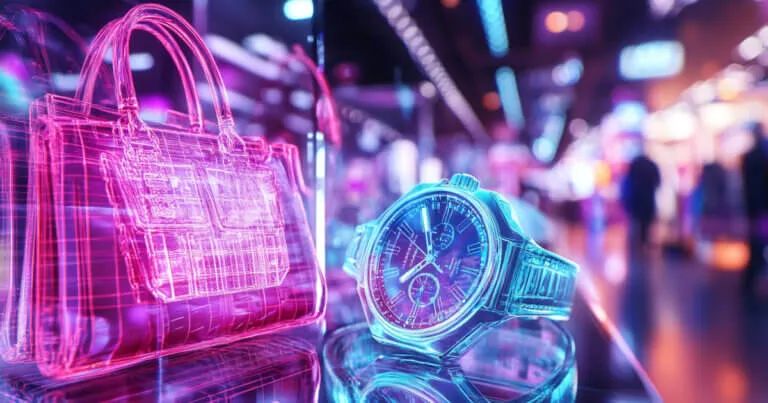
For example, if a user owns a luxury watch, a private cryptographic key could be embedded to verify its origin, especially when it enters the secondhand market.
Why should brands invest in this technology?
Because if buyers can be assured of authenticity in the secondhand market, it increases the asset's overall value. This applies not only to watches, but also shoes, jewelry, and collectibles—all of which can undergo on-chain verification.
Therefore, fashion and luxury brands haven’t completely abandoned NFTs.
9dcc debuted its NFT-linked fashion collection at Paris Fashion Week this year, drawing design inspiration from digital innovation.
The younger generation is also increasingly concerned about the environmental impact of manufacturing. Demonstrating brand commitment to circular economy principles through blockchain certification offers significant marketing advantages.
For a long time, developers in the crypto industry have looked inward, focusing on problems irrelevant to ordinary people.
The industry is maturing, and we need to embrace use cases beyond finance.
Identity verification is one major area where blockchain can deliver better solutions than existing technologies. The crypto winter is over—it's time to bring back mainstream users.
Join TechFlow official community to stay tuned
Telegram:https://t.me/TechFlowDaily
X (Twitter):https://x.com/TechFlowPost
X (Twitter) EN:https://x.com/BlockFlow_News
 @CryptoSlate










