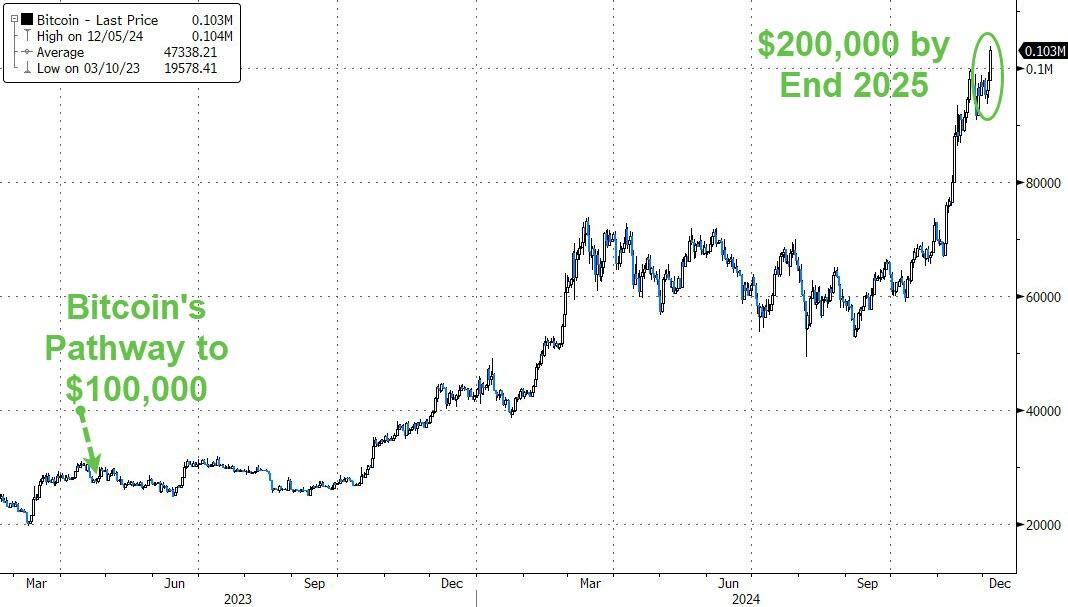
After accurately predicting Bitcoin's surge to $100,000 this year, Standard Chartered analysts are bullish again: targeting $200,000 by the end of next year
TechFlow Selected TechFlow Selected
After accurately predicting Bitcoin's surge to $100,000 this year, Standard Chartered analysts are bullish again: targeting $200,000 by the end of next year
Standard Chartered believes that institutional investors have dominated bitcoin investment flows this year, and this trend will continue or even exceed this year's level next year.
 Navigating Web3 tides with focused insights
By Li Dan, Wall Street Insights
On Thursday, December 5, Bitcoin surged past $100,000 for the first time in history during intraday trading. Back in April last year, when Bitcoin was trading around $27,000, Geoffrey Kendrick, head of emerging markets foreign exchange and cryptocurrency research at Standard Chartered, accurately predicted that the price would reach $100,000 by the end of this year. Now that Bitcoin has broken through the $100,000 threshold, Kendrick is even more bullish on its outlook, expecting it to climb to approximately $200,000 by the end of next year amid growing institutional investment.
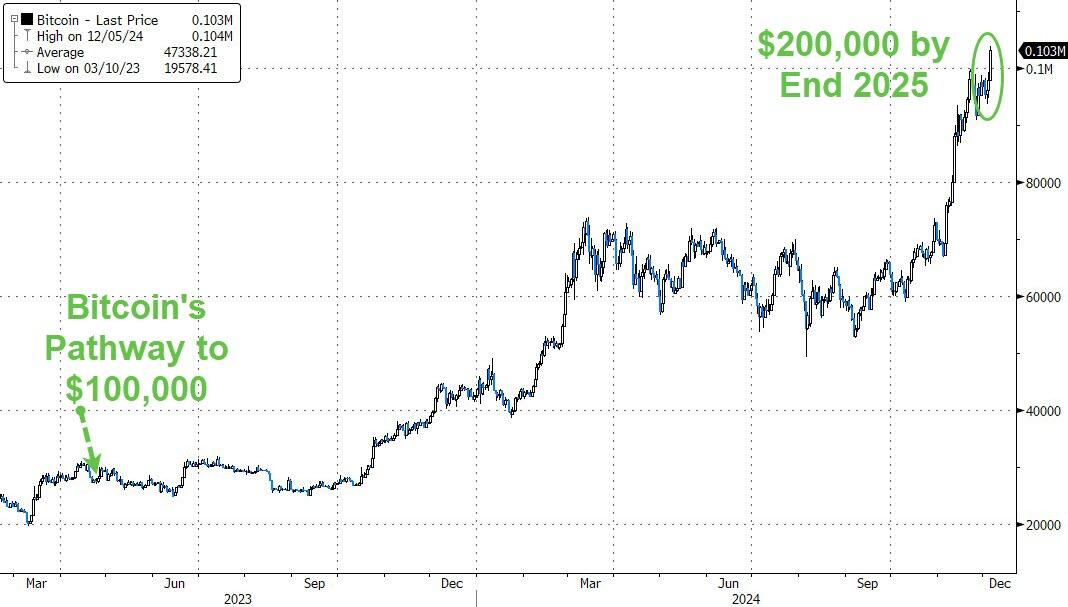
Kendrick attributes Bitcoin's rise to $100,000 this year primarily to strong support from institutional investors. Throughout 2024, institutional investors have dominated Bitcoin investment flows. Standard Chartered expects this trend to continue into 2025, helping Bitcoin reach the bank’s projected target of around $200,000 by the end of 2025. Further adoption by U.S. pension funds and/or sovereign wealth funds (SWFs) could make the bank even more optimistic about price appreciation.
In terms of institutional inflows specifically, since the beginning of this year, institutions have purchased substantial amounts of Bitcoin via spot Bitcoin ETFs listed in the United States and through MicroStrategy—a software company holding large quantities of Bitcoin and widely seen as a proxy for direct Bitcoin exposure—resulting in net purchases totaling 683,000 Bitcoins. Notably, 245,000 Bitcoins worth of inflows occurred within weeks following the U.S. elections.
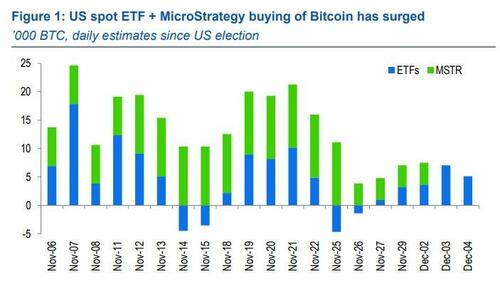
These capital inflows have clearly driven Bitcoin’s recent surge past $100,000—but what lies ahead?
According to Kendrick’s report, Standard Chartered forecasts that institutional inflows into Bitcoin will maintain or even exceed 2024’s pace throughout 2025. MicroStrategy is already accelerating its plan announced in late October to raise $42 billion over the next three years to buy Bitcoin, suggesting its 2025 purchase volume could match or surpass 2024 levels.
Regarding U.S. Bitcoin ETFs, Standard Chartered notes from SEC Form 13F filings that pension fund holdings currently account for only 1% of shares across nine newly launched Bitcoin ETFs.
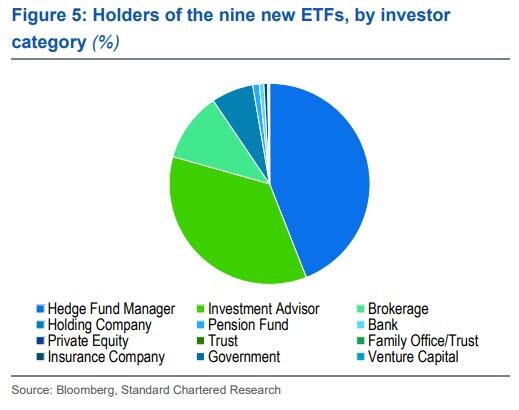
The bank anticipates that with regulatory changes expected under the incoming Trump administration, traditional financial institutions will find it easier to participate in digital asset investments. As a result, pension fund ownership of Bitcoin ETFs is likely to increase in 2025. Even allocating a small fraction of the total $40 trillion U.S. pension fund pool to Bitcoin could significantly boost the cryptocurrency’s price.
Under these conditions, Standard Chartered believes a Bitcoin price target of around $200,000 by the end of 2025 is achievable. If U.S. pension funds, global sovereign wealth funds (SWFs), or a potential U.S. strategic reserve fund adopt Bitcoin faster than expected, the bank would become even more bullish on its price performance.
In his report, Kendrick noted that Standard Chartered previously highlighted the possibility of the U.S. government establishing a strategic reserve fund for Bitcoin. While the bank considers the likelihood of such a fund being established relatively low, its actual creation would have a major impact—not only introducing a new buyer into this relatively small asset class but also potentially providing cover for other SWFs to either begin purchasing Bitcoin or disclose existing holdings.
Kendrick pointed out that when Trump mentioned the idea of a Bitcoin strategic reserve in July, the U.S. government already held 210,000 Bitcoins—about 1% of Bitcoin’s total supply. Given the scale of global foreign exchange reserves and considering Bitcoin’s relatively small market capitalization, Standard Chartered views the establishment of such a strategic reserve as a significant upside catalyst for Bitcoin’s price.
Even if foreign reserve managers allocate just 1% of their assets to Bitcoin, the absolute amount involved would be enormous—and potentially sufficient to drive Bitcoin’s price substantially higher.
Join TechFlow official community to stay tuned
Telegram:https://t.me/TechFlowDaily
X (Twitter):https://x.com/TechFlowPost
X (Twitter) EN:https://x.com/BlockFlow_News