








Court rules "OFAC sanctioning Tornado Cash" illegal, TORN surges over 10x
TechFlow Selected TechFlow Selected
Court rules "OFAC sanctioning Tornado Cash" illegal, TORN surges over 10x
Technology is not guilty, but the developers, including Roman, will not have the charges against them dropped.
 Navigating Web3 tides with focused insights
By Nan Zhi, Odaily Planet Daily
This morning, Coinbase Chief Legal Officer Paul Grewal posted on X: "Privacy wins. Today, the U.S. Fifth Circuit Court ruled that the Treasury Department’s sanctions on Tornado Cash smart contracts are unlawful. This is a historic victory for cryptocurrency and everyone who cares about defending freedom." Uniswap founder called it "immutable smart contracts defeating the Treasury in court."
Following the news, TORN, the protocol token of Tornado Cash, surged rapidly—rising from a low of $3.7 to a high of $43 within one hour.
What exactly does this ruling entail, and what implications does it have for users, protocols, and related assets? Odaily provides an in-depth analysis below.
Protocol Impact Analysis
Background
In August 2022, the U.S. Department of Treasury's Office of Foreign Assets Control (OFAC) added Tornado Cash to its Specially Designated Nationals (SDN) list. Since then, multiple countries—including Germany, France, and South Korea—have conducted investigations, issued warnings, or imposed sanctions on Tornado Cash.
The U.S. OFAC sanctions can be summarized as follows:
-
Access prohibition: including shutting down front-end websites and blocking technical access;
-
Interaction ban: all entities and citizens under U.S. jurisdiction—including financial institutions, cryptocurrency platforms, and wallet providers—are prohibited from interacting with Tornado Cash;
-
Financial flow restriction: U.S. financial institutions and crypto exchanges are banned from processing any fund inflows or outflows related to Tornado Cash;
-
Asset freeze: all assets owned or controlled by Tornado Cash within the United States—including virtual currencies—are frozen.
In May 2024, Alexey Pertsev, one of Tornado Cash’s founders and core developers—a 31-year-old Russian national—was sentenced to five years and four months in prison in the Netherlands for laundering $2.2 billion via the cryptocurrency mixer platform.
In September this year, the criminal trial of Roman Storm, another Tornado Cash developer, will begin. The U.S. Department of Justice accuses Storm and his colleague Roman Semenov of three charges: conspiracy to commit money laundering, operating an unlicensed money transmitting business, and violating the International Emergency Economic Powers Act (IEEPA), alleging they helped the North Korean hacking group Lazarus Group launder over $1 billion.
Court Ruling and Implications
Coinbase Chief Legal Officer Paul Grewal stated: "Tornado Cash will be removed from the sanctions list, and Americans will once again be allowed to use this privacy-preserving protocol. In other words, government overreach can no longer continue."
Uniswap founder Hayden Adams highlighted a key point from the ruling: "We conclude that the immutable smart contracts of Tornado Cash—the lines of privacy-enhancing software code—are not 'property' of a foreign national or entity, meaning (1) they cannot be blocked under IEEPA, and (2) OFAC has exceeded the authority granted by Congress." (See final section for detailed explanation)
Protocol Revenue and Token Impact
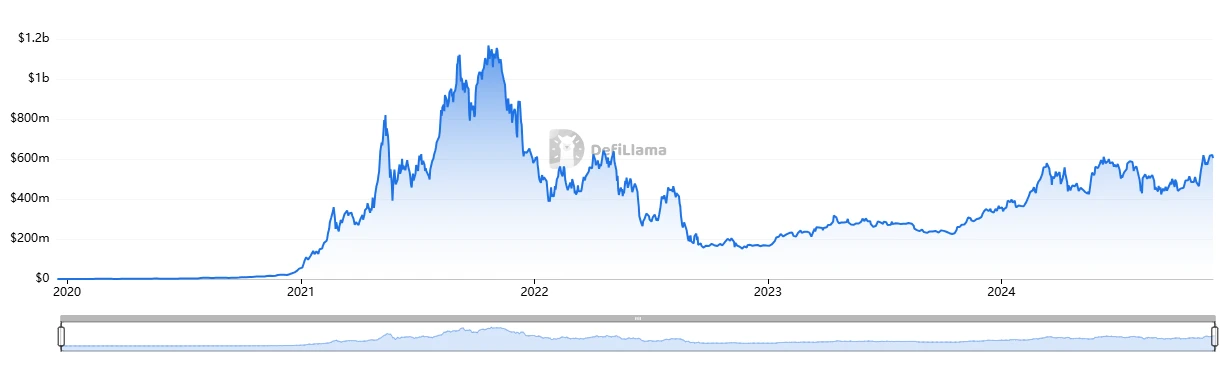
After being sanctioned by OFAC in 2022, Tornado Cash’s total value locked (TVL) plummeted. However, due to its historical accumulation and deep liquidity pools, Tornado remains hackers’ preferred mixing tool, with TVL gradually recovering.
Although front-ends were blocked, hackers continue to directly interact with on-chain smart contracts for mixing. Thus, sanctions have had limited impact on these "core users." The author believes that TORN’s "revenue fundamentals" will not significantly change due to this ruling. Instead, price movements are primarily driven by sentiment and market confidence. While TORN surged tenfold within one hour this morning, it subsequently dropped nearly 70% over the next two hours. Readers are advised to focus on news developments and market sentiment when assessing future price trends.
Will This Affect Roman’s Trial?
After the Fifth Circuit Court’s decision was announced, users asked Consensys lawyer Bill Hughes whether “Roman will be released.”
Bill responded: "This is entirely separate. This ruling doesn’t say Tornado Cash isn’t a service—it says the immutable smart contracts embedded in the platform’s software aren’t the service. The U.S. Department of Justice alleges that Roman operated a service that violated sanctions, illegally transferred funds, and facilitated money laundering. These allegations remain unchanged."
Key Elements of the Ruling
This section explains in detail the logic and legal basis behind the Fifth Circuit Court’s determination that the Treasury Department’s sanctions on Tornado Cash smart contracts are unlawful. Readers may choose to read selectively.
Tornado Cash Is Not a Service
OFAC Argument: Smart contracts are essentially services because users can leverage them to perform specific operations (e.g., anonymous transactions).
Court View: Immutable smart contracts require no human intervention. Even under Treasury’s definition, immutable smart contracts are merely lines of code—more accurately described as tools used to deliver a service rather than the service itself.
Tornado Cash Is Not Property
Under the International Emergency Economic Powers Act (IEEPA), OFAC sanctions must target "property" or "property" in which a foreign person holds an interest.
However, Tornado Cash’s smart contracts are immutable and decentralized. No economic entity controls them. These contracts cannot be owned. Over a thousand volunteers participated in a trusted setup ceremony to irreversibly remove anyone’s ability to update, delete, or control the code. As such, no individual can exclude others from using the Tornado Cash pool smart contracts. Even under OFAC’s sanctions regime, North Korean hackers could still withdraw assets. Therefore, Tornado Cash does not constitute sanctionable property.
Legally, the government can only sanction entities that qualify as either "property" or "service." If something qualifies as neither, sanctions lack legal foundation.
(Note: Full court opinion available at original link.)
Join TechFlow official community to stay tuned
Telegram:https://t.me/TechFlowDaily
X (Twitter):https://x.com/TechFlowPost
X (Twitter) EN:https://x.com/BlockFlow_News
 Odaily






