Bitcoin on the verge of breaking $100,000, altcoins underperforming
TechFlow Selected TechFlow Selected
Bitcoin on the verge of breaking $100,000, altcoins underperforming
Market liquidity shows a trend toward centralization, while crypto regulatory sentiment remains pending implementation.
 Navigating Web3 tides with focused insights
Author: Pzai, Foresight News
As Bitcoin once again reached a new high of $97,000, its market dominance in the cryptocurrency market also hit a three-year peak. The pro-crypto faction under Trump has consistently positioned Bitcoin at the core of its crypto strategy, and with the regulatory landscape becoming clearer, various compliant investment avenues are gaining investor favor.
Crypto Stocks Rise, Altcoins Underperform
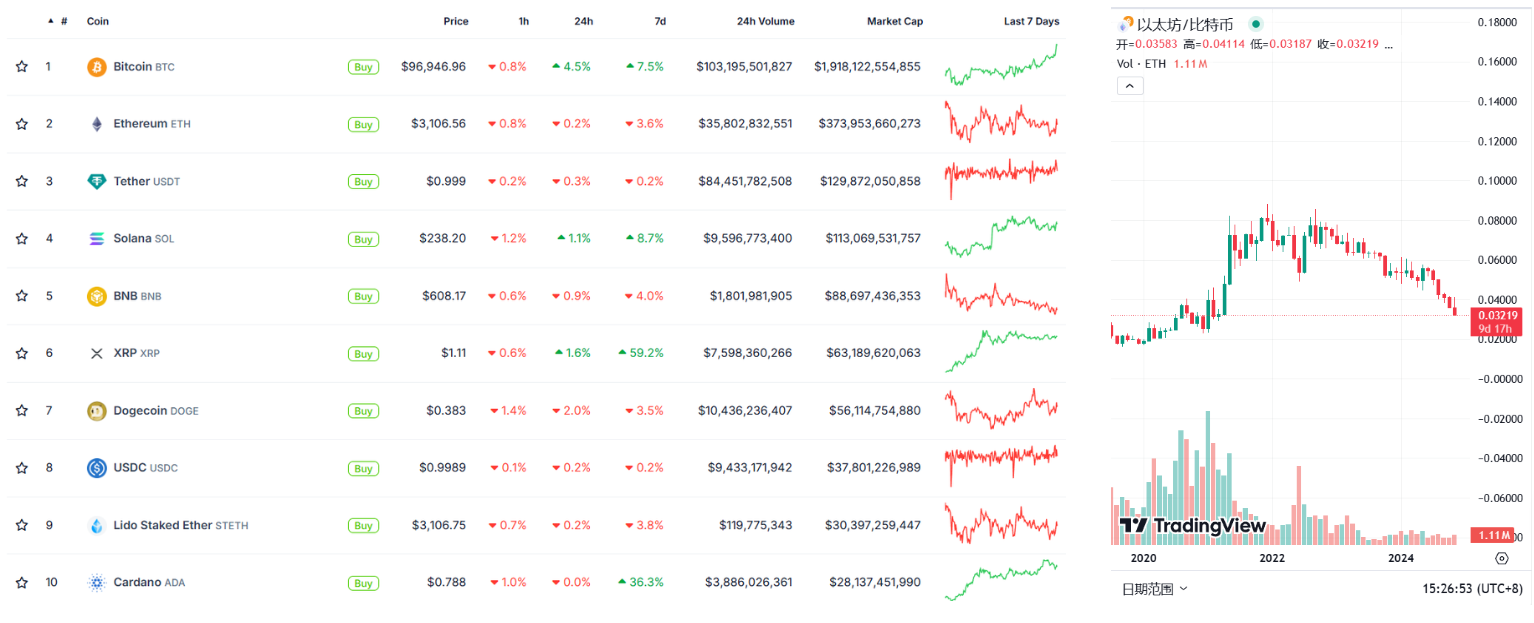
Bitcoin’s market dominance has further consolidated, reaching 61.6%—a multi-year high—as it continues to absorb liquidity from both on-chain and off-chain sources. In contrast, most altcoins declined, with only BTC, SOL, and XRP among the top ten cryptocurrencies posting gains. Since existing compliant investment channels primarily concentrate liquidity in Bitcoin and related assets, altcoin liquidity has been significantly drained.
Ethereum, the second-largest crypto asset, saw its exchange rate against Bitcoin fall to 0.03217, hitting a nearly three-year low. Its lackluster price performance has triggered some skepticism within Chinese communities regarding Ethereum's operational model. At the time of writing, Ethereum was trading at $3,125, remaining range-bound around the $3,000 level for an extended period.
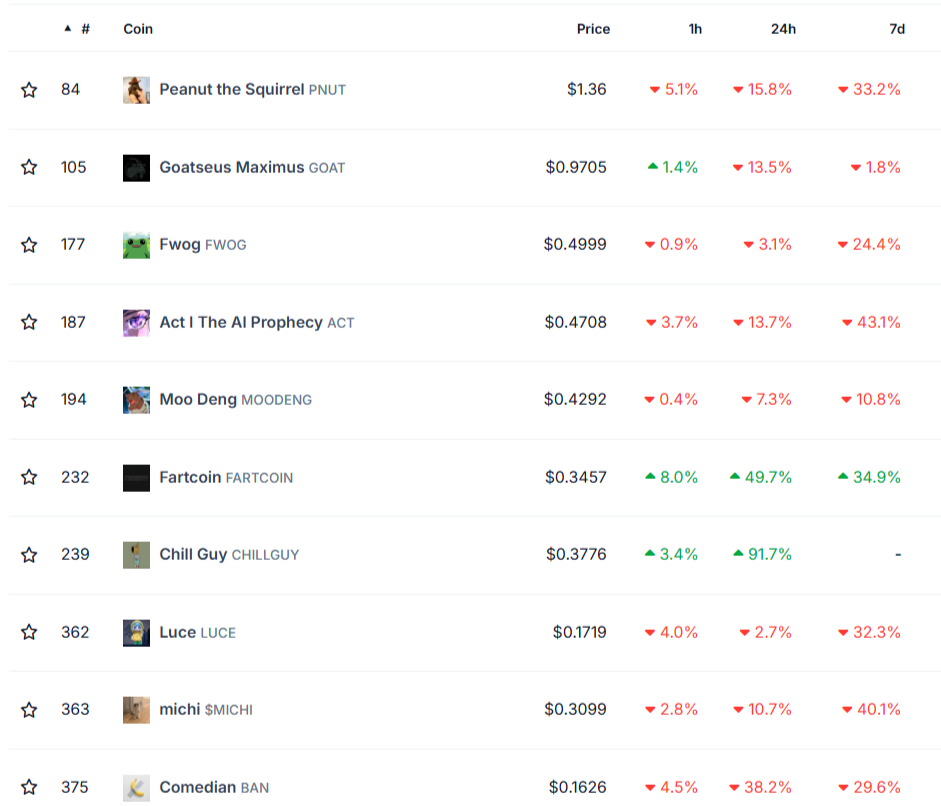
The market’s unipolar trend is also evident in the MEME sector. Among Solana’s leading MEME tokens, average daily declines ranged between 5% and 10%, reflecting a notable capital shift back toward mainstream assets.
Off-chain, massive capital inflows are steadily pushing Bitcoin prices upward. Bloomberg senior ETF analyst Eric Balchunas noted that trading volume in Bitcoin-related equity stocks reached $50 billion—equivalent to the average daily trading volume of the entire UK stock market. MicroStrategy (MSTR) alone accounted for $32 billion of this, while MSTU and MSTX (two leveraged ETFs tied to MSTR) together generated $6 billion in volume—surpassing the combined trading volume of all spot Bitcoin ETFs. Investors appear to prefer trading these corporate equities over spot ETFs directly. MSTR’s share price hit a record high of $504.83, surpassing $100 billion in market capitalization, with single-day trading volume exceeding Tesla’s and ranking only behind Nvidia.
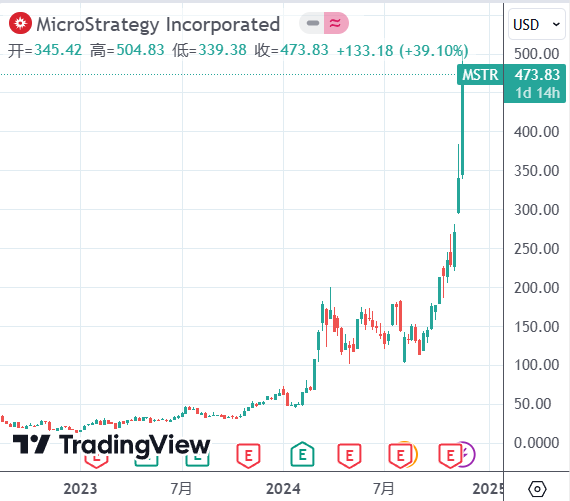
As a crypto-linked asset in the U.S. stock market, MSTR has recently been highly active, including plans to issue $2.6 billion in notes to fund additional Bitcoin purchases. To date, MicroStrategy’s unrealized gains on its Bitcoin holdings have exceeded $15.5 billion.
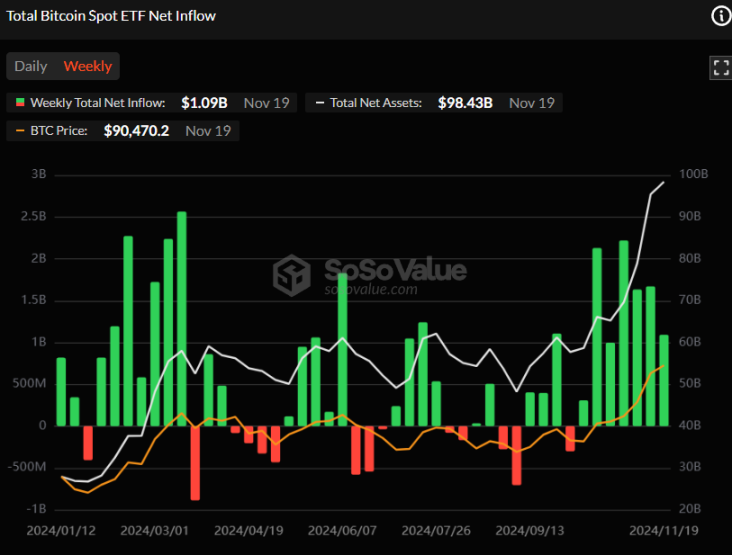
On the ETF front, net inflows over the past two months have surpassed $9 billion, reflecting traders’ confidence in Bitcoin’s price trajectory—especially bolstered by increased certainty following Trump’s election victory.
Can the Bull Market Continue?
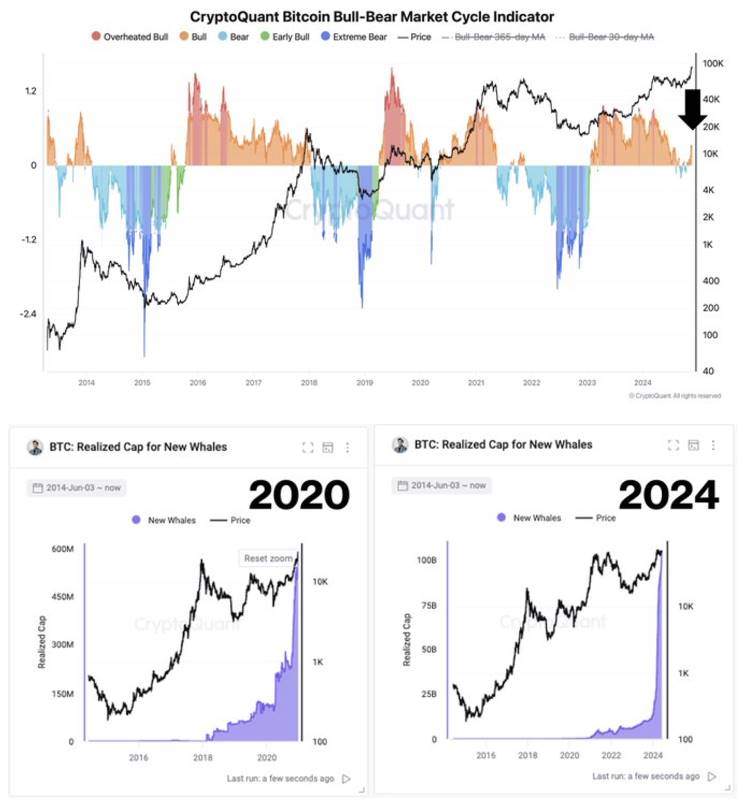
Ki Young Ju, founder of CryptoQuant, believes there remains significant room for Bitcoin’s bull market, citing recent positive shifts such as the Bull & Bear Index turning bullish. On-chain whale accumulation is also rising, resembling patterns seen in 2020. He suggests that the upcoming halving cycle, combined with institutional inflows, could support future price movements.
Crypto Regulatory Clarity Still Pending
This week, traders are closely watching Trump’s appointments for Treasury Secretary and Chair of the U.S. Securities and Exchange Commission (SEC). According to sources, Trump’s team is considering creating the first-ever crypto-related position within the executive office—an additional catalyst encouraging institutional participation in the crypto space.
Potential candidates for SEC Chair include Goody Guillén, who previously worked on blockchain legal matters at a law firm. Trump’s team seeks a leader familiar with the industry and cautious about applying securities laws to digital assets until Congress passes clear legislation. Additionally, Howard Lutnick, CEO of Cantor Fitzgerald—the firm managing much of Tether’s reserves—has been nominated by Trump as the new Commerce Secretary. The company recently announced a new leveraged Bitcoin financing business with initial funding of up to $2 billion, signaling a growing integration mindset within Trump’s circle toward the crypto industry.
On the legislative front, although calls for digital asset regulation continue within the U.S. Congress, tangible progress toward a concrete policy framework remains limited. In May, the U.S. House passed the FIT21 Act (Financial Innovation and Technology for the 21st Century), aiming to provide federal guidance for the digital asset sector. However, the bill still faces significant hurdles, including coordination with the Senate and the executive branch. With the incoming Trump administration, hopes are rising for definitive regulatory clarity that could finally solidify the compliance foundation for the crypto industry.
Join TechFlow official community to stay tuned
Telegram:https://t.me/TechFlowDaily
X (Twitter):https://x.com/TechFlowPost
X (Twitter) EN:https://x.com/BlockFlow_News
 Foresight News