Culture for Sale: Memes as a New Medium for Cultural Transmission and Value Accumulation
TechFlow Selected TechFlow Selected
Culture for Sale: Memes as a New Medium for Cultural Transmission and Value Accumulation
Meme coins are an ideal tool for measuring community value.
 Navigating Web3 tides with focused insights
Author: JJ Alicea
Translation: TechFlow
Memes have always been part of human culture—they are cultural symbols passed across generations, ideas that accumulate meaning over time. As focal points of society, memes carry collective influence.
Modern audiences often regard memes as trivial or even comical, largely because internet memes tend to be humorous. Yet humor resonates precisely because it often contains a kernel of truth.
As Richard Dawkins said: "A meme propagates itself in the meme pool by leaping from brain to brain via a process which, in the broad sense, can be called imitation, just as a gene propagates itself in the gene pool by leaping from body to body via sperm or eggs."
Memes are the fundamental units of cultural transmission. In ancient societies, religious stories and shared histories were passed down orally, with each storyteller adding their own perspective or embellishment. This process helped solidify communal beliefs and values, embedding them deeply into the fabric of culture. Similarly, modern memes are fragments of thought or culture transmitted from one person to another, typically evolving with each retelling or reinterpretation. Both forms rely on repetition, resonance, and subtle changes as individuals re-interpret and share—allowing core ideas to persist and adapt over time.
Thus, memes have become tools for modern storytelling, distilling complex ideas into easily shareable formats that transmit cultural information.
Community
Memes are the basic units of cultural transmission, while communities are the soil in which these memes accumulate value. In other words, memes are important ideas, and communities are the audiences these ideas influence.
Communities typically exhibit the following characteristics:
-
Shared interests and goals
-
Communication and interaction
-
Structure and identity
-
Knowledge and resource sharing
-
Collective identity
Communities are often initiated by small groups of people committed to changing mainstream culture. The open-source software movement was started by a small group of developers—for example, the founder of the Linux project, who challenged the dominance of proprietary software, advocating free access to and modification of code. Punk rock originated in New York and London, driven by passionate musicians, artists, and fans who rejected the polished sounds of mainstream rock and consumerist pop culture. VaccinateCA is a group of techno-optimists dedicated to providing the public with reliable vaccine availability data, responding to government shortcomings in logistics.
These communities began highly localized, composed of a few dedicated believers with a shared vision and belief in the malleability of the world. Ultimately, they made profound impacts across technology, finance, culture, art, entertainment, and healthcare.
The Linux operating system saves enterprises and governments over $60 billion annually in licensing fees, supports over 90% of global web infrastructure, and powers Android—the Linux-based system running on approximately 70% of smartphones worldwide. Punk rock became the soundtrack for political and social movements in Eastern Europe (such as Poland’s Solidarity movement) and Latin America. Punk enthusiasts and bands popularized zines—publications focused on music, politics, and alternative lifestyles—which served as grassroots precursors to modern blogs and independent digital journalism. VaccinateCA provided reliable information on over 1,000 vaccination sites, compared to Google's mere 127 options, significantly improving vaccine distribution efficiency.
This is grassroots, bottom-up, community-driven value creation.
Meme
Gold use dates back to ancient Mesopotamia, Egypt, and parts of Eastern Europe. By 4000 BCE, it was prized for its unique beauty, rarity, and malleability, used to craft jewelry, ceremonial objects, and status symbols. At the same time, copper, silver, and bronze were widely used for tools and ornaments. So what made gold so special?
Unlike other metals, gold does not tarnish or corrode, giving it a sense of permanence and stability. Its durability means it resists change, obsolescence, and competition, suggesting it will endure into the future. Gold became a meme with lasting impact because its significance and uniqueness resonate deeply with humans.
Gold is one of the largest asset classes globally, yet has no practical utility—no productive use, no cash flow, no business model. Its value stems solely from our collective recognition. While gold has limited practical applications, its worth lies in its beauty, scarcity, and symbolic meaning within human culture. It doesn’t serve a tangible purpose like crude oil, nor represents ownership of value like Apple stock. Yet as more people recognize its value, gold has not only become a store of value but also holds potential as a global reserve currency—perhaps replacing another cultural symbol: the dollar.
One might argue that Bitcoin (BTC) is the original “meme coin” in the digital world—a digital asset initially perceived as worthless that has now become a significant store of value in the global economy.
Bitcoin sparked not only a financial revolution but also a cultural movement. Through decentralized technology, it enabled peer-to-peer value exchange, granted individuals financial sovereignty, and catalyzed the rise of a global grassroots community united by shared beliefs.
Bitcoin emerged shortly after the 2008 financial crisis—an essential timing. It captured widespread distrust in traditional financial systems and created a new narrative around decentralized value. People bought Bitcoin not for cash flows, but for its unique value proposition: it is a store of value, a belief in future returns, and most importantly, a symbol of a new financial ecosystem beyond corporate or individual control. Bitcoin is a trustless asset capable of supporting a decentralized economy.
Bitcoin holders feel part of something larger—they are members of a community, not just investors. If in doubt, search “Apple tattoo” or “Uber tattoo,” then compare with “Bitcoin tattoo.”
The Value of Community
Outside observers often underestimate the power and value of communities, much like they initially misunderstood Bitcoin. In traditional finance, professionals typically rely on methodologies taught at institutions like Wharton—discounted cash flow, comparative analysis, cash flow statements, EBITDA. Companies build their metrics and reporting around these frameworks. This narrow lens explains why many initially failed to grasp GameStop’s value, and why crypto assets like Bitcoin and meme coins remain poorly understood by traditional finance.
Today, immense value resides in communities built around various “companies.” Here, “company” can mean anything—a startup, public corporation, crypto protocol, influencer, idea, or even a subreddit. Over time, company valuations will extend beyond profits to include the value created and accumulated by their communities—both internal and external (e.g., Reddit and GameStop).
Over 86% of internet users trust Reddit and its communities more than advertisements when learning about new products and brands. Adults under 45 trust news from social media platforms more than traditional news networks, and 63% of Gen Z and Millennials trust influencers more than brands. The average Gen Z member spends 8.5 hours online daily, with 55% using smartphones over five hours per day, while Americans send an average of 94 text messages daily.
TikTok’s book community has driven bestseller sales in publishing, with some books seeing sales increases of up to 1000% after community recommendations. Reddit’s r/WallStreetBets community pushed GameStop’s stock from under $20 to over $300 in just days. Bud Light saw a 26% drop in sales and AB InBev’s stock fell 20%, wiping $26 billion in market value—all driven by backlash from its conservative community.
The importance of communities is difficult to measure using traditional financial valuation models because their influence is unpredictable. Communities are dynamic, constantly evolving and shifting—impossible to capture fully in pitch decks or financial models.
Financial institutions often dismiss the enduring strength of communities, treating them as anomalies and underestimating their impact.
We believe that as connectivity accelerates and online interactions continue to grow, communities will keep evolving and exerting greater influence. Digital platforms make it easier than ever for individuals to find and connect with like-minded people, breaking down geographic and social barriers that once limited community formation.
Meme Coins: A New Vehicle for Community Ownership
Meme coins are ideal instruments for measuring community value. They are tokenized expressions of culture.
Like social networks, meme coins derive value from the communities they gather. However, they bring a fundamental shift in how value is distributed and controlled. Unlike platforms such as Instagram or Facebook—where value generated by user activity (content creation, engagement, data) is captured primarily by the platform and its shareholders—meme coins disrupt this model by making users both creators and owners of network value.
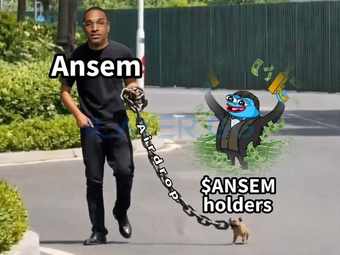
Bonk was distributed via airdrop, quickly becoming the preferred meme coin of the Solana community. Early recipients were those who remained committed and continued contributing to existing communities, protocols, and core infrastructure after FTX’s collapse. Bonk became a tokenized symbol of resilience in adversity. Enthusiasm spread from early adopters to the broader community, increasing Bonk’s value and generating wealth within the ecosystem. This wealth stayed within the community, fueling projects like Bonkbot, creating substantial value for Solana, product users, and Bonk token holders alike.
This is bottom-up, community-driven, grassroots value creation—with no outside investors, only human capitalists building value for the community.
As we digitize more of the world’s assets, more memes can be monetized, manufactured, and spontaneously created. The concept of “meme” expands to encompass anything socially meaningful, turning irrevocable smart contracts into tools for community monetization.
Looking Ahead
The future will resemble the past in many ways. Technology will advance, cities will expand, and culture will adapt to the tools and media of the era—but machines will not dominate cultural creation. The creation, transmission, and endurance of culture cannot be outsourced to vast data matrices. While machines may generate meme-like outputs—algorithmically optimized, mass-replicated snapshots of familiar ideas designed to capture fleeting attention—they will lack the deep resonance and transformative power of true memes.
Throughout history, culture has been a collective effort, and memes are its smallest units of transmission—carrying the thoughts and values of an era. Memes are not merely fragments of media; they are carriers of shared meaning. Memes thrive not because they are created, but because they are accepted and spread by people. They do not emerge from isolated invention, but from shared understanding, humor, and emotion.
On Losaida Avenue in Manhattan, there’s a small Puerto Rican restaurant called Rinconcito. They don’t take reservations, offer rewards programs, loyalty points, or digital cards. They don’t ask for your email to send ads or collect contact info. You won’t find them chasing dietary trends on TikTok or patenting sauces for mass sale.
They run culture. Honest food, fairly priced, cooked by honest people—just as they’ve done for decades. In every community, there’s a clear resonance about how things should be. That’s the secret ingredient—culture for sale.
Join TechFlow official community to stay tuned
Telegram:https://t.me/TechFlowDaily
X (Twitter):https://x.com/TechFlowPost
X (Twitter) EN:https://x.com/BlockFlow_News
 @anagramxyz