As Trump's inauguration approaches, where is crypto regulation headed?
TechFlow Selected TechFlow Selected
As Trump's inauguration approaches, where is crypto regulation headed?
Spending $240 million, the crypto industry buys Congress.
 Navigating Web3 tides with focused insights
Article: Tuoluo Finance

The Trump effect continues, with Bitcoin hitting new highs.
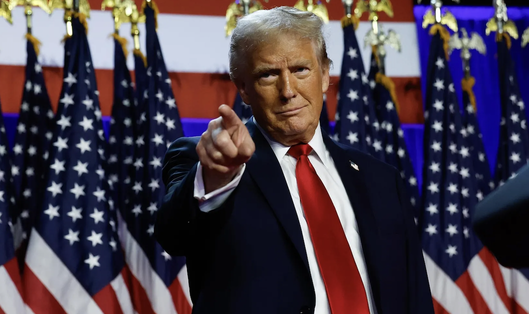
Less than a week after the election results were announced—despite not yet being sworn into office and with the House of Representatives still undecided—the President-elect Donald Trump has already made sweeping impacts across the crypto sector. Recently, the cryptocurrency market has continued to surge, with BTC breaking past its previous all-time high on election day and now surpassing the $81,000 mark, leaving a strong bullish candlestick pattern on the charts.
This clearly shows that Trump's emergence has significantly boosted market sentiment in the crypto space—an outcome naturally fueled by politicians' verbal promises. However, data suggests that when reviewing presidential terms historically, actual policy fulfillment rates have been far from optimistic.
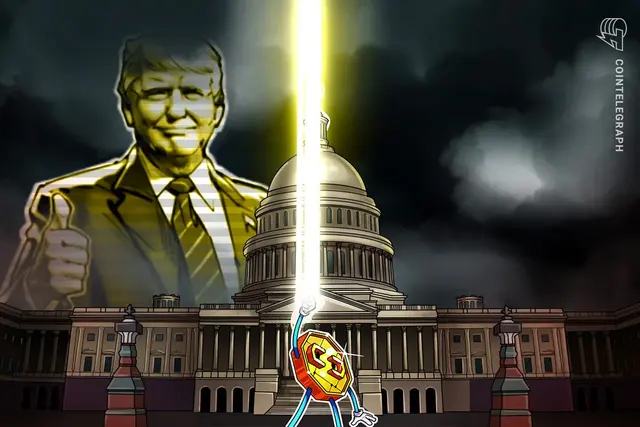
Whether crypto regulation will unfold as promised remains uncertain. What is clear, however, is that the crypto industry, having spent a staggering $240 million, has officially stepped out from behind the scenes into the center of American political life.
In the aftermath of the U.S. election, aside from the fossil fuel industry, no other sector stands taller than the crypto industry.
Driven by the "Trump effect" and the imminent interest rate cuts, the crypto market has seen astonishing gains. Bitcoin led the charge, rising rapidly from $67,000 to above $81,000 within just one week. In the early hours today, it reached a high of $81,500, marking a 7-day increase of 17.79%. Major cryptocurrencies broadly rallied. Ethereum, long dormant, climbed to $3,200, while SOL’s market cap briefly exceeded $100 billion. Meme coins also surged—DOGE, hailed as the representative of political memes, rose over 33% in the last 24 hours alone to $0.292, reaching a market cap of $42.3 billion, even overtaking stablecoin USDC to become the sixth-largest cryptocurrency by market value.
With such extreme volatility, liquidations are inevitable. According to Coinglass data, as of 2:54 PM, 216,612 positions were liquidated in the past 24 hours, totaling $650 million in liquidation volume—$365 million in longs and $285 million in shorts.
Overall, despite heightened volatility, the crypto market is clearly trending upward. A key indicator is Wall Street institutions continuing to bet heavily on Bitcoin. Starting November 6, Bitcoin ETFs saw significant net inflows, reaching a record single-day high of $1.359 billion on November 7. BlackRock’s IBIT fund now manages $17.243 billion in assets under management (AUM), with total assets reaching $17.443 billion—surpassing IAU, the second-largest gold ETF in the U.S. stock market, further reinforcing Bitcoin’s status as “digital gold.”
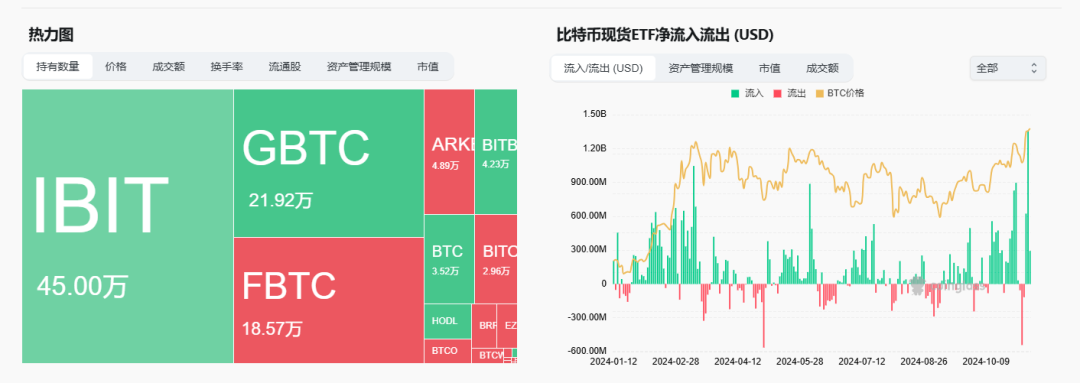
Prior to Trump’s victory, many market analysts predicted that once the election outcome was known, markets might decline due to “sell the news” dynamics. But in reality, the positive momentum for crypto has proven highly persistent. This sustained strength stems partly from a more accommodative macro environment—even though Wall Street expects slower rate cuts next year, the Fed delivered a cut in November as expected. The second driver is the industry’s growing optimism about Trump’s pro-crypto stance.
Looking back at Trump’s verbal commitments, they fall largely into two categories: regulatory and price-related. At the Bitcoin conference, Trump explicitly stated that Bitcoin’s market capitalization would continue growing since its inception, soon surpassing silver and eventually overtaking gold. He emphasized that if elected, the U.S. would treat Bitcoin as a strategic reserve asset, never selling a single coin, encouraging Bitcoin mining, minting, and manufacturing in America rather than elsewhere, and ensuring the U.S. becomes the world’s crypto hub and Bitcoin superpower.

On the regulatory front, Trump has opened up even greater imagination. He declared he would never allow a central bank digital currency (CBDC) to exist, promising to fire prominent anti-crypto figure and current SEC Chair Gary Gensler on his first day in office and appoint a new chair. He also pledged to immediately establish a Presidential Advisory Committee on Bitcoin and Cryptocurrency, tasked with designing transparent regulatory guidelines for the entire industry—goals to be completed within 100 days. “From now on,” he said, “these rules will be written by people who love your industry, not those who hate it—people who want clarity, simplicity, directness, and fairness, who wish to see your industry thrive, not die.”
Beyond words, Trump has taken concrete actions. Not only is he the first U.S. president to accept cryptocurrency donations, but his family has also launched DeFi projects. Crowned the “first Bitcoin president of America,” he repeatedly highlighted crypto during campaign rallies. Beyond Trump himself, Vice President-elect J.D. Vance and top advisor Elon Musk are staunch crypto supporters—both SpaceX and Tesla hold substantial Bitcoin reserves.
Even more encouragingly, this election brought a sweeping Republican victory. Having secured control of the Senate, Republicans are highly likely to win the House as well. This means Trump will enjoy much stronger party support in legislation, appointments, and fiscal matters—unlike in 2016, when he faced constant obstruction.
Thus, the crypto industry appears poised for a transformative shift in regulatory landscape, sparking great excitement among participants. Today, a16z’s policy lead wrote an article calling for building upon bipartisan cooperation from the previous Congress to advocate for clear regulatory frameworks that foster innovation and decentralization, bringing greater regulatory clarity. The industry should now feel empowered to explore all blockchain-powered breakthrough products and services, especially in token issuance and community building—many previously stalled plans may finally resume.
In terms of specific legislation, a research report by blockchain infrastructure firm Blockdaemon highlights two key bills likely to advance: first, the 21st Century Financial Innovation and Technology Act, which may pass the Senate and become law in 2025; second, the repeal of SAB 121, previously vetoed by Biden, may now come into effect.
Coinbase’s Chief Legal Officer Paul Grewal stated bluntly that crypto has reached a turning point. The CEO added that next year, U.S. lawmakers will be exceptionally friendly toward the crypto market, calling it “the most pro-crypto Congress in history.”
This is no exaggeration. While the presidency is crucial, in practice, legislative creation and enforcement in the U.S. depend heavily on Congress under its “separation of powers” system. Against this backdrop, the crypto industry has broadened its strategic focus—not only backing the president but also actively supporting crypto-friendly candidates in Congress.
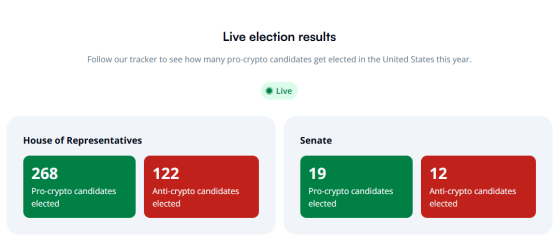
According to data from Coinbase’s Stand With Crypto website, as of November 11, in this election cycle, 268 pro-crypto candidates won seats in the House of Representatives, compared to only 122 anti-crypto representatives. Meanwhile, the new Senate is also more favorable to crypto, with 19 supporters versus 12 opponents.
All of this has been bought with real money. The crypto Super PAC Fairshake—funded by companies including Coinbase, Ripple, and Andreessen Horowitz—raised $245 million, making it the largest single-cycle Super PAC in U.S. history. It has surpassed traditional corporate donors and now ranks second only to the fossil fuel industry in political spending since the 2010 Supreme Court ruling lifted restrictions on corporate political contributions.
Fairshake not only raised enormous funds but also demonstrated remarkable precision in candidate selection, adopting a bipartisan investment strategy by funding both Republican-aligned “Defend American Jobs” and Democratic-aligned “Protect Progress.” Of the 48 candidates supported by the crypto PAC, nearly all won, achieving a historic 98% success rate. In pivotal races, crypto poured in millions—spending $40 million to help Ohio car dealer and blockchain entrepreneur Bernie Moreno, a Republican, overturn a 6% deficit and defeat Sherrod Brown, the well-known Democratic Senator from Ohio and fierce critic of crypto, who chaired the Senate Banking Committee. This victory further cemented Republican control of the Senate. The $40 million spent became the largest single organizational expenditure ever in an Ohio Senate race.
Beyond this election, Fairshake is already planning ahead for the 2026 midterm elections. To date, it has amassed over $78 million earmarked for midterms, aiming to counteract the typical voter backlash that often leads to divided government.
Anticipated lighter regulation and a return to smaller government are driving industry growth. Altcoins are experiencing a revival, and many in the industry are once again hopeful about altcoins entering the mainstream.
Yet in reality, beyond relatively swift personnel changes, any effort involving legislation or strategic direction entails complex, lengthy processes. It would be a mistake to overstate the power of any single president. In a federal system with strong checks and balances, the actual authority of the U.S. president is far more limited than in centralized regimes. In today’s deeply ideologically divided America, opposition parties exert strong constraints on the ruling party. Voters often prevent one-party dominance—even if one side wins everything temporarily, they typically rebalance power during midterms, which explains why Fairshake is already positioning itself early. During campaigns, presidents often make grandiose or radical promises to win votes, only to revert to pragmatism once in office.
According to data from Zhiben Society, presidential fulfillment rates during their terms are generally low. During Biden’s term, the overall promise fulfillment rate was only 28%: healthcare promises fulfilled at 42%; economic policies achieved just 2 out of 18 goals (11%); judicial at 20%; national security at 21%; administrative reform at 33%. Among smaller issue areas: immigration 50%, education 0%, climate and environment 75%, trade 33%.
During Trump’s first term, the overall promise fulfillment rate was 31%. All five trade-related promises were fulfilled (100%). However, other major areas fared poorly: only 3 out of 13 economic promises were met, with 10 completely unfulfilled (7.6%); immigration at 27%; administrative reform at 20%. Smaller areas: healthcare 10%, judiciary 50%, education 25%, national security 66%, climate and environment 33%.
Therefore, when evaluating U.S. presidents, actions matter more than words. Attention should turn to Trump’s speeches and follow-through actions after his official inauguration on January 20. On the other hand, the market need not be overly pessimistic. Compared to the highly unconventional Trump of 2016, today’s Republican sweep and Trump’s strong internal party standing could significantly improve his term’s policy execution rate. More importantly, the fact that the crypto industry has effectively “bought” access to Congress is now undeniable. Combined with a growing base of voters, neither lawmakers nor the president can afford to ignore this increasingly politicized and powerful sector.
From this moment forward, the crypto industry may have truly stepped onto the stage of history.
Join TechFlow official community to stay tuned
Telegram:https://t.me/TechFlowDaily
X (Twitter):https://x.com/TechFlowPost
X (Twitter) EN:https://x.com/BlockFlow_News