How Will Trump’s Return to the White House Impact Financial Markets? The Crypto Industry Welcomes a New President
TechFlow Selected TechFlow Selected
How Will Trump’s Return to the White House Impact Financial Markets? The Crypto Industry Welcomes a New President
Bitcoin greets new market expectations with an ATH.
 Navigating Web3 tides with focused insights
By Chandler, Foresight News
With Trump securing Pennsylvania's 19 electoral votes, the 2024 U.S. presidential election has effectively come to a close.
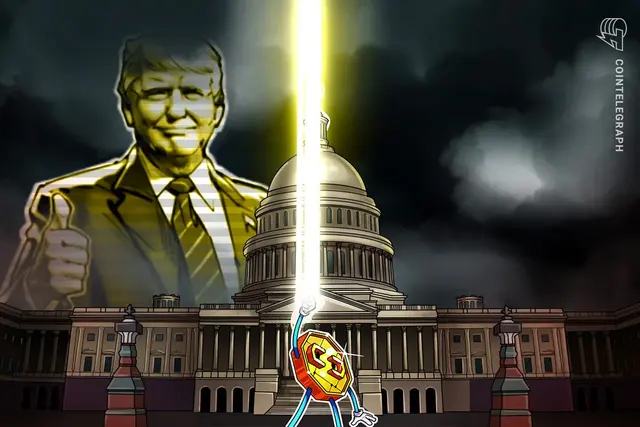
On November 6, FoxBusiness journalist Eleanor Terrett posted that, in fact, Donald Trump will now become the first "crypto president."
The crypto market responded swiftly to this outcome. On November 6, Bitcoin surged to an intraday high of 75,656 USDT, surpassing its previous peak of 73,775.9 USDT set in March and reaching a new all-time high. Financial markets mirrored this sentiment: the U.S. dollar index rose nearly 1.5%, while futures on the S&P 500 and Nasdaq 100 gained over 1.1%.
As the election concludes, investor focus is shifting toward understanding how the incoming administration may impact markets.
The July "Bitcoin" Declaration
Let’s first revisit Trump’s commitments to cryptocurrency made during his appearance at the Bitcoin Conference in the U.S. this past July:
-
"On Day One, I will fire Gary Gensler and appoint a new SEC Chair. If elected, I will establish a strategic national Bitcoin reserve for the United States. The U.S. government will hold 100% of its Bitcoin—never sell your Bitcoin. Bitcoin will go to the moon."
-
"Bitcoin might one day surpass gold in market cap. I reaffirm my commitment to commute Ross Ulbricht’s sentence."
-
"During my presidency, there will never be a CBDC."
-
"If I am elected president, Bitcoin and cryptocurrencies will soar as never before."
-
"Bitcoin does not threaten the dollar—what threatens the dollar is the current U.S. administration. America will become the global capital of cryptocurrency and the world's Bitcoin superpower."
-
"Bitcoin represents freedom, sovereignty, and independence from government coercion and control. I pledge to the Bitcoin community: on the day I am sworn in, Joe Biden and Kamala Harris’s anti-crypto campaign will end."
How Will the U.S. Election Result Impact the Crypto Market?
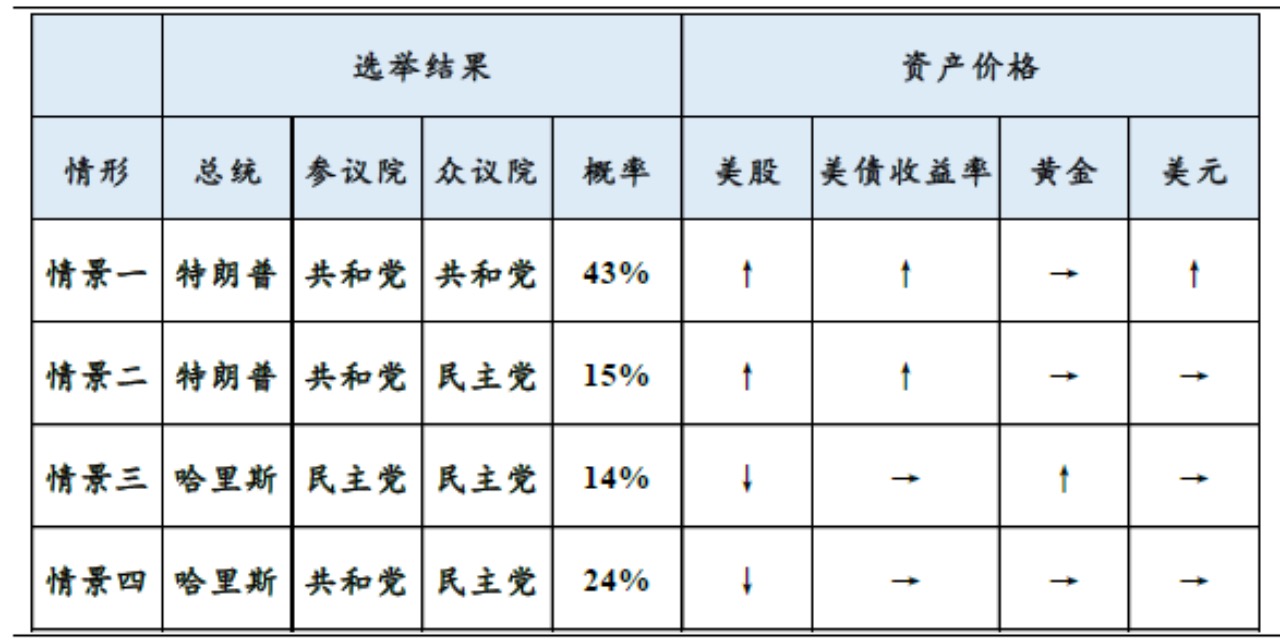
Prior to the election, Dongwu Securities analyzed four potential scenarios based on betting odds (chosen for their sensitivity and clarity), categorizing outcomes by party control, and assessing their impacts on asset prices. In the case of a Republican sweep (43% probability), the expected asset performance would be: U.S. equities > USD > gold > U.S. Treasuries. The report emphasized that the success of any presidential policy hinges critically on congressional support.
In such a scenario, Trump could more smoothly implement his agenda—enacting significant corporate tax cuts and deregulation—providing strong tailwinds for U.S. equities. Additionally, policy alignment (e.g., higher tariffs and tighter immigration) could increase reflationary pressures in the U.S. economy, which would be supportive of the dollar. Conversely, longer-dated Treasuries could face selling pressure under this environment.
Trump’s proposed tax reductions and regulatory easing, if implemented, would likely boost capital market attractiveness. The crypto market may see a short-term influx of capital as lower taxes increase disposable funds available for investment, with crypto assets becoming a key destination. Deregulation would reduce compliance burdens for crypto firms, encourage innovation, and strengthen investor confidence. For mainstream assets like Bitcoin and meme-driven altcoins (such as DOGE), increased liquidity could drive price appreciation and enhance market activity.
From a long-term perspective, if Trump’s policies advance further within a low-interest-rate, fiscally expansive environment, investors typically favor high-yield, highly liquid assets—conditions increasingly aligned with crypto. Moreover, reduced regulatory costs could increase institutional participation, helping expand the scale and real-world application of the crypto market.
Beyond the presidency, shifts in White House and congressional control will significantly shape the regulatory landscape and future development of digital assets. Senate control is particularly crucial for the crypto industry, as it plays a decisive role in confirming leaders of key regulatory bodies such as the SEC and CFTC.
Furthermore, if Trump returns to the White House, whether his campaign promises on crypto policy can be effectively enacted will have profound implications for the industry’s future trajectory.
Implementation of Crypto Policy
Trump has clearly stated his support for crypto innovation and plans to promote sector growth through deregulation. He has also pledged to explore designating Bitcoin as a strategic reserve asset for the United States.
Republican Senator Cynthia Lummis has introduced the "Bitcoin Strategic Reserve Act," submitting it to Congress for review by the Senate Banking Committee. The bill aims to create a strategic Bitcoin reserve and related programs, ensuring transparent management of federal Bitcoin holdings, leveraging certain Federal Reserve resources to offset costs, and other purposes. It must pass both the Senate and House, and be signed by the President, before becoming law.
If Bitcoin is officially designated as a strategic reserve asset, it would carry major symbolic and practical significance. First, it would mark Bitcoin’s transformation from a niche asset into a nationally recognized reserve instrument, dramatically enhancing its legitimacy and credibility. Such a policy shift would elevate Bitcoin’s status and significantly strengthen market confidence in its long-term value.
Second, as a reserve asset, Bitcoin would join traditional holdings like gold and foreign exchange reserves in supporting national financial stability and economic security. This recognition could solidify Bitcoin’s position within the global financial system, prompting central banks and governments worldwide to reassess their stance on Bitcoin and digital assets. Especially amid efforts to hedge against dollar volatility and economic uncertainty, this policy shift could set a precedent, encouraging other nations to adopt Bitcoin into their reserves for diversification and risk management—thereby expanding global demand and adoption.
However, it is important to note that U.S. presidential policymaking operates within established procedures and complex political realities. Campaign promises often require intricate processes—including negotiation, legislative approval, and bureaucratic implementation—before becoming actual policy. Overall, the effectiveness of a president’s agenda depends heavily on interplay among the executive branch, Congress, and the judiciary. After inauguration, whether a president can deliver on pledges ultimately hinges on several factors: party control of Congress, use of executive orders, legislative backing, and broader public sentiment.
The Fate of Gary Gensler
Following the 2024 U.S. election, the tenure of Gary Gensler as Chair of the Securities and Exchange Commission (SEC) is entering its final phase. Gensler’s term officially ends in January 2026, but tradition dictates that when a new president belongs to the opposing party, the SEC Chair typically resigns. With Trump’s victory, pressure on Gensler will intensify—particularly given his increasingly adversarial relationship with the crypto industry. Trump has repeatedly declared that he will fire Gensler if elected, making his departure all but certain.
Since assuming office in 2021, Gensler has maintained a hardline stance toward the crypto industry, asserting that existing securities laws are sufficient for regulating digital assets and enforcing them aggressively.
According to data from the Blockchain Association, since Gensler became SEC Chair, the U.S. crypto industry has spent over $400 million defending against the agency’s enforcement actions. During this period, the SEC has filed lawsuits against major crypto firms including Coinbase and Kraken. The Blockchain Association notes that the $400 million figure represents only “a fraction of the industry,” based on a sample of its members.
With Trump confirmed as the winner, Gensler’s fate will become a focal point. While he may technically remain at the SEC, under historical precedent and the current political climate, his resignation appears inevitable.
Overall, today’s rise in Bitcoin price clearly reflects, to some extent, market pricing-in of expectations for looser regulations under a Trump administration. Capital markets are front-running anticipated benefits as a hedge against future risks. If U.S. policy can strike a balance between compliance and innovation, it could further boost broad adoption and legitimacy of crypto assets—especially reinforcing Bitcoin’s role as a hedge asset with stable growth potential.
In the long run, crypto asset prices will continue to depend closely on market acceptance, policy support, and global capital flows. Clarity and sustainability in policy will be key to restoring investor confidence in the coming period.
Join TechFlow official community to stay tuned
Telegram:https://t.me/TechFlowDaily
X (Twitter):https://x.com/TechFlowPost
X (Twitter) EN:https://x.com/BlockFlow_News
 Foresight News