East Rises, West Falls 2.0: Bitcoin Hits New High—Can Unisat Spark Another Ecosystem Boom?
TechFlow Selected TechFlow Selected
East Rises, West Falls 2.0: Bitcoin Hits New High—Can Unisat Spark Another Ecosystem Boom?
We All Gonna Make It, we will ultimately win the victory!
 Navigating Web3 tides with focused insights
Author: Shouyi, Core Contributor of Biteye
Editor: Crush, Core Contributor of Biteye
Community: @BiteyeCN
* Approximately 4,000 words, estimated reading time: 8 minutes
On November 3, 2024, as BTC failed to break its previous high and dropped to $68,000, risk-off sentiment surged in the crypto market, pushing BTC’s dominance rate to 60%.
More distressing than the bloodbath among altcoins is the deeper question: Will this industry ever recover? Plummeting VC tokens, on-chain meme wars, centralized exchanges under fire, interest rate cuts falling short of expectations, and the upcoming U.S. election—each adds to the fog of uncertainty hanging over every crypto participant.
"The farther you can look back, the farther you can see forward." Let's revisit a past moment of confusion and uncertainty—whether by following clues or clinging to outdated methods—and cook up a bowl of "WAGMI"鸡汤 (a morale-boosting broth).
We All Gonna Make It—we will ultimately prevail ✌️
01 The Anxious and Confusing Western Time
Are you regretting missing out on 100x or even 1000x AI meme coins? Are you staring blankly at $GOAT, $GNON, $SLOP, unsure what just happened? Do you find yourself contemplating Binance’s $NEIRO perpetual contracts versus the spot $neiro token, trying to quickly identify which CTO (Community Take Over) projects or similar-themed tokens are worth buying?
Going back another six months, tokens like $BOME, $SLERF, $FIGHT (inspired by Trump’s assassination attempt), and Mars city-themed $TERMINUS and $MARS weren’t easy to explain, let alone understand their narratives. And that’s before considering that @pumpdotfun has already launched over 2 million meme tokens this year alone (source: Cryptohunt.ai).
Relax—this kind of anxiety-inducing “chaotic moment” is precisely the hallmark of what we call “Western Time.” As early as 2023, when PEPE emerged out of nowhere and reached a $1 billion market cap within three weeks, a new pattern pioneered by Western players began to take shape: “novel narrative + large capital pumps + rapid exchange listings + sustained development.” The only difference was that the final phase—building and ultimately absorbing losses—was often left to Eastern participants.
“When will there finally be a narrative led by Eastern players, where we rally together and make foreigners the ones taking the bag?” After enduring this anxious and disorienting Western Time, users are now eagerly awaiting the arrival of an Eastern era.
02 East Rising, West Declining 1.0: Engraving Rocks to Sell to Westerners
“Only Easterners enjoy carving things into rocks.” That’s how Zhu Su, former founder of Three Arrows Capital, described inscription minting during a recent Space—shortly after completing a four-month prison sentence.
At the time, BTC network gas fees were soaring due to the wealth effect of $ORDI. People—mostly Asian users—were frantically minting four-letter BRC20 tokens, proclaiming this as the universal token standard for the next bull run: “It’s time to migrate Ethereum-based applications to Bitcoin!”
Once again, a novel narrative had emerged, followed swiftly by capital inflows, fast exchange listings, and ongoing ecosystem development.
During this period, BTC Layer-1 chains such as @MerlinLayer2, @BSquaredNetwork, @BitlayerLabs, and @build_on_bob announced funding rounds. Projects like @babylonlabs_io, @SolvProtocol, and @IgnitionFBTC introduced staking and other new utilities to the BTC ecosystem.
On September 24, 2023, $SATS—the ninth inscription on BTC—reached 100% minting completion, with a total of 21,107,258 mints and 36,061 holders.
On October 10, 2023, UniSat officially announced that BRC20-swap would launch on the 25th, and revealed that $SATS would be used as the transaction fee token. $SATS promptly surged tenfold.
On November 7, 2023, Binance listed $ORDI—an important signal of its commitment to the BTC ecosystem. OKX, however, had already listed $ORDI back in May and leveraged inscriptions to drive rapid growth in its Web3 wallet user base.
Although Coinbase didn’t list $ORDI until April 2024, given Binance’s influence across both Eastern and Western markets, its listing marked the beginning of the “sustained development” phase—only this time, it was Western users stepping in to carry the momentum.
03 Halfway Through the Journey, Yet Already Debating BTC OGs
From Binance’s listing of $ORDI in November to Coinbase’s in April the following year, the BTC ecosystem did not progress smoothly. Key events included:
1. BTC OGs: Inscriptions Are an Attack on the Bitcoin Network
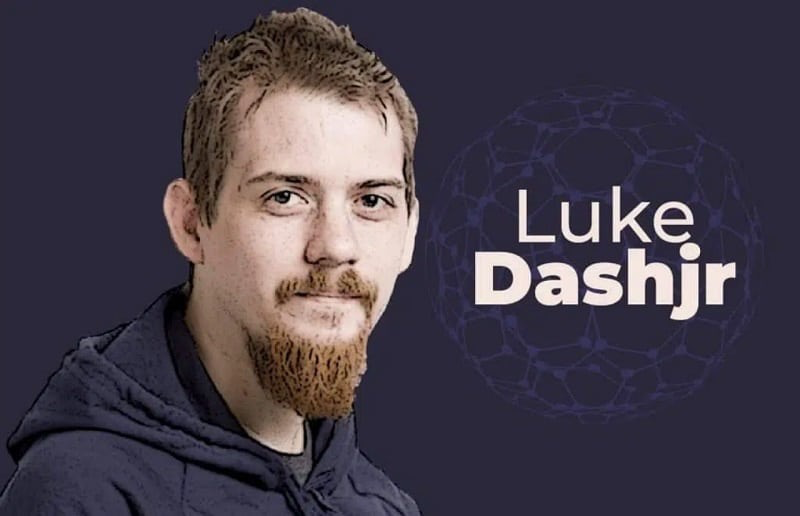
On December 6, Bitcoin core developer Luke Dashjr tweeted that “Inscriptions” were exploiting a vulnerability in Bitcoin Core to flood the blockchain with spam data.
Shortly after, on December 9, the U.S. National Vulnerability Database (NVD) flagged Bitcoin inscriptions as a cybersecurity risk, highlighting a security flaw in the Ordinals Protocol dating back to 2022.
2. Amid the Chaos, Runes Were Born
As debates with BTC OGs intensified, inscriptions faced the real possibility of becoming obsolete with future client updates. Discussions around potential forks gained traction, and assets like BRC100 and ARC20 saw strong performance.
In March, Casey Rodarmor, founder of Bitcoin Ordinals, released the highly anticipated Runes (符文) whitepaper. Runes allow users to etch, mint, and transfer native digital assets directly through Bitcoin transactions. Casey boldly declared that if the Runes ecosystem failed to reach a $1 billion market cap, he would “live-stream seppuku.”
3. $MERL’s Continuous Decline and Other Projects Delaying Token Launches
On April 19, 2024, $MERL was listed on OKX—then began a relentless downtrend. By November, it had fallen from a high of $1.74 to $0.25, with a still-significant market cap exceeding $500 million. $MERL’s poor performance cast doubt on the profitability of the BTC ecosystem, causing multiple BTC-native projects to delay their token launches.
The launch of $MERL effectively marked the end of the Eastern era. Prior to this, $ORDI had hit an all-time high of $96 in March, while $SATS, despite a steady decline after its Binance listing in December 2023, rebounded close to its peak in March. But by April, everything had quieted down. No subsequent inscription project managed to spark renewed excitement. The market moved on—to Solana-based memes—and re-entered Western Time.
Looking back, the decline of inscriptions was foreshadowed.
Their narrative rode the coattails of two broader trends: “BTC ETF approval” and “ETH’s lack of innovation.” With nothing better to do, people rediscovered Bitcoin’s hidden potential. The inscription model—no pre-mine, no VC allocation, fair launch via minting—resonated strongly with widespread skepticism toward VC-backed tokens.
This momentum was further fueled by infrastructure support from Unisat and OKX, enabling users to batch-mint inscriptions and participate in competitive NFT drops.
However, the wealth effect of inscriptions relied heavily on liquidity scarcity. Once listed on exchanges, they lost much of their unique BTC-native appeal and became just another tradable token. As infrastructure stagnated, users realized the BTC ecosystem was little more than “old wine in new bottles.” Falling token prices then accelerated the narrative’s collapse.
04 A Masterstroke: Unisat’s Own Chain—Fractal Bitcoin
Fractal Bitcoin is a Bitcoin scaling solution developed by Unisat, a well-known Bitcoin wallet team.
According to its official documentation, Fractal Bitcoin uses BTC’s core code to recursively create infinite scaling layers on the main Bitcoin chain, boosting transaction throughput and speed while maintaining full compatibility with the existing Bitcoin ecosystem. It features fast transactions, native compatibility, and dynamic adjustments.
A Brand-New BTC Public Chain
During the first Eastern era, the fate of inscriptions rested in the hands of a few core BTC developers. Unisat clearly recognized that building on such uncertain foundations was unsustainable. Creating their own BTC chain allowed them to control their destiny and avoid the exorbitant fees on the Bitcoin mainnet.
Built on BTC’s core code, Fractal is fully compatible with existing Bitcoin wallets, tools, and mining hardware. Since launch, it has demonstrated solid performance in network capacity and transaction traceability.
Cadence Mining
Fractal uses the same PoW mechanism as Bitcoin, allowing BTC miners to seamlessly switch to mining Fractal using existing hardware. Through Cadence Mining—a hybrid of permissionless and merged mining—two out of every three blocks are mined via permissionless mining, while one is mined via merged mining. Permissionless mining allows anyone to participate, while merged mining enables BTC miners to simultaneously mine both chains without additional computational power.
Currently, Fractal’s merged mining hash rate stands at 352.278 EH/s, approximately 61.9% of Bitcoin’s current 570.96 EH/s. In other words, Fractal incentivizes miners to secure the network by distributing daily rewards in $FB.
Support for Innovative Assets and Protocols
1. CAT20 Protocol
CAT20 was one of the earliest protocols on the Fractal network. According to the official @ProtocolCAT documentation (https://catprotocol.org/), CAT Protocol is a new UTXO-based Bitcoin token standard, standing for Covenant Attested Token (CAT). Verified by miners and governed by smart contracts, it manages token minting and transfers with the following features:
-
No indexer required: Token rules are secured by Bitcoin consensus, inheriting BTC’s security. Data and logic reside entirely on-chain, eliminating reliance on third-party off-chain services like indexers.
-
Modular design: CAT tokens can be integrated into other smart contracts to build complex dApps (e.g., AMMs, lending, staking).
-
Programmable minting: Minting rules are enforced by smart contracts, preventing over-issuance.
-
Cross-chain interoperability: The CAT protocol supports multi-chain assets, enabling dApps to operate across chains.
-
SPV compatible: CAT tokens support Simplified Payment Verification (SPV), allowing lightweight clients (e.g., mobile wallets) to independently verify token authenticity without trusting central servers.
CAT supports both fungible tokens (CAT20 standard) and non-fungible tokens (CAT721 standard). Currently:
The first CAT20 token caused gas fees to spike from 150 sats/vB to 5,000 sats/vB during minting. A single CAT20 card (comprising five tokens) peaked at $10 and has since settled around $3.5.
The first CAT721 NFT collection has a total supply of 10,000: 1,500 were distributed via OKX wallet raffles, and 8,500 were allocated to users who staked 100 CAT20 tokens in their wallets.
Unisat provides extensive support for CAT20, offering dedicated query pages during minting and full asset integration within its website and wallet.
2. PizzaSwap
PizzaSwap, formerly known as Fractal Swap, is a key product in Unisat’s roadmap from the first Eastern era.
PizzaSwap currently has no native token. In May, Unisat airdropped the five-letter BRC20 token $PIZZA to ecosystem users, consistently framing it as a promotional giveaway. However, the name sparked speculation that $PIZZA might become PizzaSwap’s governance token, driving its price up to $6 in September before settling around $2.
On October 27, Unisat announced via Twitter that PizzaSwap would launch LPfest on November 6, allowing users to earn trading fees and $FB rewards by providing liquidity.
$FB Circulation Control
As Fractal’s gas token, $FB has dropped from a high of $38 to around $5 since launch. Its current circulating market cap is only $25 million—less than many short-lived inscription tokens from last year. This stems from several factors tied closely to $FB’s circulation dynamics.
Initial airdrops of $FB were limited; most tokens are currently generated through miners’ merged mining activities, leading some users to complain about constant sell pressure. Additionally, low circulation levels have made $FB ineligible for listing on certain exchanges, restricting user access. Finally, low liquidity makes $FB highly sensitive to ecosystem developments and wealth effects: demand spikes whenever new projects emerge. However, aside from a brief surge during inscription mania, subsequent developments—including runes—have underperformed, and on-chain gas fees have since returned to single digits.
Yet for a team like Unisat—one that has weathered both bull and bear markets in the inscription space—there may be a longer-term strategy at play.
05 Conclusion: The Sun Sets in the West, But Sunrise Is Only a Matter of Time
In reality, Eastern and Western times aren’t mutually exclusive. Capital never sleeps—the difference lies only in which time zone profits are being made.
When people grow tired of discussing memes on California beaches, they naturally turn their gaze across the Pacific to BRC20 tokens. Ultimately, in times of tight liquidity, capital relies on narratives to move.
But after each narrative cycle, truly capable and responsible developers quietly lay the foundation, patiently waiting for the clock to strike their hour.
On October 30, 2023, UniSat announced the initial 14 assets supported by BRC20-swap—including $SATS.
On November 1, 2023, BRC20-swap officially launched, with nearly half of the initial 118 pools using $SATS as a liquidity asset.
In December 2023, UniSat announced it would open indexer operation mining in January 2024, rewarding users with $SATS for running transaction bundling services.
Reflecting on the relationship between UniSat and $SATS, $SATS began as a mere “satoshi meme coin,” but with UniSat’s backing, it forged its own narrative. Today, the Fractal network has become Unisat’s primary focus. If we apply the same logic today—can we expect a CAT20 breakout this December?
Let’s wait and see. Once again, we may be stepping into an era defined by Eastern narratives.
Join TechFlow official community to stay tuned
Telegram:https://t.me/TechFlowDaily
X (Twitter):https://x.com/TechFlowPost
X (Twitter) EN:https://x.com/BlockFlow_News
 @BiteyeCN