








Rumors Abound: Are Binance's Exorbitant Listing Fees Real?
TechFlow Selected TechFlow Selected
Rumors Abound: Are Binance's Exorbitant Listing Fees Real?
"Binance demands 15% of the total token supply." "If a project doesn't pass the screening process, no amount of money or token percentage will get it listed on Binance."
 Navigating Web3 tides with focused insights
By shaofaye123, Foresight News
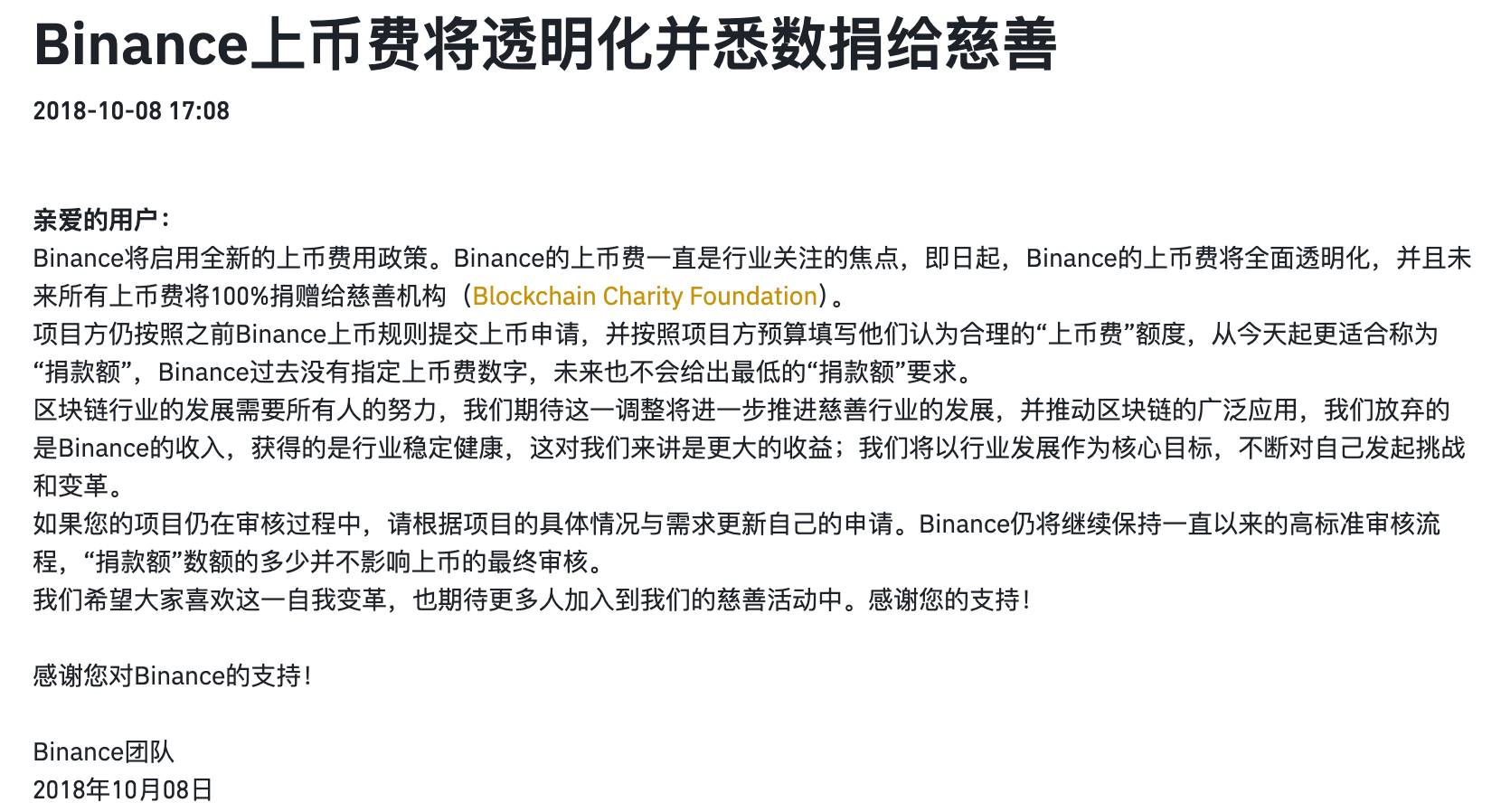
Listing fees at cryptocurrency exchanges have long been a focal point in the industry, and debates over whether exorbitant listing fees truly exist are nothing new. In 2018, Binance was questioned over allegations that it charged $1 million to list a token. Other exchanges were also drawn into the controversy, with claims ranging from 10 ETH to 20 BTC or 500,000 tokens—making it difficult to discern truth from fiction. In October 2018, Binance issued a statement announcing it would make its listing fees transparent and donate them to charity. In 2022, Binance's listing fee practices came under public scrutiny again due to the MITH deposit refund incident. Recently, with Moonrock Capital’s CEO revealing a purported $100 million listing fee on Twitter, rumors and criticisms surrounding Binance’s alleged sky-high fees have once again taken center stage.
The Incident Unfolds
On November 1, the CEO of Moonrock Capital, a crypto-native consulting and investment firm, took to Twitter claiming that Binance demanded 15% of a potential project’s total token supply to secure a listing on its centralized exchange—amounting to approximately $50 million to $100 million.
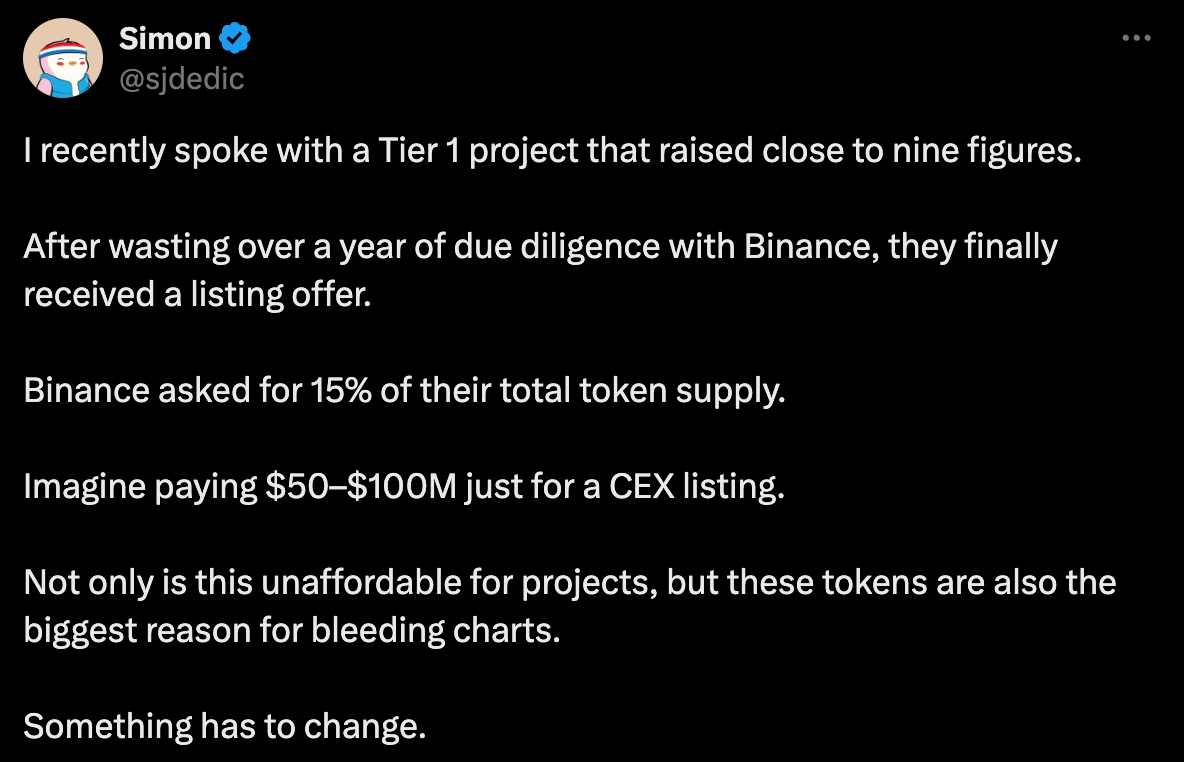
The post quickly went viral, amassing over a million views, and sparked widespread discussion as more KOLs joined either in condemnation or defense.
Brian Armstrong, co-founder of Coinbase, responded to the situation by stating: "Coinbase does not charge listing fees."
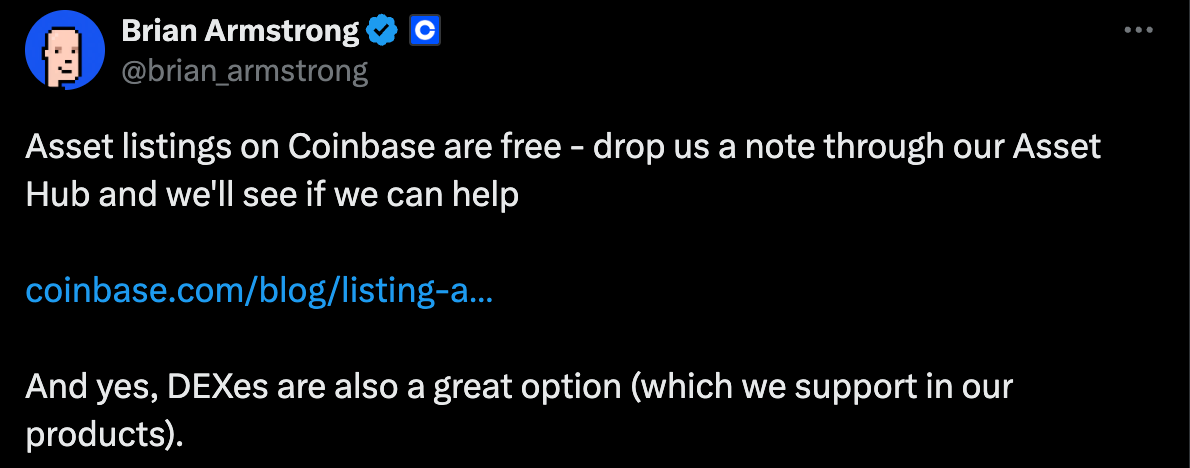
However, Coinbase soon faced backlash itself, exposed for not only charging listing fees but demanding substantial amounts.
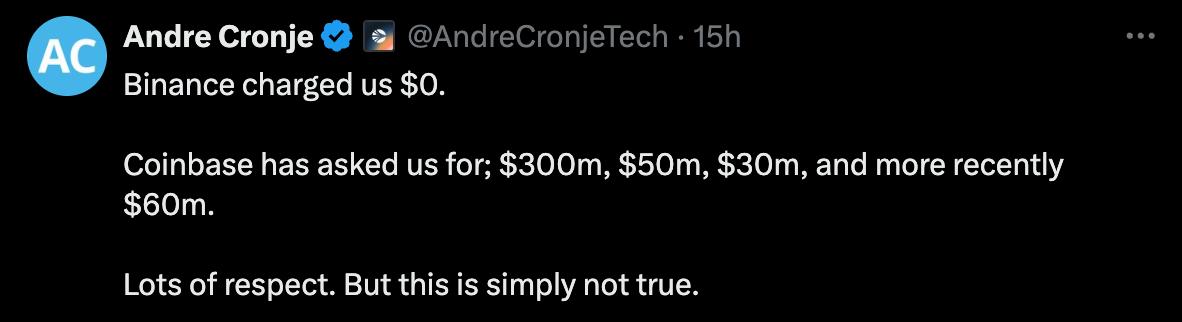
Andre Cronje, co-founder of Sonic Labs, claimed on Twitter that “Binance does not charge listing fees, but Coinbase has repeatedly asked for payments—quoting figures such as $300 million, $50 million, $30 million, and most recently $60 million.” This response ignited intense debate, escalating the situation further. Some questioned whether Andre might have interacted with fake Coinbase listing representatives, but Andre insisted he could provide all evidence for public verification. “I didn’t sign any NDAs, so I’m happy to share proof—the quotes came from multiple Coinbase employees/departments over the years via email, Telegram, and Slack. Coinbase may argue these aren’t listing fees but ‘earn fees,’ but they still translate into real listing costs for projects.”
He Yi Responds
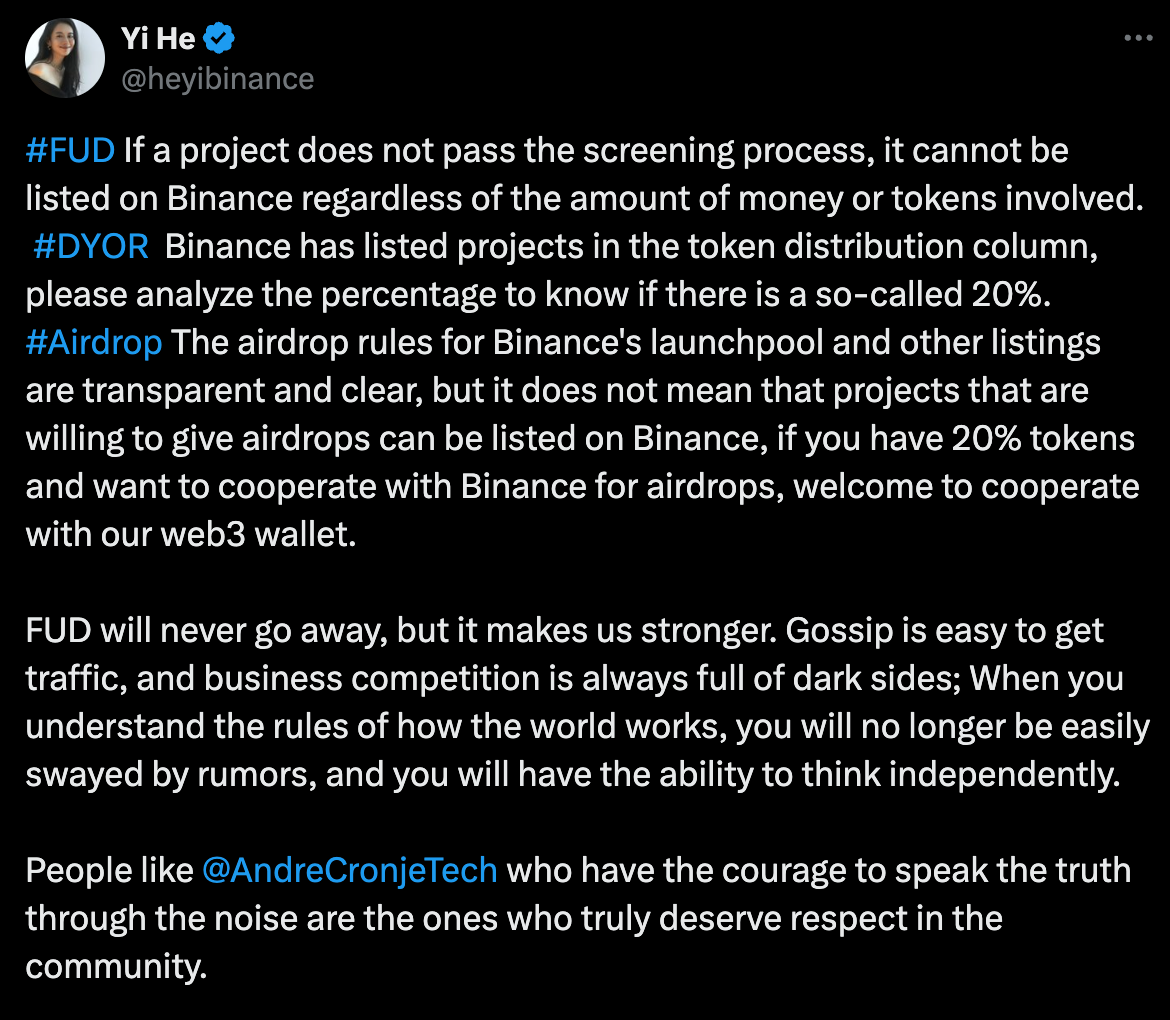
Amid soaring public interest, Binance co-founder He Yi issued a response, denying the existence of any such listing fee. She emphasized that Binance’s collaboration models involving token allocations and airdrop rules are clear and transparent, and that listing eligibility is never determined by whether a project offers tokens. Additionally, Binance maintains a strict project evaluation process.
In her tweet, He Yi stated:
-
FUD: If a project doesn’t pass our review process, no amount of money or percentage of tokens will get it listed on Binance.
-
DYOR: Projects already listed on Binance clearly disclose their token distribution—feel free to analyze the percentages yourself to see if there’s any truth to claims of 20%, 15%, etc.
-
Airdrops: Rules for Binance Launchpool and other airdrops are transparent, but this doesn’t mean every project willing to conduct an airdrop qualifies for listing. If you’d like to collaborate with us on an airdrop using 20% of your tokens, we welcome you to partner with our Web3 wallet team.
"FUD will never disappear, but it makes us stronger. Gossip easily attracts attention; business competition always has its dark sides. When you understand how the world really works, you won’t be swayed by rumors—and you’ll develop independent thinking.
People like AC, who have the courage to speak the truth amid noise, are the ones the community should truly respect."


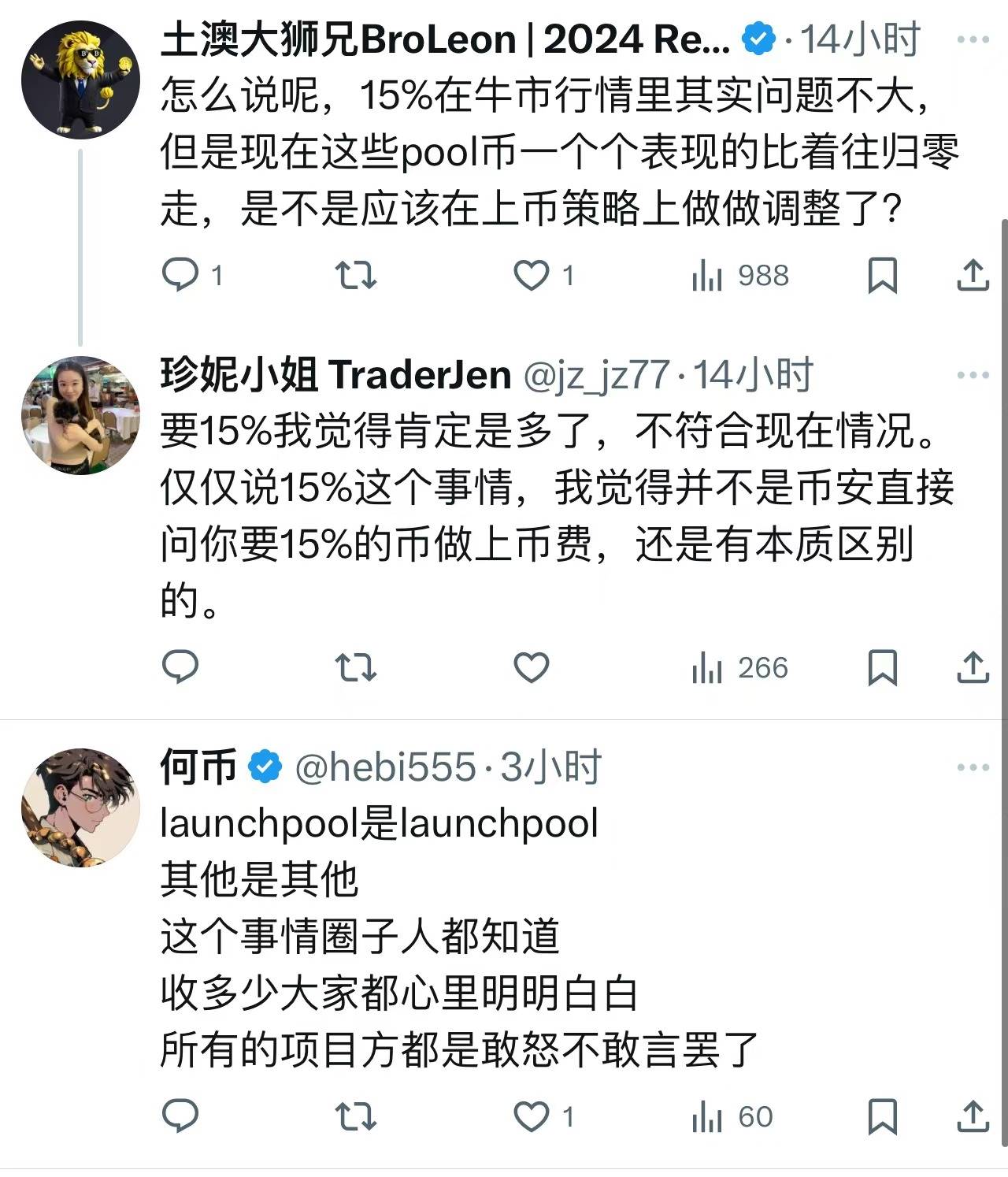
Public and KOL opinions on listing fees remain divided. Some believe listing fees are a legitimate part of exchange operations and can serve as a mechanism to filter project quality. Others argue that high fees may prevent promising but underfunded projects from listing, thereby harming market diversity and competitiveness.
Reflections on Industry Development Through Listing Fees
2018, 2022, 2024—it seems that every few years, the debate over listing fees resurfaces. At its core, cryptocurrency champions decentralization, yet listing fees at centralized exchanges remain shrouded in opacity. From a business perspective, it may be reasonable for exchanges to charge listing fees, given the resources required to evaluate projects, ensure compliance, and maintain platform operations. However, such fees must be transparent and fair, and excessively high costs should not become barriers that stifle innovation.
Amid ongoing disputes over listing fees, what emerges clearly is the industry’s strong demand for transparency and fairness. Binance’s proactive response has helped ease market concerns to some extent, highlighting the growing necessity for exchanges to adopt more transparent and equitable listing policies. Yet, industry progress should not revolve solely around listing fees. Project teams must place greater emphasis on the quality and sustainability of their projects. Each renewed focus on listing fees reflects a deeper desire for a fairer, more transparent market environment—one that often signals a turning point, where truly valuable projects are expected to rise above the rest.
Join TechFlow official community to stay tuned
Telegram:https://t.me/TechFlowDaily
X (Twitter):https://x.com/TechFlowPost
X (Twitter) EN:https://x.com/BlockFlow_News
 Foresight News






