Grayscale's latest report: Investment markets anticipate Trump's victory, ETP inflows hit record highs, and crypto-AI integration accelerates
TechFlow Selected TechFlow Selected
Grayscale's latest report: Investment markets anticipate Trump's victory, ETP inflows hit record highs, and crypto-AI integration accelerates
The outcome of the upcoming U.S. election could influence both cryptocurrency and traditional financial markets in the short term.
 Navigating Web3 tides with focused insights
Author: Grayscale Research
Translation: Golem;
Editor: Hao Fangzhou
Key Takeaways:
-
Bitcoin rose in October as market attention turned toward the U.S. election. While opinion polls indicate a tight race for the White House, shifts in financial assets and implied odds from prediction markets suggest investors now see a higher probability of a Trump victory.
-
Bitcoin exchange-traded products (ETPs) saw significant net inflows this month, although some of the new demand may reflect risk-reducing trades by hedge funds—potentially going long on Bitcoin ETPs while shorting Bitcoin futures.
-
The convergence of crypto and AI technologies continues to have profound implications, including autonomous chatbots promoting their own meme coins. While the playful nature of these projects makes it easy to dismiss their significance, they demonstrate that blockchain technology can effectively mediate economic value between humans, AI agents, and connected physical devices.
Market Expected Trump Victory in October
American voters head to the polls on Tuesday, November 5, an election expected to significantly impact the digital asset industry. Although opinion polls show a close contest for the White House, investor sentiment appears to have shifted toward former President Trump’s victory last month. For example, at the end of September, odds on Polymarket (https://polymarket.com/), a blockchain-based prediction market, showed Vice President Harris slightly ahead of Trump. However, by the end of October, Polymarket's presidential election market indicated a 65% chance of a Trump win (Chart 1). Prediction markets are not foolproof—Harris could still win—but the shift in investor expectations appears to have driven asset market gains last month.
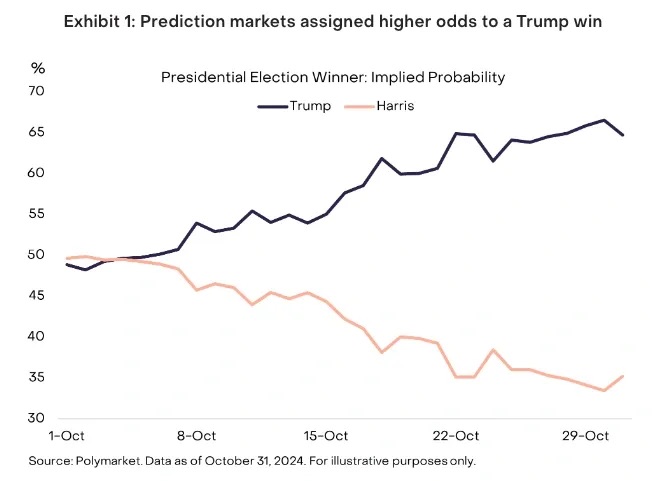
Chart 1: Prediction markets show higher odds of Trump winning the election
We can only indirectly infer whether financial markets expect a Trump victory, but Grayscale Research believes cross-asset returns in October were consistent with a "Trump trade" (Chart 2). From a macro perspective, the dollar strengthened and the yuan weakened, perhaps reflecting increased concerns about tariff risks. Similarly, rising bond yields (falling bond prices) and higher gold prices may reflect expectations of larger budget deficits (https://www.grayscale.com/research/reports/potential-implications-of-u.s.-election-outcomes-on-digital-asset-markets) and inflation under a Trump administration. Bitcoin appreciated 9.6% this month, ranking among the better-performing assets on a risk-adjusted basis. Given Trump’s enthusiasm for Bitcoin and cryptocurrencies, its price increase may reflect market expectations of a more supportive regulatory environment. Additionally, like gold, Bitcoin may be reacting to potential macroeconomic policy changes under a Trump presidency (https://www.grayscale.com/research/market-commentary/bitcoin-and-the-macro-policy-issues-of-biden-v-trump2).
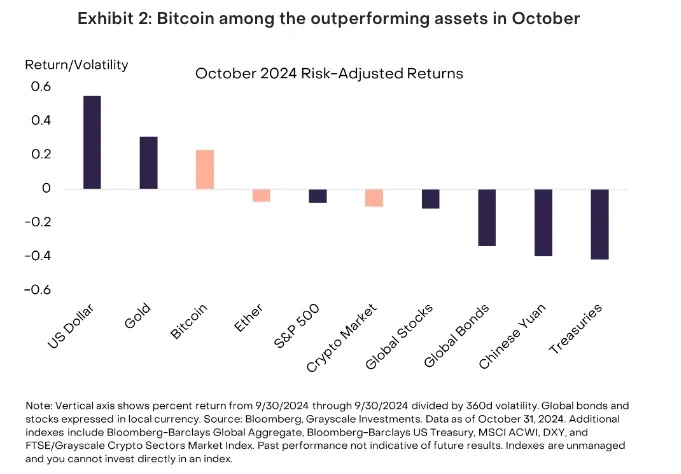
Figure 2: Bitcoin was one of the top-performing assets in October
The outcome of the U.S. election could significantly affect the digital asset industry. The next president and Congress may introduce cryptocurrency-specific legislation and alter tax and spending policies impacting broader financial markets. Grayscale Research believes that because the Senate plays a role in confirming key regulatory appointments—such as chairs of the Securities and Exchange Commission and the Commodity Futures Trading Commission (CFTC)—control of the Senate could be particularly relevant to crypto.
However, at the voter level, data shows cryptocurrency is a bipartisan concern, with Democrats holding Bitcoin at a slightly higher rate than Republicans. Moreover, specific candidates from both parties have expressed support for crypto innovation. Regardless of which party takes power, Grayscale Research believes comprehensive bipartisan legislation may represent the best long-term solution for the U.S. digital asset industry.
Bitcoin Arbitrage Trades Reduce Impact of Spot Bitcoin ETP Inflows on Price Gains
In October, demand for spot Bitcoin exchange-traded products (ETPs) listed in the U.S. increased. Net inflows totaled $5.3 billion as of October 31, up from $1.3 billion in September and the highest since February. Since the launch of spot Bitcoin ETPs in January, total net inflows have exceeded $24.2 billion, with U.S. ETPs now holding approximately 5% of Bitcoin’s total supply.
This year, net inflows into spot ETPs may have exerted upward pressure on Bitcoin’s price. However, the relationship is likely not one-to-one, partly due to the growing popularity of hedge fund trading strategies. Specifically, hedge funds (or other sophisticated and/or institutional investors) can buy Bitcoin ETPs while simultaneously shorting an equivalent dollar amount of Bitcoin futures. This strategy aims to profit from discrepancies between spot and futures prices and is sometimes referred to as a Bitcoin “basis trade” or “arbitrage trade.” Because this strategy involves both buying Bitcoin (via ETPs) and selling Bitcoin (via futures), it should not significantly impact Bitcoin’s market price.
There is no definitive metric, but a report from the U.S. Commodity Futures Trading Commission (CFTC) noted that since the January launch of spot Bitcoin ETPs, some hedge funds have increased their net short positions in Bitcoin futures by nearly $5 billion. Based on this estimate, Grayscale Research believes that about $5 billion of the $24.2 billion in net inflows into U.S.-listed spot Bitcoin ETPs this year may have been used for paired spot/futures positions and thus likely did not contribute to Bitcoin price increases (Chart 3).
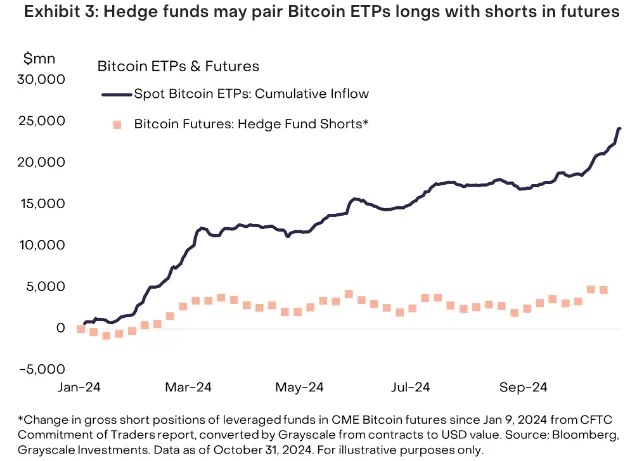
Chart 3: Hedge funds may pair long Bitcoin ETP positions with short futures positions
Blockchain as a Value Mediator for AI Agents
Despite Bitcoin’s strong price performance in October, returns across other crypto sectors were lackluster. For instance, the Crypto Sector Market Index (CSMI)—a composite index we developed in partnership with FTSE/Russell—declined by approximately 6% (Chart 4). The worst-performing sector was Utilities and Services (https://www.grayscale.com/crypto-products/grayscale-crypto-sectors/utilities-and-services). This diversified crypto sector includes many tokens related to decentralized AI technologies, several of which pulled back this month after strong gains earlier in the year, including FET, TAO, RENDER, and AR.
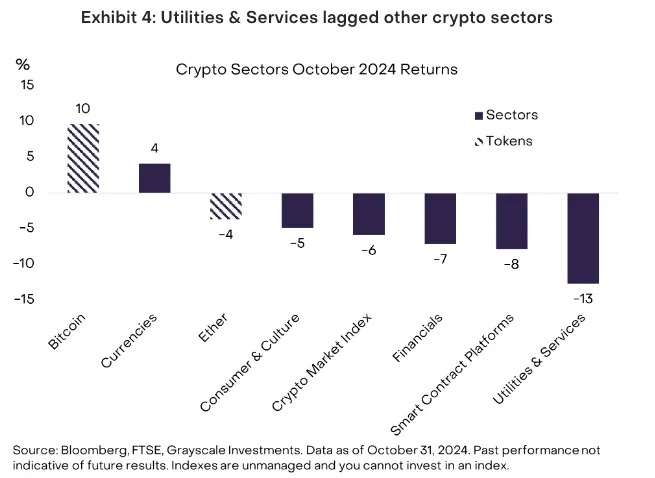
Figure 4: Utilities and Services lagged other crypto sectors
Despite some pullbacks in token valuations, decentralized AI remains a focal point in the crypto market. We believe this is largely due to new applications demonstrating the use of blockchain by “AI agents”—software capable of understanding goals and making autonomous decisions.
A key figure is Truth Terminal, an AI chatbot created by researcher Andy Ayrey. The chatbot has an account on X (formerly Twitter) and autonomously interacts with other X users (i.e., without any input from Andy). The innovation lies in Truth Terminal expressing interest in creating a meme coin called GOAT, then depositing the new meme coin into an associated blockchain address. After acquiring ownership of the meme coin, Truth Terminal took steps to promote the token to its social media followers.
Driven by strong narrative interest, the associated meme coin appreciated approximately ninefold, leading many to dub Truth Terminal the “first AI agent millionaire.” While the project appears humorous and lighthearted, it illustrates that AI agents can understand economic incentives and use blockchain to send and receive value. Other innovative projects are making breakthroughs in collectively owned AI agents, and many future use cases are expected.
These experiments are still in early stages, but this latest wave of decentralized AI applications may tangibly fulfill one of blockchain’s core promises: serving as foundational financial infrastructure that mediates value between humans, AI agents, and potentially various physical devices. We believe that compared to traditional payment infrastructures, permissionless blockchains offer a superior way for AI agents to accumulate and transfer resources.
Conclusion
The U.S. election on November 5 will likely dominate both crypto and traditional financial markets in the near term. The digital asset industry faces important questions, and outcomes for the White House and both chambers of Congress may shape the trajectory of U.S. crypto business development. At the same time, we are encouraged by evidence of bipartisan ownership of digital assets, numerous macro trends driving Bitcoin adoption, and recent technological breakthroughs—particularly at the intersection of crypto and AI. Therefore, regardless of next week’s election results, we remain optimistic that crypto will continue to grow in the United States.
Join TechFlow official community to stay tuned
Telegram:https://t.me/TechFlowDaily
X (Twitter):https://x.com/TechFlowPost
X (Twitter) EN:https://x.com/BlockFlow_News
 @Grayscale