Block validators陷入生存困境, income decline forces service upgrades
TechFlow Selected TechFlow Selected
Block validators陷入生存困境, income decline forces service upgrades
L1 validators are providing additional services to earn extra income, and if they don't do so, they will need to continue doing so to maintain APY.
 Navigating Web3 tides with focused insights
Author: taetaehoho
Translation: TechFlow
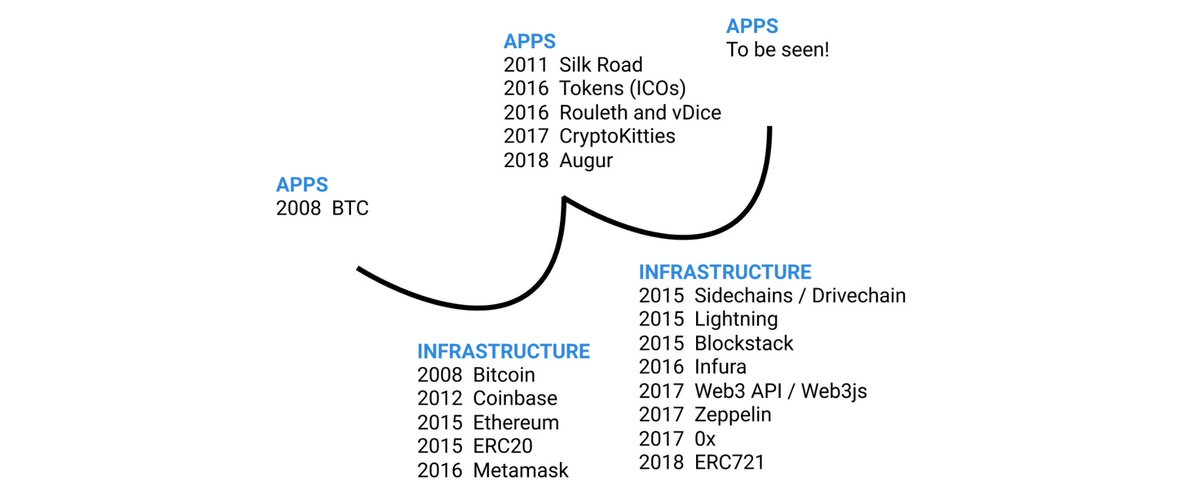
Blockchains have three primary revenue sources (paid to stakers and sequencers):
-
Base fees – A non-dynamic base fee set as validators’ “cost of transaction,” covering bandwidth, storage, and computational resources.
-
Congestion fees – Blockchains define maximum block sizes based on full-node requirements and internal protocol mechanisms (e.g., committee consensus, signature aggregation, propagation). When capacity is reached, congestion fees arise. Dynamic base fees are effectively a form of congestion pricing, possibly distributed as direct rewards or through burning.
-
MEV (Maximal Extractable Value) – Revenue earned by selling proposer rights to “reorderers,” such as tips from Jito and MEV-Boost.
For all blockchains, many of these revenue streams are expected to decline over time.
-
Competition among high-throughput chains is intense. Solana’s example shows that node operator costs can be offset by high initial inflation and launch support, provided high usage is eventually achieved. Industry-wide, base fees are decreasing as chains adopt “loss-leading” strategies.
-
Decentralized applications (dApps) that generate valuable state realize their MEV income leaks to stakers and sequencers, so they’re seeking ways to self-sequence and capture profits. This drives demand for appchain infrastructure and maturity of App-Specific Sequencer (ASS) solutions. Although third-party integration costs remain high—such as noted by @AndreCronjeTech—they are gradually falling with the emergence of players like @hyperlane and @RelayProtocol.
These incentives apply universally across blockchains. So what comes next?
In response, L2s are expanding their product offerings and funneling profits from these operations into their DAOs (Decentralized Autonomous Organizations), promising future token holders will manage capital allocation.
-
Rollup frameworks – Joining the Optimism Collective requires contributing 15% of sequencer profits or 2.5% of revenue to the collective (DAO treasury).
-
Shared validity frameworks – Users either pay higher fees for cross-domain transactions or opt into models bearing B2B costs. It remains unclear how such revenues could flow back to Protocol-Owned Liquidity (POL).
-
Shared sequencers – Creating a third-party service enabling atomic interoperability across domains. A portion of cross-domain surplus is collected as fees and directed to the DAO (no rollup team has implemented this yet).
L1 validators are providing additional services to earn extra income, and unless they do so, they’ll need to continue doing so to maintain annual percentage yield (APY).
-
Sequencing
-
Pre-confirmations
-
Order-flow-based trading
-
Sponsored gasless transactions
Of course, validators also perform other network functions, such as block validation and transaction propagation.
What would a world look like where validators sell additional services?
If validators are unwilling to take on extra work (e.g.,不愿参与区块构建), centralized intermediaries may emerge to act on their behalf (e.g., gateway pre-confirmations), or infrastructure may evolve to make it easier for validators to provide these services (e.g., Eigenlayer’s MEV-Boost++).
How will protocol/application valuations change?
Just as appchains and App-Specific Sequencer (ASS) services force blockchains to return value to decentralized applications (dApps), the surge in ASS-driven dApps will push these applications to return value to users.
As dApps gain more revenue streams and mature, we’ll see more “sign-up bonuses / starting balances,” “sponsored transactions,” and Web2-like customer acquisition cost (CAC) spending. This will drive a new wave of application development prosperity in crypto.
It's unclear how this shift will affect existing blockchains. We don’t know if any L1 or L2 valuations are based on revenue multiples, and it’s difficult to quantify or attribute value to meme-ness and moneyness. L1 validator revenues may decline—the value of accessing contested state is theoretically infinite, while the value of other ancillary services remains ambiguous.
Join TechFlow official community to stay tuned
Telegram:https://t.me/TechFlowDaily
X (Twitter):https://x.com/TechFlowPost
X (Twitter) EN:https://x.com/BlockFlow_News
 @0xtaetaehoho