








OKX University Interview | Feng Yu: User Shortage is the Industry's Biggest Bottleneck in This Cycle
TechFlow Selected TechFlow Selected
OKX University Interview | Feng Yu: User Shortage is the Industry's Biggest Bottleneck in This Cycle
University talent and entrepreneurial teams will play the role of innovation engines and practical drivers in the future Web3 transformation.
 Navigating Web3 tides with focused insights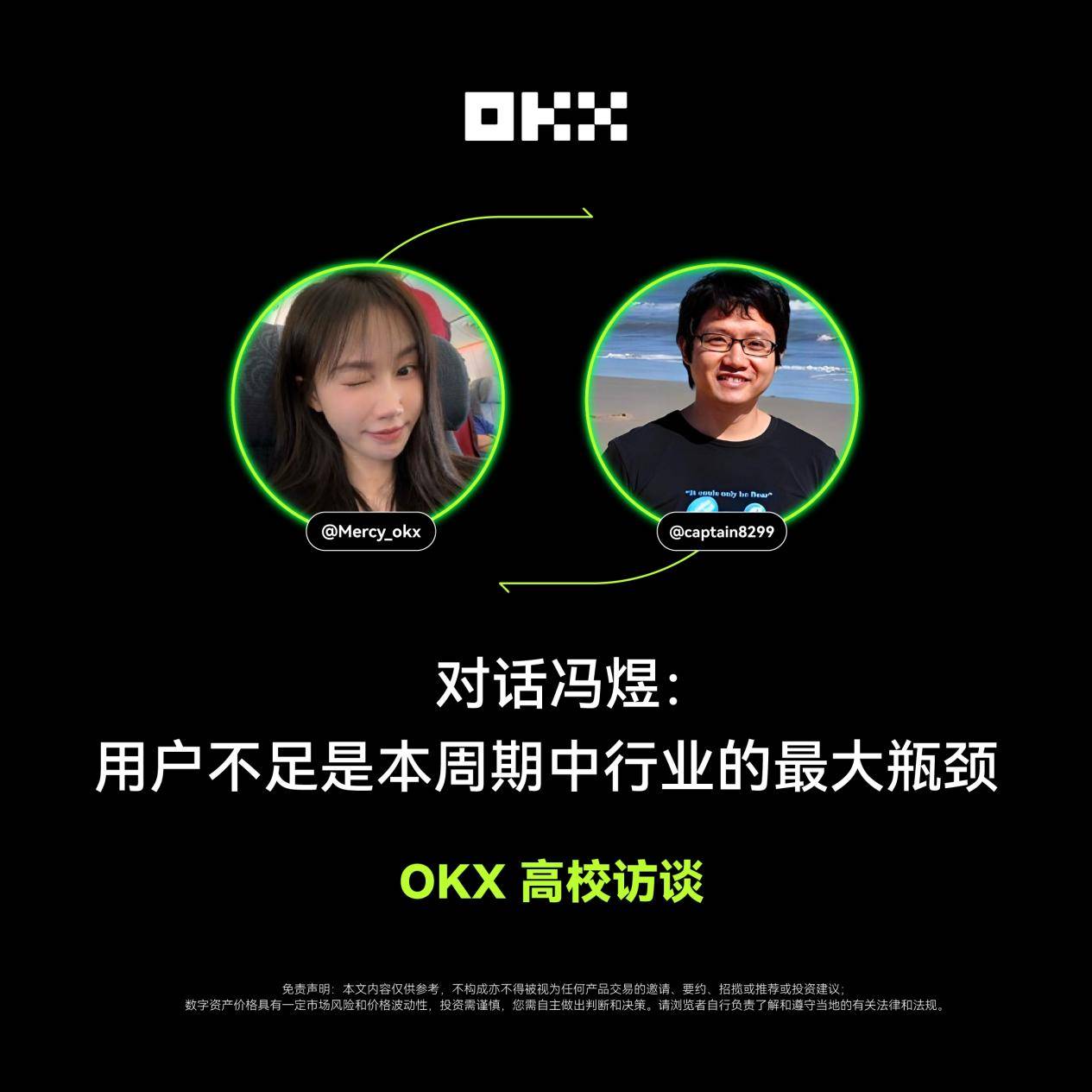
Feng Yu is an assistant professor at the University of California, Santa Barbara (UCSB), and earned his Ph.D. in Computer Science from the University of Texas at Austin (UT Austin) in 2018. His research spans blockchain security, programming languages, and formal verification. He currently serves as founder and CEO of Nubit.
Since 2011, he has been engaged in formal verification research, focusing on the security of various software systems—from web browsers to mobile applications. During his doctoral studies, he delved into distributed systems and security protocols, gradually recognizing the immense potential of blockchain technology in building secure and decentralized systems. As digital asset management became a frequent target for hackers, he decided to dedicate himself to the Web3 space, aiming to advance the security and efficiency of the blockchain ecosystem through both academic research and practical application.
We aim to interview entrepreneurs with academic backgrounds from universities worldwide, offering insights into the development of the Web3 industry through their perspectives, while also uncovering their experiences to provide guidance for university students interested in pursuing careers or starting businesses in Web3. In this edition, we are honored to have Professor Feng Yu as our guest speaker for the "OKX University Interview" series.
The "OKX University Interview" series is a special feature produced by OKX, hosted by Mercy (@Mercy_okx), an official community ambassador of OKX. It aims to highlight industry insights from individuals with academic affiliations around the globe, providing valuable references for those seeking opportunities in Web3 entrepreneurship and employment.
1. First, could you please give us a brief self-introduction?
I'm Feng Yu, an assistant professor at the University of California, Santa Barbara (UCSB). I received my Ph.D. in Computer Science from the University of Texas at Austin (UT Austin) in 2018. My research focuses on blockchain security, programming languages, and formal verification. I’m also the founder and CEO of Nubit.
Since 2011, I've been conducting research in formal verification, primarily focused on the security of various software systems—from web browsers to mobile apps. During my Ph.D., I studied distributed systems and security protocols in depth, and gradually realized the enormous potential of blockchain technology in constructing secure, decentralized systems. However, as the blockchain sector rapidly expanded, cryptocurrency asset management became a prime target for hackers. This motivated me to dive into the Web3 field, committed to advancing the security and efficiency of the blockchain ecosystem through both academic research and real-world applications.
I clearly remember joining UCSB in 2018 when Ethereum was trading at just $80. My department chair kindly warned me: “Xiao Feng, Ethereum might go to zero—why are you still researching it?” One thing I deeply appreciate about academia in the U.S. is the freedom to maintain your own judgment—even if it differs from that of senior faculty like department chairs or deans (though I don’t advocate being stubbornly opinionated). At the time, I was passionate about the technology but completely indifferent to token prices—I didn’t even have an exchange account.
In the next three years, my lab and I made notable progress in blockchain smart contracts and zero-knowledge proof security. In 2022, introduced by Shumo (co-founder of Manta), I met Luke from Polychain. Luke said: “DeFi Summer was exciting, but the frequent hacks afterward gave investors headaches. Why don't you start a company?” I replied, “I don’t know how to run a startup, and I have no funding…” But he responded, “We’ll back you!” That’s how Veridise was born, and I officially stepped into Web3 entrepreneurship.
In the early days, friends across the crypto community offered tremendous support, helping me move forward despite many stumbles. With backing from the Ethereum Foundation and 0xparc, we conducted extensive research and product development in zero-knowledge circuit security, auditing several leading ZK projects. Unfortunately, due to misaligned management philosophies, I decided earlier this year to exit Veridise. It was an emotionally complex moment—like abandoning a child I had raised myself, failing to protect it properly. I especially regret seeing the company miss key opportunities, fall short of my original vision, and ultimately let down the investors who trusted me unconditionally.
After a few weeks of reflection, I co-founded Nubit with my Ph.D. students, aiming to build data and execution layer infrastructure for the Bitcoin ecosystem, leveraging our expertise in security. To my surprise and deep appreciation, almost all of Veridise’s investors proactively offered support upon learning about Nubit. Despite not fulfilling my promises at Veridise, they continued to trust my integrity. That trust became a crucial driving force behind Nubit’s rapid growth. With full support from old friends like Tekin from dao5 and Luke from Polychain, Nubit grew quickly—completing three funding rounds within five months—and emerged as a rising force in the Bitcoin ecosystem.
2. What is your view on the current state of the Web3 industry? And what will drive its future development?
I believe the Web3 industry today faces both challenges and opportunities. Although the market has gone through multiple cycles, the infrastructure and ecosystem continue to mature. Recently, however, criticism toward infrastructure projects—especially those in the Ethereum ecosystem—has increased. To some extent, yes, the Web3 industry has invested massive human and financial resources into foundational infrastructure over the past few years. In this cycle, both individual infrastructure projects and the broader industry have hit a bottleneck in mass adoption—mainly due to insufficient user traction. Yet public discourse seems to have swung to the opposite extreme, questioning the value of technology itself and instead promoting meme culture. Admittedly, some project teams have loudly championed technological innovation without delivering tangible results, making investors and users wary of high-valuation infrastructure projects.
At this point, I think we need to maintain clear-headed judgment. As the ancient saying goes: “History is a mirror.” I remember more than 20 years ago, when my family's small apartment first connected to the internet via dial-up. Opening the browser revealed pop-up ads everywhere; clicking one would spawn endless windows until we had to forcibly shut down the computer. The internet infrastructure existed, but no one could predict how it would transform daily life. Today, traditional internet services have profoundly reshaped our world. My point is: we should approach the evolution of this industry with openness, inclusiveness, and dialectical thinking. Give entrepreneurs more time—perhaps in a few years, the Web3 equivalents of Google, Facebook, or Twitter will emerge.
Of course, I’m not trying to excuse current industry shortcomings. Web3 does face urgent challenges—security, scalability, and user experience chief among them. Security is particularly critical, as vulnerabilities in blockchain systems and smart contracts can lead to severe financial losses. Some OGs claim that recent reductions in hacking incidents are thanks to audit firms, but in reality, last cycle’s frequent attacks occurred precisely because DeFi Summer brought explosive innovation alongside numerous vulnerabilities. This cycle, many projects only offer simple staking services—there’s barely anything for hackers to exploit (despite incidents like the Bedrock hack). This is exactly why I remain deeply committed to blockchain security and formal verification, striving to enhance the overall safety and reliability of the ecosystem.
Looking ahead, I see the following as key drivers of future industry growth:
1. Technological Innovation: In academia, AI has already permeated numerous fields within just a few years. AI + blockchain has become a hot topic in this cycle. While there’s yet to be a killer app combining the two—and some projects use “AI” as little more than a meme—I believe genuine AI-blockchain integration will eventually materialize.
2. Security Assurance: Enhancing system security and reliability through smart contract audits and formal verification.
3. User Experience: Simplifying the architecture of blockchain applications to lower barriers for users and developers, enabling true mass adoption.
4. Regulatory Compliance: Clear regulatory frameworks will help build trust and promote healthy industry growth.
5. Cross-chain Interoperability: Enabling communication between different blockchains, breaking down data silos, and enhancing ecosystem synergy.
3. What proportion of university students are choosing to enter the Web3 industry? How do you view the current talent landscape in Web3?
I hesitate to make broad claims about global or even North American university trends (though they may very well be upward). Based on my observations at UC Santa Barbara (UCSB), however, the number of students entering the Web3 industry is steadily increasing. While I lack exact statistics, it’s evident that student interest in blockchain technology and decentralized applications is rising—and this trend correlates with Bitcoin price movements.
For example, UCSB’s computer science department hosts one of the top security labs in the U.S., led by two legendary figures in cybersecurity, Chris and Giovanni. Their Shellphish team consistently ranks among the best globally in CTF competitions, including those hosted by the U.S. military. Interestingly, when I first joined, these two professors were skeptical of blockchain, viewing it merely as infrastructure for money laundering and drug trafficking—not worth studying from a security perspective. I quoted an old Chinese proverb: “Water can carry the boat, but it can also capsize it.” Today, over 50% of their Ph.D. students are working on blockchain security research. I believe emerging technologies demand open-minded, inclusive academic attitudes. Technology itself is neutral—it’s neither good nor evil.
Regarding the current talent landscape in Web3, I see the field in rapid expansion, with extremely strong demand for skilled professionals. However, due to the relative newness of blockchain and Web3 technologies, individuals with deep knowledge and hands-on experience remain scarce, resulting in a supply-demand imbalance. To address this, we’re actively creating relevant courses and research opportunities. For instance, in 2019, I launched the first blockchain course at UCSB, with only 15 students. Thanks to growing institutional investment in blockchain and Web3 education, enrollment in these courses now consistently exceeds 100 students. While this growth doesn’t match the volatility of crypto prices, it’s certainly a solid start.
Overall, as mentioned earlier, the Web3 industry is evolving rapidly, but compared to traditional Web2 sectors, both infrastructure and talent reserves—whether in management or technical R&D—are still relatively weak. This presents significant challenges for Web3 startups. At Nubit, for example, we prefer hiring engineers and managers from established Web2 tech giants (such as Google, ByteDance, Alibaba, Tencent)—professionals with strong work ethics but limited blockchain experience—over quick-turnaround Web3 practitioners. After all, fundamentals matter across any industry.
To tackle this issue, sustained efforts in education and training are essential. On one hand, universities and research institutions should increase investment in blockchain and Web3 teaching and research to cultivate more specialists. On the other hand, companies can accelerate onboarding through internships and training programs. Overall, as the Web3 industry matures, demand for talent will continue to grow. I remain confident that through collective effort, the talent shortage will gradually ease, fostering healthier industry development.
4. What advice would you give to young people preparing to enter the Web3 industry?
Based on my experiences in research and entrepreneurship, here are a few suggestions:
a. Build Strong Technical Foundations: While short-term gains from trading tokens can be thrilling, young entrepreneurs—especially developers—must prioritize mastering core computer science concepts. Deep understanding of blockchain technology, distributed systems, and cryptography is essential. Stay sharp on industry developments by regularly reading academic papers, technical blogs, and news, and participate in conferences, workshops, and hackathons to stay on the cutting edge. Value hands-on practice: theory matters, but so does experience. Contribute to open-source projects, build decentralized applications (DApps), or deploy smart contracts on testnets to sharpen your skills.
b. Strengthen Security Awareness: Security is paramount in Web3. Learn secure coding practices and understand common vulnerabilities and prevention strategies to avoid critical mistakes. Having spent over a decade in security research and founded a Web3 audit firm, I can say most hackers aren’t exceptionally intelligent—over 80% of security breaches stem from negligence toward basic security mechanisms. Therefore, improving Web3 security isn’t just about better tools—it requires widespread awareness across the entire industry.
c. Entrepreneurship Reflects Character: Web3 startups generally face higher risks than traditional ventures, and many investments end up lost. As a young founder, when you raise venture capital, remember you're borrowing trust from your investors. When successful, don’t become complacent—the industry shifts fast, and risks loom large. When struggling, don’t lose confidence. Many of today’s hottest projects were once obscure, just like you, knocking on doors for funding. Treat your peers, co-founders, and every hardworking employee with respect. Never sacrifice long-term vision for short-term gain.
d. Maintain Hunger and Innovation: Web3 evolves rapidly—staying curious and eager to learn is vital. I’m not advocating blind chasing of trends, but rather maintaining a relentless curiosity for new ideas and technologies. This mindset helps you pivot quickly when stuck. What I love most about Web3 is its abundance of opportunity and encouragement of innovation. No matter how unconventional a technology sounds, there’s likely a place for it here. If you have a unique idea, try building it—you might achieve something unexpected.
e. Prioritize User Experience: Compared to Web2, Web3 lags significantly in user experience and retention. People can easily disconnect from Web3 after turning off their devices, whereas leaving services like Uber, WeChat, or Amazon meaningfully impacts daily life. Young founders must avoid showcasing technology at the expense of usability. Successful products require not only robust tech but also intuitive design and real user value. Step out of the office, talk to potential customers, iterate quickly, and find your PMF (Product-Market Fit) as soon as possible.
f. Follow Ethical and Legal Standards: Understand and comply with relevant laws, regulations, and ethical guidelines to ensure your work contributes positively to industry development.
Finally, above all, maintain passion and curiosity for this field.
5. What major transformations in Web3 do you foresee over the next 5–10 years?
I believe the Web3 space may undergo the following transformative changes in the next five to ten years:
First, Mass Adoption and Mainstream Integration: As technology matures and user experience improves, Web3 applications are likely to reach broader audiences. Areas like decentralized finance (DeFi) and stablecoins will transition from niche to mainstream, influencing more industries. Meanwhile, traditional Web2 applications will gradually incorporate decentralized features, blurring the lines between Web2 and Web3—ultimately converging.
Second, Cross-chain Interoperability and Chain Abstraction: Connectivity between different blockchains will progressively improve. Advances in cross-chain technology will break down silos, allowing assets and data to flow freely across networks and enhancing ecosystem synergy. Just as mini-programs created a platform ecosystem within WeChat, abstraction layers for blockchain infrastructure will mature, enabling traditional Web2 developers to build complex decentralized applications more efficiently.
Third, AI Integration and Security Standardization: Artificial intelligence will increasingly penetrate blockchain technology, boosting system performance, security, and application diversity. At the same time, Web3 security will evolve from today’s “random shooting” phase toward standardization, with defined protocols for security mechanisms across subdomains. This will strengthen user trust and accelerate broader adoption.
Fourth, Establishment of Regulatory and Compliance Frameworks: Governments and international organizations may introduce clearer regulations, providing legal clarity for the Web3 industry. This will reduce uncertainty and attract more institutional investors and traditional enterprises. Looking back at internet history, two decades ago people hesitated to share credit card details online. Today, even older generations rely on digital payments like WeChat Pay.
Fifth, The Crucial Role of University Talent and Startup Teams: Just as Harvard gave birth to Facebook, Stanford to Google, and Berkeley to OpenAI, North American universities played pivotal roles in Web2. Looking ahead, academic talent and entrepreneurial teams will be instrumental in shaping Web3’s transformation. Reflecting on over a decade of blockchain evolution, I divide its history into three phases:
• 2009 (Bitcoin launch) to 2021: The “wild west” era of blockchain startups. Whether scammers or serious builders, teams raced to establish themselves amid relatively weak infrastructure. In 2017, when I began researching smart contract security, I discussed language design flaws with the Solidity team lead, suggesting they introduce an intermediate representation (IR) layer during compilation to optimize EVM bytecode. His response? “That’s a genius idea! We will do that in the next version”—which later became YUL. It struck me how apparent such foundational oversights could be.
• 2021 (DeFi Summer) to 2023: A period of flourishing innovation. At the same time, professors and researchers from North American universities gradually entered the space—most of my peers in programming languages and formal verification launched their own blockchain startups.
• 2023 to present: The industry is stabilizing. Now, blockchain startups in North America without academic ties among founders or advisors struggle to attract investor attention.
While university-affiliated startups may sometimes lack market agility or execution speed, they offer two of the most稀缺 (scarce) elements in Web3: integrity and innovation. Integrity is straightforward—these teams operate under strict oversight from universities and governments, facing serious consequences for misconduct. Innovation is a hallmark of North American academia. Not necessarily because academics are smarter, but because the academic environment is relatively pure—free from complex hierarchies or external pressures—fostering a culture of relentless, fearless research where people work late into the night driven purely by curiosity.
In summary, university talent and entrepreneurial teams will serve as engines of innovation and catalysts for practical advancement in the future of Web3. Their research and real-world efforts will help overcome current technical and application barriers, accelerating Web3’s adoption and maturity, and guiding the industry toward a more open, decentralized, and trustworthy future.
Risk Disclaimer
This article is for informational purposes only. The views expressed are solely those of the author and do not represent the positions of OKX. This article is not intended to provide (i) investment advice or recommendations; (ii) offers or solicitations to buy, sell, or hold digital assets; or (iii) financial, accounting, legal, or tax advice. We do not guarantee the accuracy, completeness, or usefulness of the information provided. Holding digital assets—including stablecoins and NFTs—involves high risk and may result in significant price fluctuations. You should carefully consider whether trading or holding digital assets is suitable for you based on your financial situation. Please consult your legal/tax/investment professionals regarding your specific circumstances. You are solely responsible for understanding and complying with applicable local laws and regulations.
Join TechFlow official community to stay tuned
Telegram:https://t.me/TechFlowDaily
X (Twitter):https://x.com/TechFlowPost
X (Twitter) EN:https://x.com/BlockFlow_News
 OKX
OKX






