Escaping the Noise: Star on Crypto’s Long-Term Trends and OKX’s Next Steps
TechFlow Selected TechFlow Selected
Escaping the Noise: Star on Crypto’s Long-Term Trends and OKX’s Next Steps
Technology and long-term value have always been our core focus.
 Navigating Web3 tides with focused insights
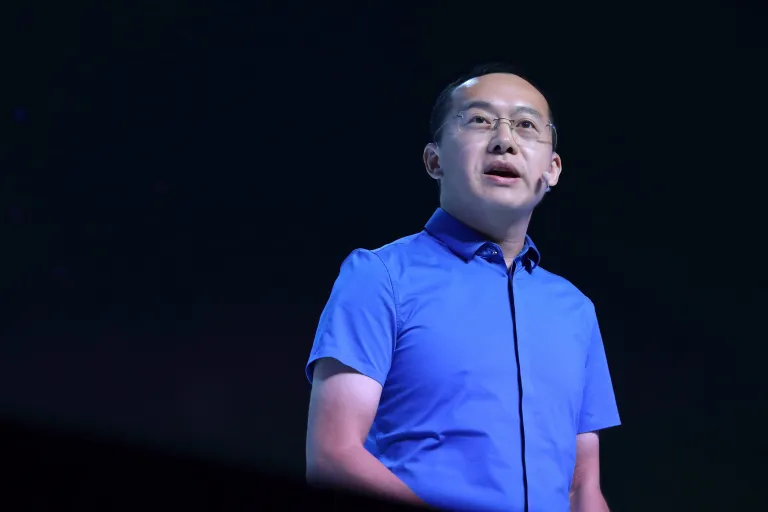
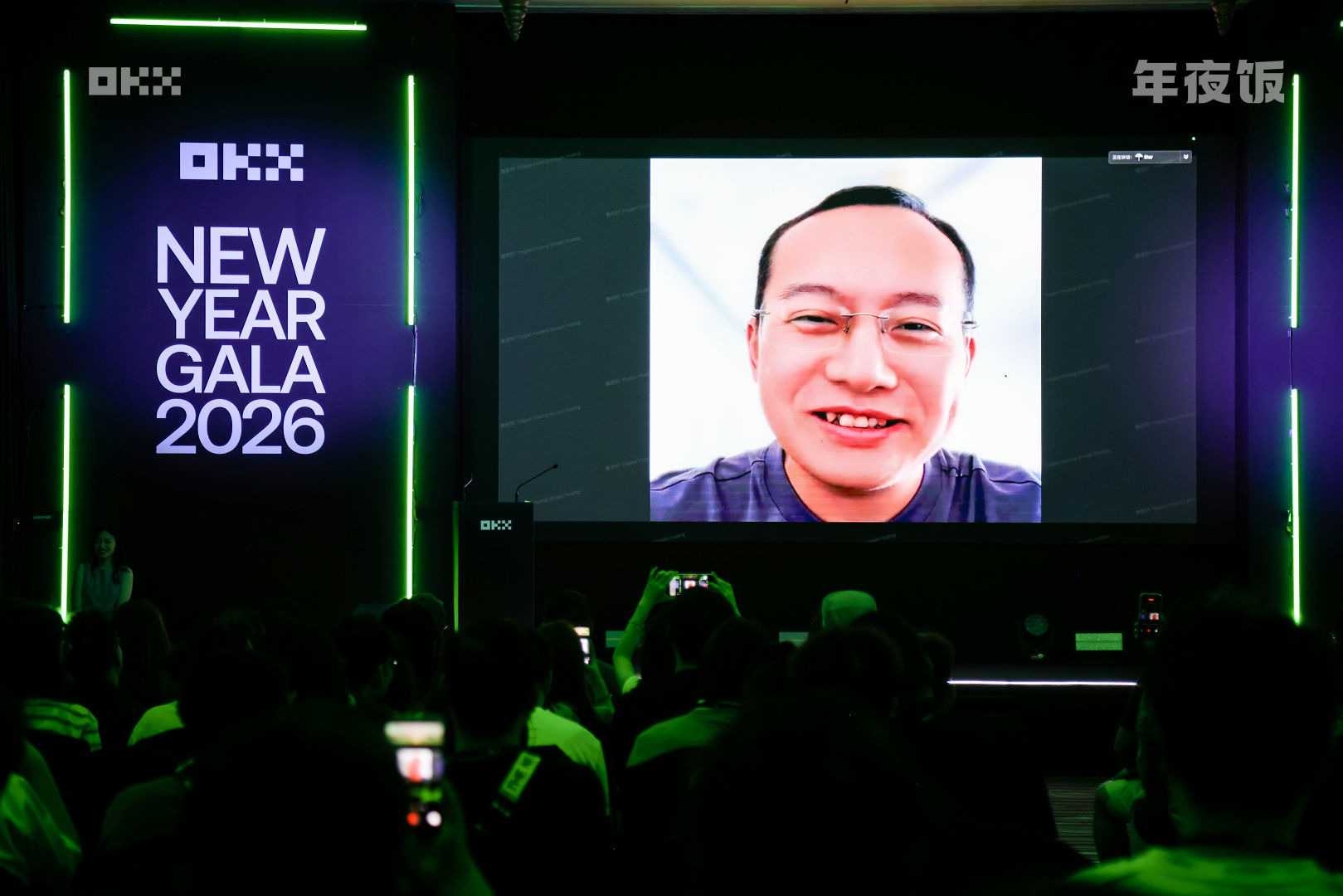
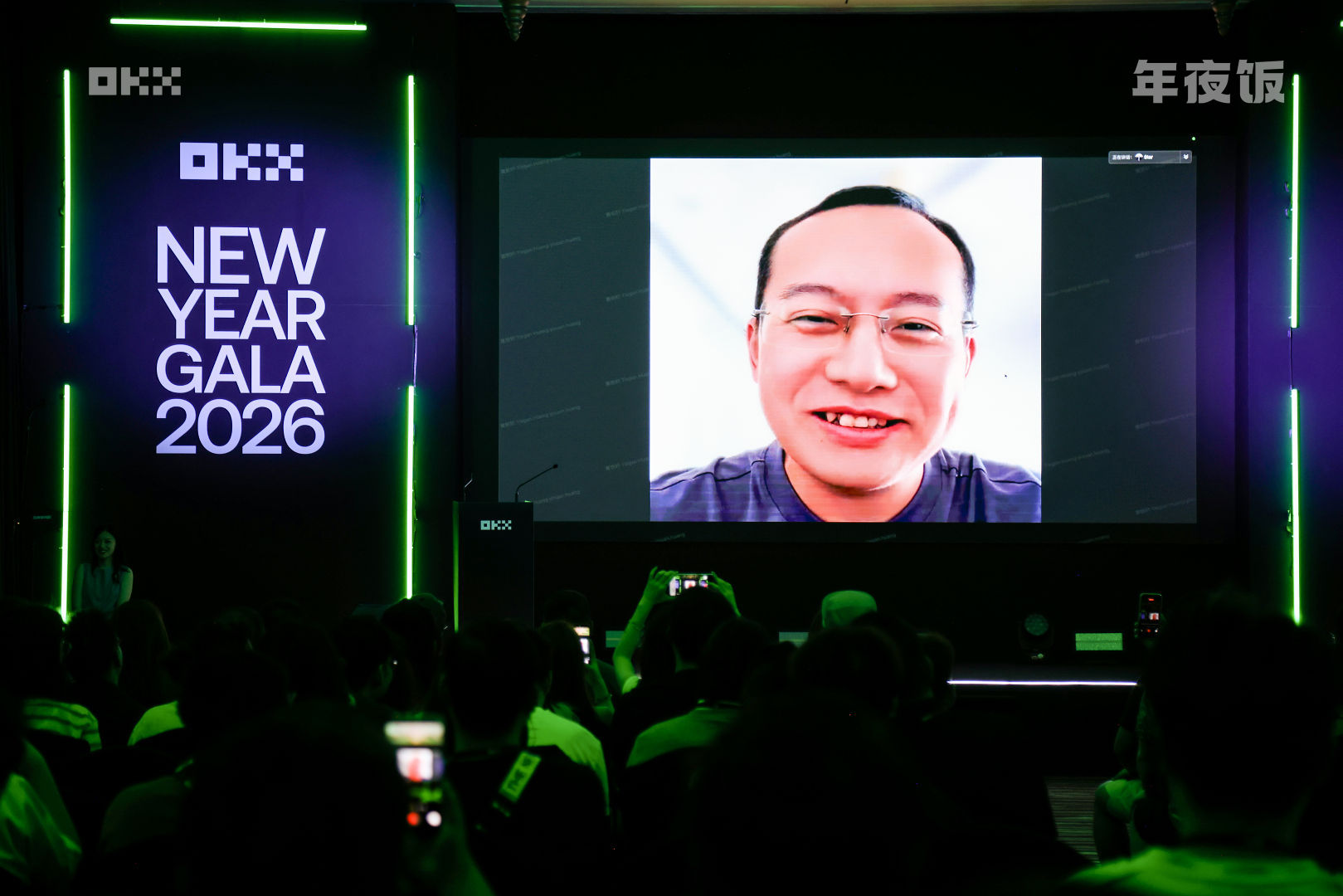
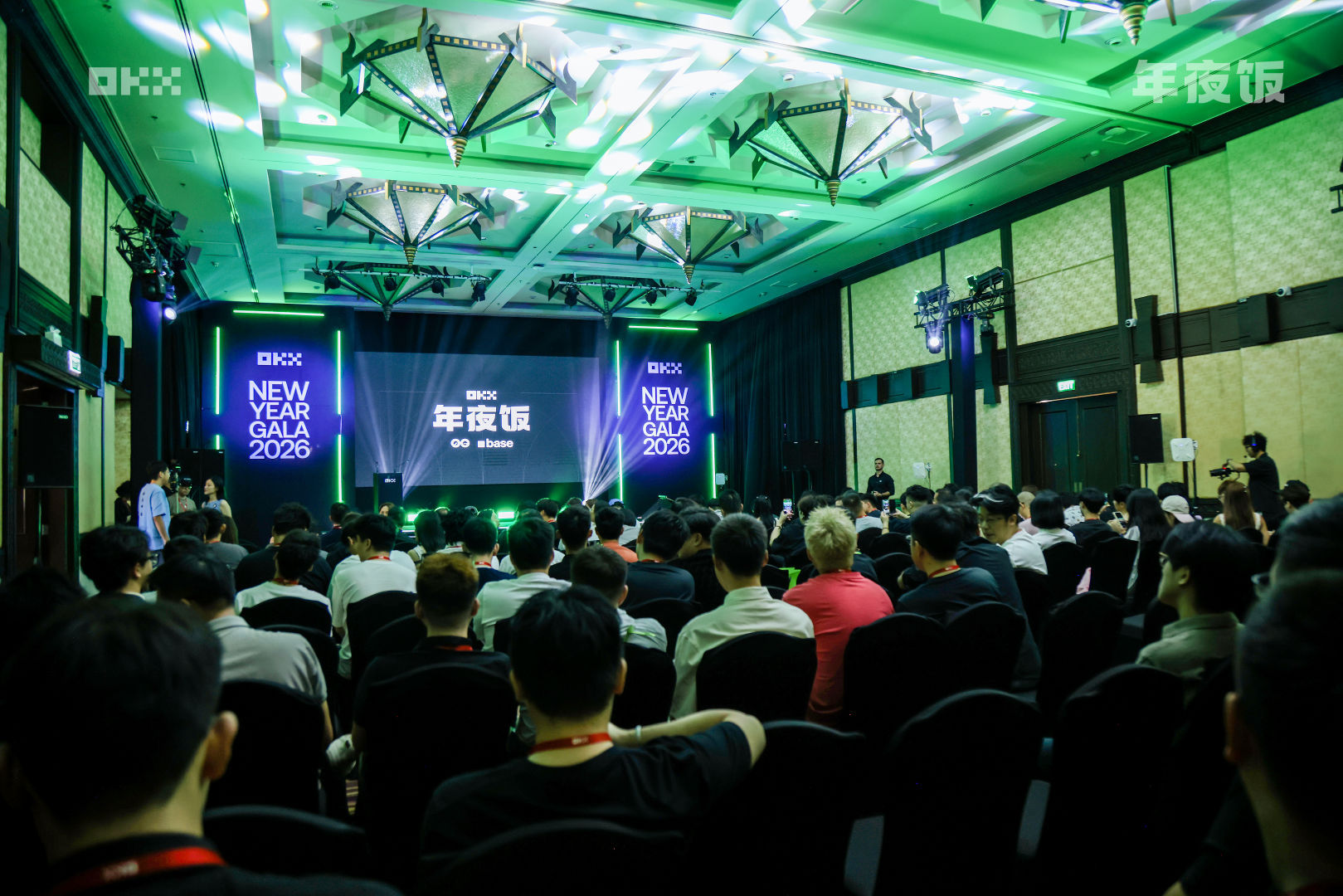
On January 24, 2026, Star, Founder and CEO of OKX, joined the “Reunion Dinner” event via video link, sharing his latest insights with sincerity. The OKX “Reunion Dinner” is a special event organized by OKX for industry builders to collectively welcome the Lunar New Year.
Below is the full transcript of Star’s speech (edited for clarity):
Year after year, we hope to continue hosting this event. We sincerely look forward to walking alongside you—Influencers, KOLs, and partners—on our shared journey ahead, growing and achieving together over the next decade in the crypto and blockchain industry.
Let me briefly share some reflections from the past year.
Seeing Trends Clearly Amid Industry Evolution
I’ve spoken many times—in various settings—about how to view the crypto and blockchain industry. Since Bitcoin’s inception in 2008, the industry has now matured over fifteen or sixteen years. Back then, many of us viewed Bitcoin more like “fun tokens” or game coins. We didn’t truly understand blockchain, nor did we know where the industry would head, how regulation would evolve, or how far applications would go—nobody knew.
As the industry evolved, Bitcoin on blockchain initially enabled only one basic function: issuing tokens. Then Ethereum emerged, declaring that blockchain technology could do much more than just issue tokens—it could host diverse applications, akin to “mini-programs.” It positioned itself as the “operating system of blockchain.”
Over the years, through collective effort—including OKX’s significant contributions—we have played an important role within the Ethereum ecosystem. Today, Ethereum has indeed become the primary platform for DApps, hosting numerous financial-grade applications. At the same time, Ethereum continues evolving toward higher performance, while high-performance blockchains like Solana have also gained traction in the market. OKX is pursuing its own explorations too: although X Layer remains in its early stages and is not yet fully mature, I firmly believe it will achieve great success in the future.
As the industry matures, it has increasingly drawn attention from regulatory authorities. Starting around 2017, regulators’ stance was largely restrictive—but after several years of development, I’ve observed meaningful shifts in key trends.
The first trend is that regulators are gradually recognizing that equating “Bitcoin with money laundering tools” is inaccurate. Any financial system can be misused; the critical point lies not in whether abuse is possible, but in implementing proper governance and oversight. Illicit activity on-chain actually constitutes only a tiny fraction of overall activity—blockchain instead represents a global, open, fair, and transparent financial system.
The second trend concerns generational shifts: younger cohorts—Millennials, Gen Z, and Alpha—have grown up hearing Bitcoin stories since childhood. My own child asked me about Bitcoin years ago. Different generations hold divergent views on “where assets are safest.” For people my age, if you ask where to store money safely, many would say large banks or established financial systems—products that are modern and user-friendly. But when speaking with younger generations, many believe managing assets using tools like OKX Wallet or Coinbase Wallet is safer and more convenient—thanks to on-chain transparency, verifiability, and continuously improving user experience.
Take stablecoins, for example: concerns often arise about rug pulls. Take USDG—if it operates under regulatory frameworks such as those of the EU, Singapore, and potentially the U.S. in the future, such risks logically diminish significantly. Regarding custody: under self-custody models, backing up your private key lets you import assets into any other wallet—you retain full control and can move assets anytime; we simply cannot access or seize them. Custodial services mainly refer to exchange-based custody. OKX has weathered many storms over the years—our corporate governance structure, board oversight, and an expanding portfolio of compliance licenses across global jurisdictions all attest to our increasing institutionalization and growing sense of responsibility.
Against this backdrop, the industry has undergone intense turbulence over the past four to five years. On one hand, skepticism and opposition toward cryptocurrency persist; on the other, adoption of Bitcoin and other crypto assets continues rising. In this process, crypto is entering an entirely new era.
More importantly, crypto is aligning itself with broader “future trends.” Beginning in the U.S., crypto’s mainstream integration has extended globally—to the UK, the EU, Japan, Singapore, and beyond. Countries and regions increasingly regard crypto as a long-term priority requiring active development, governance integration, and even national-level strategic competition and positioning.
Upholding Long-Termism and Safeguarding the Industry’s Reputation
So, what I want to emphasize to you is: uphold long-termism.
What did you miss in the past—and how should you act going forward? The first step to answering “what’s next?” is to trust the industry, companies, and institutions—and filter out noise to refocus on underlying trends. Standing on the trends I just outlined:
First, technological advancement has progressed from enabling simple token issuance, to supporting DApps on Ethereum, and today extends to sophisticated, financialized, large-scale applications such as RWA (real-world asset tokenization).
Second, demographic shifts and generational mindset changes mean more young people now perceive crypto as safer, more trustworthy, and more promising than traditional alternatives in certain contexts.
Third, governments and regulatory bodies worldwide are systematically promoting the industry and related sectors.
Based on these three macro-trends, you must formulate a clear five- to ten-year plan for yourself. Such planning cannot be driven daily by market sentiment or drowned out by noise. What harms you isn’t opportunity—it’s noise. Life requires a solid foundation. I strongly urge everyone to build their own long-term strategy. I genuinely believe that if you begin thinking seriously and acting decisively today, you’ll thank yourself for years to come.
You’ll realize each person arrives in this world with unique opportunities. As the saying goes, “Heaven has endowed me with talents for a purpose”—often, it’s not that you lack capability, but that you’re distracted by irrelevant voices. Choose your “vehicle” based on the three points I just highlighted. Once your strategy is set, learn to “power off”—shield yourself from temptation, ignore short-term volatility, and even mentally detach from those funds for a period.
I hope to instill in you a belief: as members of the blockchain industry, believe in the industry itself.
Next, let me address the second point—based on the industry’s current stage of development. If you hold Bitcoin, Ethereum, or even larger positions, you must cherish and protect this industry. Today’s crypto landscape is fundamentally different from the past. Over recent years, the industry has faced skepticism, denigration, and even extreme suppression. Beyond natural industry maturation, another major reason is irresponsible rhetoric from so-called “industry leaders,” who consistently use flippant, exaggerated language—seriously misleading the public.
When we routinely describe our industry using terms like “100x” or “all-in,” pause and consider: how will governments and regulators perceive us? By framing our work through “betting everything” or “get-rich-quick fantasies,” we inherently harm and devalue the industry—and erode the long-term value of the assets we hold. This is essentially “flipping our own table and smashing our own bowls.”
Meanwhile, on the other side of the world, a starkly different picture emerges: stablecoin legislation advances, crypto industry representatives sign bills at the White House, and numerous crypto firms list on the NYSE and NASDAQ. In many countries and regions, crypto has already entered the mainstream—and industry professionals increasingly stand shoulder-to-shoulder with AI and autonomous driving pioneers, earning well-deserved respect.
I want to stress: if you profit from this industry without earning respect, that success is fragile. Wealth lacking societal recognition and institutional support can easily be negated—or even reversed. Respect isn’t granted—it’s earned. And the industry’s respect must be jointly upheld by every practitioner.
What we do is tech-driven: using technology to eliminate unfairness and extend superior financial services to more people. Whether enterprises, KOLs, or Influencers—you are all participants, builders, and beneficiaries of this industry. As members of a shared community, we must collectively safeguard its reputation and earn genuine external respect.
Occasional humor is fine—but repeatedly plastering extreme, emotionally charged terms across your homepage to describe trading or the industry itself demands reflection: How will regulators interpret this? How will users—and the world—perceive it? Thus, leading enterprises, industry organizations, and KOLs each bear distinct responsibilities. Leaders must lead with accountability; KOLs must exercise awareness; platforms must fulfill their duties. As beneficiaries of industry growth, we must jointly protect its reputation to earn lasting, sustainable respect.
OKX’s Three Key Business Focus Areas for 2026
Next, I’d like to outline OKX’s overall plans for 2026—grounded in the core judgments I’ve emphasized repeatedly: technological evolution, application development, and regulatory and geopolitical progress.
First, at the trading and service level, we aim to provide more diverse, user-friendly, and convenient exchange services—within globally compliant regulatory frameworks. Whether crypto, equities, or other asset classes, we’ll continue responsibly expanding our service boundaries—giving users greater choice.
Second, bringing more assets on-chain. We already have xBTC; in the future, more “X”-series products will follow—including cross-chain assets, RWAs, and even real-world securities. Through OKX’s X Layer and Web3 wallets, we aim to unify these multi-asset offerings into a single gateway—serving as users’ entry point into the on-chain asset world.
Third, OKX Pay—a payment service launched last year. Feedback has been mixed, and we acknowledge its current roughness—continuous upgrades are underway. We’ve already integrated with local banking systems in Brazil, Europe, Singapore, and other regions. Even where direct card services remain unavailable, we aim to enable everyday payments—managing assets, sending funds to friends or merchants—via intuitive Web3 wallets, eliminating complex steps. Our goal is to make OKX an entry-level service enabling ordinary users to effortlessly manage digital assets.
In summary, OKX will prioritize three areas in 2026: compliant trading services, multi-asset on-chain infrastructure, and enhanced payment and wallet experiences.
Beyond that, a critically important element is our partners—many of whom are here today. I’ve issued a clear directive to the company: OKX must grow closer to its partners. We’ll maintain our low-key approach—but low-key doesn’t mean distant. Whether you’re a KOL, partner, market maker, or channel collaborator, we’ll treat you with greater respect and co-explore more win-win opportunities.
We’ll continuously refine our KOL Program and Affiliate Program, while building a more professional customer service and account management system—with dedicated one-on-one communication channels. We welcome all feedback—constructive criticism included—as well as insights on where competitors may excel. Actionable items will be addressed via clearly defined SLAs, with responses and improvements delivered within specified timelines. Even matters tied to long-term principles or core business logic will remain open for ongoing dialogue and collaborative problem-solving.
Finally, let me touch upon X Layer and OKB. From a compliance perspective, OKX operates only in major jurisdictions under formal licensing—subject to strict oversight and numerous non-negotiable regulatory red lines. From a long-term business standpoint, we reject “killing the goose that lays the golden egg.” We don’t inherently oppose MEME tokens—essentially community-driven tokens—so long as communities remain healthy and transparent, we welcome collaboration. However, projects characterized by extreme centralization, manifestly unfair design, or demands that platforms “orchestrate 100x narratives,” are categorically off-limits.
That said, X Layer and OKB development will absolutely continue. X Layer is one of OKX’s core infrastructures. Historically, our Web3 investments were insufficient—but starting last year, we elevated X Layer from peripheral to central strategic priority. X Layer forms the bedrock of our long-term strategy: though its current TVL stands at several hundred million dollars, our target is $5 billion—and ultimately $10 billion. Going forward, vast numbers of applications—from exchange users, payment users, to wallet users—will be built atop X Layer.
OKB, as both an ecosystem and gas token, holds a clear, enduring role. There is no scenario where OKX abandons X Layer or OKB. As OKX itself grows—and as the broader crypto and blockchain industry expands—I’m confident both X Layer and OKB will remain integral, long-term strategic pillars of OKX.
We will sustain investment in ecosystem and infrastructure development—without pause. Regardless of whether OKX goes public, technology and long-term value will always remain our core focus.
Join TechFlow official community to stay tuned
Telegram:https://t.me/TechFlowDaily
X (Twitter):https://x.com/TechFlowPost
X (Twitter) EN:https://x.com/BlockFlow_News
 OKX
OKX