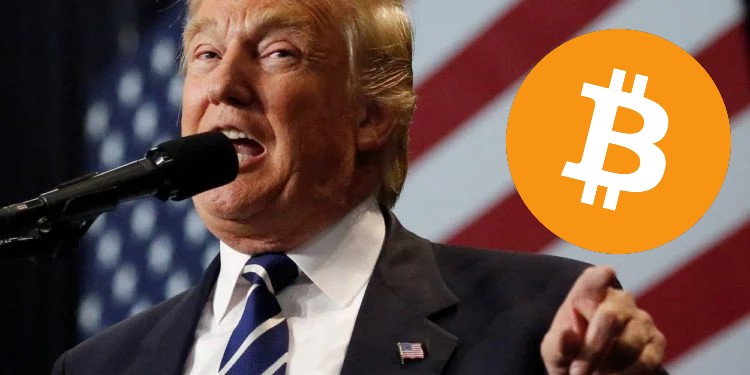
HTX Growth Academy | Cryptocurrency Market Macro Research Report: Trump Trade Pushes Bitcoin to Break New All-Time High, Ushering in a New Bull Market Cycle
TechFlow Selected TechFlow Selected
HTX Growth Academy | Cryptocurrency Market Macro Research Report: Trump Trade Pushes Bitcoin to Break New All-Time High, Ushering in a New Bull Market Cycle
This report will conduct an in-depth analysis of the direct and indirect impacts of "Trump trades" on the cryptocurrency market, exploring the resulting shifts in market sentiment, price volatility, and potential future trends.
 Navigating Web3 tides with focused insights
1. Introduction
Recently, the Bitcoin and cryptocurrency markets have experienced a new wave of growth, driven significantly by what is known as the "Trump trade" effect. Bitcoin has rapidly broken through key historical resistance levels, signaling not only a strong rebound in the crypto market but also demonstrating global investors' continued preference for digital assets amid uncertain macroeconomic conditions. This report will analyze in depth the direct and indirect impacts of the "Trump trade" on the cryptocurrency market, exploring shifts in market sentiment, price volatility, and potential future trends. By integrating macroeconomic data, policy context, and market sentiment, we aim to comprehensively assess the future trajectory of Bitcoin and other crypto assets, along with underlying market risks.
2. Macroeconomic Context Analysis: Multiple Drivers Behind the Crypto Bull Run
2.1 Global Economic Slowdown and Cryptocurrencies’ Safe-Haven Attributes
Global economic growth has continued to slow since 2023, particularly after successive interest rate hikes by the Federal Reserve, which constrained dollar liquidity and reduced overall capital market liquidity. Against this backdrop, global investors are increasingly allocating to risk-resistant assets. Bitcoin, due to its decentralized and inflation-resistant characteristics, is gradually being recognized as “digital gold.” In 2024, the crypto market is entering a new bull cycle closely tied to rising demand for safe-haven assets worldwide.
This safe-haven attribute stems from cryptocurrencies’ low correlation with traditional markets. Especially as Trump re-emerges politically, his public support for cryptocurrencies has boosted market confidence, prompting investors to include Bitcoin as a “safe-haven asset” in their portfolios during times of economic uncertainty, thereby driving up its price.
2.2 Federal Reserve Policy Shifts and Currency Depreciation
The Federal Reserve's monetary policy exerts profound influence on the crypto market. Post-pandemic, the Fed raised rates multiple times to combat inflation. However, in 2024, as the pace of rate hikes slows, expectations for future rate cuts are strengthening. Fluctuations in the U.S. Dollar Index and the trend of dollar depreciation have led investors to turn toward cryptocurrencies to hedge against long-term dollar devaluation.
Under these conditions, Bitcoin’s scarcity and borderless nature have attracted global capital inflows. Particularly under Trump’s influence, demand for Bitcoin in the U.S. market has seen renewed growth. The linkage between the U.S. economy and dollar depreciation has prompted investors from other countries to enter the Bitcoin market to hedge against domestic currency depreciation. Additionally, the Fed’s potential continuation of loose monetary policy could further benefit the crypto market.
2.3 Long-Term Inflation Threat and Cryptocurrencies’ Inflation Resistance
As the global economy recovers, inflation continues to rise. The fixed supply, scarcity, and decentralized nature of cryptocurrencies make them increasingly attractive investment vehicles in an environment of rising inflation. Bitcoin, in particular, with its capped total supply, acts as an “insurance policy” against inflation, offering unique value preservation capabilities compared to traditional assets.
Trump’s public endorsement further reinforces this trait. Amid heightened political uncertainty in the U.S. and persistent inflationary pressure, Bitcoin’s inflation-resistant qualities are leading more institutional and individual investors to view it as a viable long-term investment. As global demand for inflation-hedging assets grows, Bitcoin is poised to become a key safe-haven instrument in this new bull cycle.
3. Direct Impact of the Trump Trade on the Crypto Market
3.1 Understanding the Concept and Origins of the “Trump Trade”
The term “Trump trade” first emerged during Trump’s presidency, when his policies and statements frequently triggered volatility in financial markets, causing rapid shifts in investor sentiment. His economic agenda, stance toward the Federal Reserve, and public positions on digital assets all influenced investor risk appetite. Today, Trump’s renewed pro-crypto rhetoric has reignited this phenomenon, with many investors believing his words play a significant role in boosting Bitcoin prices.
In this latest market swing, the “Trump trade” effect has become pronounced, increasing Bitcoin’s volatility. Trump’s supportive posture toward digital assets has drawn massive attention and brought in both traditional and new investors. Under his influence, price movements in the crypto market have become more frequent, creating greater investment opportunities.
3.2 Shifts in Market Sentiment: From Caution to FOMO-Driven Buying
The shift in market sentiment triggered by Trump’s comments has been especially evident. From his initial statements onward, Bitcoin’s price quickly broke through major resistance levels, accelerating the entry of previously观望 investors. Market sentiment shifted from cautious observation to momentum chasing, with FOMO (fear of missing out) fueling further price gains.
At the same time, cryptocurrency market sentiment indices show that optimism has climbed to annual highs as Trump-related commentary increases. Investors now see Bitcoin not just as a short-term profit vehicle, but also as a long-term tool to hedge against policy uncertainty and protect personal wealth. This change in sentiment has driven capital flows that further elevate Bitcoin’s price.
3.3 Profound Impacts on the Crypto Ecosystem
Trump’s pro-crypto stance affects not only Bitcoin’s price but also catalyzes broader development across the crypto ecosystem. Emerging sectors such as NFTs, DeFi, and Web3.0 have received renewed investor confidence thanks to Trump’s statements. These innovative fields, valued for their decentralization and risk resilience, are attracting substantial capital and developer interest, boosting overall market activity. Notably in the NFT space, the launch of crypto-based projects by the Trump family has led to a significant increase in NFT trading volume. The expansion of the NFT market benefits major cryptocurrencies like Bitcoin and Ethereum, enhances liquidity across the entire crypto ecosystem, and supports long-term market development.
4. Stages of the New Bull Cycle
4.1 Early Bull Phase: Institutional Entry and Price Momentum
In the early stages of a bull market, institutional inflows are the primary driver of price increases. Spurred by Trump-related developments, many institutional investors have increased their Bitcoin holdings, greatly enhancing market liquidity. Statistical data shows a sharp rise in the share of capital from institutions, indicating that Bitcoin is increasingly becoming part of traditional investment portfolios. Compared to previous cycles, institutional holdings in this bull run are more stable. Driven by large investment funds, hedge funds, and pension funds entering the market, Bitcoin’s price fluctuations have become more moderate. Institutional participation deepens market depth, reduces volatility, and contributes to market maturity.
4.2 Mid-Cycle Bull Phase: FOMO Effect and Retail Investor Surge
The mid-phase of a bull market typically sees an amplification of the FOMO effect. Led by institutional momentum, retail investor interest surges dramatically. Against the backdrop of Trump’s frequent media appearances, many retail investors rush into the market seeking to capture bull market gains. Changes in market sentiment indices clearly reflect this trend. Market activity rises sharply, with trading volumes hitting record highs. Discussions about cryptocurrencies on social media platforms continue to grow, especially after Bitcoin breaks successive psychological resistance levels. Heightened sentiment drives retail participation, pushing prices upward rapidly.
4.3 Late Bull Phase: Risk Management and Rational Investing
In the later stages of a bull market, volatility may intensify and risk appetite decline. Some investors who entered at high prices may begin reducing positions, causing sentiment swings. Meanwhile, regulatory scrutiny and market correction pressures could also impact prices. Although Trump supports cryptocurrencies, investors should remain cautious to avoid overexposure at peak valuations.
During this phase, market fluctuations are common, and investors must strengthen risk controls. Institutional sell-offs during the late bull phase can trigger price corrections. As the market transitions, adopting conservative strategies helps mitigate downside risks.
5. In-Depth Analysis of Policy Risks
While Trump’s support sends positive signals to the market, the legal status and compliance framework for cryptocurrencies remain exposed to risks.
5.1 Regulatory Developments in the United States
Despite Trump’s pro-crypto stance, regulatory bodies such as the U.S. Securities and Exchange Commission (SEC) and the Commodity Futures Trading Commission (CFTC) maintain a cautious approach toward digital assets. Their regulatory actions have far-reaching implications for crypto market volatility. For instance, the SEC’s position on spot Bitcoin ETF approvals directly influences market liquidity and pricing. Any shift in regulators’ attitudes could affect market sentiment and prompt price adjustments.
5.2 Global Policy Risks
Beyond the U.S., regulatory stances in other countries significantly impact the market. For example, China and the European Union maintain stricter positions on cryptocurrencies. Changes in national policies can lead to capital flows and increase market volatility. While U.S. policy may loosen under Trump’s influence, the positions of other nations require close monitoring.
6. Conclusion: Prospects of the New Bull Market and Investor Strategies
In 2024, amid growing global economic uncertainty and shifting U.S. political dynamics, the “Trump trade” effect has injected fresh momentum into the Bitcoin market. The breakout in Bitcoin’s price and the onset of a new bull cycle present lucrative opportunities—but also escalating risks. Macroeconomic factors, Federal Reserve policy shifts, inflation trends, and global regulatory developments remain critical variables shaping the future landscape.
A detailed analysis reveals that while Bitcoin’s inflation-hedging and safe-haven attributes are being fully realized in this cycle, the drivers and challenges behind this bull market are more complex and diverse than before. Both institutional inflows and retail FOMO sentiment can amplify upward momentum—and potentially inflate market bubbles. Therefore, when investing in Bitcoin and other digital assets, investors must adopt prudent strategies and closely monitor market signals to secure returns while effectively managing risks.
7. Investment Recommendations: Diversified Strategies and Risk Management
Based on the macro-level analysis of this bull market, here are strategic recommendations for investors:
7.1 Long-Term Strategy: Stay Rational and Hold Patiently
For investors who believe in Bitcoin’s long-term value, accumulating positions gradually during the early and mid-phases of the bull market is a sound strategy. With potential policy tailwinds from Trump’s pro-crypto stance, favorable regulations in the coming period could further enhance Bitcoin’s appeal. Long-term investors should remain patient during market corrections and adopt a medium-to-long-term horizon, avoiding frequent trading driven by short-term volatility.
7.2 Medium-Term Strategy: Capture Swing Opportunities with Stop-Loss/Take-Profit Levels
During the mid-bull phase, when price swings become frequent, investors may consider swing trading strategies. By leveraging market fluctuations, they can achieve阶段性 gains. However, given the heightened volatility, it is advisable to set clear stop-loss and take-profit levels for each trade to guard against potential losses caused by sudden sentiment shifts.
7.3 Risk Management: Monitor Policy Changes and Adjust Positions Accordingly
Policy uncertainty remains a core risk factor in the crypto market. While Trump’s stance may benefit the sector, future regulation—especially from the SEC and other international regulators—remains unpredictable. Investors are advised to stay alert to regulatory developments, maintain adequate cash reserves, and retain flexibility in adjusting positions to respond to unexpected policy shocks.
7.4 Portfolio Diversification: Balance Traditional and Crypto Assets
Although Bitcoin’s role as a safe-haven asset is gaining recognition in this cycle, its high volatility cannot be ignored. Investors should avoid concentrating all capital in crypto markets. Instead, through diversified asset allocation, balancing crypto and traditional investments can enhance the overall portfolio’s resilience. Traditional safe-haven assets such as bonds and gold can serve as hedges, mitigating the overall risk posed by crypto volatility.
8. Outlook: Bright Prospects and Underlying Concerns of the New Bull Market
Overall, in 2024, the Bitcoin market has entered a new bull cycle fueled by Trump’s support and evolving global economic conditions. Bitcoin’s positioning as “digital gold” is increasingly solidified, drawing in a growing number of institutional and retail participants, while the depth and breadth of the crypto market continue to expand. This new bull cycle exhibits unprecedented vitality, and with favorable policy momentum and tightening global financial conditions, the rally could last for an extended period.
However, market exuberance often accompanies rising risks. Investors must recognize the high volatility of crypto assets and the uncertainty surrounding regulations, avoiding blind FOMO-driven buying simply because prices are rising. Going forward, investors need to strike a balance between market sentiment and macroeconomic realities, achieving sustainable long-term returns through rational planning and disciplined execution.
The arrival of a new bull market brings unprecedented opportunities to the cryptocurrency space. Yet successful investing requires not only a deep understanding of market trends but also careful risk management. In a landscape marked by both opportunity and challenge, only稳健 and cautious investment strategies can unlock true long-term value in the ever-evolving crypto market.
Join TechFlow official community to stay tuned
Telegram:https://t.me/TechFlowDaily
X (Twitter):https://x.com/TechFlowPost
X (Twitter) EN:https://x.com/BlockFlow_News
 @HTXAcademy