Deep Dive: How to Build the Next Pump.fun? A Comprehensive Analysis from Market Opportunity to Product Strategy
TechFlow Selected TechFlow Selected
Deep Dive: How to Build the Next Pump.fun? A Comprehensive Analysis from Market Opportunity to Product Strategy
Is copying a Pump.fun the right赛道?
 Navigating Web3 tides with focused insights
Author: Meme4fun
Translation: TechFlow

Why Build Another Pump.fun?
Entrepreneurship is inherently risky, with a 99.9% chance of failure.
Choosing the right market can increase your odds of success tenfold (bringing it to around 1%).
So, is cloning Pump.fun the right path forward?
From my perspective, the answer is yes.
The current Meme launch platform market is weakly competitive. Pump.fun dominates this space, while other products on Solana or EVM Layer 2s don't even reach one-tenth of its scale. This situation is unlikely to evolve into a monopoly. Compared to decentralized exchanges (DEXs) or Layer 2s, competition in mimicking Pump.fun is also relatively mild. Even NFT markets are far less contested than other areas, indicating room for growth.
Venture Capital Landscape
Weak competition and sufficient market size are why venture capitalists show surface-level interest in this sector.
Yet, many only pretend to understand or engage with Memes. Let me make two bold claims:
-
Fewer than 1% of mainstream VCs or analysts have ever bought a token on Pump.fun. In reality, fewer than 5% of VCs actively participate in Memes, and early adopters among them are even rarer.
-
Many investors fake their involvement by reading media articles, whereas editors at these outlets typically experience new products and participate in Memes far more frequently.
Knowing this, your first fundraising targets shouldn’t be VCs. Instead, reach out directly to real users on Twitter—they understand the problems within Pump.fun and the Meme ecosystem much more deeply.
Once your product has compelling content, you’ll receive genuine feedback, and community-driven fundraising will follow naturally.
We no longer depend on venture capital.
Problems with Pump.fun and the Meme Ecosystem
Revenue Disparity
Data reveals a key issue.
The so-called “dead NFT” market generated over $100 million in revenue for creators and platforms.
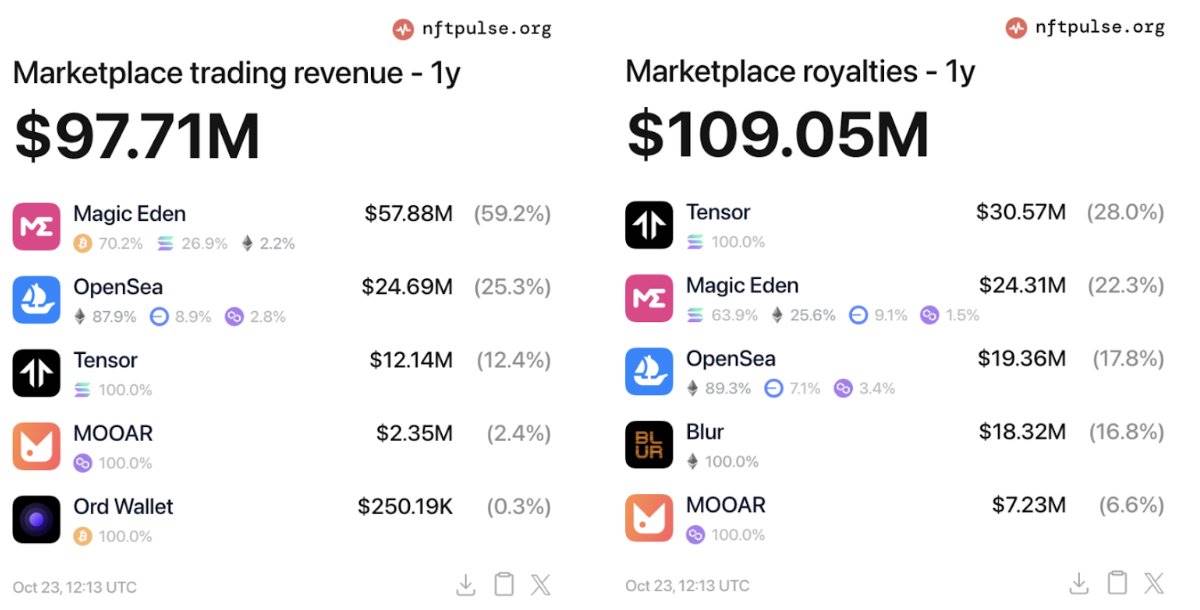
Pump.fun, as a representative of the new creator economy, has also reached $100 million in revenue. However, it incentivizes creators with just 0.5 SOL, while Raydium distributes fees totaling millions—making it a hundred times less favorable to creators.
To displace an existing product, a new one must offer a 100x improvement—that’s where the opportunity lies.
When Will Pump.fun Conduct Its TGE (Token Generation Event)?
When will Pump launch its token?
Platforms like OpenSea once faced competition from LooksRare and Blur. Similarly, in the Meme space, users seek not only entertainment but also financial returns.
Although Pump has mentioned in public Q&As that they might issue a token, doing so isn’t currently optimal for them.
Given their passive income from trading fees and minimal competition, launching a token would largely serve as a deterrent against potential rivals.
Duality of Content and Asset
Memes possess both content and asset characteristics. The asset aspect is obvious, but the content dimension is often overlooked.
Current trading bots handle the distribution of these high-risk assets, enabling users to easily make speculative decisions based on asset data.
However, Meme content requires a different distribution model—one more akin to a lottery than pure speculation.
High-quality content often motivates users to make small contributions or donations. To aggregate long-tail liquidity driven by content-based Memes, a new distribution model is necessary—we’ll discuss this further in the product section.
Blockchain Selection
After identifying a suitable market and analyzing industry pain points, choosing the right blockchain is the first step in development.
Ideally, only Solana and Ethereum mainnet are viable options, as both host sufficient Meme developers and liquidity. In contrast, Layer 2 networks still lack the infrastructure needed to support a new creator economy—a pattern evident when comparing the U.S. short-video app Musical.ly with China’s Kuaishou.
From a business standpoint, receiving support or funding from a public blockchain is highly advantageous, as Meme platforms have become default offerings for many blockchains. However, there's a significant difference in community size between Solana and Ethereum’s Meme ecosystems.
Core Product Decisions
Traders vs. Developers?
Many users, including industry observers, believe PvP mechanics and high rug/pull risks are the biggest challenges in today’s Memecoin ecosystem. The belief is that whoever better protects investors will capture more market share.
But this may be the greatest delusion in our entire industry.
Since 2017, explosively growing applications have consistently focused on simplifying token issuance and liquidity creation.
Traders are fully aware of the risks involved; they don’t participate seeking refunds, but hoping for 100x returns. Therefore, products targeting traders should not focus on loss prevention, but on providing access to as many tradeable assets as possible.
Meme platforms should prioritize incentivizing developers—the key individuals who create new narratives and assets.
Developers are often superior traders themselves, so they should be the primary focus of operational strategy. This should be the top priority in strategic planning.
New Bonding Curve or Issuance Mechanism?
Prior to Pump.fun, platforms like Pinksale offered templates featuring locked liquidity, vesting, and refund mechanisms.
But why did Pump.fun succeed?
Because of its simple and clear design. PvP dynamics aren’t a flaw—they’re a major strength.
When considering new bonding curves or issuance models, the key question is: Who is your target user?
Are mechanisms like pk, shorting, refunds, and fair launches more appealing to end-users, or more desirable for those looking to launch tokens?
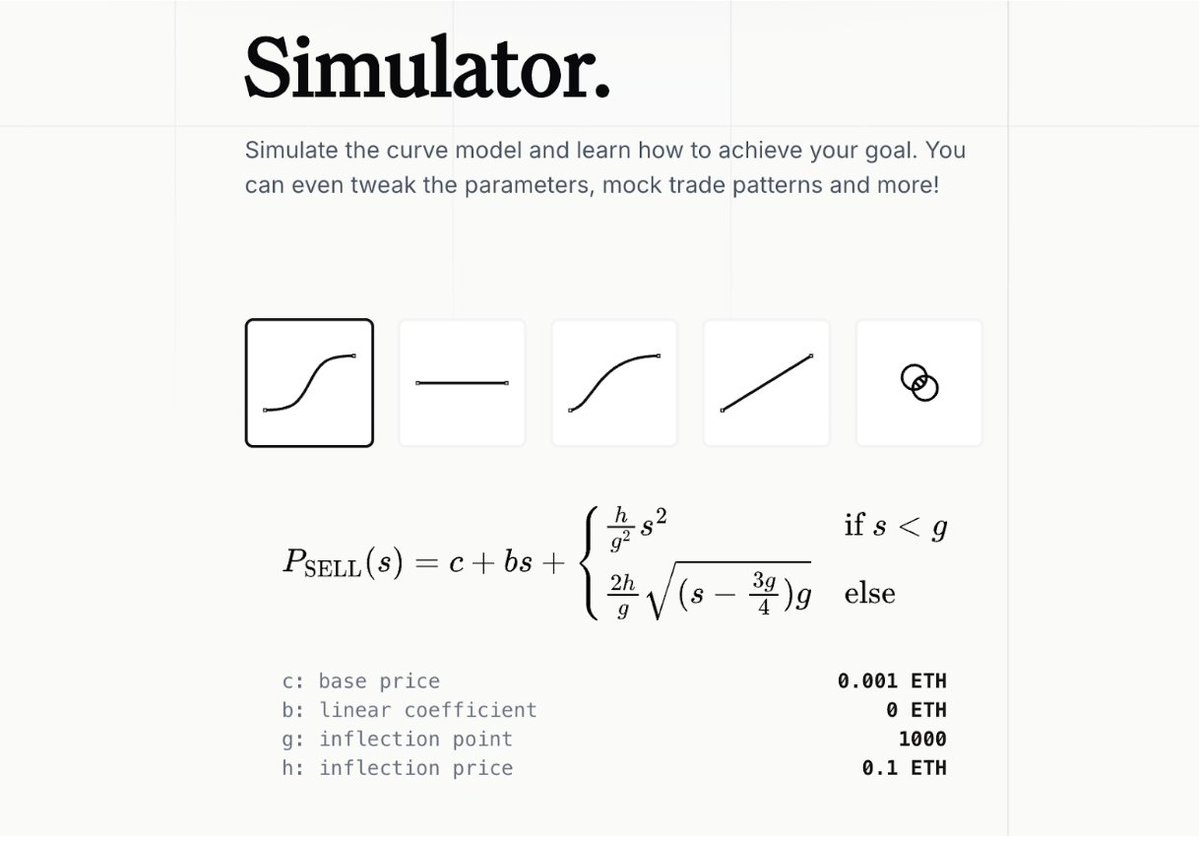
In terms of bonding curves, vv.Meme offers various customizable models worth exploring for those interested in novel issuance methods.
Regarding new issuance models, we’re considering integrating elements of fair launch into the PvP process. We’ve recently researched this approach.
Currently, including ourselves, no one has found a superior alternative to existing bonding curves. In the future, we may offer users a new option rather than completely replacing the current model.
Long-Term Incentives
Currently, Pump.fun's graduation rate to Raydium is about 1%. Once graduated, the probability of rug/pull (i.e., sudden collapse or developer exit scam) jumps to around 99%, as early profit-seeking users tend to leave.
Therefore, we need a new incentive mechanism to extend the lifespan of graduated Memes.
Last month, Moonshot launched a new product showing users desire long-term value, introducing a unique LP reward mechanism that shares DEX trading fees with holders.
Beyond fee-based incentives, figuring out how to incentivize token distribution and establish sharing structures within the ecosystem is crucial.
Similar to issuance mechanisms, we need to identify the most valuable contributors both inside and outside the ecosystem.
In earlier discussions, we highlighted the duality of Meme content and assets, raising the question: How should content be distributed?
We’ve seen preliminary attempts like we.rich, which assigns basic tags to each Meme and uses a simple recommendation algorithm. However, due to insufficient base liquidity and limited developer numbers, there isn’t enough data yet to build a complete distribution system.
Ideally, this should be the core focus of “pump.” Rather than competing with trading bots like pepeboost for asset distribution, “pump” should concentrate on distributing the content behind Memes. Given the current volume of 10,000 daily Meme launches and wallet-related user traits, there’s already enough data to explore new distribution models.
A promising opportunity lies in building a Meme discovery mechanism atop the “pump” layer to aggregate long-tail liquidity—greatly advancing the entire Meme creator ecosystem.
Operational Strategy: Pushing Flagship Tokens vs. Building a Creator Ecosystem
When deciding the direction for pump.fun, many repeatedly suggest focusing on “pushing certain tokens.”
The idea is to generate initial wealth effects at launch to encourage early traders to stay engaged long-term.
For example, Justin Sun’s SunPump platform produced multiple tens-of-millions-dollar Meme launches in its first week, and various Meme platform projects on Layer 2 solutions have adopted similar strategies.
I’ve seen marketing materials stating things like: “XXX is the pump.fun of XXX chain, and XXX token is the #1 token—watch it.”
Follow-up messaging often says: “The #1 token has grown X times; the next one could be XXX.”
Many teams even raise funds specifically for this purpose to better attract early users.
However, if Memes are viewed as a creator ecosystem, artificially pushing markets may negatively impact the community.
For instance, SunPump developers only care whether Justin Sun himself supports a project, weakening organic growth opportunities. Without official backing, creators may shift to platforms like pump.fun, where new opportunities may arise.
Market-making generates short-term positive feedback, but over time, it can lead to a “market-making trap.”
SunPump, trapped in this cycle, now launches fewer than 100 new tokens per day. More important than creating markets is building a system where independent developers can thrive.
This choice will define the product’s future direction: We aim to create an entirely new Meme distribution platform by offering accessible issuance tools and fostering community-driven liquidity.
Join TechFlow official community to stay tuned
Telegram:https://t.me/TechFlowDaily
X (Twitter):https://x.com/TechFlowPost
X (Twitter) EN:https://x.com/BlockFlow_News
 @0xmeme4fun