As the U.S. election approaches, crypto policies heat up
TechFlow Selected TechFlow Selected
As the U.S. election approaches, crypto policies heat up
What began as a fringe interest among tech enthusiasts has now become a key issue, especially as both parties vie for younger voters increasingly aligned with Web3 and blockchain technologies.
 Navigating Web3 tides with focused insights
By: Jillian Godsil
Translation: Baihua Blockchain
What began as a niche interest among tech enthusiasts has now become a pivotal issue—especially as both parties vie for the increasingly Web3- and blockchain-connected younger electorate.
Donald Trump, known for his unconventional policy approach, has drawn attention by incorporating cryptocurrency into his campaign platform.
In July 2024, he revised the Republican Party's official platform to include the right to "mine Bitcoin" and "self-custody digital assets," boldly advocating for transactions "without government surveillance."
Trump’s stance on cryptocurrency signals his belief that blockchain technology and decentralized finance will shape the global economic future.
Shibtoshi, an anonymous whale from the Shiba Inu community and founder of SquidGrow, noted that many supporters of the "Make America Great Again" (MAGA) movement beyond Trump himself show strong interest in crypto—driven by their shared belief in economic freedom, distrust of centralized systems, and desire for financial independence.
"Many MAGA supporters see cryptocurrency as a tool aligned with their values: it empowers individuals, operates outside traditional financial institutions, and offers a way to resist government intervention," said Shibtoshi.
The MAGA community’s enthusiasm for crypto also ties into broader themes of innovation and self-reliance. This group appreciates the decentralized nature of digital currencies, viewing them as a means to challenge the status quo of traditional banking and government-controlled financial systems.
For MAGA supporters, cryptocurrency symbolizes their broader political ideals—breaking through red tape, reducing reliance on traditional gatekeepers, and returning power to the people.
After listening to Trump’s speech at the libertarian conference, Shibtoshi believed Trump effectively connected with the audience by emphasizing themes deeply resonant with libertarians—economic freedom, reduced government intervention, and individual empowerment.
"Trump’s focus on deregulation, minimizing government interference, and advancing American innovation resonates with libertarians who view cryptocurrency as a path to financial independence. While he didn’t delve into technical details of crypto during the speech, his emphasis on protecting U.S. economic interests and ensuring American leadership in financial innovation helped him connect with audiences who see digital assets as a key part of this vision," Shibtoshi said.
Next came September’s high-profile crypto conference Token2049 in Singapore, where CoinTelegraph Editor-in-Chief Gareth Jenkinson moderated a panel discussing the potential impact of the U.S. presidential election on the crypto industry.
Guests like Yat Siu, Chairman of Animoca Brands, shared candid views on the candidates. Siu stated, “If Harris wins, it might be bad for the U.S. crypto industry but beneficial globally.” He pointed out that stricter regulations could push many crypto companies to relocate to Europe or Asia. He added, “It’s like Americans moving to Canada after Trump’s 2016 victory,” hinting at a possible exodus of talent and innovation.
Venture capitalist and long-time Bitcoin advocate Tim Draper was equally outspoken. When asked whether crypto is genuinely on the political agenda or just a distraction, Draper replied, “Fifty million people own cryptocurrency and Bitcoin wallets—politicians should take note.”
He believes crypto has moved beyond mere speculative investment into the mainstream, making it impossible for any serious candidate to ignore this trend.
While Kamala Harris has been less vocal on crypto than Trump, her campaign team has recently attempted to attract support from the crypto community. Her team expressed willingness to explore regulatory frameworks that wouldn’t stifle innovation—but many remain skeptical about their sincerity.
Charles Hoskinson, founder of Cardano, voiced concern that crypto is being used as a partisan battleground. “Trump launching a DeFi app makes me nervous because anything Trump does gets fiercely opposed by the left,” Hoskinson said. “He’s turning something that should be bipartisan into a partisan issue.”
This sentiment was echoed by Charles Dray, founder and CEO of Resonance Security. He said, “Crypto should be discussed as a technological topic, but now it’s becoming a distraction because some see it as a buzzword for gaining votes. In reality, crypto—I prefer to call it blockchain technology—is a foundational building block that, alongside traditional and emerging technologies, will drive growth and innovation. It should be taken seriously as technology, not as a buzzword.”
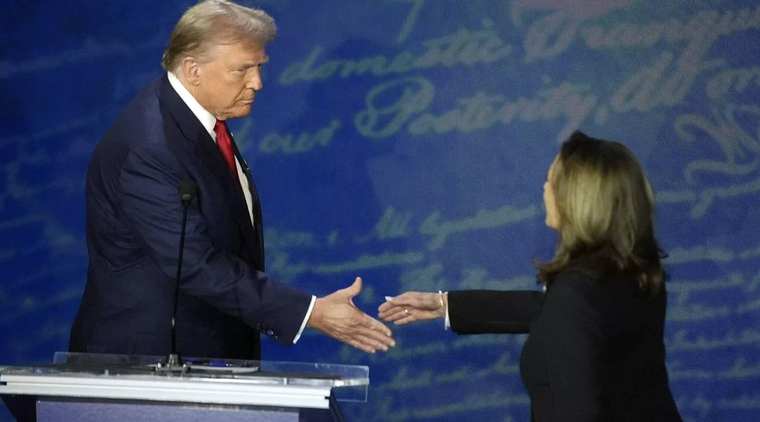
With campaign donations hitting record highs and growing bipartisan support, cryptocurrency has become central to policy debates. Both candidates acknowledge its potential, with Trump particularly aiming to position the U.S. as a global crypto hub.
Todd Ruoff, COO and CFO of Autonomys, believes the crypto industry plays a crucial role in attracting swing voters, making it an unavoidable issue for candidates in closely contested states.
“The Democrats narrowly control the Senate with 51 out of 100 seats, while Republicans hold a slim majority in the House with 222 to 213. Republicans are targeting key swing states like Arizona, Nevada, and Pennsylvania to gain Senate control, enabling them to influence, pass, or block crypto legislation and shape judicial appointments,” he said.
“Moreover, multiple political action committees (PACs) are heavily involved in Senate primaries and general elections in these key states, highlighting the rising influence of the crypto industry in U.S. politics. Committees like Fairshake PAC have raised over $102 million, and with contributions from Coinbase and Ripple, they account for nearly half of all corporate campaign donations this year.”
Ruoff added, “Beyond presidential races, crypto-focused PACs are also prioritizing state-level congressional elections, especially in critical swing states.”
Trump’s Crypto Ambition: Bold Move or Gimmick?
Trump’s embrace of crypto hasn’t come without critics. Some see it as a strategic move to attract a growing and passionate voter base, while skeptics like Anthony Scaramucci, founder of SkyBridge Capital and former Trump ally, are more cynical. Scaramucci recently labeled Trump’s crypto initiative as “a campaign fundraising strategy” and even suggested it might resemble a pump-and-dump scheme. He implied that Trump’s newly launched decentralized finance project, World Liberty Financial, may prioritize profit over policy.
Launched in September 2024, World Liberty Financial quickly drew attention within the crypto community. The project promised a decentralized lending platform, but early reports revealed that 70% of its tokens were allocated to insiders, raising transparency concerns. Although the insider allocation was later reduced to 20%, the damage was done—many questioned whether the platform prioritized financial gain over technological innovation. The project is primarily driven by controversial figure Chase Herro, whose complex past has intensified public scrutiny.
Despite doubts about Trump’s sincerity, Draper believes his approach could help the U.S. regain competitive advantage in the crypto space. When asked if other Republicans besides Trump are enthusiastic about crypto, Draper responded, “People from both parties own crypto. I think it transcends traditional political boundaries.”
Dan Weinberger, CEO of Morpheus.Network, believes crypto has evolved from a niche topic into a central element of global financial discourse.
“The presence of crypto in the 2024 U.S. presidential election shows how far we’ve come. Bipartisan attention to blockchain technology and digital assets underscores the urgent need for clear regulatory frameworks that foster innovation while ensuring security. For the crypto industry, this is a pivotal moment—the decisions made in the coming years will determine whether the U.S. maintains its leadership in the digital economy or falls behind regions more open to technological advancement,” he said.
Harris and the Democrats: Too Late?
Kamala Harris has recently attempted to engage with the crypto community, but her efforts appear reactive and lacking in vision. Her team seems to be playing catch-up after Trump embraced the technology. However, Draper warns that if Democrats fail to adopt a clear and supportive stance, they risk losing ground.
“I don’t think politicians can afford to ignore crypto,” Draper said. “Within ten years, Bitcoin will be the dominant global currency. The policies enacted over the next decade will determine whether the U.S. retains its leadership position.”
A key figure shaping Democratic crypto policy is Senator Elizabeth Warren, known for her strong opposition to the crypto industry. Warren has repeatedly called for strict regulation of digital assets, earning criticism from many in the crypto community. As Yat Siu and other panelists at Token2049 noted, a Harris presidency could be perceived as “anti-VC, anti-startup, anti-crypto”—a stance that might drive entrepreneurs and innovators to friendlier overseas markets.
Nevertheless, Draper remains optimistic about the future of the U.S. crypto industry and suggests key changes to help America reclaim leadership. He advocates for “allowing airdrops,” noting that many innovations are currently geographically constrained due to restrictive U.S. regulations. Draper also calls for simplifying tax policy by allowing crypto firms to pay taxes in cryptocurrency and eliminating capital gains tax on crypto transactions. He believes these measures could unlock massive growth potential in the U.S. market.
The Role of the SEC: Confusing and Restrictive?
One of the main obstacles to the development of the U.S. crypto industry is the stance of the Securities and Exchange Commission (SEC). Draper is blunt in his assessment:
“Their approach is confusing. They once strongly supported a major figure in the crypto industry, yet now they’re going after compliant companies like Coinbase.”
Draper’s criticism reflects widespread frustration in the crypto industry, where many believe the SEC’s inconsistent actions are stifling innovation and pushing businesses toward more crypto-friendly jurisdictions.
Shibtoshi added, “The ‘crypto vote’ is emerging as a powerful force in the upcoming presidential election. Though not yet a dominant voting bloc, its influence is rapidly growing. As cryptocurrency adoption expands, more people are becoming passionate about financial freedom, innovation, and decentralized finance. This community is becoming an essential constituency that no candidate can afford to ignore.”
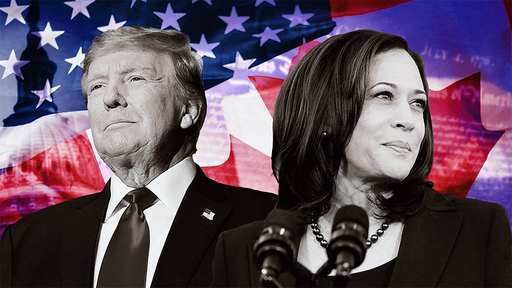
With only weeks remaining until the U.S. presidential election, the future of crypto regulation hangs in the balance. Both Trump and Harris are vying for the crypto vote—but whether either candidate can deliver coherent and supportive policies remains to be seen.
For now, as Draper put it vividly, “Fifty million wallets matter in this election, because it might come down to just ten thousand votes.”
Join TechFlow official community to stay tuned
Telegram:https://t.me/TechFlowDaily
X (Twitter):https://x.com/TechFlowPost
X (Twitter) EN:https://x.com/BlockFlow_News
 @jilliangodsil