Comprehensive Analysis of Q3 2024 Crypto Market Changes: Bitcoin and Stablecoins Gain Dominance, Ethereum Staking Surges
TechFlow Selected TechFlow Selected
Comprehensive Analysis of Q3 2024 Crypto Market Changes: Bitcoin and Stablecoins Gain Dominance, Ethereum Staking Surges
Increasing institutional participation in Bitcoin ETFs, the surge in Ethereum staking, and the growing role of stablecoins as a key driver of market activity.
 Navigating Web3 tides with focused insights
Written by: Coinbase & Glassnode
Translated by: Felix, PANews
What has changed in the crypto market over the past three months? Bitcoin’s price has largely moved sideways, consolidating between $50,000 and $60,000 with occasional fluctuations. Yet upon closer inspection, significant developments are unfolding behind the scenes.
First, liquidity and complexity in the crypto market have increased this quarter. Institutional interest in cryptocurrencies remains strong. Spot Bitcoin ETFs in the U.S. recorded $5 billion in net inflows, indicating continued institutional participation despite periodic volatility. Ethereum reached an all-time high, reflecting how traditional finance is exploring new ways to engage with digital assets. Meanwhile, stablecoins remain one of the most widely used applications in crypto, with their market capitalization reaching a record $170 billion—growing transaction volumes underscore their ongoing utility in cross-border payments and other use cases.
This report provides a comprehensive overview of the forces driving these trends, and highlights potential shifts and directions for key assets—particularly Bitcoin and Ethereum—as we approach year-end.
Below is the full report:
Polymarket emerged as a breakout application during the crypto election year, exemplifying how blockchain technology can enhance transparency, accessibility, and trust in markets and information.
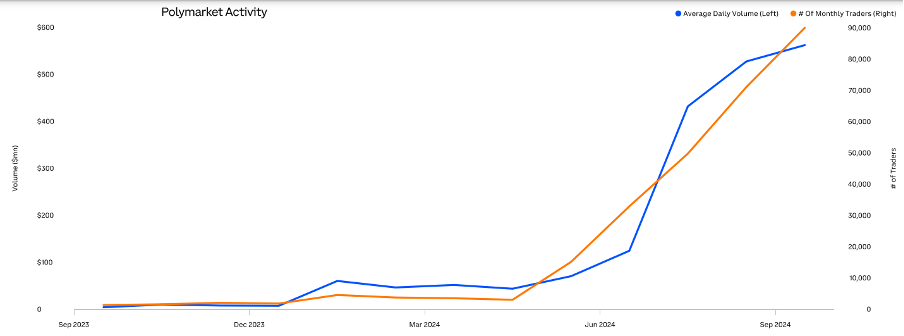
Source: @rchen8, Dune Analytics, Grayscale Investments
Data as of September 30
Among Layer 1 blockchains, Ethereum's share of fee revenue rebounded from a low of 9% at the end of August to 40% at the end of September.
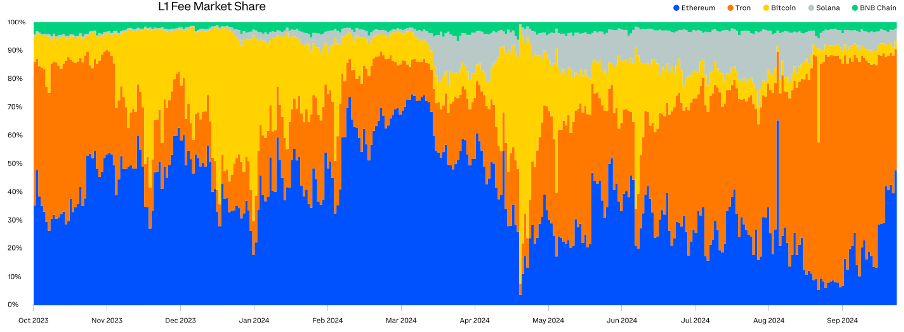
Source: Token Terminal, September 24
Ethereum staking yield is more than twice the real (inflation-adjusted) yield of the 10-year U.S. Treasury note.
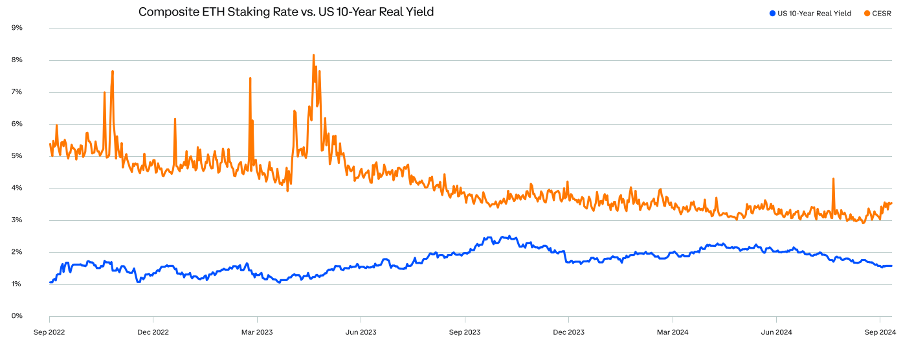
Source: CoinDesk Indices
(CESR measures the average annualized yield earned by validators who stake ETH, composed of consensus rewards and priority transaction fees; while ETH inflation has historically been negative, it has recently turned positive, which stakers should consider when evaluating staking returns)
Many successful applications generate more revenue than the infrastructure they operate on.
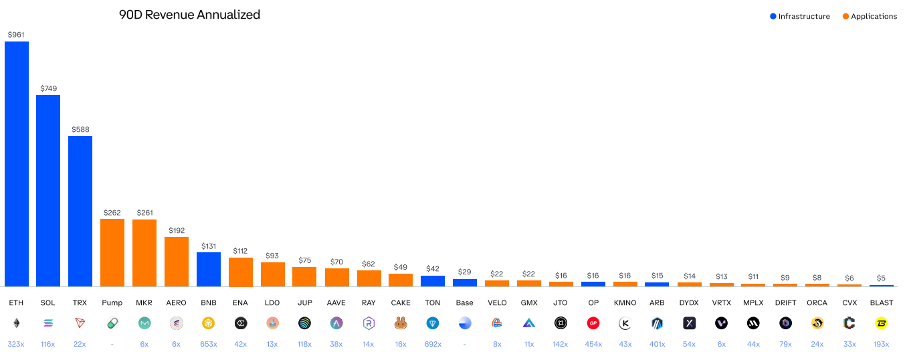
Source: Token Terminal, MakerBurn, DeFiLlama, Tronscan
Annualized revenue calculated over the past 90 days; Solana revenue includes base fees, priority fees, and MEV tips; data as of September 25
Last year, token issuance surged 13-fold, with Solana accounting for the largest share.
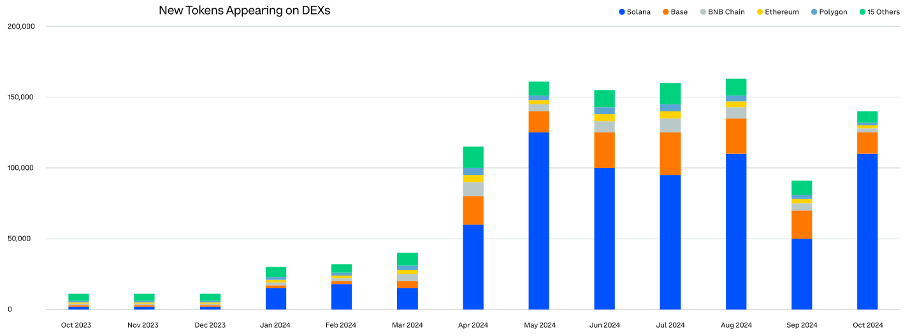
Source: Dune Analytics
Market Overview
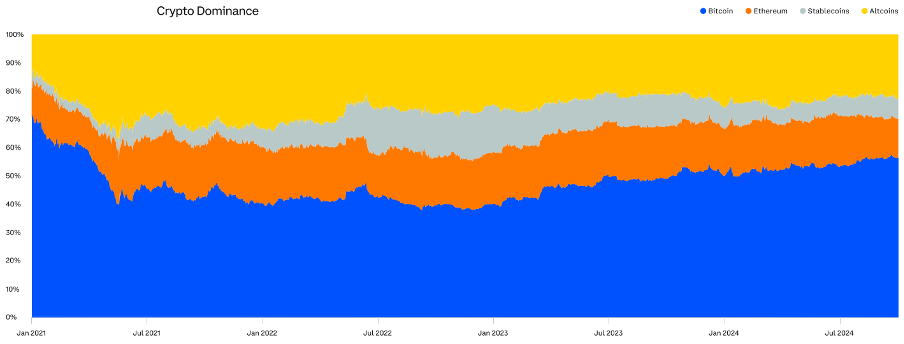
BTC and stablecoin dominance both rose in Q3 as market participants gravitated toward higher-quality assets.
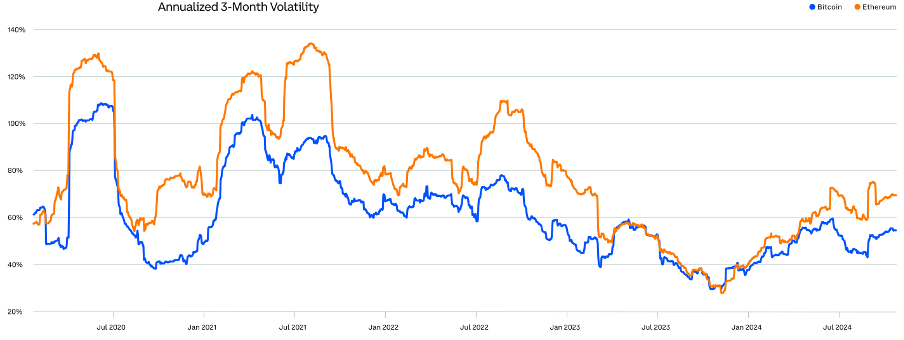
As the market matures, BTC and ETH have shown a clear trend of declining volatility.
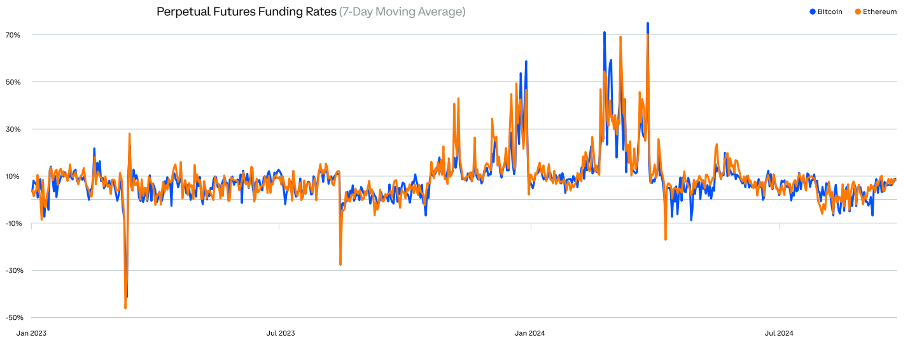
In Q3, perpetual contract funding rates traded within a narrow range, indicating balanced sentiment between buyers and sellers.
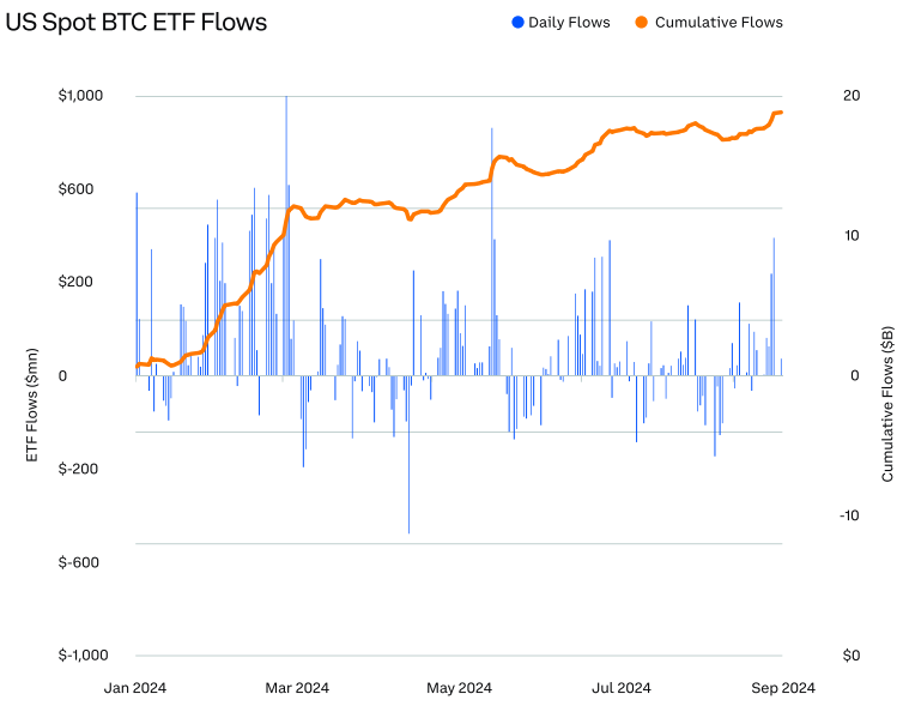
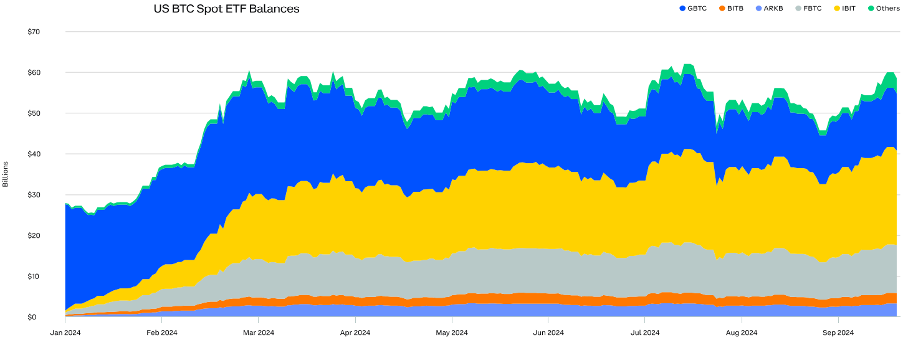
U.S. spot BTC ETFs attracted over $5 billion in net inflows during Q3.
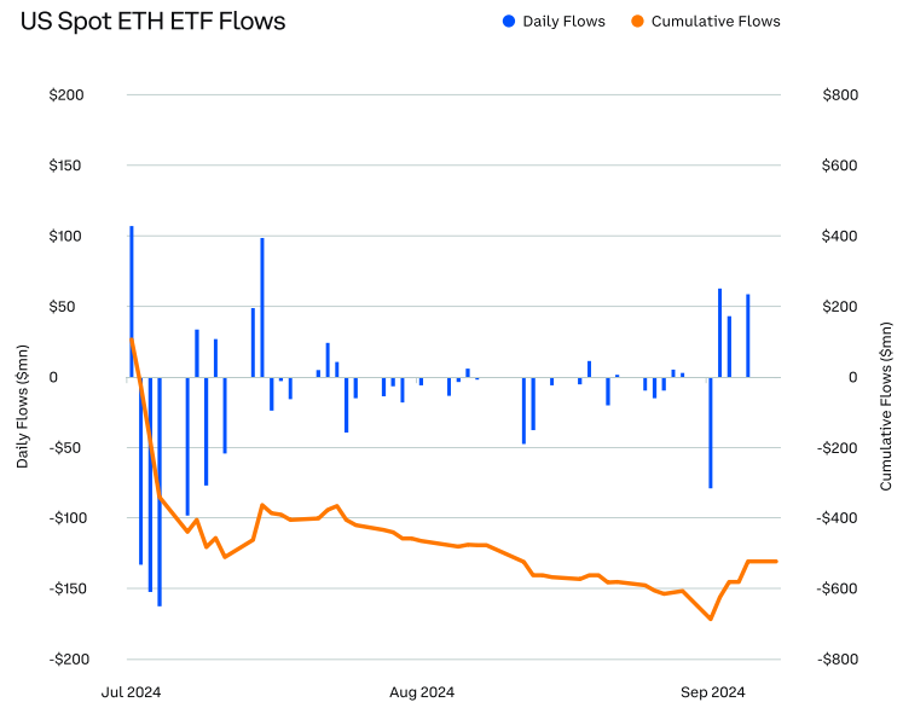
After weeks of outflows, U.S. spot ETH ETFs saw a rebound in capital flows at the end of Q3.
Basis for BTC and ETH (CME futures minus spot) declined across Q3.
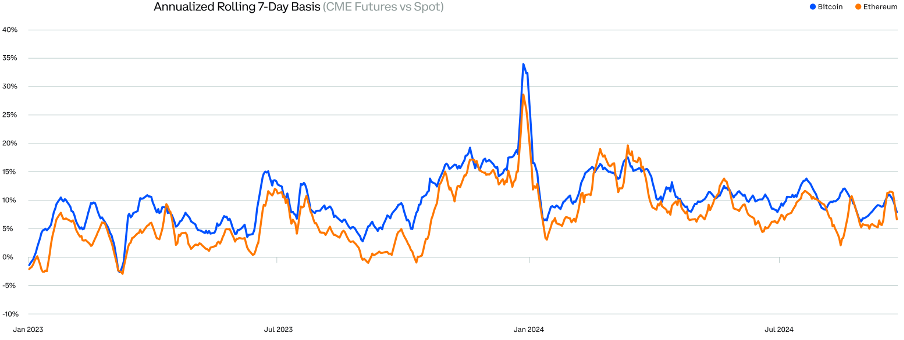
Extreme basis movements, whether positive or negative, often correlate with sharp swings in market sentiment.
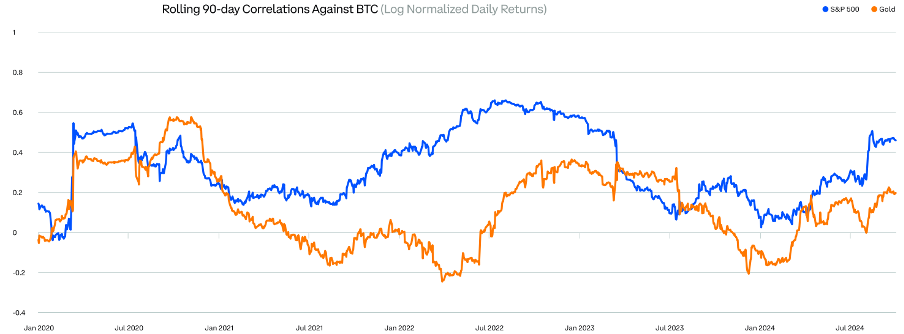
Cryptocurrencies show low or negative correlation with all major asset classes.
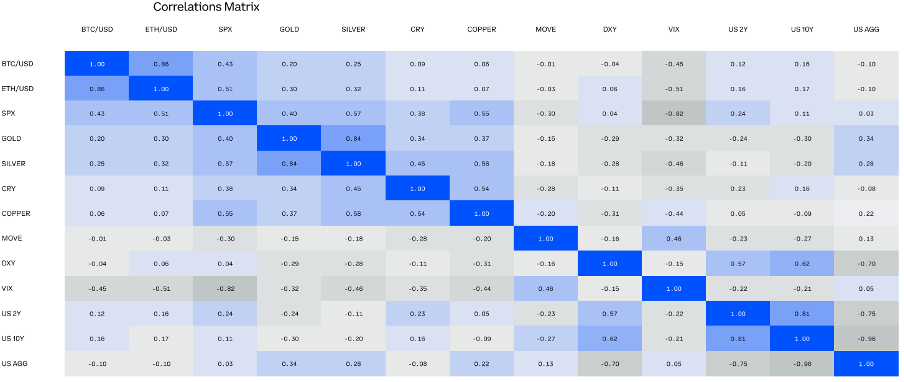
Source: Bloomberg, Coinbase. Data from July 1 to September 30
Since 2020, Bitcoin’s average correlation with the S&P 500 has been just 0.33, and with gold only 0.13.
Stablecoin Surge
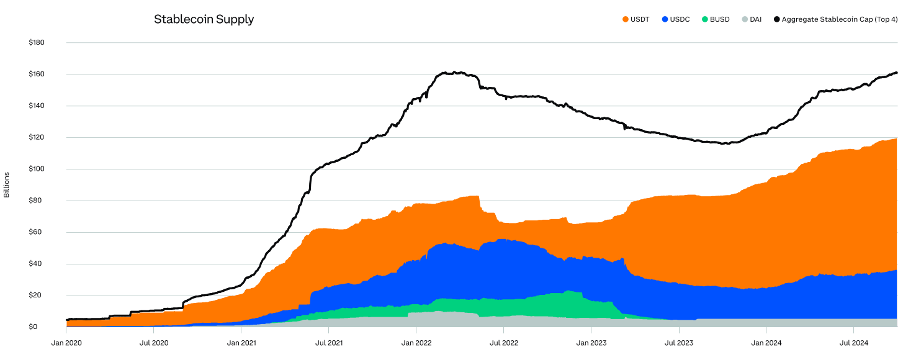
Total stablecoin market cap hit a record high near $170 billion in Q3 2024, coinciding with the enforcement of new EU regulations under the Markets in Crypto-Assets (MiCA) framework.
Both events reflect growing mainstream adoption of stablecoins and increasing awareness of their advantages—such as speed, cost efficiency, and security. Stablecoins are increasingly being used to build payment systems, facilitate remittances, and streamline cross-border transactions.
The integration of stablecoins into existing payment infrastructures is just one example of crypto’s expanding role in the real economy.
As market participants continue using stablecoins across new and established use cases, stablecoin supply reached an all-time high in Q3.
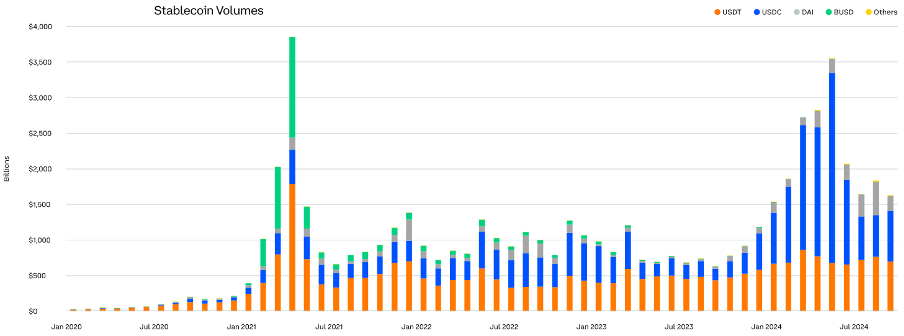
Year-to-date, stablecoin transaction volume has surged to nearly $20 trillion.
Layer 2 (L2)
As we enter Q4, ETH price approaches its level at the start of the year. Beyond price, however, lies a rapidly growing Ethereum ecosystem, driven largely by innovative new L2s.
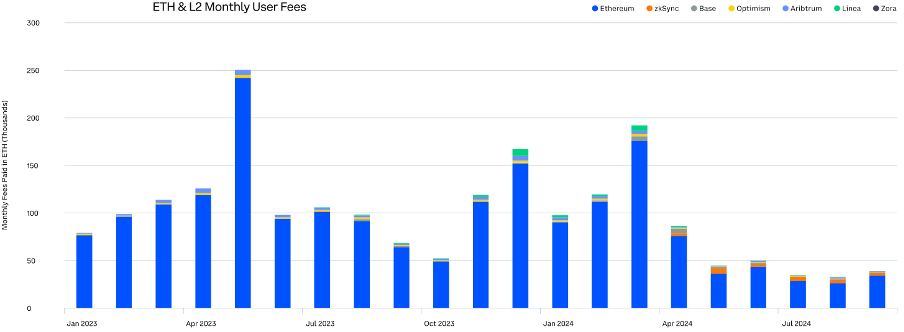
With developers and end users continuing to migrate on-chain, active user counts and transaction volumes have sharply increased. Meanwhile, following Ethereum’s Dencun upgrade, fees on L2s have dropped significantly.
While it remains to be seen how activity will evolve between Ethereum L1 and various L2s, L2s are bringing more users, more activity, and more innovation to the Ethereum ecosystem.
Daily active addresses in the Ethereum ecosystem have risen sharply this year, with growth in L2s being the most pronounced—led by Base.
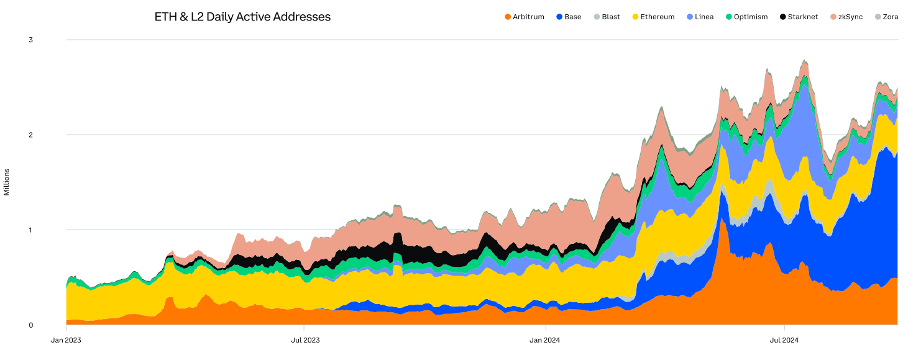
With thriving new L2s and use cases, daily transaction volume across the Ethereum ecosystem has grown fivefold since early 2023.
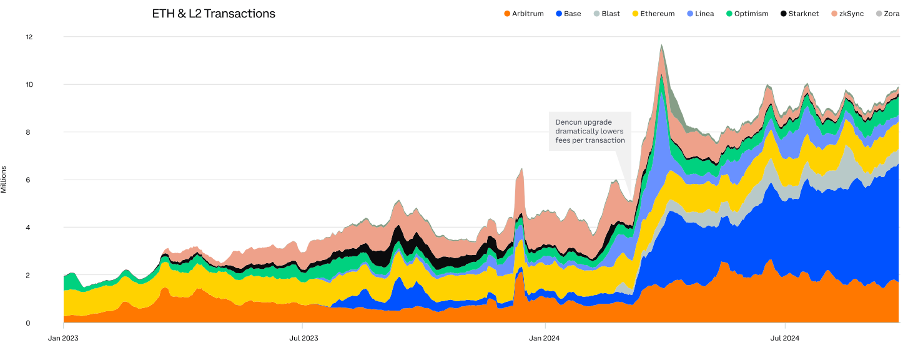
Following Ethereum’s Dencun upgrade in March 2024, which drastically reduced transaction fees on L2s, total fees paid have declined substantially despite a surge in transaction activity.
Bitcoin (BTC)
The current BTC cycle closely resembles the 2015–2018 and 2018–2022 cycles, which delivered total returns of approximately 2,000% and 600%, respectively.
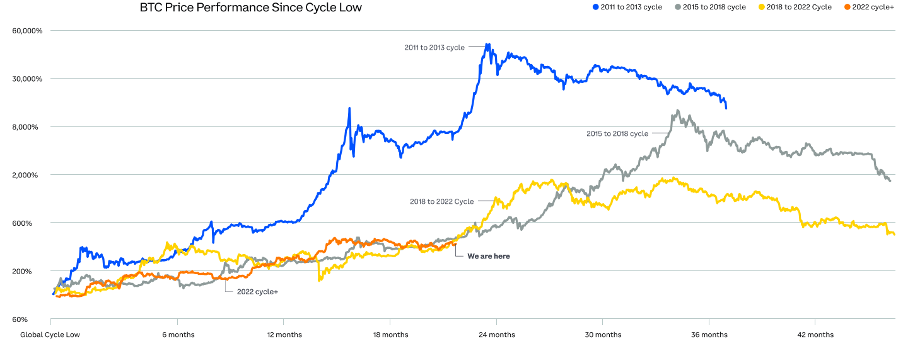
Bitcoin has gone through four cycles, each comprising bull and bear markets. This chart shows how the current market cycle (beginning in 2022) compares to prior ones. (Past performance is not indicative of future results.)
BTC’s performance since the fourth halving most closely mirrors that after the third halving, when prices consolidated sideways for several months before rising sharply within a year of the halving event.
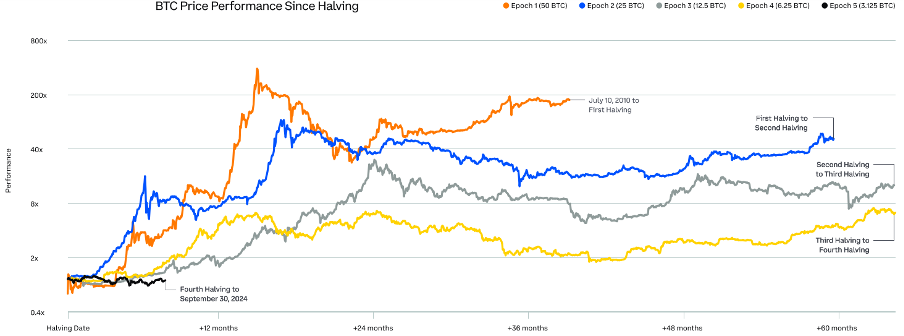
This chart measures Bitcoin’s total return during each halving period. After each halving, prices tend to trade sideways—just as they have over the six months since the April 2024 halving. However, in the 12 months following the first three halvings, prices rose significantly. After the first halving, price increased over 1,000% in the first 12 months. After the second, it rose 200%. After the third, it gained over 600%. Since the fourth halving on April 19, 2024 (black line), Bitcoin’s price has declined by 1.2%.
As of the end of Q3, U.S. spot BTC ETFs had amassed nearly $60 billion in AUM—just nine months after launch.
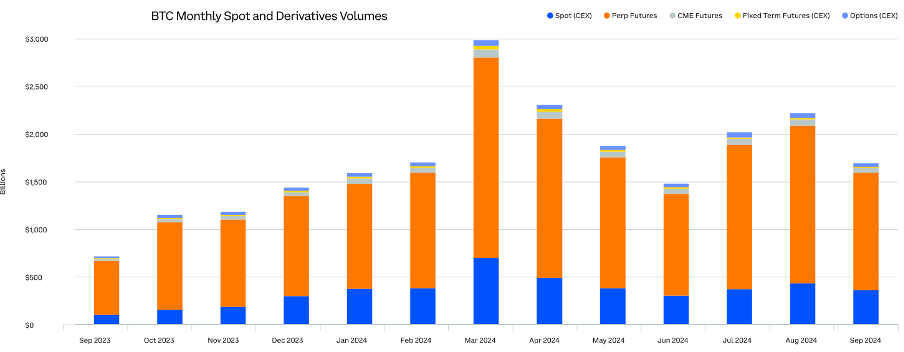
Liquidity in the crypto market continues to grow. BTC trading volume averaged $2 trillion per month YTD, up 76% from the same period last year.
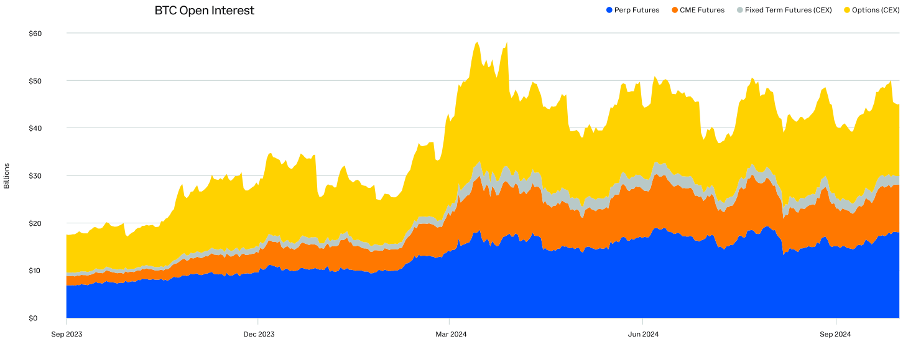
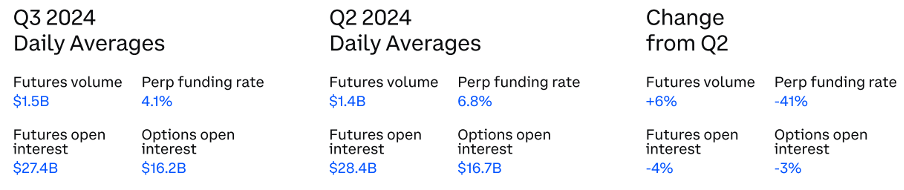
In Q3 2024, open interest in Bitcoin derivatives averaged $44 billion.
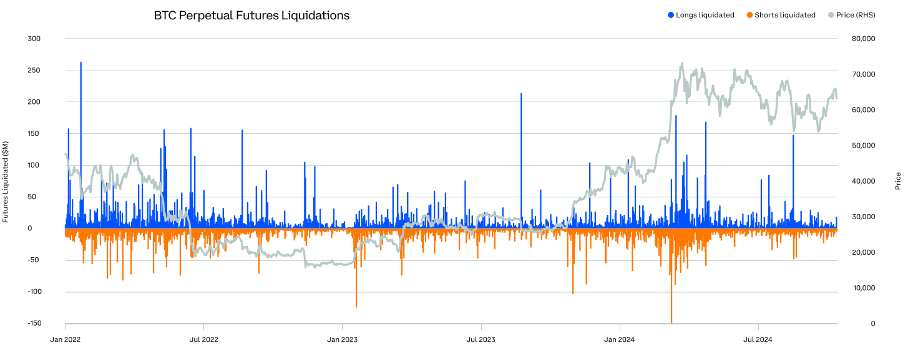
Following a wave of long liquidations in early August linked to unwinding yen carry trades, Bitcoin positioning now appears cleaner.
BTC Derivatives Summary:
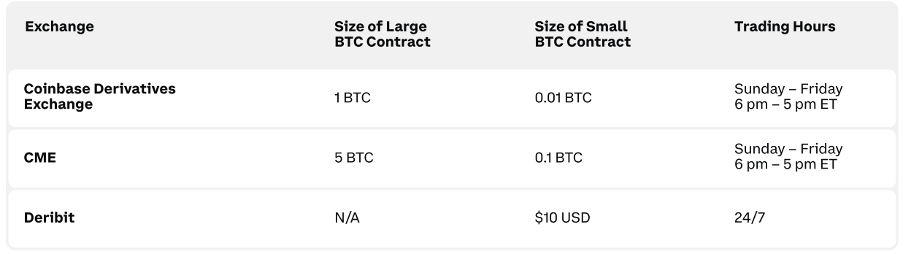
BTC Traditional Futures Specifications
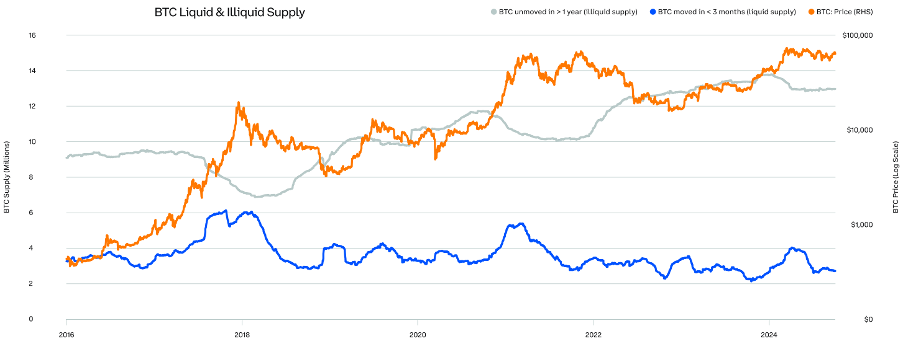
Throughout Q3, the scale of liquid and illiquid BTC supply remained relatively stable.
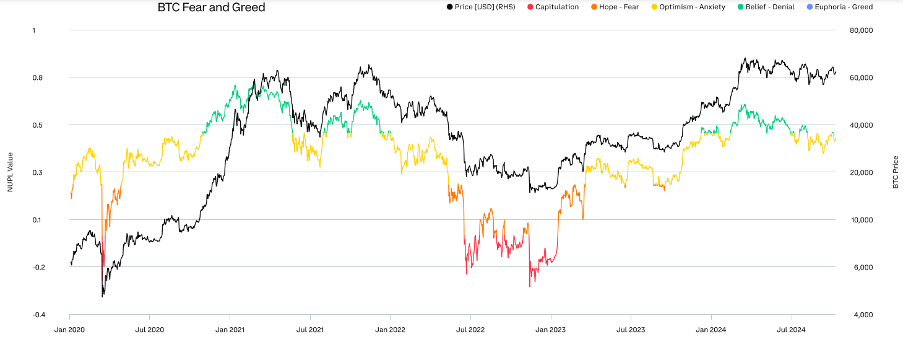
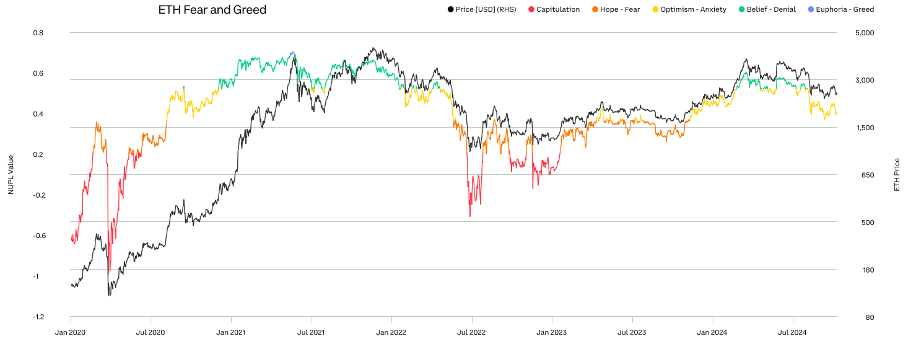
As the market consolidated, sentiment shifted from greed to fear—potentially laying the groundwork for the next rally.
Ethereum (ETH)
After closely tracking the 2018–2022 cycle, the current ETH cycle began to diverge as ETH price pulled back during Q3.
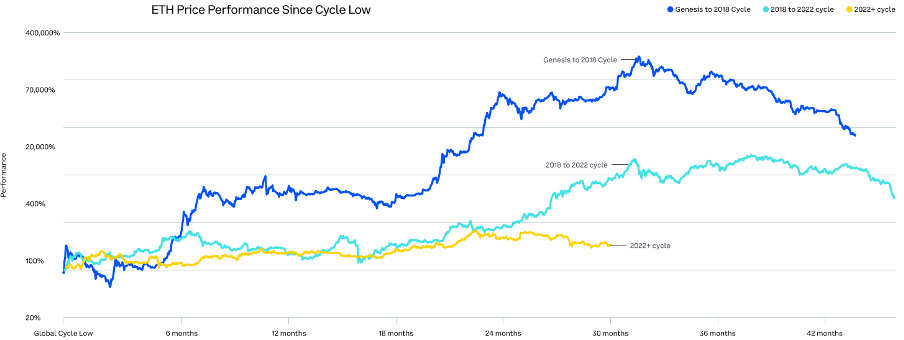
ETH has undergone two full cycles, each including bull and bear phases. This chart shows how the current market cycle (starting in 2022) compares to previous ones. In this cycle, ETH has risen over 125% from its November 2022 cycle low. (Past performance is not indicative of future results.)
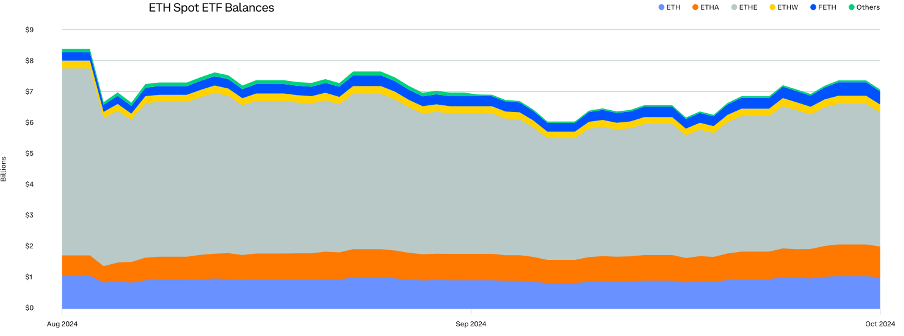
U.S. spot ETH ETFs launched in July and reached $7.1 billion in total AUM by the end of Q3.
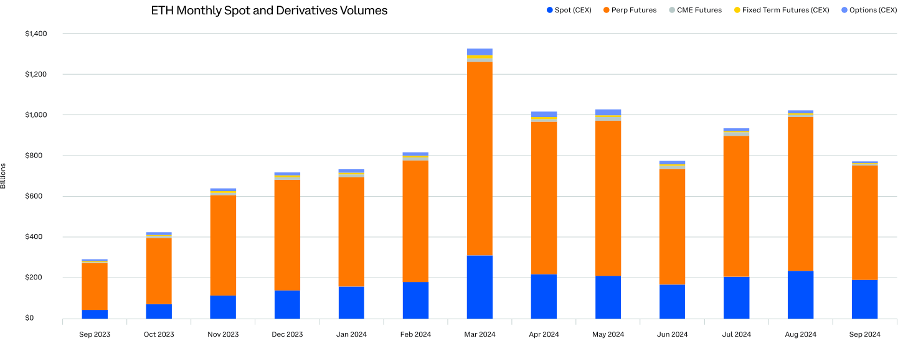
Market liquidity continues to strengthen. ETH monthly average trading volume in 2024 reached $930 billion.
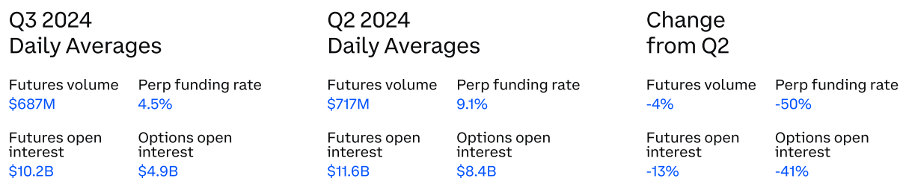
In Q4 2023, open interest in ETH derivatives averaged $15 billion.
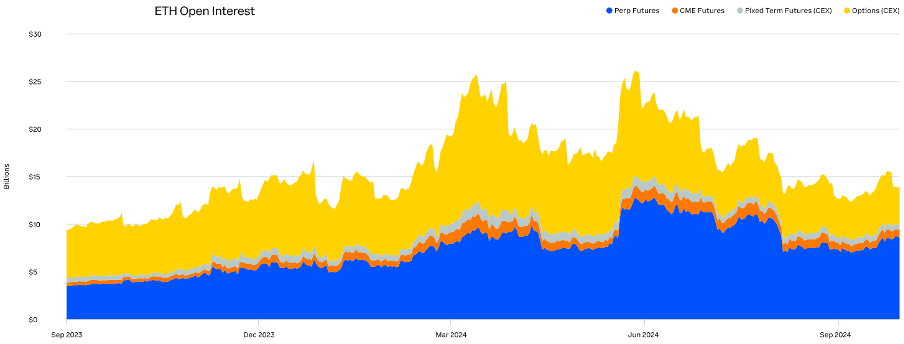
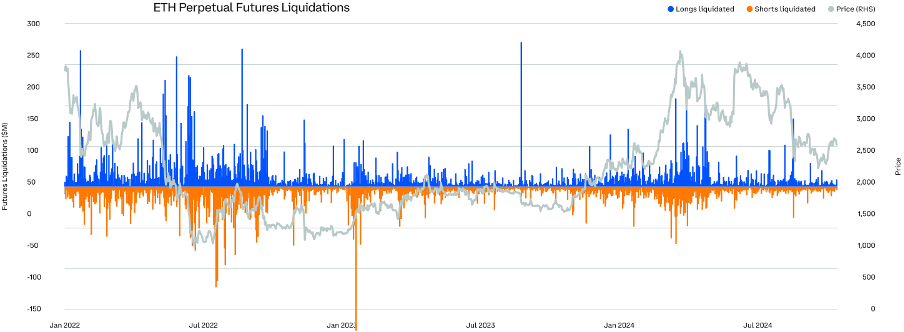
ETH saw an immediate spike in long liquidations following the launch of U.S. spot ETH ETFs and the unwinding of yen carry trades in early August.
ETH Derivatives Summary
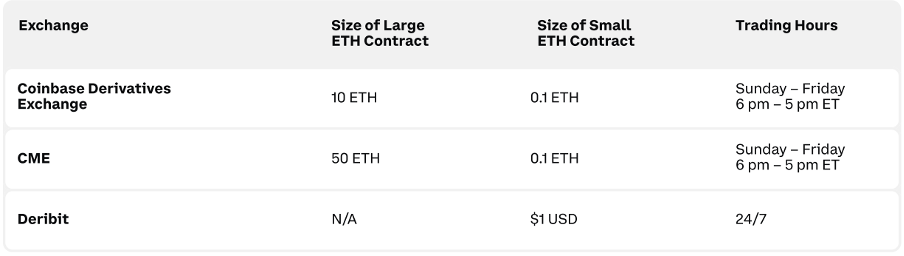
ETH Traditional Futures Specifications
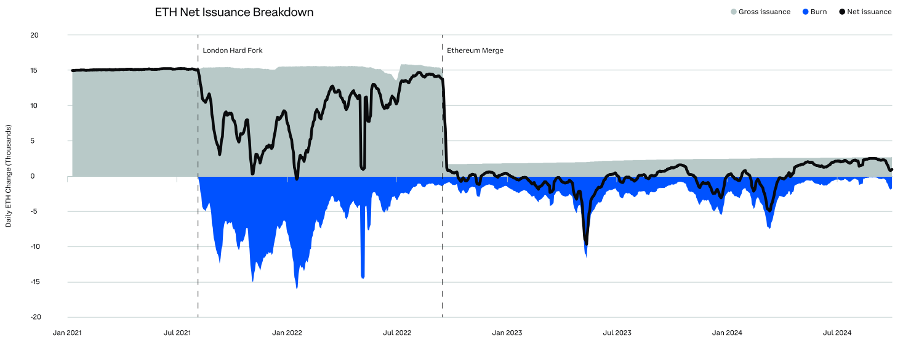
Despite rising fees toward the end of Q3, ETH issuance remains in net inflation.
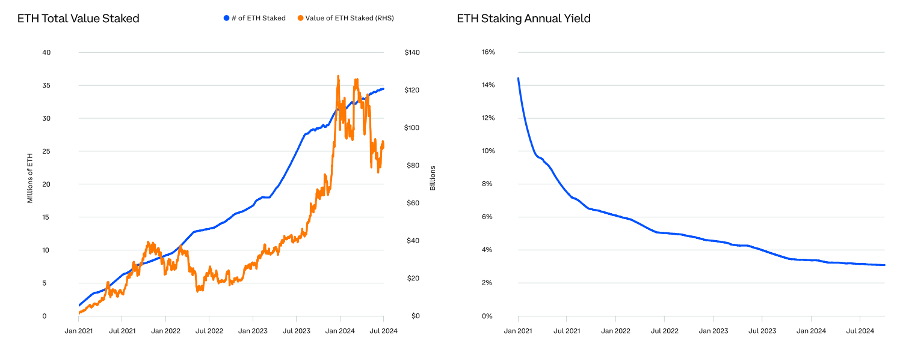
As more holders seek yield from their positions, ETH staking volume hit a record high in Q3.
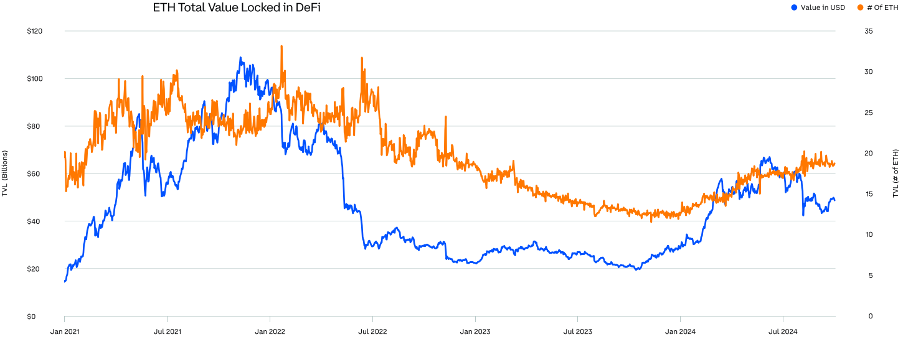
In Q3, the amount of ETH locked in DeFi rose 11%.
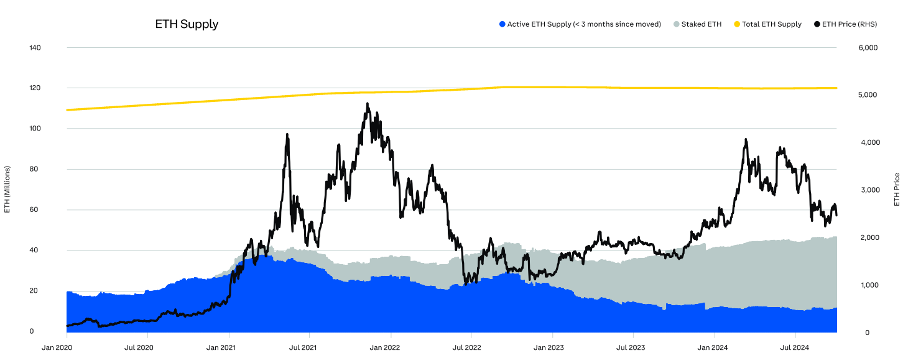
Staking has become a major source of ETH liquidity absorption.
As ETH price retreated, market sentiment shifted from greed to fear—potentially setting the stage for the next rebound.
Join TechFlow official community to stay tuned
Telegram:https://t.me/TechFlowDaily
X (Twitter):https://x.com/TechFlowPost
X (Twitter) EN:https://x.com/BlockFlow_News
 @glassnode